
Top Rated 14,000 BTU Portable Air Conditioner
A 14,000 BTU portable air conditioner is a serious cooling machine. It is designed for large rooms, open-plan living areas, and spaces where a window unit simply will not fit. This guide explains what makes a model stand out, how to match capacity to your room, and which features matter most before you decide.
Explore Top OptionsWhy 14,000 BTU? Portable ACs in this class typically cool spaces between 400 and 600 square feet, depending on ceiling height, insulation, sun exposure, and how many people or appliances share the room. They are the sweet spot for living rooms, master bedrooms, and small apartments that need strong, flexible cooling without a permanent installation.
What a 14,000 BTU Portable AC Really Delivers
BTU, or British Thermal Unit, measures how much heat an air conditioner can remove from a room in one hour. A 14,000 BTU portable unit removes substantially more heat than the 8,000 to 10,000 BTU models that dominate entry-level listings. That extra capacity matters in rooms that heat up quickly, such as west-facing living rooms or spaces with large windows.
In practical terms, a well-rated 14,000 BTU portable air conditioner can bring a large room down to a comfortable temperature faster than a smaller unit, and it can hold that temperature with the compressor cycling less often. That reduced cycling is one reason higher-capacity models can feel more stable and less drafty than smaller units running at full tilt.
It is worth understanding that portable AC ratings are measured under standardized test conditions. Real-world performance depends on how well the unit is vented, whether the room is open to the rest of the house, and how much direct sunlight the space receives. A top rated model with strong airflow and a reliable dual-hose design will consistently outperform a weaker unit with the same nominal rating.
If you are still comparing form factors, our overview of stand-alone portable air conditioning units explains how these machines differ from window and mini-split systems. For buyers who want maximum efficiency in this category, the guide to the most efficient portable air conditioner is a useful companion read.
Matching 14,000 BTU to Your Room Size
Manufacturers typically rate 14,000 BTU portable ACs for rooms between 400 and 600 square feet. That range is a starting point, not a guarantee. Several factors shift the effective coverage up or down:
- Ceiling height: A room with 10-foot ceilings holds more air than one with 8-foot ceilings, so it needs more capacity.
- Sun exposure: Large south- or west-facing windows can add significant heat load in the afternoon.
- Insulation quality: Older homes with single-pane windows and minimal insulation lose cool air faster.
- Occupancy and appliances: Kitchens, home offices with multiple monitors, and rooms with several people need extra capacity.
- Open floor plans: A portable AC cools the air around it. If the room opens into a hallway or staircase, cool air escapes and the unit works harder.
A useful rule of thumb is to size slightly above your calculated need rather than slightly below it. An oversized portable AC can short-cycle, but in the portable category the bigger risk is undersizing, which leaves the compressor running constantly without ever reaching the set temperature. For a deeper walkthrough of sizing logic, see our guide on how to size an air conditioner.
Key Features That Separate Top Models
Two portable ACs can share the same BTU rating and still perform very differently. The difference usually comes down to a handful of design and build decisions. These are the features that consistently show up in top rated 14,000 BTU models.
Dual-Hose Design
A dual-hose unit pulls in outside air for the condenser and exhausts hot air separately. This avoids the negative pressure problem that single-hose units create, where the unit pulls in warm air from other rooms to replace the air it exhausts.
High EER or CEER Rating
Efficiency ratings tell you how much cooling you get per unit of electricity. In the 14,000 BTU class, a higher EER means the compressor and fan are better matched, which usually translates to quieter operation and more stable cooling.
Variable Speed or Inverter Compressor
Inverter-driven compressors adjust their speed instead of switching fully on and off. They hold temperature more evenly and tend to be gentler on the ears during long cooling sessions.
Dehumidification Mode
At 14,000 BTU, most units also pull meaningful moisture from the air. A dedicated dehumidify mode is useful in humid climates and helps the room feel comfortable at a higher thermostat setting.
Auto-Evaporation and Drain Options
Better models evaporate condensate during normal operation and only require manual draining in very humid conditions. A continuous drain option is valuable if you plan to run the unit for days at a time.
Noise Management
Larger units move more air, so noise control becomes a real engineering challenge. Look for models with sound ratings in the low-to-mid 50s dB range on low fan speed, and check whether the compressor is isolated from the cabinet.
Smart Controls and Scheduling
Wi-Fi control, programmable timers, and remote thermostatic operation let you pre-cool a room before you use it. These features matter most in bedrooms and home offices where the unit runs on a schedule.
Window Kit Quality
The window vent kit is where many portable ACs lose efficiency. Adjustable panels with foam seals and a secure hose connection keep hot outdoor air from leaking back in around the exhaust.
Comparison by Tier
The portable AC market splits into recognizable tiers. Understanding where a model sits helps you judge whether its feature set matches your expectations. The table below uses neutral tier descriptors rather than numerical figures.
| Tier | Typical Strengths | Trade-offs | Best For |
|---|---|---|---|
| Essential tier | Straightforward cooling, single-hose venting, basic remote, mechanical or simple digital controls | Louder compressor cycling, less efficient venting, fewer smart features | Occasional use in a guest room or a space where the unit is not running all day |
| Mid-tier | Dual-hose options, better EER, auto-evaporation, programmable timer, improved window kit | Still some compressor noise, smart features may be limited to a basic app | Daily use in a living room or master bedroom where comfort and efficiency both matter |
| High-end tier | Inverter compressor, low noise operation, full app control, robust drain management, premium seals | Larger physical footprint, more complex setup, higher position in the market | Long cooling sessions, open-plan rooms, buyers who prioritize quiet and stable temperature |
| Top-tier | Best-in-class efficiency, refined airflow design, comprehensive smart home integration, durable build | Requires careful installation to justify the engineering, fewer units meet this bar | Whole-season primary cooling for a large room, or buyers replacing a failed central system temporarily |
Tier placement is not the same as suitability. A mid-tier dual-hose model with a well-sealed window kit will often outperform a top-tier unit that is vented poorly. Read the installation section below before you settle on a model.
Single Hose vs Dual Hose at 14,000 BTU
The hose configuration is one of the most consequential decisions in the 14,000 BTU class. Here is how the two designs behave in practice:
- Single hose: The unit pulls room air across the condenser, uses it to cool the refrigerant, and exhausts that air outside. Because air leaves the room, replacement air is drawn in from adjacent spaces, hallways, or outdoors. In a well-sealed room, this can reduce net cooling and make the unit work harder.
- Dual hose: One hose brings outside air in for the condenser, and a second hose sends it back out. The room's air is not consumed, so the unit does not create negative pressure. Dual-hose models are generally more efficient and more consistent in larger rooms.
At 14,000 BTU, the capacity is high enough that single-hose designs can noticeably depressurize a room. If you are cooling a living area that connects to the rest of the house, a dual-hose model is usually the better choice. Our dedicated guide to the top rated dual hose portable air conditioner covers specific configurations in more detail.
Single-hose units still have a place. They are lighter, less complex to set up, and easier to move between rooms. For short cooling sessions in a bedroom, the efficiency gap is less significant than it is during all-day use.
Installation and Venting Essentials
A portable AC is only as good as its venting. The following steps make the biggest difference in real-world performance:
- Choose a suitable window: Double-hung and sliding windows work with most kits. Casement windows may require a specialized panel.
- Seal the panel edges: Use the foam insulation included with most kits, and add weatherstripping if there are gaps. Hot air leaking back in around the panel cancels out a meaningful share of the cooling.
- Keep the exhaust hose short and straight: Avoid sharp bends and extra length. A stretched or kinked hose increases back pressure and reduces efficiency.
- Position the unit for airflow: Place it so the cool air stream reaches the occupied part of the room, not a wall or curtain. Keep at least 12 to 18 inches of clearance around the intake and exhaust.
- Mind the weight: 14,000 BTU units are heavy. Check the floor rating if you plan to place one on an upper floor or a raised platform, and use the caster locks on hard floors.
If your window situation is unusual, our guide to a stand-alone air conditioner without window vent covers alternative venting approaches, including through-wall and sliding-door kits.
Maintenance Habits That Extend Lifespan
Portable ACs handle dust and moisture continuously, so basic maintenance has an outsized effect on longevity and cooling performance.
- Clean or replace the filter every two weeks during heavy use. A clogged filter restricts airflow, which strains the compressor and reduces cooling.
- Drain the condensate tank promptly. Most units shut off when the tank is full. If your model supports continuous drain, use it during long runs.
- Inspect the exhaust hose and window panel seasonally. Cracks in the hose or loose panel seals are common causes of declining performance.
- Clean the evaporator and condenser coils annually. Dust buildup on the coils is a frequent reason a unit that used to cool well starts to struggle.
- Store the unit upright and dry during the off-season. Run it in fan-only mode for an hour before storage to dry internal surfaces.
If a unit stops cooling well despite clean filters, the cause may be a refrigerant issue or a sensor fault. Our troubleshooting guide on why the AC is not blowing cold air walks through the common causes in order of likelihood.
Common Buying Mistakes to Avoid
- Buying on BTU alone. Two 14,000 BTU units can differ dramatically in efficiency, noise, and venting quality. The rating is a starting point, not a complete specification.
- Ignoring the hose design. A single-hose unit in a sealed, open-plan room will underperform a dual-hose unit with the same rating.
- Underestimating noise. Portable ACs are louder than window units and mini-splits. Check the dB rating at the fan speed you expect to use, not just the lowest setting.
- Skipping the window kit review. A poor seal around the vent panel is one of the most common reasons buyers report disappointing cooling.
- Assuming portability means easy mobility. At this capacity, most units weigh significantly more than smaller models. Measure doorways and check caster quality if you plan to move it between rooms.
For a broader look at the category, including how these units compare with tower designs, see our overview of stand-up air conditioners. If you are deciding between a portable unit and a window unit at similar capacity, our guide to the top rated 10,000 BTU window air conditioner is a useful comparison point for efficiency and installation effort.
Frequently Asked Questions
What size room does a 14,000 BTU portable air conditioner cool?
Most 14,000 BTU portable ACs are rated for rooms between 400 and 600 square feet. Ceiling height, insulation, sun exposure, and open floor plans can push the effective range lower. Size slightly above your calculated need rather than below it.
Is a dual-hose 14,000 BTU portable AC better than a single-hose model?
For larger rooms and longer cooling sessions, yes. Dual-hose units avoid the negative pressure problem that single-hose units create and generally deliver more consistent cooling. Single-hose units are simpler to set up and easier to move, which suits short sessions in smaller spaces.
How loud is a 14,000 BTU portable air conditioner?
Noise varies by model and fan speed. Many units in this class operate in the low-to-mid 50s dB range on low fan speed, with louder operation on high. Inverter-driven models tend to hold temperature more quietly because the compressor does not cycle fully on and off.
Can a 14,000 BTU portable AC cool more than one room?
It can provide some spillover cooling, but portable units are designed to cool the air around them. Cool air escapes into hallways and stairwells, so multi-room use is inefficient. Close doors to adjacent spaces to get the most from the unit.
Do I need to drain a 14,000 BTU portable AC?
Most units evaporate condensate during normal operation, but in humid conditions the internal tank fills and the unit shuts off until drained. Mid-tier and high-end models often support a continuous drain hose, which is convenient for long runs.
How often should the filter be cleaned?
Every two weeks during heavy use, and at least monthly during lighter use. A clogged filter restricts airflow, reduces cooling, and strains the compressor. Cleaning the filter is the single easiest maintenance task that protects performance.
Can a portable AC replace a central air system?
For a single large room, a 14,000 BTU unit can provide meaningful cooling. For a whole home, it cannot match a central system's coverage. Portable units are often used as temporary cooling when a central system fails, or as targeted cooling for rooms that central air does not reach well.
Recommended 14,000 BTU Portable Air Conditioners
The models below represent a cross-section of the 14,000 BTU portable AC market. Each entry is described by tier and strength rather than by numerical figures. Use the comparison table above to match a tier to your room and usage pattern, then check current availability through the links.
Top Rated 14,000 BTU Portable Air Conditioners
⚠️ AFFILIATE DISCLOSURE: This website contains affiliate links. As an Amazon Associate, we earn from qualifying purchases. If you make a purchase through these links, we may receive a small commission at no additional cost to you. Read our full affiliate policy.

14,000 BTU Portable Air Conditioner Cools Up to 700 Sq.Ft, 3-IN-1 Energy Efficient Portable AC Unit with Remote Control & Installation Kits for Large Room, Office, Temporary Space
Check price on Amazon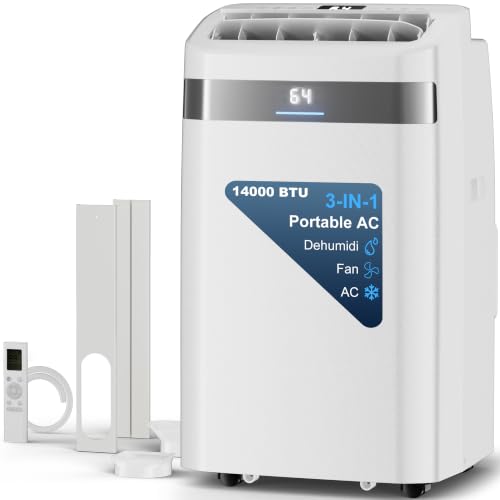
AKIRES Portable Air Conditioners,14,000 BTU Air Conditioner for Bedroom with Remote Control,Portable AC Unit With Fan & Dehumidifier,Cools Up To 700 Sq.Ft For Large Room With 24H Timer And Sleep Mode
Check price on Amazon
Midea Duo 14,000 BTU Portable Air Conditioner with Heat, Inverter Quiet | 12,000 BTU SACC High Efficiency Inverter Portable AC, with Heat up to 550 Sq.Ft. Smart/Remote Control, Alexa/Google Assistant
Check price on Amazon
Midea 14,000 BTU Portable Air Conditioner with Heat, Cools up to 450 Sq. Ft | 10,000 BTU SACC Portable AC, Smart APP & Remote Control, Amazon Alexa & Google Assistant, with Dehum & Fan & Heat mode
Check price on Amazon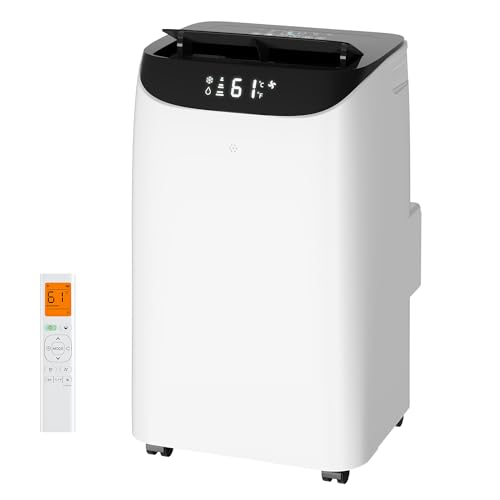
Inverter 16000 BTU Portable Air Conditioner, 3 in 1 Portable Ac Unit Cools Up for Rooms 850 Sq. Ft, Dual Hose Standing AC for Bedrooms with Dehumidifier, Fan, Quiet Sleep Mode, Remote Control
Check price on Amazon
Midea Duo 14,000 BTU Portable Air Conditioner, Inverter Ultra Quiet | 12,000 BTU SACC High Efficiency Inverter Portable AC, Cools up to 550 Sq. Ft. Smart & Remote Control, Alexa/Google Assistant
Check price on Amazon
14,000 BTU Portable Air Conditioner with WiFi & Remote Control, Cools Up to 700 Sq.Ft, Auto-Evaporation Low Noise Portable AC Unit for Large Room, Office, Garage, White
Check price on Amazon