Water Pump on Air Conditioner: Complete Guide
Condensate pumps keep water moving out of your AC system when gravity alone is not enough. Learn how these pumps work, why they matter, and how to choose the right one.
START LEARNINGWhy condensate pumps matter: Air conditioners remove moisture from the air as they cool. That moisture collects on the evaporator coil and drips into a drain pan. When a gravity drain is not possible — in basements, interior closets, or ductless installations — a water pump on the air conditioner moves the condensate to a remote drain. Without a working pump, water backs up, leaks, and can damage ceilings, walls, and flooring.
What Is a Water Pump on an Air Conditioner?
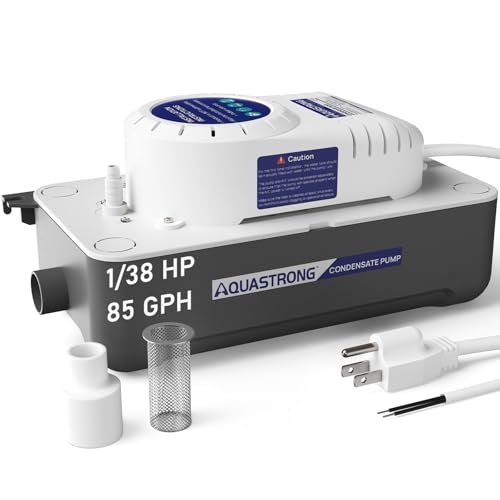
A condensate pump is a small electric device that collects water from the AC drain pan in a reservoir and pumps it through a flexible tube to a suitable discharge point. It is common in systems where the indoor unit sits below the drain line, in interior spaces without gravity drainage, or in mini-split installations where routing a gravity line would be impractical.
The pump is separate from the refrigerant circuit. It handles only water, not refrigerant. That distinction matters when troubleshooting: a water leak near the indoor unit points to the condensate path, while cooling problems point to the refrigerant side. For cooling-side diagnostics, review trouble shooting air conditioning.
Condensate pumps are relevant across many system types. Owners of a split system air conditioning system or a wall-mounted air conditioner with heat pump may need one depending on installation location. Ductless setups often use low-profile pumps designed for the indoor head.
How a Condensate Pump Works
The operating sequence is straightforward:
- Condensate drips from the evaporator coil into the drain pan
- Water flows into the pump reservoir through an inlet
- A float switch rises as the reservoir fills
- At the set level, the pump activates and moves water out through the discharge tube
- When the reservoir drops, the pump stops and waits for the next cycle
Many pumps include a safety float switch that shuts off the cooling system if the reservoir overfills. This protection prevents overflow and water damage when the pump fails or the discharge line clogs.
Gravity Drain vs Pumped Drain
A gravity drain relies on slope. The drain line must continuously fall toward the discharge point. A pumped drain removes that constraint, allowing the indoor unit to sit below the drain or far from it. In retrofit situations, a pump is often the practical choice. For broader system context, see split system air conditioning maintenance.
Key Features to Evaluate
Lift Capacity
The maximum vertical height the pump can push water. Match it to the distance from the pump to the discharge point.
Flow Rate
Measured in gallons per hour. Higher-capacity systems and humid climates produce more condensate and need more flow.
Reservoir Size
A larger reservoir reduces cycling frequency. Smaller reservoirs suit tight installations but cycle more often.
Safety Float Switch
A built-in float switch shuts off cooling when water backs up, protecting the home from overflow.
Noise Level
Pumps produce sound when running. Quiet models matter in bedrooms, home offices, and living areas.
Installation Type
Standalone reservoir pumps, inline pumps, and low-profile mini-split pumps serve different layouts and space constraints.
Market Tiers for Condensate Pumps
Condensate pumps fall into recognizable tiers. Use this table to match expectations to your installation and reliability needs.
| Tier | Best For | Typical Characteristics |
|---|---|---|
| Entry-level | Small systems, light-duty residential use, temporary setups | Basic reservoir and float, standard lift height, straightforward installation, solid build for the tier |
| Mid-range | Typical residential AC systems, mini splits, wall-mounted units | Higher lift, quieter operation, safety float switch, improved housing, reliable day-to-day performance |
| Premium | High-humidity climates, finished spaces, comfort-focused installations | Higher flow, low noise, robust float mechanisms, advanced safety features, refined build quality |
| Professional-grade | Multi-zone systems, commercial spaces, retrofit projects | High lift and flow, heavy-duty construction, external alarm contacts, documented performance, integration with HVAC controls |
Advantages and Limitations
Advantages
- Allows installation where gravity drainage is not possible
- Protects ceilings, walls, and floors from water damage
- Supports interior closets and basement installations
- Enables clean mini-split installations
- Safety float switches add protection
- Simple to service and replace
Limitations
- Adds a component that can fail or clog
- Requires periodic cleaning and inspection
- Produces some noise when running
- Needs a nearby power outlet
- Discharge line must be routed carefully
- Improper installation can cause short cycling
Common Problems and Their Causes
Most condensate pump issues trace back to a small number of causes. Recognizing the symptom helps narrow the diagnosis.
Water Leaking from the Indoor Unit
Leaks around the indoor unit often mean the pump is not moving water. Check the reservoir, the float switch, and the discharge line. Slime and debris in the drain pan can also block flow before water reaches the pump. Related symptoms are covered in water is dripping from AC vents and water coming out of air conditioner vents.
Pump Running Constantly
Constant running usually indicates a clogged discharge line, a stuck float, or a pump that is failing to move water. In very humid conditions, high condensate production can also keep the pump cycling frequently. Confirm the line is clear and the pump actually discharges water when running.
Pump Not Running at All
Check power first. Then check the float switch. A float stuck in the up position prevents the pump from running, and a float stuck in the down position prevents it from activating. If power and float are fine, the pump motor may have failed.
Water Leaking Outside the Unit
Outdoor leaks often come from a disconnected discharge line or a line that terminates in the wrong place. The principles in water leaking from air conditioner outside unit apply here. Always confirm that the discharge point is appropriate and does not create a slip hazard or water intrusion.
Where Condensate Pumps Fit in Different Systems
Condensate pumps are used across many cooling system types. The right pump depends on the installation layout and the volume of condensate produced.
Split Systems
In a split system air conditioning and heating installation, the indoor air handler or coil may sit in a location without gravity drainage. A condensate pump handles the discharge. The same logic applies to split system air conditioning units for sale with interior air handlers.
Mini Splits and Wall-Mounted Units
Mini-split indoor heads often need a small pump. A wall-mounted mini split installation in a bedroom or office can use a low-profile pump tucked behind or beside the unit. Owners of a wall-mounted air conditioner heater combo installation should confirm that the pump is compatible with the heating cycle as well as cooling.
Combination Units
Combination heating and cooling units also produce condensate in cooling mode. A wall heater and air conditioner combination or wall-mounted air conditioner and heating units may need a pump if the indoor head lacks gravity drainage. In heating mode, some models also produce condensate at the outdoor unit, which follows a separate drain path.
How to Choose the Right Condensate Pump
Start with the installation. Then match the pump's specifications to the system's output and the discharge path.
- Measure the vertical lift required from pump to discharge point
- Estimate the condensate volume produced during peak cooling
- Confirm the reservoir size fits the available space
- Choose a pump with a safety float switch
- Check the noise rating if the pump is near living areas
- Verify the discharge line can be routed cleanly and safely
- Confirm there is a nearby power outlet
For multi-room homes, one pump per indoor head is standard. The practical steps in split AC filter replacement and the guidance on wall mounted air conditioner cleaning service help keep the condensate path clear between service visits.
Maintenance for Long-Term Reliability
Condensate pumps are reliable when kept clean. Plan on the following:
- Inspect the reservoir and drain pan for slime and debris
- Flush the discharge line periodically to prevent clogs
- Test the float switch by lifting it manually and confirming the pump activates
- Confirm that water actually discharges when the pump runs
- Check the discharge point for proper drainage
- Replace the pump if it becomes noisy or unreliable
If water problems persist, review the broader troubleshooting in trouble shooting air conditioning. Some symptoms that look like pump failures are actually coil or airflow issues that increase condensate production. For related water issues, see water leaking out of furnace when air conditioning is on.
Frequently Asked Questions
What does a water pump do on an air conditioner?
A condensate pump collects the water that forms on the evaporator coil and moves it to a drain location that gravity alone cannot reach. It allows AC units to be installed where a gravity drain is impractical.
Why is my AC condensate pump running constantly?
Constant running usually indicates a clogged drain line, a stuck float switch, or a pump that is failing to move water. It can also indicate a very humid environment with high condensate production.
Can I install a condensate pump on a mini split?
Yes. Mini split indoor units often need a small condensate pump when a gravity drain is not possible. Low-profile pumps designed for ductless heads are available.
What happens if the condensate pump fails?
If the pump fails, water backs up in the drain pan. Many systems include a float switch that shuts off cooling to prevent overflow. Without that protection, water can leak from the indoor unit and damage surrounding materials.
Do all air conditioners need a condensate pump?
No. Many installations use gravity drainage. A pump is needed when the indoor unit sits below the drain point, when the discharge location is far away, or when routing a gravity line is impractical.
Ready to Choose a Condensate Pump?
Review the recommended pumps and accessories below to find a solution that matches your installation layout and condensate volume.
VIEW RECOMMENDED OPTIONS