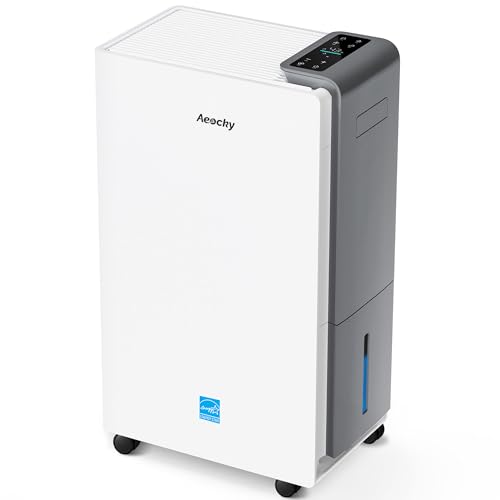
Whole House Dehumidifier: Complete Guide for Homeowners
Understand how a whole-home dehumidifier works, how to size it correctly, which features matter, and how to keep indoor humidity balanced for comfort, health, and long-term protection of your home.
What Is a Whole House Dehumidifier?
A whole house dehumidifier is a ducted appliance that removes excess moisture from the air across an entire home, rather than from a single room. It is typically integrated with your HVAC ductwork or installed as a standalone ducted unit connected to return and supply air paths. Unlike small portable dehumidifiers that serve one enclosed space, a whole-home system continuously manages humidity levels throughout the living areas of a house.
Homeowners usually consider a whole-home dehumidifier when indoor relative humidity consistently stays above the comfortable range, when musty odors persist, or when condensation appears on windows and cool surfaces. In many climates, the air conditioning system alone cannot manage latent load (moisture removal) efficiently, especially during mild but humid weather when the AC does not run long enough to dehumidify properly. A dedicated whole-house dehumidifier addresses that gap.
These systems are also relevant for basements, crawl spaces, and sealed homes with tight building envelopes. If you are already exploring broader indoor air quality upgrades, you may also want to compare options like a whole-house air purifier and review how a whole-house ventilation system works alongside humidity control.
How a Whole-Home Dehumidifier Works
Most whole-house dehumidifiers use a refrigeration-based process. Moist air is drawn through a filter and across a cold evaporator coil. Water vapor condenses on the coil and drains away through a condensate line. The dried air then passes over a warm condenser coil before being distributed back into the ductwork. This continuous cycle lowers the moisture content of the air supplied to living spaces.
There are also desiccant-based whole-house dehumidifiers, which use a moisture-absorbing wheel and a reactivation heater. Desiccant units can perform well in cooler conditions where refrigeration-based systems lose some efficiency. The choice between these technologies depends on climate, basement conditions, and how the system will be integrated with existing HVAC equipment.
Integration With HVAC and Controls
Whole-house dehumidifiers can operate independently or be tied into your HVAC controls. Many units include a humidistat that monitors relative humidity and activates the dehumidifier only when needed. Some systems can work in tandem with a smart thermostat or a Wi-Fi HVAC thermostat so that humidity and temperature are managed together. If your home uses a heat pump, compatibility with a Wi-Fi heat pump thermostat is worth checking before installation.
Why Indoor Humidity Control Matters
Excess indoor humidity affects comfort, health, and the durability of building materials. When relative humidity stays elevated, the air feels warmer than the thermostat indicates, occupants may feel clammy, and the home can develop persistent musty odors. Over time, high humidity contributes to condensation on windows, moisture in wall cavities, and conditions that support mold and mildew growth.
Managing humidity also improves HVAC performance. A home with balanced humidity often feels comfortable at a slightly higher thermostat setting, and the cooling system does not need to work as hard to compensate for moisture-laden air. If you notice that your central air is not cooling as expected, humidity may be one of several contributing factors worth investigating.
Comfort range tip: Many indoor comfort guidelines suggest keeping relative humidity roughly between 30% and 50% during cooling season. Persistent readings above that range are a common reason homeowners start researching whole-house dehumidification.
Types of Whole-House Dehumidifiers
Whole-home dehumidifiers are generally grouped by installation style and by the underlying moisture-removal technology. Understanding the differences helps you match a unit to your ductwork, climate, and maintenance preferences.
| Type | Best For | Key Consideration |
|---|---|---|
| Ducted whole-house unit | Homes with existing HVAC ductwork | Requires integration with return and supply ducts |
| Standalone ducted dehumidifier | Basements and crawl spaces with dedicated duct runs | Operates independently from the AC system |
| Refrigeration-based | Warm and humid climates, typical residential use | Most efficient in warmer air conditions |
| Desiccant-based | Cooler conditions and lower-temperature spaces | Uses a reactivation heater; suited to specific climates |
For homes without ductwork, a ductless approach may be more practical, and it is worth reviewing how a whole-house ductless heating and cooling system is planned before adding humidity control equipment. In homes with ducts, the dehumidifier is usually installed near the air handler or in a mechanical room.
Sizing and Capacity Guidelines
Correct sizing is one of the most important decisions when selecting a whole-house dehumidifier. An undersized unit will run continuously without reaching the target humidity level, while an oversized unit may cycle too frequently and remove moisture unevenly. Capacity is typically expressed in pints per day of moisture removal, and the right figure depends on home size, climate, basement conditions, and air leakage.
Factors That Influence Capacity Needs
- Home size and volume: Larger conditioned areas generally require higher moisture-removal capacity.
- Climate zone: Hot and humid climates place a higher latent load on the system.
- Basement or crawl space: Below-grade spaces often have persistent moisture sources.
- Air sealing and insulation: Leaky homes allow humid outdoor air to enter.
- Occupancy and activities: Cooking, showering, and laundry add indoor moisture.
A professional load assessment is the most reliable way to match capacity to your home. If you are comparing humidity control with other air quality upgrades, reviewing resources on who to call for high humidity in a house can help you understand the diagnostic process before committing to equipment.
Key Features to Compare
Whole-house dehumidifiers vary in controls, efficiency, filtration, and installation requirements. Focusing on features that affect long-term performance is more useful than comparing surface-level specifications alone.
Controls and Monitoring
- Built-in humidistat: Allows the unit to maintain a target humidity level automatically.
- Remote sensors: Useful for monitoring the living space rather than only the mechanical room.
- Smart integration: Some units can coordinate with thermostats and home automation systems.
Airflow and Duct Compatibility
- Static pressure rating: Determines how well the unit works with longer duct runs.
- Filter options: MERV-rated filters can add particulate filtration alongside moisture removal.
- Drain options: Gravity drain or condensate pump depending on installation location.
Efficiency and Durability
- Energy factor: A measure of moisture removal per unit of energy used.
- Compressor quality: Durable construction supports long service life.
- Corrosion-resistant coils: Important in coastal or high-humidity environments.
For homeowners upgrading their overall climate system at the same time, it may help to compare a whole-house humidifier for heating season and review how a whole-house air conditioning system handles latent load during summer.
Market Tier Descriptors
Whole-house dehumidifiers are commonly positioned in the market using relative tier descriptors. These terms describe product positioning and feature depth without relying on numeric figures or currency references.
| Tier | Typical Characteristics | Best For |
|---|---|---|
| Entry-level tier | Essential humidity control, straightforward controls, basic filtration | Smaller homes or single-zone humidity issues |
| Mid-range tier | Improved efficiency, better airflow handling, upgraded filter options | Most whole-home residential applications |
| High-end tier | Advanced controls, smart integration, durable components, quieter operation | Larger homes and homeowners seeking integrated climate management |
| Professional-grade | Heavy-duty construction, high static pressure capability, commercial-oriented design | Large homes, multi-zone systems, and demanding installations |
Mid-range units generally offer a balanced combination of efficiency and control features, while high-end and professional-grade models are appropriate when airflow requirements are more demanding or when the dehumidifier will be part of a broader smart-home climate strategy. If you are also considering air purification, a whole-house air purifier can complement humidity control by addressing particulates.
Installation and Placement
Whole-house dehumidifier installation is typically handled by an HVAC professional because it involves ductwork modifications, electrical connections, and condensate management. Placement decisions affect performance, noise, and service access. Common locations include the mechanical room, basement, attic, or crawl space, depending on the unit type and climate.
Installation Considerations
- Duct integration: The unit must be connected so that it draws return air and supplies dried air back to the distribution system.
- Drainage: Condensate must be routed to a suitable drain or pump.
- Electrical supply: The unit requires an appropriate dedicated circuit.
- Service clearance: Filters and coils need to be accessible for maintenance.
If your home is undergoing broader HVAC work, it can be useful to coordinate with resources on whole-house heating and air conditioning systems and whole-house electric furnace planning so that humidity control is included in the overall design.
Maintenance Best Practices
Regular maintenance keeps a whole-house dehumidifier operating efficiently and extends its service life. Most tasks are straightforward and can be scheduled seasonally.
- Replace or clean filters: Follow the manufacturer's schedule based on runtime and indoor air quality.
- Inspect the condensate line: Clear blockages to prevent water backup.
- Clean coils: Dust and debris reduce moisture-removal performance.
- Check humidity calibration: Verify that the humidistat reads accurately.
- Schedule professional service: Annual inspection of electrical components and refrigerant charge where applicable.
Maintenance is especially important in homes that also rely on other air quality equipment. If you use a whole-house ventilation system, coordinate filter schedules so that maintenance tasks are efficient.
Ready to compare whole-house dehumidifier options? Browse recommended models selected for different home sizes and installation setups.
View Recommended DehumidifiersFrequently Asked Questions
Do I need a whole-house dehumidifier if I already have central air conditioning?
Not always, but many homes benefit. Central air removes some moisture while cooling, yet it may not run long enough during mild or humid weather to maintain ideal humidity. A dedicated whole-house dehumidifier handles latent load independently.
Where is a whole-house dehumidifier usually installed?
Common locations include the basement, mechanical room, attic, or crawl space, depending on the unit type and duct layout. Installation is typically integrated with the return and supply ducts.
How do I know if my home has a humidity problem?
Signs include persistent musty odors, condensation on windows, clammy air, and humidity readings above the comfortable range. A professional assessment can confirm whether a whole-house dehumidifier is the appropriate solution.
Can a whole-house dehumidifier work with a heat pump or ductless system?
Yes, in many configurations. Compatibility depends on ductwork and controls. For ductless homes, review how a whole-house ductless heating and cooling system is designed before adding humidity control equipment.
How often should a whole-house dehumidifier be serviced?
Filter maintenance should follow the manufacturer's schedule, typically monthly to seasonally. Professional inspection is often recommended annually to check electrical components, drainage, and overall performance.