Whole House Ventilation Systems: The Complete Guide
Understand how whole house ventilation systems work, compare the main system types, learn how to size and install them, and discover the maintenance habits that keep fresh air flowing through every room of your home.
Explore System TypesWhy ventilation matters: Modern homes are built tighter than ever, which is excellent for energy efficiency but can trap moisture, odors, and indoor pollutants. A whole house ventilation system is the mechanical answer: it delivers a controlled, continuous supply of fresh outdoor air while exhausting stale indoor air, so your home stays healthy and comfortable in every season.
If you have been researching indoor air quality, you have probably noticed that ventilation is no longer optional in well-sealed homes. A whole house ventilation system works quietly in the background to balance fresh air intake with stale air exhaust, reducing condensation on windows, controlling humidity, and diluting volatile organic compounds released by furniture, cleaning products, and cooking. This guide walks you through every decision point, from understanding the technology to matching a system to your home's size and climate.
What Is a Whole House Ventilation System?
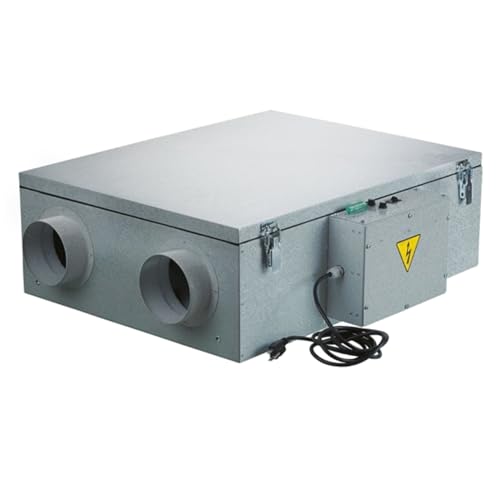
A whole house ventilation system is a mechanical network of fans, filters, and ducts designed to exchange indoor air with outdoor air across your entire home. Unlike a single bathroom exhaust fan that works only in one room, a whole house system is integrated into the home's ductwork or installed as a dedicated ventilation circuit, providing consistent air exchange in bedrooms, living areas, and sometimes kitchens and bathrooms as well.
The core function is simple: bring fresh air in, push stale air out, and do it efficiently. More sophisticated systems add filtration to remove pollen and particulates, and recovery cores that transfer heat or moisture between the two air streams so your heating and cooling equipment does not have to work as hard. That efficiency is why these systems are increasingly paired with modern whole house air conditioning systems in tightly built homes.
Ventilation is closely related to humidity control. If your home feels clammy even with the AC running, a ventilation system alone may not solve it; you may also need to evaluate a whole house dehumidifier or understand who to call for high humidity in the house. Conversely, in very dry climates a whole house humidifier can complement the ventilation strategy.
The Main Types of Whole House Ventilation Systems
There are four broad categories of mechanical ventilation, each with a distinct approach to moving air. Understanding the trade-offs is the most important step before choosing a system.
Exhaust-Only Ventilation
One or more fans draw stale air out of the home, typically from bathrooms, kitchens, and laundry areas. Fresh air enters through planned passive inlets or natural leakage. Simple and cost-conscious within its tier, but less controlled in tight homes.
Supply-Only Ventilation
A fan pushes filtered outdoor air into the home while stale air exits through exhaust paths. Filtration is a strength, but without a recovery core the incoming air can add heating or cooling load in extreme climates.
Balanced Ventilation (HRV/ERV)
Two synchronized fans supply and exhaust equal air volumes. A heat recovery ventilator (HRV) transfers heat; an energy recovery ventilator (ERV) transfers heat and moisture. This is the most controlled approach for airtight, high-performance homes.
Fresh Air Intake with HVAC Integration
A dedicated duct introduces outdoor air into the return side of the HVAC system, where it is filtered and conditioned before distribution. A practical option when central ductwork already exists and full balanced ventilation is not feasible.
For homes without ductwork, a whole house ductless heating and cooling system can be paired with a compact ERV or HRV that uses short, flexible duct runs, preserving the flexibility of a ductless layout while adding controlled ventilation. If you also plan a broader HVAC upgrade, reviewing whole house heating and air conditioning systems helps you plan the ventilation component as part of one coordinated design rather than an afterthought.
HRV vs ERV: Which Recovery Core Fits Your Climate?
Both heat recovery ventilators and energy recovery ventilators are balanced systems with a core that tempers incoming air. The difference is what the core transfers. An HRV transfers sensible heat only. An ERV transfers both heat and moisture, which makes it a better fit for humid summers or homes where winter dryness is a concern. In cold climates, HRVs are often the practical choice because frost control is simpler and the home's heating system already manages humidity.
| Feature | HRV (Heat Recovery) | ERV (Energy Recovery) |
|---|---|---|
| Transfers heat | Yes | Yes |
| Transfers moisture | No | Yes |
| Best climate fit | Cold and dry winters | Humid summers, mixed climates |
| Humidity control | Relies on the home's HVAC | Balances indoor moisture year-round |
| Frost management | Simple, well established | Requires careful setup |
| Typical tier placement | Premium tier | Premium tier |
Neither core type is universally superior. The right choice comes down to your climate, your home's air-sealing level, and whether moisture control is a primary concern. Homes that already struggle with dampness may benefit from combining an ERV with targeted humidity management, similar to how a whole house dehumidifier is sized to the home's latent load.
Key Benefits of a Whole House Ventilation System
- Consistent indoor air quality: Continuous air exchange dilutes pollutants, allergens, and cooking odors instead of letting them accumulate.
- Moisture control: Removing humid air helps prevent condensation, mold growth on cold surfaces, and musty smells in closets and basements.
- Energy-conscious operation: Recovery cores capture heat or coolth from outgoing air, so fresh air arrives closer to room temperature than it would with a simple fan.
- Quiet operation: Premium balanced systems run at very low sound levels, unlike a continuously running bathroom fan.
- Improved comfort in airtight homes: Modern construction traps air effectively; ventilation restores the fresh-air component that older, leakier homes had by accident.
- Filtration of incoming air: Supply-side filters capture pollen, dust, and particulates before they reach living spaces, complementing a whole house air purifier if you have one.
Ventilation also works alongside other air-quality equipment. If your goal is comprehensive filtration, a whole house air purifier handles fine particulates while the ventilation system handles air exchange. If you want to simplify controls across your equipment, a WiFi HVAC thermostat can help coordinate ventilation scheduling with heating and cooling cycles.
How to Size a Whole House Ventilation System
Ventilation capacity is measured in cubic feet per minute (CFM). Undersizing leaves stale air in place; oversizing can dry out the home and waste energy. Most residential designs follow recognized standards such as ASHRAE 62.2, which sets a continuous ventilation rate based on floor area and number of bedrooms.
As a practical starting point for planning, calculate roughly 0.01 CFM per square foot of conditioned floor area, plus about 7.5 CFM per person for a baseline occupancy assumption. A 2,000 square foot home with four occupants, for example, lands in the neighborhood of 50 to 60 CFM continuous, before adjusting for local code amendments. Always confirm the final number with a qualified HVAC designer or your local authority, because code editions and climate zones change the calculation.
Sizing also depends on the distribution strategy. If ventilation air is delivered to bedrooms and living spaces and exhausted from bathrooms and kitchens, duct design becomes as important as fan capacity. Long, restrictive duct runs lower delivered CFM even when the fan is rated correctly, so static pressure and duct layout deserve careful attention.
Installation: What the Process Actually Involves
Installation complexity varies sharply by system type. A single exhaust fan retrofit is a modest job; a balanced ERV with dedicated ductwork is closer to a small HVAC project. The steps below describe a typical balanced system installation.
- Site assessment: Identify the ERV/HRV mounting location, usually near an exterior wall in a utility room, attic, or basement, and plan the shortest practical duct routes.
- Duct design: Lay out supply runs to bedrooms and living areas, and exhaust runs from bathrooms, kitchens, and laundry. Insulate ducts that pass through unconditioned spaces.
- Penetrations: Cut exterior wall openings for the intake and exhaust hoods, positioned to prevent cross-contamination and keep intake away from exhaust, dryer vents, and vehicle exhaust.
- Core unit mounting: Secure the unit level and accessible for filter and core service. Vibration isolation pads reduce noise transmission.
- Ducting and sealing: Connect insulated flexible or rigid duct, seal all joints, and balance airflow using dampers after the system is energized.
- Electrical and controls: Wire the unit to a dedicated circuit and install the wall control or smart control interface.
- Commissioning: Measure delivered airflow at each terminal, adjust balancing dampers, and verify the system meets the design ventilation rate.
Permitting requirements vary by jurisdiction. Whole house ventilation added during new construction is usually reviewed with the HVAC permit, while a retrofit may or may not require a separate permit depending on local rules. Check with your building department before cutting wall penetrations.
Maintenance That Keeps Ventilation Working
A ventilation system is only as good as its upkeep. Filters clogged with dust reduce airflow and can force the fan to work harder; dirty cores lose recovery efficiency. The routine below covers the essentials.
- Inspect filters every one to three months depending on local dust and pollen levels; replace or clean according to the manufacturer's schedule.
- Clean the recovery core once or twice a year by rinsing or vacuuming per instructions, and let it dry fully before reinstalling.
- Clear exterior hoods of leaves, lint, and snow so intake and exhaust remain unobstructed.
- Check condensate drainage on ERV models, since moisture transfer can produce condensate that must drain properly.
- Verify airflow seasonally at registers and exhaust grilles; a noticeable drop often signals a clogged filter or a disconnected duct.
- Schedule professional service periodically for fan inspection, control calibration, and duct cleaning if conditions warrant it.
Homes that also run dedicated moisture equipment should review their maintenance plan together. Keeping an eye on humidity is part of the same routine, and understanding who to call for high humidity in the house helps you know when to escalate from DIY checks to professional diagnosis.
How to Choose the Right System for Your Home
Choosing a system starts with three questions: how airtight is the home, what is the climate, and what duct infrastructure already exists? Homes built to modern energy codes usually benefit most from balanced ventilation, while older leaky homes may see adequate results from a simpler exhaust strategy, though that gap narrows as homes are air-sealed during renovations.
Budget decisions should be framed by tier rather than headline figures, because the meaningful comparison is lifecycle performance. An entry-level exhaust fan costs the least to install but provides the least control. A mid-tier fresh-air intake integrated with existing ductwork balances simplicity and filtration. A top-tier balanced ERV with smart controls is the premium option, delivering the most consistent results in tight, climate-stressed homes. Premium materials and durable construction in the core unit tend to reduce long-term service needs, which matters because these systems run continuously for years.
If your broader plan includes replacing cooling equipment, it is worth reviewing the related whole house air conditioning systems overview so ventilation, filtration, and temperature control are designed as one system. Homes without ducts can consider a whole house ductless heating and cooling system combined with a compact recovery ventilator. Where humidity is the dominant problem, evaluate a whole house dehumidifier alongside ventilation rather than instead of it.
Frequently Asked Questions
What is a whole house ventilation system?
A whole house ventilation system is a mechanical setup that continuously replaces stale indoor air with fresh outdoor air across the entire home. It typically uses ductwork, fans, and filters, and may include heat or energy recovery cores to reduce the load on your heating and cooling equipment.
Do I need a whole house ventilation system?
Homes built or renovated for airtightness often need mechanical ventilation to control moisture, pollutants, and stale air. If you notice persistent condensation, odors, or stuffiness, a whole house system can help, especially in modern tightly sealed houses.
What is the difference between HRV and ERV?
Both HRVs and ERVs transfer heat between outgoing and incoming air. An ERV also transfers moisture, which helps keep indoor humidity balanced in humid or very dry climates. HRVs are often preferred in cold climates where humidity control is less critical.
How is ventilation capacity measured?
Whole house ventilation capacity is usually measured in cubic feet per minute (CFM). Sizing depends on home volume, occupancy, and local code requirements, often following standards such as ASHRAE 62.2.
Can a ventilation system help with high humidity?
Ventilation helps by replacing humid indoor air with outdoor air, but its effectiveness depends on outdoor conditions. In humid climates, pairing ventilation with a dehumidifier is often the more reliable approach.
Ready to Compare Ventilation Systems?
Review the recommended whole house ventilation products below and match a system to your home's size, climate, and duct situation.
View Recommended Systems