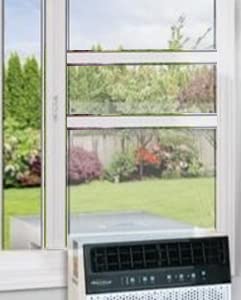
Window AC for Side Sliding Windows: The Complete Buyer's Guide
Everything you need to know about choosing, installing, and running a window air conditioner in a side sliding window — from unit types and sizing to brackets, sealing, and maintenance.
Side sliding windows — also called horizontal sliders — open from the side rather than sliding up and down. They are common in modern apartments, condos, and homes with contemporary architecture. The problem is that almost every window air conditioner on the shelf is designed for a double-hung window that opens vertically. If you have tried to fit a standard unit into a side slider, you already know it does not work: the unit is wider than it is tall, while the opening is taller than it is wide.
The good news is that a dedicated category of air conditioners exists for exactly this situation. Below, you will learn which units work, how to size them correctly, how to install them safely, and how to keep them running efficiently for years.
Why a Standard Window AC Does Not Fit a Side Sliding Window
A conventional window air conditioner is built around a horizontal chassis: roughly 18 to 25 inches wide and 12 to 16 inches tall. It is designed to rest on the bottom sill of a double-hung window, with the window sash closing down on top of the unit. The opening it needs is wider than it is tall.
A side sliding window is the opposite. The opening is taller than it is wide — typically 15 to 20 inches wide and 20 to 30 inches tall — and the sliding panel moves horizontally. A standard unit simply cannot be seated in that opening, and forcing it creates serious safety and sealing problems.
If you are still exploring which cooling format suits your home, our overview of air conditioner types explains how each style is matched to a specific window or wall opening.
The Right AC Type for Side Sliding Windows
Two product categories are engineered for horizontal window openings:
1. Casement Window Air Conditioners
Casement units are purpose-built for side sliding and casement windows. Their chassis is tall and narrow — often around 14 to 16 inches wide and 20 to 24 inches tall — so it slots into the vertical opening. They usually ship with a mounting bracket that hangs the unit from the window frame or anchors it to the exterior wall. This is the most straightforward and safest option for most side slider owners.
2. Horizontal Window Air Conditioners
Some manufacturers label these units "horizontal window ACs" or "slider window ACs." Functionally they are the same idea as casement units: a narrow footprint that fits the side opening. The terminology varies by brand, so check the product specifications for the actual dimensions of the chassis rather than relying on the label alone.
If your window situation is different — for example, you need a unit that can be moved between rooms — a portable air conditioner is an alternative worth considering, though it uses a hose vent rather than sitting in the window frame.
How to Size a Side Sliding Window AC
Sizing works the same way as for any room air conditioner: match the cooling capacity in BTU to the square footage of the room, then adjust for sun exposure, ceiling height, and occupancy.
As a starting point, the common rule of thumb is roughly 20 BTU per square foot for a standard room. That means:
- Up to 150 sq ft: 5,000 – 6,000 BTU (entry-level capacity)
- 150 – 250 sq ft: 8,000 – 10,000 BTU (mid-range capacity)
- 250 – 400 sq ft: 12,000 – 14,000 BTU (high-end capacity)
- 400 – 550 sq ft: 15,000 – 18,000 BTU (top-tier capacity for a single window unit)
Adjust upward if the room gets direct afternoon sun, has high ceilings, or is regularly occupied by more than two people. Adjust downward if the room is heavily shaded or well insulated. Oversizing is a real problem: a unit that is too powerful will cool the air quickly, shut off, and leave the room humid and clammy. If you are unsure about the right capacity, our guide to sizing an air conditioner walks through the calculation in more detail.
For a more granular breakdown, see our capacity guides for 5,000–6,000 BTU units, 8,000–10,000 BTU units, and 12,000–14,000 BTU units.
Installation: Step by Step for a Side Sliding Window
Installing a casement or horizontal unit in a side slider is a different process from dropping a standard unit into a double-hung window. Follow these steps carefully.
Step 1: Measure the opening precisely
Measure the width and height of the clear opening with the window fully open. Also measure the depth of the window frame and the distance from the interior sill to the exterior wall surface. Casement ACs often need a specific minimum depth to sit safely. Write these numbers down and compare them to the product specifications before purchasing.
Step 2: Install the support bracket
This is the most important step and the one most often skipped. A casement AC hangs in the window opening and cantilevers outward, which puts significant leverage on the frame. A proper exterior bracket — usually supplied with the unit or sold as a matching accessory — bolts to the exterior wall or window frame and carries the weight. Never rely on the window frame alone to hold the unit. If you are not comfortable drilling into the exterior wall, hire a professional through a window AC installation service.
Step 3: Seat the unit in the opening
With the bracket in place, lift the unit into the opening so that the indoor section faces the room and the outdoor section protrudes beyond the exterior wall. Most casement units have a flange or sill that rests on the bracket. Check that the unit sits level — a slight backward tilt (about 1/4 inch) helps condensate drain outdoors, but too much tilt stresses the frame.
Step 4: Close and lock the sliding panel
Slide the moving panel of the window until it meets the side of the AC chassis. Most units include a filler panel or accordion seal that bridges the remaining gap. Lock the window if possible, and add a window lock or a wooden dowel in the track to prevent the panel from being forced open from outside.
Step 5: Seal the gaps
Air leaks around the unit waste energy and let humidity in. Use weatherstripping foam, a window AC insulation kit, or closed-cell foam strips to seal the perimeter. Pay particular attention to the top and bottom of the opening, where the vertical gap is often widest. A well-sealed installation can noticeably improve cooling performance.
Casement AC vs. Standard Window AC vs. Portable AC
The table below compares the three options most people consider for a side sliding window. It focuses on fit, installation effort, and efficiency tier rather than any monetary figures.
| Category | Fits Side Slider? | Installation Effort | Efficiency Tier | Best For |
|---|---|---|---|---|
| Casement / horizontal window AC | Yes — purpose-built | Moderate (requires bracket) | Mid-range to high-end tier | Permanent cooling in a bedroom or living room with a side slider |
| Standard double-hung window AC | No — will not fit safely | Low (for vertical windows) | Entry-level to mid-range tier | Double-hung windows only |
| Portable AC with window kit | Yes, with a hose adapter | Low (no bracket) | Essential tier to mid-tier | Renters or rooms where a fixed installation is not allowed |
If you are comparing a fixed window unit against a movable option, our article on portable air conditioner options covers the trade-offs in more depth. For rooms where noise matters, a quiet air conditioner is worth prioritizing — casement units tend to run a little louder than premium mini-splits, so check the decibel rating in the specifications.
Energy Efficiency: What to Look For
Window AC efficiency is measured by the CEER rating (Combined Energy Efficiency Ratio) under current DOE rules. Higher numbers mean more cooling per unit of electricity. When comparing casement units, look for models with a CEER that is competitive within their capacity class rather than chasing an absolute number — casement units as a category tend to sit slightly below the most efficient standard window units simply because of their compact chassis.
Features that improve real-world efficiency include:
- Inverter compressor: modulates speed instead of cycling on and off, which holds temperature steadier and uses less energy in the long run. See our guide to inverter AC technology.
- Programmable or smart thermostat: lets you schedule cooling around your routine. Our article on smart AC thermostats explains the options.
- ENERGY STAR certification: indicates the unit meets the current federal efficiency threshold for its class.
- Eco mode and sleep mode: small features that add up over a full cooling season.
For a broader look at how efficiency ratings work, read our explainer on SEER and CEER ratings and our overview of energy-efficient HVAC systems.
Maintenance Tips for a Sliding Window AC
A casement unit in a side slider is exposed to the same wear as any window AC, plus a few extra considerations because of how it is mounted.
- Clean or replace the filter every two to four weeks during peak season. A clogged filter is the most common cause of weak cooling. If you notice the unit running but not cooling, check the filter first — our guide to window AC running but not cooling covers the diagnostic steps.
- Inspect the exterior bracket each season. Bolts can loosen over time. Tighten them and check for rust or corrosion on the bracket and the unit's base.
- Clean the coils annually. Dust and pollen build up on the outdoor coil and reduce heat transfer. Our article on cleaning AC coils shows how to do it safely.
- Re-seal the window opening at the start of each cooling season. Weatherstripping degrades in sunlight and temperature swings.
- Check the drain path. Condensate should run out of the unit and away from the wall. A blocked drain can cause water to pool inside the room or stain the exterior wall.
If something goes wrong and the unit needs service, our guide to window air conditioner repair explains which problems are DIY-friendly and which need a technician. For persistent issues, a heating and cooling contractor can diagnose the unit properly.
Common Mistakes to Avoid
Most problems with side slider AC installations trace back to a handful of avoidable errors:
- Buying a standard window unit and forcing it in. It will not seal, it may fall, and it voids the warranty. Buy a casement or horizontal unit.
- Skipping the exterior bracket. The window frame is not designed to carry a cantilevered load. Use the bracket.
- Oversizing the unit. A unit that is too powerful short-cycles, leaving the room humid. Match BTU to room size.
- Leaving gaps unsealed. Even a one-inch gap around the chassis can let in enough hot air to make the unit work much harder than necessary.
- Ignoring the window lock. A side slider with an AC installed is an entry point unless you secure the moving panel.
Frequently Asked Questions
Can a regular window air conditioner fit a side sliding window?
No. A standard vertical window AC is designed for double-hung windows and will not fit a side sliding window without modification. You need a specialized horizontal or casement window AC unit that is designed for side-to-side window openings.
What type of air conditioner works best for side sliding windows?
Casement window air conditioners, also known as horizontal window ACs, are specifically engineered for side sliding windows. They are taller than they are wide, allowing them to fit into the vertical opening of a sliding window.
Do I need a special bracket for a sliding window AC?
Yes, most sliding window AC units require a support bracket that attaches to the exterior wall or window frame. This bracket safely carries the weight of the unit and prevents it from tipping, especially since the window opening is oriented differently than a double-hung window.
How do I seal gaps around a window AC in a sliding window?
Use the accordion-style side panels that come with the unit to fill the horizontal gap. For additional sealing, apply weatherstripping foam or a window AC insulation kit around the frame to prevent cool air from escaping and warm air from entering.
Can I install a side sliding window AC myself?
Many homeowners can handle the installation with a helper, provided they are comfortable drilling the exterior bracket into the wall. If the window is on an upper floor, the wall material is unfamiliar, or you are unsure about the bracket rating, hire a professional installer.
Is a casement AC as efficient as a standard window AC?
Casement units are generally competitive within their class, though the most efficient standard window units may edge them out slightly because of their larger chassis. Look for ENERGY STAR certification and an inverter compressor to get the best efficiency available in the casement category.
Ready to Choose the Right Unit?
Compare casement and horizontal window air conditioners built for side sliding windows in the recommended products section below. Match the chassis dimensions to your window opening, confirm the bracket is included, and check the CEER rating before you decide.