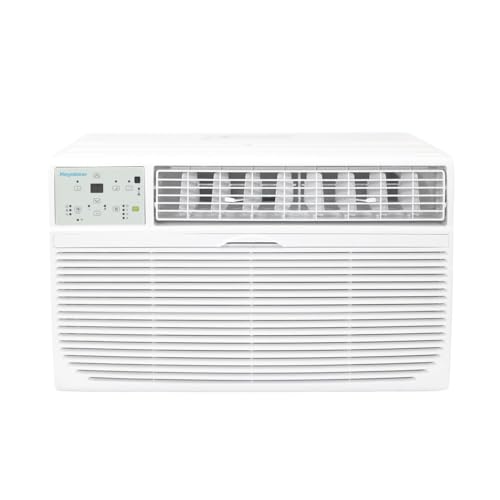
10000 BTU Through the Wall Air Conditioner: The Complete Buyer's Guide
A 10000 BTU through the wall air conditioner is one of the most practical cooling solutions for medium-sized rooms. Unlike window units, it is installed permanently into an exterior wall, freeing up window space, improving security, and delivering quieter, more consistent cooling. This guide explains everything you need to know before choosing one: sizing, installation requirements, efficiency ratings, maintenance, and the key features that separate entry-level units from premium models.
Start With SizingWho this guide is for: If you have already decided that a through the wall air conditioner fits your room, this page helps you confirm the right capacity, understand installation realities, and choose between entry-level and premium models with confidence.
What Room Size Does 10000 BTU Cool?
A 10000 BTU through the wall air conditioner is generally suited for rooms between 350 and 450 square feet. However, square footage alone is not enough. The actual cooling load depends on several factors that increase or decrease the required capacity:
- Ceiling height: Rooms taller than 8 feet need more capacity.
- Insulation quality: Poorly insulated walls and attics increase heat gain.
- Sun exposure: South- and west-facing rooms with large windows need more BTU.
- Occupants and appliances: Each person and heat-generating device adds load.
- Climate: Hotter, more humid climates push the unit harder.
For a more precise estimate, use a BTU calculator based on room dimensions and conditions. If your room is near the upper limit of this range or has heavy sun exposure, consider stepping up to a larger capacity rather than forcing a 10000 BTU unit to run continuously.
Related reading: 10000 BTU air conditioner room size guide and 10000 BTU cooling area explained.
Why Choose a Through the Wall Unit Over a Window Unit?
Through the wall air conditioners are installed inside a permanent sleeve set into an exterior wall. This design offers several advantages over window-mounted units:
- Frees up window space: Windows remain usable for light and ventilation.
- Better security: No window opening is left accessible to intruders.
- Quieter operation: The wall sleeve dampens vibration and sound.
- Cleaner appearance: The unit sits flush with the wall rather than protruding into the room.
- Long-term stability: Once installed, the sleeve allows easy unit replacement without cutting the wall again.
The trade-off is that installation is a construction project rather than a plug-in task. You need an exterior wall, proper framing, electrical wiring, and a watertight seal. For rooms without suitable windows or where aesthetics matter, the through the wall design is often the better investment.
If you are still comparing form factors, see space-saving air conditioner options and PTAC units, which are common in hotels and apartments.
Key Features to Evaluate in a 10000 BTU Through the Wall AC
Not all 10000 BTU through the wall units are built the same. When comparing models, focus on these categories:
Efficiency Rating
Look for the SEER2 rating, which reflects cooling efficiency under current DOE test standards. A higher SEER2 means lower energy consumption over the unit's life. For a 10000 BTU through the wall unit, a SEER2 of 15 or higher is a solid target. Also check the EER2 rating for peak-load efficiency, especially in hot climates.
Heating Capability
Many through the wall units offer heating in addition to cooling. There are two common approaches: electric heat strips, which are simple but energy-intensive, and heat pumps, which move heat rather than generate it and are more efficient in mild climates. If you need year-round comfort, a heat pump model is the better choice.
See also: wall air conditioner with heat and 10000 BTU window air conditioner with heat for comparable features in other form factors.
Noise Level
Through the wall units are generally quieter than window units because the wall sleeve absorbs vibration. Still, check the decibel rating. Premium models often use insulated sleeves, variable-speed fans, and better compressor mounts to reduce noise further.
Smart Controls and Thermostat Compatibility
Modern through the wall units increasingly include Wi-Fi control, programmable schedules, and compatibility with external thermostats. If smart home integration matters to you, confirm the unit supports the control method you prefer. A dedicated thermostat guide can help you understand compatibility.
Installation Requirements
Check the required wall opening dimensions, sleeve size, and electrical requirements. Most 10000 BTU through the wall units run on 115V or 230V circuits, and the circuit must be dedicated. Confirm the amperage and breaker size before installation. A single phase to three phase converter is not typically needed for residential units, but commercial installations may require different electrical planning.
Tier Comparison: Entry-Level vs Mid-Range vs Premium
To help you position models without relying on prices, here is a tier-based comparison of what to expect across the market:
| Tier | Typical Characteristics | Best For |
|---|---|---|
| Entry-level | Basic mechanical controls, single-speed fan, standard efficiency, electric heat strip option | Rental units, seasonal rooms, straightforward replacement in an existing sleeve |
| Mid-range | Digital controls, programmable timer, higher SEER2, quieter fan, remote included | Primary bedrooms, home offices, long-term residential use |
| Premium | Heat pump capability, variable-speed compressor or fan, Wi-Fi control, insulated sleeve, low noise | Year-round comfort, smart homes, rooms where quiet operation matters |
Entry-level models are a solid choice when the unit will be used seasonally or when replacing a unit in an existing sleeve. Mid-range models offer the best balance of features and efficiency for most homeowners. Premium models make sense when you need heating, smart control, or the quietest possible operation.
Installation: What to Expect
Installing a through the wall air conditioner is not a DIY-friendly project for most homeowners. The process typically involves:
- Selecting the wall location: An exterior wall with proper clearance and structural support.
- Cutting the opening: Precise dimensions matching the sleeve, with framing to support the unit.
- Electrical work: A dedicated circuit, correct voltage, and proper grounding, usually by a licensed electrician.
- Setting the sleeve: The sleeve is installed and sealed to prevent water intrusion and air leaks.
- Mounting the unit: The air conditioner slides into the sleeve and is secured and sealed.
Professional installation protects the wall structure, ensures code compliance, and maintains the manufacturer's warranty. For related guidance, see HVAC installation and local heating and air conditioning companies.
Efficiency and Long-Term Operation
A 10000 BTU through the wall unit that runs efficiently will consume less energy over its lifetime. Beyond the SEER2 rating, several habits and features improve long-term efficiency:
- Seal the sleeve and wall opening properly to prevent air leakage.
- Clean or replace the filter regularly, ideally every month during peak season.
- Use programmable schedules or a smart thermostat to avoid cooling empty rooms.
- Keep the outdoor coil clear of debris and vegetation.
- Schedule annual professional service to check refrigerant levels and electrical connections.
Regular HVAC cleaning and service extends the life of the unit and maintains efficiency. If you notice the unit running but not blowing air, see my air conditioner is running but not blowing air for troubleshooting steps.
Through the Wall vs Other Cooling Options
Understanding how a through the wall unit compares to alternatives helps confirm your choice:
- Window air conditioner: Lower installation complexity but blocks a window and is easier to remove or tamper with.
- Portable air conditioner: Flexible placement but generally less efficient and requires venting through a window or wall.
- Mini-split system: Quieter and more efficient, but requires refrigerant lines and a more involved installation.
- Central air conditioning: Best for whole-home cooling but requires ductwork and a much larger investment.
For a broader comparison, see whole house AC system and mini split air conditioner without heat pump. If you are considering a ductless option, single zone ductless mini split air conditioning system is a useful reference.
Maintenance Checklist for Through the Wall Units
Keep your 10000 BTU through the wall air conditioner running reliably with this seasonal checklist:
- Monthly: Clean or replace the air filter.
- Seasonal: Inspect the sleeve seal and caulking for cracks or water intrusion.
- Seasonal: Clear debris from the outdoor coil and around the exterior grille.
- Annual: Have a technician check refrigerant charge, electrical connections, and drain pathways.
- Annual: Verify the thermostat or control settings are accurate.
Frequently Asked Questions
What size room does a 10000 BTU through the wall air conditioner cool?
Typically 350 to 450 square feet, depending on ceiling height, insulation, sun exposure, and occupancy. Rooms at the upper end of this range or with heavy heat gain may benefit from a larger capacity.
Is a 10000 BTU through the wall air conditioner better than a window unit?
It is better for rooms without suitable windows, for security-conscious homeowners, and for anyone who wants quieter operation and a cleaner appearance. Window units are simpler to install and remove.
Does a through the wall air conditioner require professional installation?
Yes, in most cases. Cutting a wall opening, framing, electrical wiring, and sealing require professional skills and often permits. Improper installation can cause water damage, air leaks, or electrical hazards.
What SEER rating should I look for in a 10000 BTU through the wall unit?
Aim for SEER2 of 15 or higher. Higher ratings indicate better efficiency and lower long-term energy use.
Can a 10000 BTU through the wall air conditioner provide heating?
Many models offer heating via electric heat strips or a heat pump. Heat pump models are more efficient for heating in mild climates.
Ready to Compare Models?
Now that you understand sizing, installation, efficiency, and features, you can compare 10000 BTU through the wall air conditioners with confidence. Use the product recommendations below to explore models that match your room and priorities.
View Recommended Models