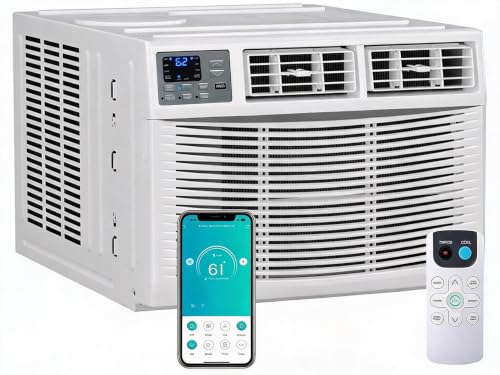
110 Volt Air Conditioner Heater Window Unit
Your complete guide to choosing, installing, and getting the most from a 110 volt window AC with built-in heating — delivering year-round comfort from a standard household outlet.
START THE GUIDEWhy this unit matters: A 110 volt air conditioner heater window unit combines cooling and supplemental heating in one compact appliance that plugs into a standard NEMA 5-15 outlet. For renters, small apartments, home offices, and rooms without ductwork, it is one of the most practical year-round comfort solutions available today.
What Is a 110 Volt AC Heater Window Unit?
A 110 volt air conditioner heater window unit is a window-mounted appliance that cools a room during hot weather and provides heat during cooler months — all powered from a standard 110–115 volt household circuit. Unlike traditional through-the-wall units that may need 220–240 volts, these models are designed for plug-and-play convenience. You will sometimes see them labeled "115 volt window air conditioner with heat," which refers to the same nominal voltage class in North American residential wiring.
The heating function typically comes from one of two designs: a heat strip (electric resistance element) that warms air as it passes through, or a reverse-cycle heat pump that reverses refrigerant flow to move heat indoors. Heat-strip models are simpler and often entry-level to mid-range, while reverse-cycle models sit in the premium tier and deliver more efficient heating in mild-to-moderate climates. For a broader look at voltage differences, see our comparison of 110V vs 240V air conditioners.
How a 110 Volt Window AC with Heat Works
In cooling mode, the unit pulls warm indoor air across an evaporator coil, removes heat and humidity, and blows cooled air back into the room while rejecting heat outdoors through the condenser. In heating mode, the process depends on the design:
Heat Strip Models
An electric resistance element heats air as the fan pushes it into the room. These are straightforward, reliable, and common in entry-level and mid-range combo units. They are best suited for supplemental heating during transitional seasons or mild winters.
Reverse-Cycle Heat Pump Models
A reversing valve flips refrigerant flow so the unit absorbs heat from outdoor air and releases it indoors. These premium-tier models are more efficient for sustained heating and are ideal for moderate climates where winter temperatures rarely drop below freezing for extended periods.
Understanding the underlying mechanics helps you choose the right tier for your climate and usage pattern. For a deeper technical walkthrough, explore our guide on window and wall AC units with heat.
Key Benefits of 110 Volt Combo Units
- Standard outlet compatibility: No electrician visit or rewiring is needed — the unit plugs into a typical grounded household outlet.
- Year-round comfort: One appliance handles summer cooling and cool-season heating, reducing clutter and simplifying room setup.
- Renter-friendly installation: Window mounting is reversible and does not require permanent structural modifications.
- Zone control: Cool or heat only the room you are using instead of conditioning the entire home.
- Compact footprint: Modern designs fit standard double-hung windows and leave floor space free.
- Simple operation: Most models include remote controls, programmable timers, and sleep modes for convenience.
Sizing: Matching BTU to Your Room
Capacity is expressed in British Thermal Units (BTU). Choosing the right capacity is the single most important decision for comfort and efficiency. An undersized unit runs constantly and struggles on hot days; an oversized unit cools too quickly without removing humidity, leaving the room feeling clammy.
| Room Size | Recommended BTU | Typical Use Case | Market Tier |
|---|---|---|---|
| Up to 150 sq ft | 5,000 – 6,000 BTU | Bedroom, small office | Entry-level |
| 150 – 250 sq ft | 8,000 – 10,000 BTU | Living room, studio | Mid-range |
| 250 – 400 sq ft | 12,000 BTU | Large bedroom, open plan | Mid to premium |
| 400 – 550 sq ft | 14,000 – 15,000 BTU | Large living area | Premium tier |
Adjust upward for south-facing windows, poor insulation, or kitchens with heat-generating appliances. For a more precise calculation, use our guide on how to size an air conditioner. If your room is on the larger side, consider a 15,000 BTU 115 volt window air conditioner for extra headroom.
Installation Essentials
Installing a 110 volt AC heater window unit is a manageable DIY project for most homeowners and renters. Follow these steps for a safe, secure fit:
1. Verify the Outlet and Circuit
Confirm the unit's amperage rating and ensure the outlet is on a dedicated circuit capable of handling the load. Most 110 volt units draw 8–12 amps; a 15-amp circuit is typical, but check your breaker panel and avoid sharing the circuit with high-draw appliances.
2. Prepare the Window Opening
Clean the window track and measure the opening against the unit's dimensions. Most kits include side panels and foam seals to bridge gaps. For sash windows, the included bracket or support kit secures the unit and prevents sagging.
3. Mount with a Slight Outward Tilt
Install the unit level side-to-side but tilted slightly toward the exterior so condensation drains outdoors rather than into the room. Secure the bracket per the manufacturer's instructions and seal gaps with insulation foam.
4. Test and Calibrate
Plug in, power on, and test both cooling and heating modes. Confirm airflow, listen for unusual noise, and check for water intrusion after the first hour of cooling operation. Register the warranty promptly for long-term coverage.
Efficiency and Operating Considerations
Efficiency for 110 volt window units is rated by CEER (Combined Energy Efficiency Ratio) or EER, and increasingly by SEER2 for higher-capacity models. Look for ENERGY STAR certification where available; certified units typically use noticeably less electricity than standard models in the same tier. Keep these factors in mind:
- Heat strip vs heat pump: Heat pumps are more efficient in the long run for heating; heat strips are simpler and best for occasional use.
- Inverter technology: Inverter-driven compressors modulate speed for steadier temperatures and lower energy use — a hallmark of premium-tier models.
- Smart features: Programmable thermostats, Wi-Fi control, and eco modes reduce waste by aligning operation with occupancy. Learn more about wireless air conditioner thermostats.
- Maintenance: Clean filters monthly during peak season and inspect coils annually. Our AC service and maintenance guide covers the essentials.
Market Tiers: What to Expect
Entry-Level Tier
Basic cooling and heat-strip heating, mechanical or simple digital controls, and essential features. Well-suited for occasional use in small rooms.
Mid-Range Tier
Better airflow design, remote control, programmable timers, and improved seals. A solid choice for daily use in bedrooms and home offices.
Premium Tier
Inverter compressors, reverse-cycle heat pumps, Wi-Fi control, and quieter operation. Feature-rich for its class and efficient in the long run.
High-End Tier
Top-tier efficiency ratings, advanced filtration, and smart-home integration. A worthwhile investment for year-round primary-room comfort.
Common Mistakes to Avoid
- Oversizing for the room: Leads to short cycling and poor humidity control. Match BTU to square footage and adjust for sun exposure.
- Skipping the support bracket: Window units are heavy; proper bracketing protects the window frame and prevents falls.
- Ignoring the circuit load: Sharing a circuit with a microwave or space heater can trip breakers. Use a dedicated outlet where possible.
- Blocking airflow: Keep curtains and furniture clear of intake and exhaust vents for efficient operation.
- Neglecting drainage: Verify the tilt and drain path so water exits outdoors, not into the wall cavity.
If you encounter cooling problems after installation, our troubleshooting resource on AC on but no cold air walks through likely causes. For homes without suitable windows, consider alternatives in our guide to windowless air conditioners.
Who Should Choose a 110 Volt AC Heater Window Unit?
This category fits a specific set of users exceptionally well:
- Renters who cannot modify ductwork or install central systems.
- Apartment dwellers in studios or one-bedroom units needing targeted comfort.
- Home office users who want independent temperature control without conditioning the whole house.
- Owners of older homes without existing ducts, especially in moderate climates.
- Seasonal users who need cooling in summer and supplemental warmth in shoulder seasons.
If your window configuration is unusual, explore our guide on air conditioners for small vertical windows. For through-the-wall mounting options, see 110 volt through-the-wall air conditioners.
Ready to Compare Models?
Explore recommended 110 volt air conditioner heater window units and find the right fit for your room, climate, and usage pattern.
VIEW RECOMMENDED UNITSFrequently Asked Questions
Can a 110 volt window air conditioner also provide heat?
Yes. Many 110 volt window units include a built-in heater function, either a heat strip or a reverse-cycle heat pump. These combo units provide cooling in summer and supplemental heating in cooler months from a standard household outlet.
What size room can a 110 volt AC heater window unit cool?
Most 110 volt window units range from 5,000 to 12,000 BTU, comfortably cooling rooms between 150 and 450 square feet depending on insulation, ceiling height, and sun exposure. Always match BTU capacity to your room size for efficient operation.
Does a 110 volt window AC heater unit require a special outlet?
No special outlet is required. A 110 volt (also labeled 115 volt) unit plugs into a standard NEMA 5-15 grounded household outlet. However, it should be on a dedicated circuit rated for the unit's amperage to prevent tripping breakers.
Is a heat strip in a window unit efficient for winter heating?
Heat strips are effective for supplemental or spot heating in mild climates but consume more electricity than heat pumps. For occasional chilly nights or transitional seasons, a heat strip is convenient; for sustained cold weather, a reverse-cycle heat pump model is more efficient.
How do I install a 110 volt AC heater window unit?
Installation typically involves securing the included mounting bracket or support kit in a double-hung window, setting the unit level with a slight outward tilt for drainage, sealing gaps with insulation foam, and plugging into a grounded outlet. Most models can be installed by two people in under an hour.
What is the difference between 110 volt and 115 volt window AC units?
In practice, they are the same class of residential appliance. "110 volt" and "115 volt" both refer to the nominal North American household voltage range (typically 110–120 volts). Manufacturers use the labels interchangeably, and a unit rated for 115 volts works fine on a standard 110–120 volt outlet.