
15,000 BTU 115 Volt Window Air Conditioner: The Complete Guide
Everything you need to know before choosing a high-capacity 115V window unit for large rooms, open-plan living areas, and hot climates — coverage, electrical requirements, efficiency, installation, and the models worth shortlisting.
Explore Recommended UnitsWhy this capacity class matters: A 15,000 BTU window air conditioner sits in the high-capacity segment of the window AC market. It is the natural step up from 12,000 BTU units and is designed for spaces that a standard bedroom unit simply cannot keep comfortable. Choosing the right model in this class is less about brand loyalty and more about matching capacity, voltage, and electrical infrastructure to your home. This guide walks you through each decision in order.
What Is a 15,000 BTU 115 Volt Window Air Conditioner?
A 15,000 BTU 115 volt window air conditioner is a self-contained cooling unit that installs into a window frame or a purpose-built wall sleeve and runs on standard North American household voltage. The BTU rating describes cooling capacity, while the 115 volt rating describes the electrical supply the unit expects. Together, these two numbers determine how much space the unit can cool and what kind of outlet and circuit it needs.
This capacity class is a practical middle ground between mid-range window units and the largest residential window models. It is powerful enough for a large living room, an open-plan kitchen and dining area, or a master suite, yet it remains a single-piece unit that does not require ductwork, a condenser pad, or professional refrigerant work. That combination of substantial cooling power and straightforward installation is exactly why this class remains popular in older homes, apartments, and rentals where central air is impractical.
Compared with lower-capacity units, a 15,000 BTU model moves noticeably more air and removes more heat per hour, which means it can hold a comfortable temperature in a larger volume rather than merely taking the edge off. Compared with 230 volt models of the same capacity, a 115 volt unit is often the more convenient choice because it can connect to existing wiring rather than requiring a new dedicated high-voltage circuit.
How Much Room Does 15,000 BTU Cool?
As a general starting point, a 15,000 BTU window air conditioner is sized for roughly 700 to 900 square feet. That range is a guideline, not a guarantee. The real answer depends on how much heat your space gains from the outside and from within. Two rooms of identical square footage can need very different capacities if one faces west with unshaded glass and the other is a shaded, well-insulated interior room.
Use the factors below to adjust the baseline range up or down:
- Ceiling height: Standard 8-foot ceilings fit the baseline range. Vaulted or 10-foot-plus ceilings increase the air volume and push you toward the upper end.
- Sun exposure: A west- or south-facing room with large unshaded windows gains significant heat and may need the top of the range or a step above.
- Insulation quality: Older homes with minimal wall and attic insulation lose cool air faster and benefit from more capacity.
- Occupancy: Each person adds body heat. A room that regularly holds several people needs more cooling than the square footage alone suggests.
- Heat-producing appliances: Kitchens, home offices with multiple monitors, and rooms with gaming setups or servers generate extra heat.
- Climate: In consistently hot, humid regions, units run longer and harder, so headroom in capacity is worthwhile.
If your space falls comfortably inside the 700–900 square foot range and the factors above are moderate, a 15,000 BTU unit is a well-matched choice. If several factors stack up, consider whether the space should instead be split into zones or cooled by a different system type. Oversizing is not a safe shortcut: a unit that is too large cools the air quickly but runs short cycles, which leaves the room feeling clammy and wears on the compressor over time.
115 Volt Electrical Requirements: What You Must Check First
The electrical side of this purchase deserves more attention than most buyers give it. A 15,000 BTU 115 volt window air conditioner is a high-draw appliance, and the circuit it connects to is not a detail you can improvise after delivery. Before ordering, confirm three things: the plug type, the circuit rating, and whether the outlet is dedicated.
| Rated Voltage | 115 volts (standard North American household supply) |
|---|---|
| Typical Running Amperage | Approximately 11–14 amps, depending on efficiency and model |
| Recommended Circuit | Dedicated 15-amp minimum; 20-amp circuit preferred for stable long-run performance |
| Common Plug Type | 5-15P (standard grounded) or 5-20P (20-amp, T-slot neutral) depending on model |
| Outlet Requirement | Dedicated outlet on its own breaker; never shared with kitchen, laundry, or workshop loads |
| Extension Cords | Not recommended; if unavoidable, use a heavy-gauge cord rated above the unit's amperage and keep it short |
Because the running amperage is close to the rating of a standard 15-amp circuit, a dedicated breaker is essential. If the unit shares a circuit with a microwave, space heater, or vacuum, nuisance trips are likely and the wiring will run warmer than it should. A 20-amp dedicated circuit gives the compressor comfortable headroom during startup surges, which is when current draw briefly spikes.
If your installation spot lacks a dedicated outlet, factor in the work of adding one before you buy. An electrician can assess your panel capacity, run a dedicated line, and install the correct receptacle. For buyers comparing supply options, our overview of 110V vs 240V air conditioners explains when stepping up to a higher-voltage circuit is the better long-term decision.
115 Volt vs 230 Volt at 15,000 BTU
Both voltage configurations are available in this capacity class, and the right answer depends on your existing wiring more than on the units themselves. The table below summarizes the practical trade-offs.
| Factor | 115 Volt Model | 230 Volt Model |
|---|---|---|
| Installation convenience | Connects to standard household outlets when a dedicated circuit exists | Requires a dedicated 230V circuit and matching receptacle |
| Running amperage | Higher — typically 11–14 amps | Roughly half, because power is delivered at higher voltage |
| Circuit requirements | Dedicated 15A or 20A circuit | Dedicated 230V circuit, installed by an electrician |
| Best fit | Homes with an available dedicated 115V outlet near the window | Homes with existing 230V service or new installations where wiring can be planned |
| Efficiency potential | Good, though high-amperage designs can run warmer | Often slightly better at equivalent capacity due to lower current |
| Portability between rooms | Easier, since standard outlets are widespread | Limited to locations with the correct circuit |
For most buyers replacing an existing window unit, the 115 volt option is the path of least resistance because the wiring is already in place. For new installations or major renovations, planning a 230 volt circuit can pay off in efficiency and electrical headroom. Our guide to 110 volt air conditioner heater window units covers dual-purpose models in more detail if year-round use is part of your plan.
Efficiency Ratings: What to Look For in This Class
Efficiency in window air conditioners is expressed through the CEER rating (Combined Energy Efficiency Ratio), which replaced the older EER metric for these products. A higher CEER means more cooling delivered per unit of electricity consumed. In the 15,000 BTU class, the spread between entry-level and premium models is wide enough to matter over a multi-year ownership period, especially in climates where the unit runs for months.
When comparing models, look for ENERGY STAR certification as a quick filter for above-average efficiency in this category. Also check whether the unit uses a variable-speed or inverter compressor, which modulates output rather than cycling fully on and off. Variable-speed operation improves both comfort and efficiency, particularly in rooms where the cooling load fluctuates through the day.
Efficiency also interacts with sizing. A correctly sized high-efficiency unit will outperform an oversized standard unit in both comfort and energy use, because it runs longer, steadier cycles that dehumidify properly. To understand how efficiency ratings are calculated and compared, see our explainer on what a SEER rating means — the underlying principle of measuring cooling output against energy input applies across system types.
Features Worth Prioritizing
Not every feature on a specification sheet earns its place. In the 15,000 BTU 115 volt segment, the following capabilities tend to have the most practical impact on daily ownership:
- Electronic controls with a remote: Precise temperature setting and scheduling are far easier than with mechanical dials.
- Programmable timer or 24-hour timer: Lets the unit cool the room shortly before you arrive home and shut off automatically.
- Energy Saver mode: Cycles the fan with the compressor to reduce electricity use when the set temperature is reached.
- Sleep mode: Gradually raises the setpoint overnight for comfort and lower overnight consumption.
- Dehumidification mode: Useful in humid climates where moisture, not just heat, is the problem.
- Washable filter with a clean-filter indicator: Simpler maintenance and a visible reminder to keep airflow unrestricted.
- Auto-restart after power interruption: The unit returns to its previous settings after an outage.
- Window installation kit: Side panels, insulation strips, and a support bracket reduce gaps and vibration.
Smart-home connectivity is appearing in this class as well. A wireless air conditioner with app control is convenient for scheduling and remote monitoring, though the core cooling performance remains the priority. If you plan to pair the unit with a central thermostat or a multi-zone setup, our overview of zoned air conditioning explains how individual room units fit into a broader comfort strategy.
Installation Considerations for High-Capacity Units
A 15,000 BTU window air conditioner is heavy — often in the range where two people are needed for safe lifting and placement. Weight is the first practical installation difference from smaller units, but it is not the only one.
Window suitability. Confirm the window opening width and height against the unit's minimum and maximum dimensions. Double-hung windows are the most straightforward fit. Casement and awning windows generally cannot accept a standard window unit without a special bracket or a switch to a different installation method; if your room has a vertical slider, see our guide to an air conditioner for a small vertical window for alternatives.
Support and safety. Large units should sit on a proper support bracket anchored to the exterior wall or window frame, not rely solely on the window sill. Follow the manufacturer's requirement for outward tilt — typically a slight downward slope toward the outside — so condensate drains correctly rather than pooling inside the unit.
Sealing the gap. The installation kit's side panels and foam strips matter more than they appear to. Gaps around the unit let hot outside air in and cool air out, which undermines the extra capacity you paid for. Weatherstripping and a tight accordion panel fit are worth the extra twenty minutes.
Wall sleeves and through-the-wall options. If you prefer a permanent installation, a compatible wall sleeve lets the unit slide in and out for seasonal storage. Our guide to 115 volt through-the-wall air conditioners covers the differences between window and wall-mounted installations in this voltage class.
Electrical verification. Reconfirm the outlet and circuit before lifting the unit into place. Installing a heavy unit only to discover the circuit cannot support it is an avoidable setback.
Market Tiers in the 15,000 BTU 115 Volt Class
Models in this category fall into recognizable tiers based on build quality, feature depth, and engineering. Understanding the tiers helps you decide where your priorities lie without relying on any single specification.
Entry-Level Tier
Straightforward cooling with mechanical or basic electronic controls, standard efficiency, and essential installation hardware. A solid choice when the priority is dependable cooling in a space that does not demand advanced features.
Mid-Range Tier
Electronic controls, remote operation, timers, and energy-saving modes, with better efficiency and quieter operation than the entry tier. Typically the best balance of capability and build quality for most households.
High-End Tier
Variable-speed compressors, higher CEER ratings, refined airflow design, and smart connectivity. Suited to buyers who run the unit heavily and want the lowest long-term energy use and the most consistent comfort.
In practice, a mid-range model usually offers the most sensible balance for a large living area, while the high-end tier makes more sense when the unit will be the primary cooling source for a space used all day. The entry tier remains a reasonable fit for a secondary room or a rental where the unit is replaced or moved periodically.
Maintenance That Protects Performance
A high-capacity unit works harder than a small one, so maintenance habits have an outsized effect on how long it performs at its rated capacity. The essentials are simple and do not require special tools.
- Clean or replace the filter every two to four weeks during heavy use. A clogged filter restricts airflow, forces the compressor to work harder, and can lead to coil icing. Our guide to AC unit filters covers filter types and cleaning routines.
- Inspect and gently clean the outdoor-side condenser coils at the start of each cooling season. Dust, pollen, and lint on the coils reduce heat rejection and efficiency.
- Check the drain path. Confirm condensate flows outward and that the drain hole is clear. Standing water inside the unit invites odor and corrosion.
- Re-seal the window kit each season. Foam strips compress and degrade over time; replacing them keeps the installation airtight.
- Store the unit correctly in the off-season. If you remove it, clean and dry it thoroughly before storing upright in a dry space.
If the unit stops cooling effectively despite clean filters, the issue may be refrigerant-related or a failing component. Our overview of air conditioners running but not cooling walks through the common causes in order of likelihood, and our fan spinning but no cold air guide helps narrow down airflow-versus-refrigeration problems.
Common Mistakes to Avoid
- Ignoring the circuit requirement. Plugging a 15,000 BTU unit into a shared outlet is the most frequent cause of tripped breakers and premature wear.
- Oversizing for the room. A unit that is too large short-cycles, leaving the space humid and the compressor stressed. Match capacity to the adjusted load, not to the largest number available.
- Skipping the support bracket. Large units need external support; relying on the window sill alone risks damage and injury.
- Leaving installation gaps. Poor sealing cancels out much of the unit's cooling advantage.
- Neglecting the filter. The single most common cause of reduced cooling is a filter that has not been cleaned in months.
- Assuming a heat function is included. Cooling-only models are common in this class; confirm before buying if you need warmth.
A Short Pre-Purchase Checklist
- Measure the room and adjust the 700–900 sq ft baseline for sun, insulation, occupants, and heat-producing appliances.
- Confirm the outlet type and that it sits on a dedicated 15A or 20A circuit.
- Measure the window opening and check it against the unit's installation dimensions.
- Decide whether cooling-only or cooling-and-heating is required.
- Compare CEER ratings and ENERGY STAR status within your preferred tier.
- Confirm the installation kit includes side panels, insulation, and a support bracket.
- Plan for two-person lifting and, if needed, a professional bracket installation.
Recommended 15,000 BTU 115 Volt Window Air Conditioners
⚠️ AFFILIATE DISCLOSURE: This website contains affiliate links. As an Amazon Associate, we earn from qualifying purchases. If you make a purchase through these links, we may receive a small commission at no additional cost to you. Read our full affiliate policy.

LG 14,000 Window Air Conditioner, 115V, 700 Sq.Ft., Auto Restart, White | 115V, Remote Control, 3 Cooling and Fan Speeds, Auto-Restart, Electronic Controls, Quiet Operation, Rooms up to 800 Sq.Ft.
Check price on Amazon
Whirlpool 15,000 BTU Window Air Conditioner with Dehumidifier, White | 115V, Remote Control, Auto-Restart, 24H-Timer, for Rooms up to 700 Sq. Ft., Living Room, Bedroom, or Kitchen
Check price on Amazon
Amana 15,000 BTU Window Air Conditioner with 3 Speeds and Timer, White | 115V, Remote Control, 24H Timer, 3-Speed, Auto-Restart, Digital Display, for Bedroom, Kitchen, Living Room
Check price on Amazon
Midea 14,000 BTU Window Air Conditioner with Remote Control | 14,000 BTU window air conditioner for powerful room cooling with convenient temperature control and everyday comfort.
Check price on Amazon
Frigidaire 12,000 BTU Smart Window Air Conditioner with Wi-Fi, Cools Up to 550 Sq. Ft., Remote Control, Quiet Operation, Eco Mode, 3 Fan Speeds, White
Check price on Amazon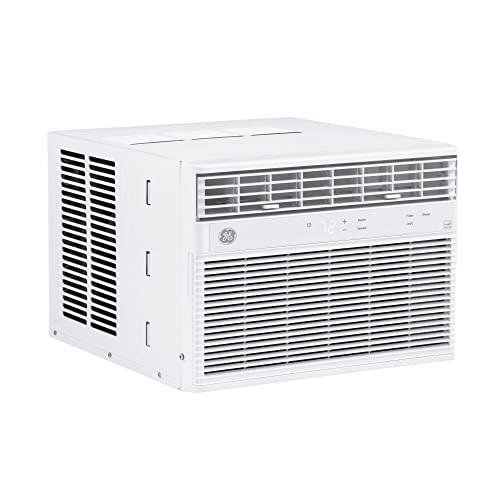
GE Window Air Conditioner 14000 BTU, Wi-Fi Enabled, Energy-Efficient Cooling for Large Rooms, 14K BTU Window AC Unit with Easy Install Kit, Control Using Remote or Smartphone App
Check price on Amazon
Midea 8,000 BTU Smart Inverter Air Conditioner Window Unit with Heat and Dehumidifier – Cools up to 350 Sq. Ft., Energy Star Rated, Quiet Operation, Electronic Controls, Remote Control, White
Check price on Amazon
Midea 10,000 BTU Smart Inverter 115V Window Air Conditioner, 450 Sq Ft | Smart Control With App and Alexa Compatibility, Energy Saving Inverter Technology, Quiet, Remote control, Easy Installation
Check price on AmazonFrequently Asked Questions
What size room does a 15,000 BTU window air conditioner cool?
A 15,000 BTU window air conditioner is generally designed for roughly 700 to 900 square feet, depending on ceiling height, insulation, sun exposure, and occupancy. Use that range as a starting point and adjust upward for west-facing glass, poor insulation, or heavy occupancy, and downward for a shaded, well-sealed interior room.
Can a 15,000 BTU 115 volt window AC run on a standard household outlet?
Yes, when the outlet is on a dedicated 15-amp or 20-amp circuit. The unit typically draws 11 to 14 amps during normal operation, so it should not share a circuit with other high-draw appliances. A dedicated outlet is strongly recommended for stable performance and safety.
Is 115 volt or 230 volt better for a 15,000 BTU unit?
It depends on your existing wiring. A 115 volt model is more convenient when a dedicated standard outlet is already available near the window. A 230 volt model draws roughly half the amperage and can be slightly more efficient, but requires a dedicated 230V circuit installed by an electrician.
Do I need a special outlet or breaker for this class?
Most units use a 5-15P or 5-20P plug and require a dedicated circuit of at least 15 amps, with 20 amps preferred. Because the unit runs continuously in peak heat, sharing a circuit risks nuisance trips. An electrician can verify your panel and wiring before installation.
Does a 15,000 BTU 115 volt window AC come with a heat function?
Some models are cooling-only, while others include a heat pump or electric heating element. If you want year-round use, look explicitly for a model labeled as cooling and heating rather than assuming the feature is standard in this class. For dual-purpose options, see our guide to 115 volt window air conditioners with heat.
How noisy are units in this capacity class?
Noise varies more by tier than by capacity. Entry-level models often produce noticeable fan and compressor noise, while mid-range and high-end models use better fan designs and vibration isolation. If the unit will sit near a seating or sleeping area, prioritize models with published low noise levels and a quiet mode.