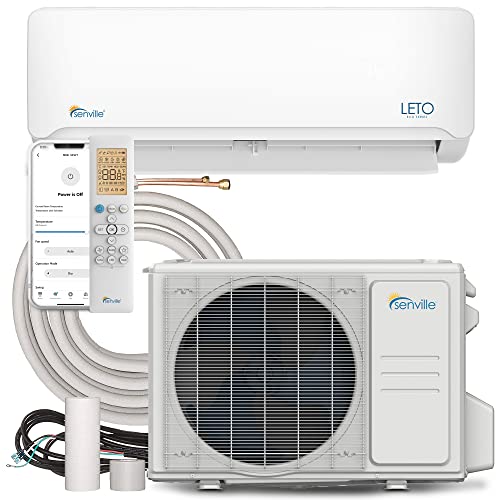
36000 BTU Mini Split: Complete Guide to Powerful Ductless Cooling
Everything you need to know about sizing, efficiency, installation, and choosing the right 3-ton ductless system for large spaces.
START LEARNINGAC Units Guide Philosophy: Well-informed buyers make confident decisions. This guide walks you through the essential facts about 36000 BTU mini splits so you can match the right system to your space, understand efficiency ratings, and plan a smooth installation.
What Is a 36000 BTU Mini Split?
A 36000 BTU mini split is a ductless air conditioning system with a cooling capacity of 36,000 British Thermal Units per hour. This translates to 3 tons of cooling power, placing it in the higher-capacity range of residential ductless systems. Unlike traditional central air conditioners that rely on extensive ductwork, a mini split pairs an outdoor condenser with one or more indoor air-handling units connected by a narrow refrigerant line set.
This configuration makes the 36000 BTU mini split particularly valuable in homes without existing ducts, in additions where extending ductwork is impractical, and in open-concept layouts where a single powerful indoor unit can distribute conditioned air across a large connected area. The system is also available as a heat pump variant, providing both cooling in summer and efficient heating in cooler months.
For readers comparing capacity tiers, our overview of 30,000–36,000 BTU AC units provides additional context on where this size fits within the broader market.
How Much Space Does a 36000 BTU Mini Split Cover?
As a general rule, a 36000 BTU mini split is appropriate for spaces between roughly 1,500 and 2,000 square feet. However, square footage alone is not a reliable sizing method. Several factors influence the actual cooling load:
- Ceiling height: Rooms with ceilings above 8 feet require additional capacity.
- Insulation quality: Poorly insulated spaces lose cooling faster and need more capacity.
- Window area and orientation: Large south- or west-facing windows increase solar heat gain.
- Occupancy and appliance load: Kitchens, home offices with equipment, and frequently occupied rooms generate more internal heat.
- Climate zone: Hotter climates demand more capacity for the same square footage.
A professional load calculation, often referred to as a Manual J calculation, remains the most accurate way to determine whether a 36000 BTU mini split is correctly sized for your specific space. Oversizing a system leads to short cycling, which reduces dehumidification and strains components. Undersizing leaves the space uncomfortable during peak heat. For a broader sizing framework, see our guide on how to size an air conditioner.
Understanding Efficiency Ratings for 36000 BTU Mini Splits
Efficiency is one of the most important considerations when evaluating a 36000 BTU mini split. Higher efficiency translates to lower energy consumption over the life of the system, which matters especially for a unit of this capacity because it draws more power than smaller systems.
Mini splits are rated using SEER (Seasonal Energy Efficiency Ratio), and newer systems are rated under SEER2, which reflects updated testing procedures. A higher SEER or SEER2 rating indicates greater efficiency. Inverter-driven compressors, now common in mid-range and premium mini splits, allow the system to modulate output rather than cycling on and off at full power. This modulation improves comfort, reduces temperature swings, and enhances efficiency in the long run.
For a deeper explanation of efficiency metrics, refer to our articles on energy efficiency ratings (SEER, EER, HSPF) and the efficiency of an air conditioner. If quiet operation is a priority alongside efficiency, our guide to quiet air conditioners covers the noise considerations relevant to large-capacity systems.
Single-Zone vs Multi-Zone 36000 BTU Configurations
A 36000 BTU mini split is available in two main configurations, and the right choice depends on the layout of your space.
Single-Zone Systems
A single-zone 36000 BTU mini split uses one outdoor condenser and one indoor head. This setup is ideal for a large open living area, a finished basement, a spacious master suite, or a small commercial space such as a studio or retail floor. The single indoor unit must be positioned so that its airflow reaches the entire conditioned area.
Multi-Zone Systems
A multi-zone 36000 BTU system pairs the same outdoor condenser capacity with two or more indoor heads, each serving a separate room. This configuration is useful when you want to condition several distinct spaces—for example, a living room and two bedrooms—without installing separate systems. Multi-zone systems offer independent temperature control per zone, though the total connected capacity of the indoor units should be matched to the outdoor condenser by a qualified installer.
For related multi-zone options at a different capacity, our page on the dual-head mini split illustrates how multi-zone systems are structured. Readers also exploring heat pump capabilities may find our 24000 BTU mini split heat pump guide useful for comparison.
Installation Considerations for a 36000 BTU Mini Split
Installing a 36000 BTU mini split is a more involved project than setting up a window unit or portable air conditioner. Because of the system's capacity, proper installation is critical to performance, safety, and warranty coverage.
- Electrical requirements: A 36000 BTU mini split typically requires a dedicated 240-volt circuit. A licensed electrician should verify your electrical panel can support the added load.
- Placement of the outdoor condenser: The condenser needs adequate clearance for airflow and should be positioned on a stable, level surface. Avoid enclosed spaces that trap heat.
- Indoor unit positioning: The indoor head should be mounted high on a wall with unobstructed airflow and a clear path to the rest of the room. Avoid directing airflow at seating areas or beds.
- Line set and drainage: Refrigerant lines must be properly sized and insulated, and condensate drainage must slope correctly to prevent water backup.
- Permits and professional installation: Many jurisdictions require permits for mini split installation. Hiring a licensed HVAC contractor ensures the work meets local codes and preserves the manufacturer's warranty.
For homeowners evaluating related ductless options, our 24000 BTU mini split heat pump overview provides a useful comparison point for capacity and installation scope. Those considering a thermostat upgrade alongside installation may also explore options for a mini split with thermostat integration.
Maintenance Tips for Long-Term Performance
Regular maintenance keeps a 36000 BTU mini split operating efficiently and extends its service life. Key tasks include:
- Clean or replace filters every one to three months depending on usage and dust levels.
- Inspect and clean the indoor coil annually to prevent airflow restriction and maintain efficiency.
- Clear the condensate drain to avoid water backups and mold growth.
- Keep the outdoor condenser clear of leaves, debris, and obstructions.
- Schedule professional service annually to check refrigerant levels, electrical connections, and overall system performance.
Well-maintained systems retain their efficiency ratings better over time and are less likely to experience premature component failure. For systems that also provide heating, maintenance should cover both modes.
What to Look for When Choosing a 36000 BTU Mini Split
When evaluating 36000 BTU mini split options, consider the following factors to match the system to your needs:
- Efficiency tier: Entry-level systems meet baseline standards, while mid-range and premium models offer higher SEER2 ratings and inverter compressors for better long-term efficiency.
- Heating capability: If you need year-round comfort, choose a heat pump model with a suitable HSPF rating for your climate.
- Noise levels: Premium indoor units often operate more quietly, which matters in bedrooms and living areas.
- Smart controls: Wi-Fi-enabled models allow remote monitoring and scheduling. Our guide to AC with Wi-Fi and smart control explains the benefits.
- Air quality features: Some systems include advanced filtration. See our overview of AC with air purifier functionality for details.
- Brand reliability: Research manufacturer reputation and warranty terms. Our resources on air con brands and HVAC manufacturers can help.
- Professional installation support: Choose a model with accessible service networks and clear warranty requirements.
For readers comparing different system types before committing to ductless, our guide on heating, ventilation, and air conditioning systems provides a broader framework.
Who Should Consider a 36000 BTU Mini Split?
This capacity tier is well suited to:
- Homeowners with large open-plan living and dining areas
- Finished basements or converted garages of significant size
- Home additions where extending ductwork is impractical
- Small commercial spaces such as studios, boutiques, or offices
- Multi-zone setups serving two or three distinct rooms
If your space is smaller, a lower-capacity system may be more appropriate. Our guides on 18,000–24,000 BTU AC and 12,000–14,000 BTU AC cover mid-range options. For very large properties, 42,000–60,000 BTU AC systems may be worth exploring.
Frequently Asked Questions
What size room can a 36000 BTU mini split cool?
A 36000 BTU mini split is designed for spaces ranging from approximately 1,500 to 2,000 square feet, depending on ceiling height, insulation quality, window area, and local climate. It is a common choice for large living areas, open-plan layouts, and small commercial spaces.
Is a 36000 BTU mini split the same as a 3-ton unit?
Yes, 36,000 BTU is equivalent to a 3-ton cooling capacity. This is a common size for whole-floor cooling in residential settings and for light commercial applications.
Can a 36000 BTU mini split handle multiple rooms?
A single-zone 36000 BTU mini split is best suited for one large open space or a connected living area. For multiple separate rooms, a multi-zone system with a 36000 BTU outdoor condenser and two or more indoor heads is a more appropriate solution.
Does a 36000 BTU mini split require a dedicated electrical circuit?
Yes, systems of this capacity typically require a dedicated 240-volt circuit. A licensed electrician should assess your electrical panel before installation.
How long does a 36000 BTU mini split last?
With proper installation and regular maintenance, a quality mini split system can last 15 years or more. Longevity depends on usage patterns, maintenance consistency, and component quality.
Ready to compare options? Browse the recommended 36000 BTU mini split systems below to find a model that matches your space, efficiency goals, and feature preferences.