
Dual Head Mini Split: Complete Guide to Dual Zone Cooling
Everything you need to know about dual head mini split systems — how they work, how to size them, installation considerations, and how to choose the right dual zone setup for two rooms or two areas of your home.
START LEARNINGWhat You'll Learn in This Guide
What Is a Dual Head Mini Split?
A dual head mini split is a ductless air conditioning system in which one outdoor condenser powers two separate indoor air handlers, often called "heads." Each head is installed in a different room or zone and operates with its own thermostat, so the two spaces can be cooled — or heated, in heat pump models — independently. This configuration is also known as a dual zone mini split or a two head mini split.
Unlike a single zone system that cools one room, a dual head setup is designed for households that need comfort in two distinct areas without running ductwork through walls, ceilings, or attics. It sits between a single zone unit and a larger multi zone system (three to five heads) in terms of complexity and coverage.
Dual head mini splits are commonly used for a master bedroom plus a living room, a home office plus a guest room, an addition plus the main house, or a garage conversion plus an adjacent workspace. Because each indoor head is controlled separately, the system avoids the common complaint of central air, where one thermostat dictates the temperature for the entire home. If you are new to ductless systems in general, it helps to first understand what an air conditioning system is and how the basic refrigerant cycle moves heat from indoors to outdoors.
Most modern dual head mini splits are heat pumps, meaning they can both cool and heat. That makes them a year-round solution in many climates, and it is one reason they have grown in popularity among homeowners replacing window units or supplementing older central systems.
How Dual Zone Mini Split Systems Work
A dual head mini split works on the same principle as any ductless system: refrigerant travels between the outdoor condenser and each indoor head through small line sets, absorbing heat indoors and releasing it outdoors during cooling mode (and reversing the process in heating mode).
What makes the dual head configuration distinct is the multi-port outdoor unit. Instead of a single refrigerant circuit leading to one indoor unit, the condenser has two service ports and a branch arrangement that feeds both heads. A control board manages how much refrigerant and compressor capacity is directed to each zone based on the demand reported by each indoor thermostat.
In practical terms, this means:
- Each indoor head has its own remote or wall thermostat and can be set to a different temperature.
- The outdoor unit modulates its compressor speed (in inverter models) to match the combined demand of both zones.
- If only one zone calls for cooling, the system can run at partial capacity, which is generally more efficient than running a full-size single zone system for one room.
- If both zones call for cooling at the same time, the system ramps up to meet the combined load — provided the total capacity is sized correctly.
For a deeper look at how the compressor and refrigerant cycle function, see the explanation of the heating, ventilation, and air conditioning system and the role of inverter technology in variable-speed operation. Inverter compressors are especially relevant here because dual zone systems benefit from the ability to run at low, steady output when only one head is active.
Key Benefits of Dual Head Systems
A dual head mini split offers several advantages that explain why it is one of the most requested configurations for two-room cooling:
Independent zone control. Each head has its own thermostat, so one room can be cooled while the other stays off or set to a different temperature. This is ideal for bedrooms, offices, and guest rooms with different occupancy schedules.
One outdoor unit instead of two. Compared with installing two separate single zone systems, a dual head setup needs only one condenser footprint on the exterior wall or ground pad. That matters for homes with limited outdoor space, condo balconies, or strict HOA rules.
No ductwork required. Like all mini splits, dual head systems avoid the energy losses associated with leaky ducts. In older homes without existing ductwork, this can be a major advantage over central air. Our guide to through-the-wall AC and other ductless options helps contextualize where mini splits fit among alternatives.
Efficient partial-load operation. Inverter-driven dual head systems can run at reduced capacity when only one zone is active, which is generally more efficient than cycling a larger single zone unit on and off. If energy efficiency is a priority, review the energy efficiency ratings (SEER, EER, HSPF) to understand how to compare models.
Heating and cooling in one system. Most dual head mini splits are heat pumps, providing both cooling in summer and efficient heating in shoulder seasons or milder winters. This dual functionality makes them a strong choice for year-round comfort.
Quieter operation. Ductless indoor heads are generally quieter than window units and central air registers, especially in the quiet air conditioner category. That matters for bedrooms and home offices.
How to Size a Dual Head Mini Split
Sizing a dual head mini split is a two-step process: first determine the load for each zone, then confirm that the combined load matches the outdoor unit's capacity. Undersizing leads to a system that runs constantly and never fully satisfies either room; oversizing leads to short cycling, poor humidity control, and unnecessary energy use.
A common starting point is the square footage rule of thumb: roughly 20 BTU per square foot for a standard ceiling height and average insulation. However, this rule should be adjusted for ceiling height, sun exposure, window area, occupancy, and climate. The most accurate approach is a room-by-room load calculation, similar to the method used for sizing an air conditioner for a whole home.
For reference, here is how typical dual head configurations map to common zone sizes:
| Total System Capacity | Typical Zone 1 | Typical Zone 2 | Best For |
|---|---|---|---|
| 18,000 BTU | Up to ~450 sq ft | Up to ~450 sq ft | Two small bedrooms or a bedroom plus small office |
| 24,000 BTU | Up to ~600 sq ft | Up to ~600 sq ft | Two medium rooms or a living room plus bedroom |
| 30,000 BTU | Up to ~750 sq ft | Up to ~750 sq ft | Two larger rooms or open-plan areas |
| 36,000 BTU | Up to ~900 sq ft | Up to ~900 sq ft | Two large zones or a great room plus master suite |
These figures are starting points, not rules. The outdoor unit's capacity must be matched to the sum of the two zone loads, and manufacturers often specify that the combined indoor capacity can slightly exceed the outdoor rating because both heads rarely run at full output simultaneously. Always confirm the allowable indoor-to-outdoor capacity ratio in the installation manual for the specific model you are considering.
If you are comparing a dual head system against a larger configuration, the guides to 18,000–24,000 BTU AC and 30,000–36,000 BTU AC provide additional context on how capacity ranges map to real-world room sizes. For a single large zone instead of two, a 24,000 BTU mini split heat pump may be the more appropriate match.
Installation Considerations for Dual Head Mini Splits
Installing a dual head mini split is more involved than installing a single zone system, because two indoor heads must be placed, two line sets must be routed, and the outdoor unit must be positioned to serve both. Planning the layout before purchase is essential.
Indoor head placement. Each head should be mounted high on a wall (or in a ceiling cassette or floor-mounted configuration depending on the model) with clear airflow and a drain path. Avoid directing airflow at seating areas or beds. The two heads can be in adjacent rooms or on different floors, but the line set length limits specified by the manufacturer must be respected.
Line set routing. Each indoor head requires its own refrigerant line set, condensate drain, and power/communication cable running to the outdoor unit. Longer runs and more complex routing increase installation labor. Check the maximum line set length and maximum vertical separation for the model you choose — these vary significantly between entry-level and premium tiers.
Outdoor unit placement. The condenser must have adequate clearance for airflow and service access, and it should be positioned so both line sets can reach it within the allowed lengths. Ground pads, wall brackets, and snow legs are common mounting options depending on climate.
Electrical requirements. Most dual head systems in the 18,000–36,000 BTU range require a dedicated 240V circuit, though some smaller systems run on 115V. Confirm the electrical requirements before purchase and consult a licensed electrician if a new circuit is needed. Our guide on 110V vs 240V air conditioners explains the differences.
Permits and professional installation. Mini split installations typically require a permit and refrigerant handling by an EPA-certified technician. While some homeowners attempt DIY installation, the vacuuming, leak testing, and refrigerant charging steps are critical to performance and warranty validity. Budget for professional installation and confirm that the installer is licensed and insured.
Dual Head Mini Split Tiers Compared
Dual head mini splits fall into a few broad market tiers. The differences show up in efficiency ratings, noise levels, smart features, warranty coverage, and build quality — not in any single specification. Use the table below to understand what each tier typically offers so you can match the system to your priorities.
| Tier | Typical Characteristics | Best For |
|---|---|---|
| Entry-level | Standard efficiency, basic remote controls, single-speed or basic inverter compressors, shorter warranty terms, functional but noisier indoor heads. | Seasonal use, garages, workshops, or secondary rooms where premium features are not essential. |
| Mid-range | Higher SEER ratings, full inverter modulation, quieter indoor operation, Wi-Fi capability on many models, improved filtration, longer warranties. | Primary living spaces, bedrooms, and home offices where comfort and efficiency matter day to day. |
| Premium | Top-tier efficiency, very low indoor noise, advanced smart controls, enhanced air purification, robust cold-climate heating performance, extended warranties. | Whole-home comfort in demanding climates, primary suites, and households that prioritize efficiency and features. |
| Professional-grade | Commercial-duty components, longer service intervals, multi-zone expandability, enhanced diagnostics, strong parts availability. | Light commercial spaces, rental properties, and installations where reliability and serviceability are paramount. |
Within each tier, the quality gap between brands can be as meaningful as the gap between tiers. Reviewing air conditioning brands and HVAC manufacturers helps identify which companies have strong track records for dual zone systems specifically. For smart-home integration, look for models with Wi-Fi and smart control; for households with allergies, consider AC with air purifier features.
If you are comparing a dual head system against a single zone unit for a large room, the 36,000 BTU mini split guide and the 2-ton mini split air conditioner overview provide useful reference points for capacity and configuration.
Pros and Cons at a Glance
Advantages
- Independent temperature control for two zones
- One outdoor unit for two rooms saves exterior space
- No ductwork, so no duct losses
- Inverter models run efficiently at partial load
- Heat pump models provide both cooling and heating
- Quieter than window units and many central systems
- Simpler and less disruptive than adding central ductwork
Considerations
- Higher upfront installation complexity than a single zone system
- If the outdoor unit fails, both zones lose conditioning
- Line set length limits may restrict head placement
- Professional installation and permits are typically required
- Both heads share one compressor, so simultaneous full-load demand must be sized correctly
- Wall-mounted indoor heads require visible wall space
Buying Checklist for a Dual Head Mini Split
Before you commit to a specific model, run through this checklist to make sure the system fits your home, your climate, and your comfort expectations:
- Confirm the square footage of each zone and perform a room-by-room load calculation.
- Verify that the combined indoor capacity matches the outdoor unit's rating and the manufacturer's allowable ratio.
- Check the SEER, EER, and HSPF ratings, and compare them within the same tier rather than across tiers.
- Confirm whether the system is a cooling-only unit or a heat pump, and whether heating performance suits your winters.
- Check the maximum line set length and vertical separation for each head.
- Verify the electrical requirements (115V vs 240V) and whether a new circuit is needed.
- Review the indoor noise levels (dB ratings) for bedrooms and offices.
- Confirm Wi-Fi or smart thermostat compatibility if remote control matters to you.
- Review the warranty terms for compressor, parts, and labor, and note any registration deadlines.
- Get quotes from at least two licensed HVAC contractors and confirm permit handling.
If you are still deciding between a dual head system and other configurations, the mini split with thermostat guide and the dual head mini split overview provide additional context. For homes where a single zone covers the main living area and a second zone handles a bedroom, the dual head configuration is often the most balanced choice.
Ready to Compare Dual Head Mini Split Options?
Browse recommended dual head mini split systems selected for two-zone comfort, efficiency, and reliable performance.
View Dual Head Mini Split OptionsFrequently Asked Questions
What is a dual head mini split?
A dual head mini split is a ductless system with one outdoor condenser connected to two indoor air handlers. Each indoor head cools its own zone independently, letting you control two rooms or areas from a single outdoor unit.
How many square feet can a dual head mini split cool?
A dual head mini split typically covers two zones of roughly 300 to 750 square feet each, depending on the total capacity of the system and the climate. A 24,000 BTU dual zone system is commonly used for two medium rooms, while higher capacity units can serve larger areas.
Can the two indoor heads run at different temperatures?
Yes. Each indoor head on a dual head mini split has its own thermostat and can be set to a different temperature. This independent zone control is one of the main advantages of a dual zone system.
Is a dual head mini split better than two separate single zone systems?
A dual head system uses one outdoor unit instead of two, which saves outdoor space and often simplifies installation. Two separate single zone systems offer more redundancy, since a failure in one does not affect the other. The best choice depends on your layout, outdoor space, and priorities.
Does a dual head mini split require a dedicated electrical circuit?
Most dual head systems in the 18,000–36,000 BTU range require a dedicated 240V circuit, though smaller systems may run on 115V. Confirm the electrical requirements in the product specifications and consult a licensed electrician if a new circuit is needed.
Can a dual head mini split heat as well as cool?
Many dual head mini splits are heat pumps, meaning they can provide both cooling and heating. Heating performance varies by model and climate, so check the HSPF rating and the manufacturer's rated operating range if you plan to rely on the system in winter.
Recommended Dual Head Mini Split Systems
⚠️ AFFILIATE DISCLOSURE: This website contains affiliate links. As an Amazon Associate, we earn from qualifying purchases. If you make a purchase through these links, we may receive a small commission at no additional cost to you. Read our full affiliate policy.

COSTWAY 20K Dual 2 Zone Mini Split AC/Heating System, 23 SEER2 12k+12k BTU | WiFi Enabled Split AC w/Heat Pump & Pre-Charged, Line Set Included, 208/230V (Blast Pro Series)
Check price on Amazon
Cozeware Energy Star 18000 BTU 2 Zone Mini Split AC/Heating System 9K+9K | MultiCoze Pro 23 SEER2 208-230V Pre-charged Inverter Dual Zone Mini Split Air Conditioner, Compatible with Wi-Fi & App
Check price on Amazon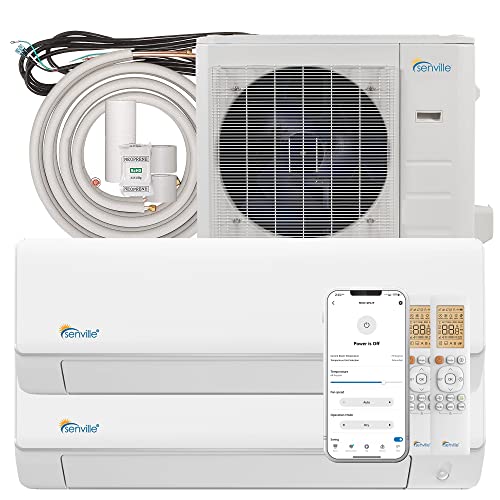
Senville AURA Mini Split AC/Heating System, 2 Zone, 18000 BTU | Energy Star Certified, Works with Alexa, Ductless Inverter, 1.5 Ton, AHRI Certified
Check price on Amazon
COSTWAY 20K Dual 2 Zone Mini Split AC/Heating System, 23 SEER2 9k + 12k BTU | WiFi Enabled Split AC w/Heat Pump & Pre-Charged, Line Set Included, 208/230V (Blast Pro Series)
Check price on Amazon
Albott 2 Zone Mini Split AC System and Heater, 12K+12K BTU, 25 SEER2 | Remote & WiFi Controlled Two Zone Mini Split Air Conditioner, 25 SEER2, Cools up to 1100 Sq.Ft for Home, Bedroom & Office
Check price on Amazon
Senville Mini Split Air Conditioner Heat Pump, White, 2 Zone, 28000 BTU | Energy Star Certified, Works with Alexa, Ductless, Wall Mounted, AHRI Certified, 208-230V Inverter
Check price on Amazon
Albott 2 Zone Mini Split AC/Heating System, 12K+12K BTU 25 SEER2 | Ductless Inverter Heat Pump with 20,000 BTU Outdoor Unit, WiFi Control, Pre-Charged Condenser & 16.4 Ft. Line Sets, 208-230V
Check price on Amazon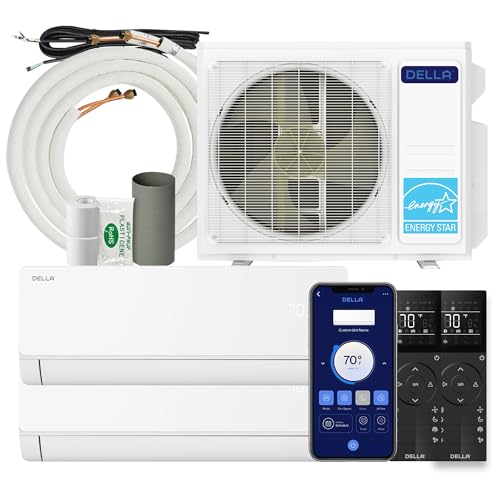
DELLA 18K BTU Dual Zone Mini Split AC (9K+12K), 25 SEER2, 16ft Kits | Heating/Cooling, Ductless Inverter, Alexa/WiFi, 208-230V, Pre-Charged Outdoor Unit, Rust/Corrosion Protection, AHRI Certified
Check price on AmazonDisclaimer
Some of the content on this site uses AI assistance. Information is provided for educational purposes only. We are not responsible for any losses resulting from the use of this information. By using this site, you waive any right to bring legal claims against us arising from your use of the information provided. If you do not agree, please do not use this site. Read the full disclaimer.