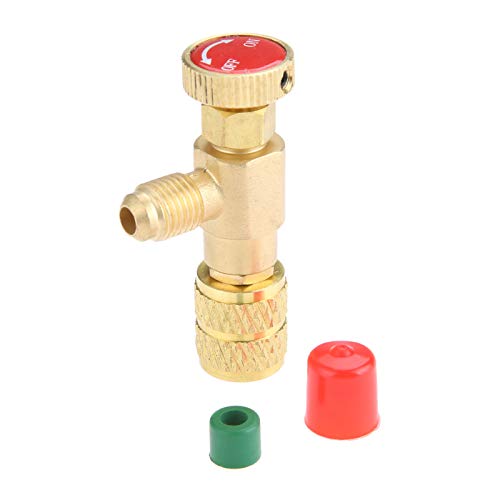
410A Freon: The Complete Guide to R-410A Refrigerant
Understand what 410A freon is, how it keeps your air conditioner running, why the HVAC industry is transitioning away from it, and what every AC owner should know before scheduling a service call.
START READINGWhat Is 410A Freon?
410A freon is the common name for R-410A, a hydrofluorocarbon (HFC) refrigerant blend used in most residential and light commercial air conditioners manufactured between roughly 2010 and 2024. It is a near-azeotropic mixture of two components — R-32 and R-125 — typically in a 50/50 ratio. The Carrier Corporation markets it under the brand name Puron, which is why some homeowners still refer to it as "Puron refrigerant."
Unlike the older R-22 (chlorodifluoromethane), R-410A contains no chlorine, which means it does not deplete the ozone layer. That was the primary reason it became the standard replacement for R-22 in new equipment. However, R-410A is a potent greenhouse gas with a global warming potential (GWP) of roughly 2,088 — which is exactly why the HVAC industry is now moving toward lower-GWP alternatives.
Key takeaway: 410A freon is the refrigerant that has kept the majority of modern US homes cool for over a decade. It is safe when handled correctly, but it is being phased down in favor of next-generation refrigerants with a much lower climate impact.
How R-410A Works in Your Air Conditioner
R-410A does not "consume" itself during operation — it circulates in a closed loop and changes state between liquid and gas to move heat from inside your home to the outdoors. Understanding the four stages helps you interpret what a technician tells you during a service visit.
- Compression: The compressor raises the pressure and temperature of the refrigerant vapor, turning it into a hot, high-pressure gas.
- Condensation: The outdoor condenser coil releases heat to the outside air, and the refrigerant condenses into a liquid.
- Expansion: The expansion valve drops the pressure and temperature dramatically, preparing the refrigerant to absorb heat indoors.
- Evaporation: The indoor evaporator coil absorbs heat from your home's air, and the refrigerant evaporates back into a gas before returning to the compressor.
R-410A operates at roughly 50 to 70 percent higher pressure than R-22. This is why R-410A systems use thicker tubing, different metering devices, and synthetic polyolester (POE) oil rather than the mineral oil used with R-22. It is also why R-410A and R-22 equipment are not interchangeable — a fact that matters if you are comparing used or older systems.
Why 410A Replaced R-22
R-22 (also known as HCFC-22) was the dominant residential refrigerant for decades. Under the Montreal Protocol, it was classified as an ozone-depleting substance because it contains chlorine. The United States began phasing it out in the 1990s and completed the ban on new R-22 equipment in 2010, with production and import restrictions tightening through 2020.
R-410A stepped in as the industry standard because it:
- Contains zero chlorine and therefore has an ozone depletion potential (ODP) of zero.
- Delivers higher cooling capacity per unit of volume, allowing more compact equipment.
- Works with POE synthetic oil, which is more stable at high temperatures.
- Was adopted broadly by every major manufacturer, making parts and service widely available.
For more than a decade, R-410A was the default choice for new split systems, packaged units, mini-splits, and heat pumps. You can still find R-410A equipment in millions of homes today — and if your AC was installed after 2010, it almost certainly uses R-410A.
The R-410A Phase-Out Explained
In 2020, the American Innovation and Manufacturing (AIM) Act gave the EPA authority to phase down HFC production and consumption in the United States. R-410A, with its high GWP, is one of the refrigerants targeted by this transition. The industry is shifting toward refrigerants with a GWP below 750, most notably R-32 and R-454B.
What this means for homeowners:
- Existing R-410A systems are not banned. You can continue to operate, maintain, and repair your current equipment.
- New equipment rules changed on January 1, 2025. Newly manufactured residential AC systems must use a refrigerant with a GWP below 750, which effectively ends new R-410A production for those products.
- R-410A supply will gradually tighten. As production ramps down, refrigerant availability may become less predictable over the coming decade.
- Repairs remain viable for now. Recharging an existing R-410A system is still legal and common, but the long-term trend favors eventual replacement with lower-GWP equipment.
Important: Do not assume a phase-out means your current AC is obsolete. The transition is a manufacturing rule, not a ban on operating existing equipment. A well-maintained R-410A system can continue to run for many years.
R-32 vs R-454B vs R-410A
The two leading replacements for R-410A are R-32 (difluoromethane) and R-454B (a blend of R-32 and R-1234yf). Both have a significantly lower GWP and are classified as A2L — mildly flammable — which introduces new handling and installation requirements for technicians.
| Property | R-410A | R-32 | R-454B |
|---|---|---|---|
| Type | HFC blend | HFC (single component) | HFC/HFO blend |
| GWP (approx.) | 2,088 | 675 | 466 |
| Ozone depletion | Zero | Zero | Zero |
| Safety classification | A1 (non-flammable) | A2L (mildly flammable) | A2L (mildly flammable) |
| Operating pressure | High | Similar to R-410A | Similar to R-410A |
| Typical use | Legacy AC and heat pumps | New AC and heat pumps | New AC and heat pumps |
For homeowners, the practical takeaway is simple: if you are buying a new system today, it will likely use R-32 or R-454B. If you are keeping an existing system, it will remain on R-410A. The two cannot be mixed, and a technician must follow different procedures for each.
Safety and Handling Rules for 410A Freon
R-410A is classified as A1 by ASHRAE — meaning it has low toxicity and is non-flammable under normal conditions. That does not mean it is safe to handle casually. The refrigerant is stored under high pressure and can cause frostbite or eye injury if it escapes suddenly. It also displaces oxygen in enclosed spaces, which is a serious hazard in basements and mechanical rooms.
Federal rules you should know
- EPA Section 608 certification is required to purchase, handle, or dispose of R-410A refrigerant. Selling it to an uncertified person is illegal.
- Venting is prohibited. Refrigerant must be recovered using EPA-approved equipment, not released into the atmosphere.
- Technicians must keep records of refrigerant recovered and charged, especially on systems above certain thresholds.
What this means for DIY homeowners
- You cannot legally buy or recharge R-410A yourself without certification.
- You should never top off a system — a low charge means there is a leak, and adding refrigerant without fixing the leak is a temporary fix at best.
- You should not open refrigerant lines, disconnect gauges, or attempt to recover refrigerant without proper training and equipment.
- You should learn the basic signs of a leak so you can call a professional early.
Safe practice: If you suspect a refrigerant issue, ventilate the area, turn off the system, and contact a licensed HVAC technician. Do not attempt to diagnose or repair the sealed refrigerant circuit yourself.
Signs of a 410A Leak
A refrigerant leak is the most common reason a system loses cooling capacity. Because R-410A operates at high pressure, even a small pinhole can cause a noticeable drop in performance over time. Watch for these signs:
- Warm air from the vents despite the thermostat calling for cooling.
- Ice forming on the indoor coil or refrigerant lines — a classic sign of low charge.
- Hissing or bubbling sounds near the indoor or outdoor unit.
- Longer run times and higher energy usage without a clear weather reason.
- Oil residue around joints, fittings, or coil connections.
- Faint chemical odor near the equipment (rare, but possible with large leaks).
If you notice any of these symptoms, the correct next step is a professional leak inspection. A technician will use electronic leak detectors, UV dye, or pressure testing to locate the source before recommending a repair. For broader troubleshooting across system types, see our guides on mini-split heat pump systems and 2-ton air conditioner setups, which cover similar refrigerant circuits.
Should You Recharge or Replace?
If your system is low on R-410A, you have two realistic paths: repair the leak and recharge, or replace the equipment. The right choice depends on the age of the system, the location of the leak, and the overall condition of the unit.
| Situation | Recommended Path | Why |
|---|---|---|
| System under 8 years old, single accessible leak | Repair and recharge | Repair preserves remaining equipment life and is straightforward for a technician. |
| System over 12 years old, multiple leaks | Consider replacement | Repeated leaks often indicate coil corrosion; replacement with a lower-GWP system may be more sensible. |
| Leak in the evaporator coil | Evaluate repair vs replacement | Coil replacement is labor-intensive; compare against the age and efficiency of the outdoor unit. |
| Compressor failure with known leak history | Replacement | Compressor replacement on a leaking system rarely delivers reliable long-term results. |
For households planning a replacement, it is worth reviewing capacity guides such as 18,000 BTU ENERGY STAR units and 3-ton air conditioning systems to understand how sizing interacts with efficiency and refrigerant choice. Larger homes may also benefit from comparing 2-ton systems against multi-zone setups.
Maintenance Tips for R-410A Systems
Regular maintenance is the single best way to protect an R-410A system and delay the need for major repairs. The following practices apply to almost every residential AC, regardless of brand or capacity.
- Replace or clean air filters every 1–3 months. Restricted airflow stresses the compressor and reduces cooling efficiency.
- Keep the outdoor unit clear. Remove leaves, grass clippings, and debris within at least two feet of the condenser.
- Schedule annual professional service. A technician will check refrigerant charge, electrical connections, and coil condition.
- Do not ignore small leaks. A slow leak becomes a compressor failure if left unaddressed for a full season.
- Watch for ice on the lines. Ice is a symptom, not a cause — call a technician rather than simply turning the system off and waiting.
- Document service history. Leak repairs, recharge amounts, and part replacements all inform future repair-vs-replace decisions.
If you are still selecting equipment, our guides on 2-ton air conditioners and 18,000 BTU mini-split heat pumps explain how refrigerant type, capacity, and system design interact. For very small rooms, a 5,000 BTU energy-efficient window unit may use a different refrigerant altogether — always check the nameplate before assuming R-410A.
Ready to Compare R-410A Equipment?
Browse recommended air conditioners across capacities and system types, then confirm refrigerant compatibility with a licensed technician before installation or service.
View Recommended UnitsFrequently Asked Questions About 410A Freon
What is 410A freon?
410A freon is the common name for R-410A, an HFC refrigerant blend used in most residential AC systems manufactured between roughly 2010 and 2024. It replaced R-22 and is marketed under brand names such as Puron.
Is R-410A being phased out?
Yes. Under the AIM Act, the EPA is transitioning the HVAC industry toward lower-GWP refrigerants such as R-32 and R-454B. Newly manufactured residential AC systems must use these alternatives, but existing R-410A equipment remains legal to operate and repair.
Can I buy 410A freon and recharge my AC myself?
No. Under Section 608 of the Clean Air Act, handling R-410A requires EPA Section 608 certification. Recharging also requires manifold gauges, a vacuum pump, and leak detection. A licensed technician should perform the recharge and confirm there is no leak first.
What happens if I mix R-410A with R-22?
Mixing refrigerants is never safe. R-410A operates at roughly 50 to 70 percent higher pressure than R-22 and uses synthetic POE oil instead of mineral oil. Mixing them can cause compressor failure, oil breakdown, and system contamination that is difficult to reverse.
How do I know if my AC uses R-410A?
Check the nameplate on the outdoor condensing unit. It lists the refrigerant type — look for "R-410A" or "Puron." If the label is worn, the system's age is a useful clue: most units installed after 2010 use R-410A.
Does a low refrigerant charge always mean a leak?
In a sealed system, yes. Refrigerant is not consumed during normal operation, so a low charge indicates that refrigerant has escaped. The correct procedure is to locate and repair the leak before recharging.
Will R-410A still be available for repairs in the future?
R-410A will remain available for the foreseeable future to service existing equipment, but production is being reduced under the HFC phasedown. Supply may become less predictable over time, which is one reason technicians encourage planning ahead for eventual replacement.