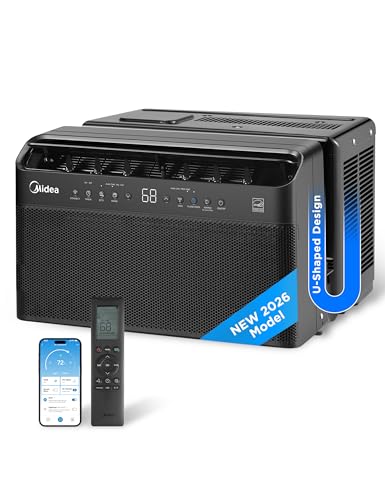
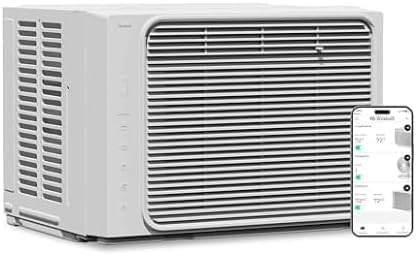
6000 BTU Window Air Conditioner Energy Star: The Complete Research Guide
Everything you need to know before choosing a 6000 BTU Energy Star window air conditioner — sizing, efficiency, installation, maintenance, and the features that actually matter for small-space cooling.
Explore Recommended ModelsWhy this guide matters: If you are researching a 6000 BTU window air conditioner with Energy Star certification, you already know the capacity range and the efficiency label you want. What remains is understanding whether the unit truly fits your room, how certification translates into long-term energy performance, and which features separate a well-engineered model from a basic one. This guide answers those questions so you can move from research to a confident decision.
What a 6000 BTU Window Air Conditioner Is and Who It Serves
A 6000 BTU window air conditioner is a single-room cooling unit designed to be mounted in a standard double-hung window. The 6000 BTU rating places it at the entry point of the window AC category — a capacity specifically engineered for compact spaces where a larger unit would be inefficient and a smaller unit would struggle.
This capacity class serves a well-defined set of users:
- Bedroom cooling for rooms up to roughly 250 square feet
- Home office and study rooms where focused cooling is needed during work hours
- Studio apartments where a single unit must handle the primary living space
- Guest rooms and dormitories that need occasional but effective cooling
- Renters who need a non-permanent cooling solution that does not require ductwork or structural modification
The window form factor is significant: it draws outside air for condenser heat rejection, which makes it more efficient than a portable unit of the same capacity. This is one reason a 6000 BTU window AC often outperforms a portable unit rated at the same BTU in real-world cooling. For a broader comparison of form factors, see our guide on buying an air conditioner.
Room Sizing: Is 6000 BTU Right for Your Space?
The most common mistake in window AC selection is mismatching capacity to room size. A 6000 BTU unit is not universally right or wrong — it is right for a specific range of conditions. The table below provides practical guidance, but treat it as a starting point rather than a rigid rule.
| Room Size | Recommended Capacity | Notes |
|---|---|---|
| Up to 150 sq ft | 5,000 BTU | Small bedroom or nursery; 6000 BTU may cycle too frequently |
| 150 – 250 sq ft | 6,000 BTU | Ideal range for a 6000 BTU window unit |
| 250 – 350 sq ft | 8,000 BTU | Consider stepping up if the room is sunny or poorly insulated |
| 350 – 450 sq ft | 10,000 BTU | 6000 BTU will likely underperform in this range |
Adjustments That Change the Calculation
Square footage alone is an incomplete measure. Apply these adjustments when evaluating a 6000 BTU unit:
- Sun exposure: A south- or west-facing room with large windows may need one capacity step up. A shaded north-facing room may allow a step down.
- Ceiling height: Standard 8-foot ceilings are assumed. Vaulted or 10-foot ceilings increase the cooling volume and may push you toward a larger unit.
- Insulation quality: Older homes with single-pane windows and minimal insulation lose cooling faster, effectively reducing the area a 6000 BTU unit can handle.
- Occupancy and appliances: A home office with multiple computers and monitors generates heat that must be offset. Two people in a room add roughly 800 BTU of load.
- Kitchen adjacency: A room open to a kitchen will experience cooking heat gain and may need additional capacity.
If your calculation lands near the upper edge of the 6000 BTU range, consider whether a slightly larger unit would serve you better during heat waves. Our guide on 5000 BTU energy-efficient air conditioners covers the smaller capacity class if your room is on the compact side.
Avoid oversizing: A unit that is too large for the room will cool the air quickly but shut off before removing adequate humidity. The result is a cold, clammy room and more frequent compressor cycling, which reduces comfort and accelerates wear. Matching capacity to load is more important than buying the largest unit that fits the window.
Why Energy Star Certification Matters for a 6000 BTU Window AC
Energy Star is a voluntary certification program administered by the U.S. Environmental Protection Agency. For window air conditioners, certification means the unit meets or exceeds efficiency thresholds set relative to its cooling capacity. For a 6000 BTU window unit, the certification is a meaningful signal because small-capacity units are often used for extended hours — overnight in bedrooms, all day in home offices.
How Efficiency Is Measured
Window air conditioners are rated using EER (Energy Efficiency Ratio) and, more recently, CEER (Combined Energy Efficiency Ratio). Both express cooling output per unit of electricity consumed. A higher number indicates more cooling for the same energy input. Energy Star certification for a 6000 BTU window AC requires meeting a minimum efficiency threshold that has been tightened over successive program updates.
The practical implication: an Energy Star certified 6000 BTU unit will generally consume less electricity than a non-certified unit of the same capacity under identical conditions. Over a full cooling season, that difference compounds. For a unit used nightly in a bedroom, the efficiency gain is a genuine long-term investment rather than a marketing label.
What Certification Does Not Tell You
- It does not measure real-world efficiency at partial load. Many units run below full capacity most of the time. Inverter-driven models can modulate compressor speed and maintain efficiency at partial load, while single-speed units cycle on and off. Energy Star ratings are based on standardized test conditions.
- It does not account for installation quality. A certified unit installed with gaps around the window frame will leak cooled air and underperform. Sealing the installation is as important as the certification itself.
- It does not guarantee quiet operation or build quality. Efficiency and acoustic performance are separate engineering considerations.
For a deeper explanation of efficiency metrics, see our article on air conditioning unit SEER ratings, which covers the broader efficiency landscape including central systems.
Key Features Worth Prioritizing in a 6000 BTU Window AC
Beyond capacity and certification, several features materially affect day-to-day satisfaction. The following are worth evaluating when comparing models.
Cooling Modes and Fan Settings
A unit with dedicated cool, fan-only, and dehumidify modes offers more flexibility than a basic cool-only model. Fan-only mode is useful for air circulation on mild days without engaging the compressor. Dehumidify mode is valuable in humid climates where moisture removal matters as much as temperature reduction.
Thermostat and Programmability
Digital thermostats with precise temperature settings (typically in 1°F increments) outperform mechanical dials for comfort and efficiency. A 24-hour programmable timer allows the unit to turn on shortly before you arrive home or turn off after you fall asleep, reducing unnecessary runtime.
Remote Control and Smart Features
A remote control is a practical convenience for a window-mounted unit that may be difficult to reach. Wi-Fi-enabled models allow control via a smartphone app and, in some cases, voice assistants. Smart features are most valuable for users who want scheduling flexibility or remote operation.
Noise Level
Window air conditioners produce compressor and fan noise. For bedroom use, a lower decibel rating is worth prioritizing. Models described as quiet-operation typically use improved fan blade design, sound-dampening insulation, or a more refined compressor mount. If noise is a primary concern, compare published dB ratings and prioritize units designed for bedroom installation.
Air Filter Accessibility
A washable, slide-out filter that can be removed without tools makes routine maintenance far easier. Since filter cleaning is the single most important maintenance task for preserving efficiency, accessibility directly affects long-term performance.
Installation Kit and Window Compatibility
Most 6000 BTU window units include a mounting kit with side panels, a support bracket, and weather sealing. Check that the kit accommodates your window type and width. Some units are designed for double-hung windows only, while others include adapters for sliding windows. Verify the minimum and maximum window width and the unit's physical dimensions before purchase.
Energy Saver Mode
An energy saver feature cycles the fan off when the compressor is not running, reducing electricity use between cooling cycles. It is a simple but effective efficiency feature for units that run for long periods.
Market Tiers and What They Deliver
Rather than evaluating models by numeric figures, it is more useful to understand how 6000 BTU window ACs are positioned across the market. The tier system below describes relative positioning and capability, and applies consistently across brands.
| Tier | Typical Characteristics | Best For |
|---|---|---|
| Entry-level | Mechanical or basic digital controls, single fan speed, standard filter, functional build | Occasional use, guest rooms, buyers prioritizing essential cooling |
| Mid-range | Digital thermostat, multiple fan speeds, remote control, energy saver mode, quieter operation, Energy Star certification common | Bedrooms and home offices with regular daily use |
| Premium | Wi-Fi and app control, programmable scheduling, refined noise profile, enhanced filtration, robust installation kit | Primary bedrooms, smart-home integration, users prioritizing comfort and control |
| Flagship tier | Advanced inverter or variable-speed compressor in compact form, top-tier efficiency, premium materials, comprehensive feature set | Users seeking the highest efficiency and quietest operation in the 6000 BTU class |
Mid-range models typically offer the most balanced combination of efficiency, features, and build quality for a 6000 BTU Energy Star unit. Entry-level models are a solid choice for secondary spaces where runtime is limited. Premium and flagship tiers make sense when the unit will run nightly and noise or smart control is a priority.
Ready to compare Energy Star certified 6000 BTU window air conditioners?
View Recommended ModelsInstallation Requirements and Considerations
Window air conditioner installation is manageable as a DIY project for many homeowners, but a few factors determine whether it goes smoothly.
Window Type and Dimensions
Most 6000 BTU window units are designed for double-hung windows that open vertically. Verify the unit's minimum and maximum window width — typically the unit fits windows from around 23 to 36 inches wide. Measure the window opening and compare it to the product specifications before ordering. Sliding windows require a specific adapter or a different mounting approach.
Structural Support
A 6000 BTU unit is relatively light, but it still extends outward from the window. A support bracket is recommended for safety and to prevent strain on the window frame. Many units include a basic bracket; a sturdier aftermarket bracket provides additional stability, particularly on upper floors.
Sealing and Weatherproofing
Gaps around the unit allow cooled air to escape and hot, humid air to enter. Use the included side panels and foam insulation, and add weather stripping where needed. Proper sealing protects the efficiency gain that the Energy Star certification provides. It also reduces the risk of pests entering through gaps.
Electrical Requirements
Most 6000 BTU window units run on standard 115V household current and draw modest amperage, making them compatible with typical bedroom circuits. Check the product specifications for the required amperage and confirm that the circuit is not shared with high-draw appliances. If the unit requires a dedicated circuit, a licensed electrician should handle the work.
Placement and Airflow
The outdoor side of the unit must have unobstructed airflow for heat rejection. Avoid installing behind shrubs, fences, or other obstructions. Indoors, direct the louvers toward the center of the room rather than at occupants for more even cooling.
If you are exploring alternatives to window installation, our guide on split-type ductless systems explains a permanent option that does not require a window opening.
Maintenance for Long-Term Performance
A 6000 BTU Energy Star unit delivers its rated efficiency only when maintained. These tasks are straightforward and extend the working life of the unit.
Seasonal Maintenance Checklist
- Clean the air filter every two to four weeks during the cooling season. A clogged filter restricts airflow and forces the compressor to work harder.
- Inspect and clean the evaporator coil annually. Dust buildup on the indoor coil reduces cooling capacity.
- Clean the condenser coil at the outdoor side of the unit. Remove debris, leaves, and dirt that block heat rejection.
- Check the condensate drain for clogs. Standing water can cause odors and, in severe cases, water damage.
- Seal gaps around the installation at the start of each cooling season. Weatherstripping and foam degrade over time.
- Test the unit before the hot season so any issues are identified early rather than during a heat wave.
For a comprehensive maintenance routine, see our buying guide section on long-term care and our article on air conditioner condenser maintenance for deeper detail on the outdoor heat-exchange side.
Advantages and Limitations
Advantages
- Efficient for a single room; draws outside air for heat rejection
- Lower energy consumption relative to portable units of the same capacity
- Energy Star certification available on many models
- Simple installation in a standard double-hung window
- No ductwork or permanent structural modification required
- Renter-friendly and removable at end of season
- Compact footprint and manageable weight for one-person installation
Limitations
- Cooling limited to one room within the capacity range
- Window space is occupied while the unit is installed
- Some noise is inherent to the form factor
- Not suitable for rooms above approximately 250 square feet without stepping up in capacity
- Efficiency drops if the installation is not sealed properly
- Appearance is functional rather than integrated into the room design
Comparison: Window AC vs Mini-Split vs Portable
Understanding how a 6000 BTU window unit compares to alternative form factors helps confirm whether it is the right choice for your situation.
| Factor | 6000 BTU Window AC | Mini-Split | Portable AC |
|---|---|---|---|
| Efficiency | Good; draws outside air for condenser | High; inverter models excellent at partial load | Lower; indoor heat rejection reduces net cooling |
| Installation | DIY in a double-hung window | Professional installation required | Minimal; vent kit through window or wall |
| Noise | Moderate; varies by model | Very quiet indoor unit | Moderate to high; compressor indoors |
| Portability | Removable seasonally | Permanent installation | Rolling; can move between rooms |
| Best For | Single-room cooling with straightforward installation | Whole-room or multi-zone comfort with permanent install | Flexible placement in rooms without suitable windows |
For a full exploration of the mini-split alternative, see our split-type ductless system guide. If your space is too large for a 6000 BTU unit, the 24000 BTU mini-split article covers a higher-capacity ductless option.
Buying Checklist for a 6000 BTU Energy Star Window AC
Use this checklist to move from research to a decision with confidence.
- Confirm room size falls within the 150–250 square foot range, with adjustments for sun, insulation, ceiling height, and occupancy.
- Verify Energy Star certification on the model listing and confirm the efficiency rating is appropriate for your usage pattern.
- Measure your window and compare to the unit's minimum and maximum window width and height.
- Check the electrical requirement and confirm your circuit can support the unit's amperage.
- Decide on features — digital thermostat, remote, programmable timer, Wi-Fi, energy saver mode, fan-only mode, dehumidify mode.
- Assess noise expectations based on whether the unit will be in a bedroom or a space where background noise is acceptable.
- Confirm filter accessibility for easy routine cleaning.
- Review the included installation kit and consider an aftermarket support bracket for added stability.
- Verify warranty terms and register the unit after installation to ensure coverage.
Frequently Asked Questions
What room size is a 6000 BTU window air conditioner suitable for?
A 6000 BTU window air conditioner is generally suitable for rooms up to approximately 250 square feet, such as a small bedroom, home office, or studio apartment. Actual sizing depends on ceiling height, sun exposure, insulation, and occupancy.
Is Energy Star certification important for a 6000 BTU window AC?
Energy Star certification indicates the unit meets recognized efficiency guidelines set by the EPA. For a 6000 BTU window AC, an Energy Star model typically uses less electricity than a comparable non-certified unit, making it a solid long-term investment for frequent use.
Can a 6000 BTU window air conditioner cool a bedroom effectively?
Yes, a 6000 BTU window unit can cool a typical bedroom effectively when correctly sized. For bedrooms up to roughly 250 square feet with standard ceiling height and average insulation, this capacity is well matched.
What does CEER or EER mean on a 6000 BTU window AC?
EER (Energy Efficiency Ratio) and CEER (Combined Energy Efficiency Ratio) measure cooling efficiency. A higher rating means more cooling output per unit of electricity. Energy Star certified 6000 BTU window units generally meet or exceed the required efficiency threshold.
How often should a 6000 BTU window air conditioner filter be cleaned?
The air filter should be cleaned every two to four weeks during the cooling season, or more often in dusty environments. Regular cleaning maintains airflow, preserves efficiency, and extends the unit's lifespan.