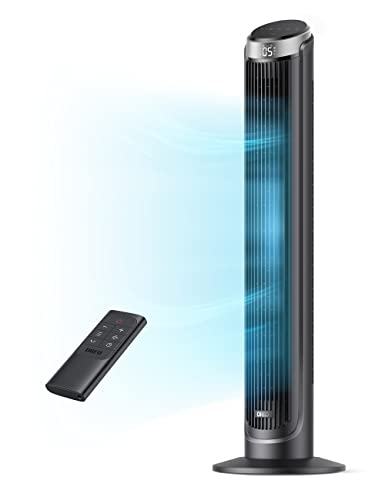
Air Conditioner Tower Fan: The Complete Guide to Smarter Cooling
A tower fan delivers focused, vertical airflow in a slim footprint. This guide explains how these units work, when they outperform a traditional air conditioner, and how to pick the right model for your room.
START LEARNINGAC Units Guide Philosophy: A tower fan is not a replacement for every air conditioner, but in the right room it can improve comfort dramatically while reducing how hard your main cooling system has to work. This guide gives you the knowledge to decide whether a tower fan belongs in your home and which tier of unit matches your needs.
What Is an Air Conditioner Tower Fan?
An air conditioner tower fan is a tall, narrow cooling appliance that produces a steady column of air through a vertical grille. Unlike a box fan, it takes up very little floor space, and unlike a window unit, it requires no installation or exterior venting. Most models oscillate side to side, spreading airflow across a wide arc so that an entire seating area or bedroom receives consistent breeze.
The category actually covers two distinct product families. The first is the pure circulation tower fan, which moves air but does not change its temperature. The second is the evaporative tower fan, sometimes called an air cooler, which draws air through a water-saturated pad to deliver a noticeable chilling effect. Understanding which family you need is the single most important decision in the buying process.
Because tower fans are energy-light compared with compressor-based cooling, many households use them as a first line of defense in spring and early summer, then switch to the main air conditioner only during peak heat. If your existing unit struggles during hot afternoons, our troubleshooting guide on an air conditioner taking a long time to cool can help you diagnose whether the issue is airflow or capacity.
How a Tower Fan Cools a Room
Air movement is the core mechanism. Human skin feels cooler when air passes over it because convection and evaporation accelerate heat loss from the body. A well-placed tower fan can make a room feel several degrees more comfortable even when the thermometer reading has not changed. This perceived cooling is why tower fans pair so well with a thermostat set slightly higher than usual.
Evaporative tower fans add a second mechanism. Warm, dry air passes over a wet cooling pad, and as water evaporates it absorbs heat, lowering the air temperature by a modest but perceptible margin. This works best in dry climates with low humidity. In humid regions the evaporative effect weakens, and a pure circulation tower fan becomes the more practical choice. If humidity is a recurring problem in your home, it is worth reviewing broader air conditioning and cooling strategies before committing to any single appliance.
Main Types of Tower Fans
Tower fans differ mainly in how they generate airflow and whether they attempt to alter air temperature. The three families below cover nearly every model on the market.
Standard Circulation Tower Fan
A simple motorized fan in a vertical housing. It moves air, oscillates, and often includes a timer. Best for bedrooms, home offices, and any room where the goal is gentle, continuous airflow rather than temperature change.
Evaporative Tower Fan
Adds a water tank and cooling pad so the airflow feels chilled. Effective in dry climates and well-ventilated rooms. Requires regular refilling and pad maintenance but delivers a more direct cooling sensation than a pure fan.
Bladeless Tower Fan
Uses an air multiplier design to project a smooth, uninterrupted stream of air. Quieter, easier to clean, and safer around children and pets. Typically the top-tier option for design-conscious living spaces.
A fourth variation worth knowing is the hybrid tower fan that combines an evaporative pad with a heating element for year-round use. These are less common but useful in climates with distinct seasons. If your home already has a capable central system, a circulation tower fan is usually the smartest addition, since it complements rather than duplicates the main unit.
Benefits of Using a Tower Fan Alongside Your AC
- Lower energy draw: A tower fan consumes a fraction of the electricity used by a compressor-driven air conditioner. Running the fan while the AC cycles less often can reduce overall consumption.
- Better air distribution: Cool air tends to stratify near the floor. A tower fan mixes the room and pushes conditioned air into corners that the ductwork never quite reaches.
- No installation: No window bracket, no exhaust hose, no drilling. Place it, plug it in, and it works. This makes it ideal for renters and for rooms where installation is impractical.
- Space efficiency: The vertical form factor occupies roughly the footprint of a dinner plate, freeing floor area compared with pedestal or box fans.
- Quiet operation: Mid-range and premium models run quietly enough for sleeping, especially on lower speed settings with oscillation enabled.
For households with ductwork limitations, tower fans can fill gaps that a central system cannot reach. Our overview of air conditioning options for homes without ductwork explains how portable and ductless solutions compare with fan-based approaches.
Key Factors When Choosing a Tower Fan
Once you have decided between circulation and evaporative designs, evaluate each candidate against the factors below. These determine day-to-day satisfaction far more than marketing claims.
Room Size and Airflow
Manufacturers publish a recommended coverage area for each model. A compact entry-level unit suits a bedroom or study, while a large living room needs a mid-range or premium fan with higher airflow and a wider oscillation arc. Oversizing a fan is rarely a problem, but undersizing one leaves you with a weak breeze that never reaches the sofa.
Noise Level
Decibel ratings matter most for bedrooms and home offices. Entry-level models can be audible at higher speeds. Mid-range units usually offer a sleep mode that steps the fan down gradually. Premium bladeless designs are the quietest overall, though their airflow feels different—smoother and more laminar.
Oscillation and Airflow Pattern
A wide oscillation arc covers more of the room, but a narrower arc concentrates airflow where you need it. Some models allow you to lock the fan in a fixed direction. Consider where you sit relative to the fan before choosing.
Controls and Smart Features
Remote controls, timers, and programmable schedules add convenience. Wi-Fi-enabled tower fans can be integrated into a smart home routine, turning on when the room temperature crosses a threshold. If you already use connected cooling equipment, our guide on air conditioner Wi-Fi control explains how these ecosystems fit together.
Maintenance Requirements
Circulation fans need only occasional dusting of the grille and blades. Evaporative models require water changes, pad cleaning, and periodic pad replacement. Bladeless fans have no exposed blades to clean but can accumulate dust inside the loop, which some models address with removable covers.
Tower Fan Types Compared by Tier
| Tier | Category | Best For | Typical Trade-Off |
|---|---|---|---|
| Entry-Level | Circulation tower fan | Bedrooms, small offices, renters | Simpler controls, more audible at high speed |
| Mid-Range | Evaporative tower fan | Dry climates, living rooms, daytime cooling | Needs water refills and pad maintenance |
| Premium | Bladeless tower fan | Design-led interiors, nurseries, quiet spaces | Different airflow feel, higher tier positioning |
| Mid-Range | Oscillating tower fan with timer | Whole-room circulation, overnight use | Limited temperature change without AC support |
| Premium | Smart Wi-Fi tower fan | Automated routines, connected homes | Setup complexity, app dependency |
How to Place a Tower Fan for Maximum Effect
Placement determines whether a tower fan feels like a gentle breeze or a genuine cooling upgrade. The two most effective strategies are cross-ventilation and assisted circulation.
Cross-ventilation works by positioning the fan near an open window so it pulls fresh outside air into the room while pushing stale air out through a second opening. This is especially effective in the evening when outdoor temperatures drop. Assisted circulation works by aiming the fan upward or across the room so it mixes conditioned air from the AC with warmer air near the ceiling, equalizing temperature without pointing a cold blast at anyone.
Avoid placing a tower fan directly in front of a return vent, which can disrupt the airflow pattern your HVAC system depends on. If your AC is running constantly but not cooling, adding a fan may mask the symptom without solving the underlying problem, so address the root cause first.
During heat waves, pair the tower fan with a ceiling fan or a strategically opened window. Our article on air blowing but not cold in the house covers how to diagnose distribution issues that a fan alone cannot fix.
When a Tower Fan Is the Right Choice—and When It Is Not
A tower fan is the right choice when your goal is air movement, energy efficiency, and flexible placement. It is the wrong choice when the room is genuinely hot and humid and needs mechanical refrigeration. The table below summarizes the decision.
Choose a Tower Fan When…
You want to supplement an existing AC, you live in a mild or dry climate, you rent and cannot install equipment, or you need quiet overnight airflow in a bedroom. It is also the sensible pick for a home office where a full AC unit would be overkill.
Choose an Air Conditioner When…
The room is consistently hot and humid, you need precise temperature control, or the space is large enough that airflow alone cannot deliver comfort. In those cases, review air conditioning units for one room or explore air conditioning units for small spaces.
For whole-home comfort, a tower fan is a complement rather than a substitute. If you are evaluating larger systems, our guide on an air conditioner that cools the whole house covers the central option in detail.
Basic Tower Fan Maintenance
Regular maintenance keeps airflow strong and extends the life of the motor. For circulation fans, dust the front and rear grilles every few weeks and wipe the exterior housing with a dry cloth. Avoid spraying liquid into the motor housing.
For evaporative tower fans, empty and rinse the water tank every few days during active use, and clean the cooling pad according to the manufacturer's schedule. Mineral buildup reduces cooling efficiency, so in hard-water areas a periodic descaling rinse is worthwhile.
Bladeless fans generally need only exterior dusting, but check whether the loop interior is accessible for cleaning. If you notice reduced airflow over time, dust accumulation is the most common cause.
If your broader cooling system also needs attention, our air conditioner service and maintenance guide covers the professional side of seasonal upkeep.
Frequently Asked Questions
Does a tower fan actually cool the air?
Can I use a tower fan instead of an air conditioner?
Where should I place a tower fan in my room?
Are bladeless tower fans better than bladed models?
How often should I clean an evaporative tower fan?
Ready to Explore Tower Fan Options?
Compare features, airflow ratings, and tier positioning of recommended models in the product section below.
VIEW RECOMMENDED MODELS