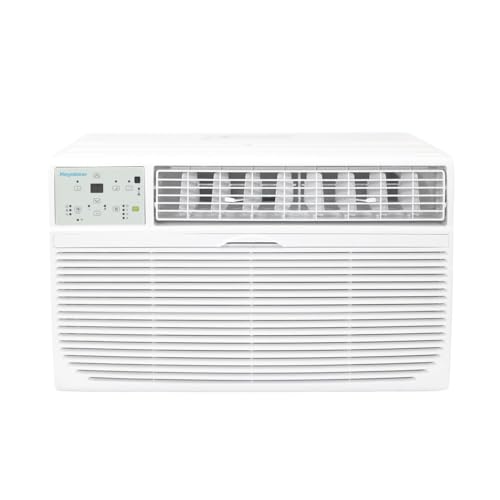
Central AC Unit for a 2500 Sq Ft Home: Complete Sizing & Selection Guide
A 2500 sq ft home sits in the sweet spot where central air conditioning delivers whole-home comfort efficiently—but only when the system is correctly sized, rated, and installed. This guide walks you through tonnage, BTU, SEER2, ductwork, zoning, and the practical steps to choose a central AC that fits your home and climate.
Why 2500 Sq Ft Needs Careful AC Sizing
A 2500 sq ft home is large enough that an incorrectly sized central AC unit becomes obvious quickly. Too small, and the system runs continuously on hot days without reaching the thermostat setpoint. Too large, and it cools the air fast but shuts off before removing humidity, leaving rooms clammy and uncomfortable. Neither outcome is acceptable for a home of this size, where comfort expectations are high and energy use is significant.
Sizing is not a simple square-footage rule. The right capacity depends on climate zone, ceiling height, insulation quality, window area and orientation, air leakage, duct location, and how many people occupy the home. The industry standard is a Manual J load calculation, which models all of these factors to produce a required BTU per hour figure. For a 2500 sq ft home, that figure usually lands between 48,000 and 60,000 BTU/h, but the calculation—not the range—should drive the final decision.
If you are also comparing homes of different sizes or want to understand how sizing scales, our guides on a central AC unit for a 1500 sq ft home and a central AC unit for 1000 sq ft house show how load factors shift with square footage.
Tonnage and BTU: What a 2500 Sq Ft Home Typically Needs
Central AC capacity is expressed in tons, where 1 ton equals 12,000 BTU per hour. For a 2500 sq ft home, the common capacity range is 4 to 5 tons:
- 4 tons (48,000 BTU/h): Suitable for a 2500 sq ft home in a moderate climate with good insulation, average window area, and no unusual heat gain.
- 4.5 tons (54,000 BTU/h): A middle-ground option for homes with larger windows, warmer summers, or partial ductwork in unconditioned spaces.
- 5 tons (60,000 BTU/h): Appropriate for hot climates, homes with west-facing glass, lower insulation levels, or high occupancy.
These are starting points, not prescriptions. A Manual J calculation can push the requirement above or below this range. For example, a well-sealed 2500 sq ft home in a mild coastal climate might need only 3.5 tons, while a poorly insulated 2500 sq ft home in a desert climate could require 5 tons or a zoned system with two units. The key takeaway: treat tonnage ranges as context, and let the load calculation set the final number.
Efficiency Ratings That Matter for a Home This Size
Efficiency has a larger impact on a 2500 sq ft home than on a small apartment because the system moves more air and runs longer. Three ratings deserve attention:
- SEER2: Seasonal energy efficiency ratio, updated to reflect modern testing conditions. Minimum standards vary by region, but for a home this size, targeting 15 to 18 SEER2 is a practical baseline for lower long-term energy use.
- EER2: Measures efficiency at peak design conditions. This matters in hot climates where the system runs hardest during the hottest part of the day.
- HSPF2: Relevant only if the system includes a heat pump for heating. If you are considering a combined cooling and heating solution, our guide to central air conditioner with heat pump prices explains how the ratings interact.
Higher-efficiency equipment is a long-term investment: it reduces electricity use over the system's service life. The trade-off is a higher upfront equipment tier. For a 2500 sq ft home, the efficiency difference between a mid-range and high-end tier often pays back over the life of the unit, especially in climates with long cooling seasons.
Ductwork, Airflow, and Zoning for 2500 Sq Ft
A central AC unit is only as good as the duct system it connects to. For 2500 sq ft, ductwork typically includes a trunk-and-branch layout sized to deliver roughly 400 CFM per ton. That means a 4-ton system needs about 1,600 CFM of airflow, while a 5-ton system needs about 2,000 CFM. Undersized ducts cause high static pressure, reduced capacity, and noisy operation; oversized ducts waste space and can cause balancing problems.
Zoning is worth serious consideration at this size. A two-story 2500 sq ft home, or a single-story home with distinct temperature pockets, often benefits from two zones with independent thermostats and dampers. Zoning improves comfort, reduces energy waste in unoccupied rooms, and can extend equipment life by reducing cycling. If your home already has ductwork, a contractor should verify its condition and capacity before matching a new unit to it. For homes without ducts, central air conditioning ductless systems offer an alternative that avoids major duct work.
Duct location matters too. Ducts in unconditioned attics or crawlspaces lose cooling capacity before the air reaches the rooms. Sealing and insulating those runs is often more impactful than upgrading to a higher SEER2 unit.
Single-Stage, Two-Stage, or Variable-Speed: Matching Technology to the Home
Compressor technology affects comfort and efficiency, and the right choice depends on climate and priorities:
- Single-stage: Operates at full capacity or off. Entry-level tier, simple, and predictable. Works best in mild climates or as a value-focused choice for a secondary home.
- Two-stage: Runs at a lower capacity most of the time and steps up to full capacity on peak days. Mid-range tier, better humidity control, and quieter operation. A strong fit for most 2500 sq ft homes.
- Variable-speed: Modulates capacity continuously to match load. High-end to premium tier, best humidity control, quietest operation, and the most consistent temperatures. Ideal for homes with zoning or rooms that are hard to balance.
For a 2500 sq ft home, a two-stage or variable-speed system often delivers the best comfort-per-tier trade-off, especially in humid climates where dehumidification matters as much as temperature.
Installation and Site Considerations
Installation quality determines whether the equipment performs to its rating. Key considerations for a 2500 sq ft home include:
- Outdoor unit placement: Shade, airflow clearance, and distance from the home affect performance. The condenser needs unobstructed airflow and should not be boxed in by fencing or vegetation.
- Refrigerant line length: Long line sets require adjustments to charge and can reduce capacity. The installer should calculate the correct charge for the actual line length.
- Electrical capacity: A 4 to 5 ton system draws significant current. The electrical panel and breaker must be verified before installation. Our guide to amps and breaker size for AC explains how to check.
- Permits and inspections: Most jurisdictions require a permit for central AC replacement or new installation. Confirm the contractor handles permits and inspections.
If your existing system has failed suddenly and you need to understand what went wrong before replacing it, our troubleshooting guide on a central air conditioner that stopped working suddenly covers common causes and what a technician will check.
Comparing Central AC to Alternatives for 2500 Sq Ft
Central AC is the most common choice for a home this size, but it is not the only option. A multi-zone ductless mini-split system can be a strong alternative for homes without ducts or for additions. Our guide to central air conditioning ductless systems compares the two approaches in detail. For homes with existing ductwork in good condition, central AC usually remains the most practical whole-home solution.
If you are weighing a central system against a smaller-home configuration, our guide to a central air conditioner for a 2400 square foot house shows how similar the sizing logic is at nearby square footages.
Maintenance and Long-Term Performance
A 2500 sq ft home places real demands on its AC system, so maintenance is not optional. Filter changes every one to three months, annual coil cleaning, refrigerant charge verification, and duct inspection keep the system operating near its rated capacity. Skipping maintenance gradually reduces capacity and efficiency—a system that starts at 16 SEER2 can degrade significantly without regular service. Our guide to central air conditioning system maintenance covers the full annual checklist.
Common problems to watch for include a central air conditioner not cooling enough, a central air conditioner leaking water inside the house, or a central air conditioner running but not cooling. Catching these early often avoids a full replacement.
Frequently Asked Questions
What size central AC unit do I need for a 2500 sq ft home?
Most 2500 sq ft homes need 4 to 5 tons (48,000 to 60,000 BTU/h), but the exact size requires a Manual J load calculation that accounts for climate, insulation, windows, and occupancy.
Is a 5 ton AC unit too big for a 2500 sq ft house?
It depends on the home and climate. A 5 ton unit suits hot climates with larger heat gain, but may be oversized in mild climates with good insulation, causing short cycling and poor humidity control.
What SEER2 rating should a central AC for 2500 sq ft have?
Aim for at least 15 SEER2 to meet typical regional minimums, and consider 16 to 18 SEER2 for lower long-term electricity use. Higher tiers reduce operating energy over the system's life.
How many zones should a 2500 sq ft central AC system have?
Two zones are common for multi-story or temperature-variable 2500 sq ft homes. Zoning improves comfort and reduces energy waste in unoccupied areas.
Bottom Line
A central AC unit for a 2500 sq ft home should be sized with a Manual J calculation, rated for the climate with an appropriate SEER2 tier, and matched to ductwork and zoning that deliver the required airflow. Two-stage or variable-speed systems usually offer the best comfort per tier. Get at least two professional load calculations and installation quotes before committing—the equipment matters, but installation quality determines whether the system performs as rated.