
Different Types of Air Conditioning Units
Understand every major AC category — central, ductless mini-split, window, portable, and ducted systems — so you can match the right unit to your home, climate, and installation constraints.
COMPARE ALL TYPESWhy this matters: Choosing the wrong AC type is the most common and most expensive mistake homeowners make. A unit that fits one home may be unsuitable for another due to ductwork, electrical capacity, window access, or rental restrictions. This guide explains how each type works, where it excels, and what trade-offs to expect — before you commit.
Quick Comparison of AC Types
The table below summarizes the five primary categories covered in this guide. Each row reflects the typical market positioning of that category, not any specific product.
| AC Type | Best For | Installation | Market Tier | Efficiency Range |
|---|---|---|---|---|
| Central Air Conditioner | Whole-home cooling with existing ductwork | Professional, permanent | Mid-range to premium | High (SEER2 14.3+) |
| Ductless Mini-Split | Homes without ducts, room-by-room zoning | Professional, semi-permanent | Mid-range to high-end tier | Very high (SEER2 16+) |
| Window Air Conditioner | Single rooms, apartments, renters | DIY, seasonal | Entry-level to mid-tier | Moderate (CEER 11–15) |
| Portable Air Conditioner | Temporary cooling, rooms without window mounting | DIY, plug-and-play | Entry-level to mid-range | Moderate (CEER 8–12) |
| Ducted AC System | Whole-home or multi-zone with concealed ductwork | Professional, permanent | Premium to luxury | High (SEER2 15+) |
Detailed Breakdown of Each AC Type
Below is a closer look at each category, including how it operates, who it suits best, and its relative strengths and limitations. If you want a broader perspective on residential options, see our guide to different types of air conditioning for homes.
1. Central Air Conditioner
A central AC system cools air at a single outdoor condenser and distributes it through a network of ducts to every room. It is the standard for modern North American homes and integrates with forced-air heating.
Advantages
- Uniform whole-home cooling
- Hidden indoor equipment
- Integrates with heating
- High efficiency options
Limitations
- Requires existing ductwork
- Professional installation only
- Higher upfront investment
- Duct losses if poorly sealed
Explore different types of central air conditioners to understand split-system, packaged, and heat-pump variants.
2. Ductless Mini-Split AC
A mini-split pairs one outdoor compressor with one or more indoor wall, ceiling, or floor-mounted air handlers. Refrigerant lines connect them through a small wall penetration — no ductwork required.
Advantages
- No ductwork needed
- Room-by-room zoning
- Very high efficiency
- Quiet indoor operation
Limitations
- Visible indoor units
- Higher per-room investment
- Professional refrigerant work
- Outdoor unit placement needed
Compare configurations in our guide to ductless air conditioning systems, including multi-zone setups.
3. Window Air Conditioner
A window AC is a self-contained unit that sits in a window frame or wall sleeve. All components — compressor, condenser, evaporator — are housed in one chassis, making installation straightforward.
Advantages
- Simple DIY installation
- Single-room targeting
- No permanent modification
- Renter-friendly option
Limitations
- Blocks window view and light
- Noise inside the room
- Limited to rooms with suitable windows
- Seasonal removal recommended
Review different types of window air conditioners for sash, casement, and through-the-wall variants.
4. Portable Air Conditioner
A portable AC is a freestanding floor unit that cools a single room and exhausts hot air through a hose kit placed in a window or wall opening. It can be rolled between rooms on casters.
Advantages
- Moves between rooms
- No permanent installation
- Works with sliding or crank windows
- Some models add heating or dehumidification
Limitations
- Lower efficiency than window units
- Requires exhaust venting
- Larger floor footprint
- Condensate management needed
See different types of portable air conditioners for single-hose, dual-hose, and inverter models. If your window type is unusual, read do portable air conditioners need a window.
5. Ducted AC System
A ducted system moves conditioned air through concealed ductwork to multiple rooms. It may be a traditional central system, a ducted mini-split, or a high-velocity small-duct system. All indoor equipment is hidden.
Advantages
- Completely concealed equipment
- Even, draft-free air distribution
- Multi-zone control possible
- Integrates with ventilation and filtration
Limitations
- Requires duct space or soffits
- Professional design and install
- Duct leakage affects efficiency
- Higher upfront investment
Compare against ductless alternatives in our guide to ducted vs ductless AC. If you are exploring a ducted mini-split, see ducted mini-split system.
How to Choose the Right Type for Your Situation
Use the decision points below to narrow your options. These are based on the practical constraints most homeowners face, not on product features.
Do you have existing ductwork?
If yes, a central AC or ducted system is usually the most seamless choice. If no, a ductless mini-split avoids the expense of adding ducts. Explore different kinds of air conditioning units for more context.
How many rooms need cooling?
One room points toward a window or portable unit. Multiple rooms favor a multi-zone mini-split or a ducted system. Our overview of different types of air conditioning system explains zoning options.
Are you renting or planning to stay long term?
Renters should prioritize window or portable units that can be removed without altering the property. Long-term owners can invest in permanent systems like central AC or mini-splits.
What is your climate and efficiency priority?
Hot climates reward higher-efficiency mini-splits and central systems. Mild climates may be well served by window or portable units. Review DOE AC efficiency standards to understand the ratings.
What are your window and electrical constraints?
Window units need a suitable sash or casement window. Portable units work with crank windows using a kit. Central and mini-split systems need dedicated electrical circuits, which may require an electrician — see do I need an electrician for AC.
Additional Considerations Before You Buy
Beyond the type itself, a few technical factors determine whether a unit will perform as expected in your space.
Sizing and BTU
Every AC type is sized in BTU per hour. An undersized unit runs continuously; an oversized unit short-cycles and dehumidifies poorly. Use a room-size BTU calculation and account for sun exposure, ceiling height, and occupant load.
Efficiency Ratings
Window and portable units use CEER; central and mini-split systems use SEER2. Higher ratings mean lower energy use over the equipment's life. The difference compounds over a decade of seasonal operation.
Noise Levels
Window units place the compressor in the room. Mini-splits and central systems move the compressor outdoors. Portable units vary widely. For bedrooms and home offices, noise is often the deciding factor.
Maintenance Access
Window and portable units need filter cleaning and seasonal storage. Central and mini-split systems need professional coil cleaning and refrigerant checks. Factor long-term service into your choice.
Frequently Asked Questions
What are the main types of air conditioning units?
The main residential types are central air conditioners, ductless mini-splits, window units, portable units, and ducted systems. Each differs in installation requirements, zoning capability, and efficiency range.
Which AC type is most efficient?
Ductless mini-splits and modern central systems typically achieve the highest SEER2 ratings. Window and portable units are generally less efficient because all components are in a single chassis and heat exchange is constrained.
Can I install a mini-split myself?
DIY mini-split installation is possible with pre-charged line sets, but refrigerant handling and electrical work usually require a licensed professional. Improper installation voids warranties and reduces efficiency.
Is a portable AC as good as a window AC?
Window units are generally more efficient for the same cooling output because the condenser is outside the room. Portable units offer flexibility and work in windows that cannot support a window unit, but they exhaust some cooled air and have a larger floor footprint.
Do I need ducts for central air?
Yes. Central AC distributes cooled air through ductwork. Homes without ducts can use ductless mini-splits or add ducts at significant expense. Ductless systems avoid this requirement entirely.
Final Thoughts
There is no universally best AC type — only the type that best fits your home's structure, your climate, and your long-term plans. Central systems suit homes with ducts and whole-home cooling needs. Mini-splits excel where ducts are absent or zoning is desired. Window and portable units serve single rooms, renters, and temporary needs. Ducted systems offer the most discreet, even distribution when the budget and space allow. Use the comparison table and selection guide above to shortlist two or three types, then verify sizing and efficiency for your specific rooms before purchasing.
Recommended Air Conditioning Units Across All Types
⚠️ AFFILIATE DISCLOSURE: This website contains affiliate links. As an Amazon Associate, we earn from qualifying purchases. If you make a purchase through these links, we may receive a small commission at no additional cost to you. Read our full affiliate policy.

Midea 8,000 BTU Smart Inverter Air Conditioner Window Unit with Heat and Dehumidifier – Cools up to 350 Sq. Ft., Energy Star Rated, Quiet Operation, Electronic Controls, Remote Control, White
Check price on Amazon
Shinco 8,000 BTU Grey Portable Air Conditioner, Portable AC Unit with Built-in Cool, Dehumidifier & Fan Modes for Room up to 350 sq.ft, Room Air Conditioner with Remote Control, Installation Kit
Check price on Amazon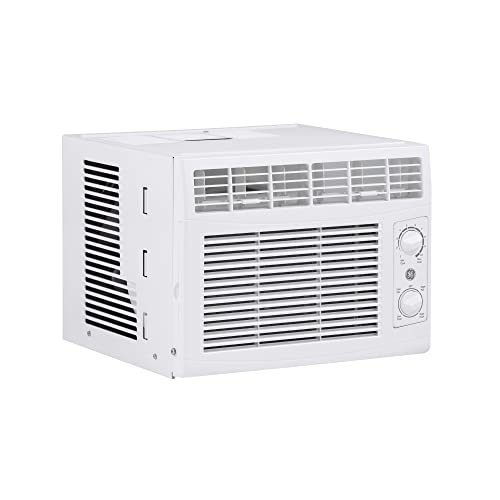
GE Window Air Conditioner Unit, 5,000 BTU for Small Rooms up to 150 sq ft. with Manual Adjustable Fan and Cooling Settings, Perfect for Small Bedroom or Living Room, Easy Install Kit Included, White
Check price on Amazon
Portable Air Conditioners For Indoor Office Bedroom, USB Charging Small Cooling Fan, 3-in-1 Portable AC Unit, Personal Mini Air Conditioner With 1000ml Water Tank
Check price on Amazon