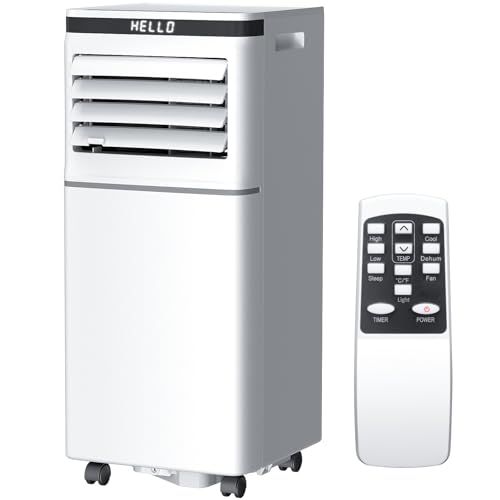
Different Types of Portable Air Conditioners
Portable air conditioners are a practical cooling option for rooms without ductwork, rentals, and temporary spaces. This guide breaks down every major type — from single-hose and dual-hose units to evaporative coolers, inverter models, and heat pump designs — so you can match the right configuration to your room, climate, and usage pattern.
Compare TypesWhy the type matters: Two portable AC units with similar cooling capacity can behave very differently depending on their hose design, compressor technology, and whether they handle humidity or add moisture. Choosing the right type for your climate and room layout is the single biggest factor in real-world comfort and efficiency.
The Main Portable AC Categories at a Glance
Portable air conditioners are generally grouped by how they manage airflow and condensation. The table below summarizes the most common configurations and where each one performs best. If you are still deciding between portable units and other formats, our broader comparison of air conditioning types for homes provides useful context.
| Type | Best For | Key Strength | Watch Out For |
|---|---|---|---|
| Single-Hose Portable AC | Small rooms, occasional use | Simple setup, lighter body | Negative pressure can draw in warm air |
| Dual-Hose Portable AC | Medium to large rooms, frequent use | Better cooling efficiency and pressure balance | Bulkier and more window-kit hardware |
| Self-Evaporating Portable AC | Low to moderate humidity rooms | Less frequent manual draining | Still needs drainage in very humid weather |
| Evaporative Portable Cooler | Dry climates, open or ventilated spaces | Low energy draw, adds moisture to dry air | Not a true AC; ineffective in humid climates |
| Inverter Portable AC | Bedrooms, home offices, extended use | Quieter, smoother temperature control | Higher upfront tier positioning |
| Portable AC with Heat Pump | Year-round use in transitional seasons | Heating and cooling in one unit | Heating output is modest for large rooms |
Detailed Breakdown of Each Portable AC Type
1. Single-Hose Portable Air Conditioner
The most common and straightforward design. One hose exhausts hot air out of a window while the unit draws indoor air across its evaporator coil to cool the room.
- Lighter and easier to move between rooms
- Simple window kit installation in most cases
- Creates slight negative pressure, which can pull warm air through gaps
- Best in smaller, well-sealed rooms with short cooling sessions
2. Dual-Hose Portable Air Conditioner
Two hoses work together: one draws outside air to cool the condenser, and the other exhausts hot air back outside. This keeps the room's air pressure closer to neutral.
- More consistent cooling in medium and large rooms
- Less warm outside air infiltration than single-hose designs
- Better choice for extended daily operation
- Some models add a built-in dehumidifier mode for humid seasons
Popular configurations include dual-hose portable AC with dehumidifier and dual-hose inverter models.
3. Self-Evaporating Portable Air Conditioner
These units reuse condensation water to help cool the condenser coil, reducing how often the water tank needs emptying. They are a practical choice for rooms where manual drainage is inconvenient.
- Less hands-on maintenance in normal humidity
- Still requires drainage in very humid conditions
- Often paired with dual-hose designs for better efficiency
See options in our guide to fully self-evaporating portable air conditioners.
4. Evaporative Portable Cooler (Swamp Cooler)
Not a refrigerated air conditioner. These units pull air through a wet cooling pad, lowering temperature through evaporation while adding moisture to the air.
- Effective in hot, dry climates with good ventilation
- Very low power draw compared with compressor-based units
- Ineffective and uncomfortable in humid climates
- Requires regular water refills and pad cleaning
Compare designs in our article on evaporative air cooler portable air conditioners.
5. Inverter Portable Air Conditioner
Inverter models use a variable-speed compressor that ramps output up or down instead of cycling fully on and off. The result is steadier room temperature and quieter operation.
- Smoother temperature control with fewer swings
- Quieter operation, especially in bedrooms and offices
- More efficient during long cooling sessions
- Often combined with dual-hose or heat pump features
Explore dual-hose inverter portable AC units and dual inverter models for advanced configurations.
6. Portable AC with Heat Pump
A reversible refrigerant cycle lets the unit cool in summer and provide supplementary heating in cooler months, making it a year-round option for rooms without ductwork.
- Cooling and heating from a single portable unit
- Useful for garages, converted rooms, and transitional seasons
- Heating capacity is generally modest for large spaces
See dual-hose portable AC with heater options for combined functionality.
Window Kit Compatibility and Installation
A portable AC is only as good as its exhaust setup. The type of window in your room directly affects which hose kit you need and how well the unit seals.
- Standard sliding or double-hung windows: Most portable units include a basic window kit that fits these frames with minimal adjustment.
- Crank-out and casement windows: These require a specialized kit. Look for a crank-out window kit for portable air conditioner models, and consider a dedicated crank-out window portable AC setup for a secure seal.
- Rental and temporary spaces: If you need to move the unit often, focus on models described as the easiest portable air conditioner to install.
Proper sealing around the window kit matters as much as the hose design. Gaps let hot outside air back in and undermine the cooling you are paying for in energy use.
How to Choose the Right Portable AC Type
Use the following decision path to narrow down the category that fits your situation:
- Step 1 — Check your climate: In humid regions, a compressor-based portable AC with dehumidification is essential. In dry climates, an evaporative cooler may be sufficient and uses far less power.
- Step 2 — Size the room: Match cooling capacity to square footage and heat load. A unit that is too small runs constantly; one that is oversized cycles inefficiently.
- Step 3 — Decide on hose design: Single-hose for occasional use in small rooms; dual-hose for larger rooms and daily operation.
- Step 4 — Consider noise and runtime: For bedrooms and home offices, inverter models are the better fit due to smoother, quieter operation.
- Step 5 — Plan for drainage: Self-evaporating designs reduce maintenance, but confirm drainage options for peak humidity months.
Portable AC Pros and Cons Across All Types
Regardless of type, portable air conditioners share a common set of trade-offs compared with window units, mini-splits, and central systems.
| Advantages | Limitations |
|---|---|
| No permanent installation or structural changes | Requires a window or vent path for exhaust |
| Movable between rooms | Generally louder than window or mini-split units |
| Works in rentals and spaces without ductwork | Floor footprint and hose routing take up space |
| Wide range of features: dehumidify, heat, inverter, smart control | Cooling efficiency is lower than ducted or mini-split systems |
If your space allows a permanent or semi-permanent installation, it is worth comparing portable units against ductless mini-split systems, which typically deliver higher efficiency and quieter operation over the long term.
Frequently Asked Questions
What is the difference between a single-hose and a dual-hose portable air conditioner?
Are evaporative portable coolers the same as portable air conditioners?
What is a self-evaporating portable air conditioner?
Can a portable air conditioner with a heat pump be used in winter?
Do inverter portable air conditioners save energy?
Ready to Pick the Right Portable AC Type?
Review the recommended models below, compare their features against your room size and climate, and choose the configuration that fits your space. Every unit listed is organized by tier so you can evaluate positioning without guesswork.
View Recommended Models