Energy Star Heating and Cooling: The Complete Guide
Understand how Energy Star certification works for HVAC systems, which product categories qualify, and how to pick an efficient heating and cooling setup that fits your home and climate.
START READINGWhy this guide matters: Heating and cooling typically accounts for the largest share of a home's energy use. An Energy Star certified system is independently verified to meet stricter efficiency thresholds than standard models, which means better performance per unit of energy over the life of the equipment. This guide explains what that certification actually covers, where it applies, and how to use it as a practical filter during your research.
What Is Energy Star Heating and Cooling?
Energy Star is a voluntary labeling program backed by the U.S. Environmental Protection Agency (EPA) and the U.S. Department of Energy. For heating and cooling equipment, the label indicates that a model has been tested and certified to meet or exceed specific efficiency criteria set for its product category. In practice, an Energy Star certified air conditioner or heat pump uses less energy to deliver the same amount of cooling or heating compared with a baseline model of the same type and capacity.
The program covers a wide range of residential and commercial HVAC equipment, including central air conditioners, heat pumps, ductless mini-splits, furnaces, boilers, and room air conditioners. Because each category has its own efficiency metric and threshold, the label means something slightly different depending on the product. Understanding those distinctions is the key to using the certification intelligently rather than treating it as a single universal stamp.
For homeowners, the practical takeaway is straightforward: Energy Star certification is a reliable starting filter. It narrows the field to models that have cleared an independent efficiency bar, after which you can compare capacity, features, noise levels, and installation requirements to find the right fit.
Which HVAC Products Carry Energy Star Certification?
The certification applies across the major heating and cooling categories. Each one is evaluated on the efficiency metric most relevant to how it operates.
Central Air Conditioners
Split-system and packaged central units are rated on SEER2 and EER2. Certified models must exceed the federal minimum efficiency standards for their size class.
Heat Pumps
Air-source heat pumps are evaluated on SEER2, EER2, and HSPF2, reflecting both cooling and heating performance across the seasons.
Ductless Mini-Splits
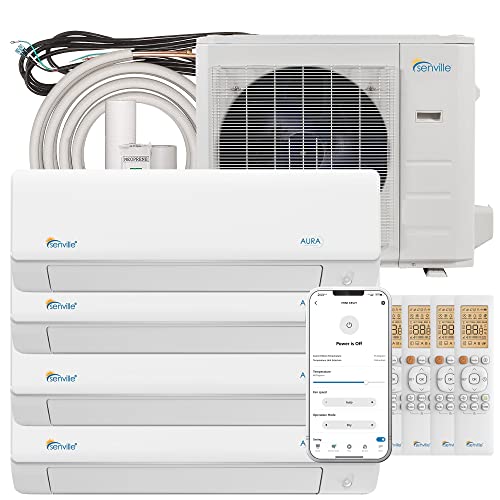
Single-zone and multi-zone ductless systems qualify under their own efficiency thresholds, making them a strong option for room-by-room control.
Window & Portable ACs
Room air conditioners are rated on CEER. Certified window and portable units meet stricter efficiency requirements than standard models in the same class.
Furnaces & Boilers
Gas furnaces are rated on AFUE, and certified models reach higher annual fuel utilization efficiency than baseline equipment.
Integrated Systems
Combined heating and cooling systems, including variable-speed setups, can qualify when the matched components meet the program criteria.
Efficiency Metrics Behind the Label
Energy Star certification is built on standardized efficiency metrics. Knowing what each one measures helps you compare models within a category and understand why a certified unit performs differently from a standard one.
| Metric | What It Measures | Applies To |
|---|---|---|
| SEER2 | Seasonal cooling efficiency over a full cooling season, adjusted to current DOE test procedures. | Central ACs, heat pumps, mini-splits |
| EER2 | Cooling efficiency at a specific peak-condition test point, useful for hot-climate performance. | Central ACs, heat pumps |
| HSPF2 | Seasonal heating efficiency for heat pumps across the heating season. | Air-source heat pumps |
| AFUE | Annual fuel utilization efficiency for combustion heating equipment. | Furnaces, boilers |
| CEER | Combined energy efficiency ratio for room air conditioners. | Window and portable ACs |
Higher values generally indicate better efficiency within the same metric and product class. The Energy Star HVAC program sets minimum thresholds for each category, and manufacturers submit models for third-party testing to confirm they meet those thresholds before the label can be applied.
Why Energy Star Certification Matters for Your Home
Choosing certified equipment is about more than a label on the box. The efficiency gains translate into practical benefits that compound over the life of the system.
- Lower energy use over time. Certified systems are designed to deliver the same comfort while drawing less power, which shows up in long-term operating performance rather than in a single seasonal cycle.
- Verified performance. Certification requires third-party testing, so the efficiency numbers on the spec sheet are independently confirmed rather than self-reported.
- Better alignment with building codes and incentives. Many utility rebate programs and tax incentives reference Energy Star criteria, making certified models a practical starting point when you plan an upgrade.
- Stronger resale positioning. Efficient HVAC equipment is a recognized home improvement that buyers and inspectors can verify.
Note on sizing: Efficiency and capacity are separate concerns. An oversized certified unit can still underperform in comfort and humidity control. Always confirm the correct capacity for your space — see our guide on how to size an air conditioner — before comparing efficiency tiers.
Energy Star Ductless Mini-Split Systems
Ductless systems have become one of the most popular ways to add efficient heating and cooling without extending ductwork. An Energy Star ductless mini-split qualifies under category-specific thresholds that account for both cooling and heating performance, which makes the certification especially meaningful for systems used year-round.
Ductless setups are particularly well suited to additions, converted spaces, and homes where duct losses would otherwise undermine efficiency. Because the indoor and outdoor units are matched, the certified rating applies to the combination rather than to a single component. If you are evaluating this route, our overview of ductless heating and air conditioning systems covers the configuration options, and the ductless mini-split guide explains how zones are planned.
For spaces that need both functions from a single unit, a energy efficient mini-split paired with a heat pump capability is often the most balanced choice. Homeowners comparing ducted and ductless approaches can review ductless vs ducted AC for a side-by-side breakdown of trade-offs.
Efficiency Tiers in Practice
Within the certified segment, models still vary in how far they exceed the minimum thresholds and in the features they offer. The tier descriptors below are used throughout this guide to describe relative market positioning without referencing specific figures.
| Tier | Best For | Typical Characteristics |
|---|---|---|
| Essential tier | Straightforward replacements and single rooms | Meets certification thresholds, single-speed or basic two-stage operation, standard feature set. |
| Balanced tier | Whole-home comfort with moderate climate swings | Higher certified ratings, two-stage or entry variable-speed compressors, improved humidity control. |
| Top-tier | Long-term primary systems in demanding climates | Variable-speed inverter compressors, zone control, quieter operation, advanced controls. |
| Premium tier | Maximum comfort and efficiency priorities | Highest certified ratings within the category, full variable-speed modulation, smart thermostatic integration. |
A balanced-tier model usually offers smoother temperature control than an essential-tier unit, while a top-tier system adds finer modulation and lower noise. The right tier depends on how much of the year you run the system and how sensitive your space is to temperature swings.
Related Energy Star Product Categories
Depending on your home's layout and your goals, the certified category you choose will differ. The following starting points cover the most common paths:
- Energy Star air conditioner — the general entry point for cooling-focused research.
- Energy Star certified air conditioners — a closer look at what certification verifies across cooling categories.
- Energy Star certified window air conditioners — for single-room cooling without installation complexity.
- Energy Star certified portable air conditioner — for flexible placement and temporary setups.
- Energy efficient heating and cooling — a broader view that includes heating performance alongside cooling.
- Energy Star certified AC — the certification criteria explained for air conditioning equipment specifically.
How to Choose an Energy Star System: A Practical Checklist
The certification narrows the field, but a successful installation depends on matching the system to your home. Work through the following points before committing to a model.
Before You Select a Model
- Confirm the correct cooling and heating capacity for your space rather than relying on the size of the unit being replaced.
- Check which efficiency metric applies to the category you are considering, and compare like with like.
- Review the matched system rating, since outdoor and indoor components are certified as a combination.
- Consider climate: heating performance matters more in cold regions, and peak-condition cooling efficiency matters more in hot ones.
- Verify local utility rebate and tax incentive eligibility, which frequently reference Energy Star criteria.
- Plan for professional installation and confirm that the contractor will perform a proper load calculation.
- Ask about warranty terms, which can differ between certified and standard models.
If you are still narrowing down the format, the energy efficient air conditioning systems overview compares the main configurations. For homes adding ductless zones, the energy efficient ductless air conditioner guide covers what to look for in a certified unit.
Maintaining Certified Equipment for Long-Term Performance
Certification reflects performance at the point of manufacture and installation. Keeping the system at that level requires routine care. Filter replacement, coil cleaning, and periodic professional checks preserve efficiency and protect the investment over the life of the equipment. Our energy saving tips for AC cover the habits that make the largest difference, and the energy efficiency HVAC guide explains how maintenance affects measured performance.
It is also worth confirming that your thermostat supports the scheduling and setback features that efficient systems are designed to use. A compatible control strategy helps the system run closer to its rated performance rather than cycling unnecessarily.
Frequently Asked Questions
Does Energy Star certification apply to both heating and cooling equipment?
Yes. The program covers cooling equipment such as central air conditioners and room ACs, heating equipment such as furnaces and boilers, and combined systems such as heat pumps and ductless mini-splits. Each category has its own efficiency metric and threshold.
Is an Energy Star certified unit always the most efficient option?
Certification sets a minimum efficiency bar rather than a maximum. Many certified models exceed the threshold, and the most efficient units in a category typically carry the label. Comparing certified models within a category is the practical way to identify the strongest performers.
Can I get incentives for choosing certified equipment?
Many utility rebate programs and federal or state tax incentives reference Energy Star criteria as an eligibility condition. Eligibility rules vary by location and change over time, so confirm current requirements with your utility or a qualified contractor before purchasing.
Do ductless mini-splits qualify for Energy Star certification?
Yes. Ductless mini-split systems are evaluated under their own category thresholds that account for both cooling and heating performance. Certified ductless models are widely available across single-zone and multi-zone configurations.
What should I check before buying a certified system?
Confirm the correct capacity for your space, verify that the matched indoor and outdoor components carry the certification together, review the efficiency metric that applies to the category, and check local incentive eligibility. Professional installation and a proper load calculation remain essential regardless of the label.