
Energy Star Ductless Mini Split: The Complete Guide to Efficient Zone Comfort
Everything you need to know about Energy Star certified ductless mini split systems — how they work, why certification matters, how to size and choose the right configuration, and which tier fits your home.
Explore Buying FactorsWhy this guide matters: If you are researching an Energy Star ductless mini split, you already know you want efficient, flexible cooling without ductwork. This guide takes you beyond the marketing copy and explains what Energy Star certification actually verifies, how mini split zoning works in practice, and what separates an entry-level certified unit from a premium one — so you can make a confident, informed decision.
What Is an Energy Star Ductless Mini Split?
A ductless mini split is a heating and cooling system made of two main components: an outdoor condenser and one or more indoor air handlers. Instead of pushing conditioned air through a network of ducts, each indoor unit delivers air directly into the room it serves. A small conduit — typically around three inches in diameter — carries the refrigerant lines, power, and condensate drain through an exterior wall. This design eliminates duct losses and allows room-by-room temperature control.
An Energy Star ductless mini split is a system that has been independently certified by the U.S. Environmental Protection Agency to meet strict efficiency requirements. Certification is not a marketing label applied at will; manufacturers must submit models for testing, and the certified ratings are published in a public database. For consumers, the practical takeaway is that a certified unit has demonstrated measurable performance rather than simply claiming to be efficient.
Most modern Energy Star ductless mini splits are also air-source heat pumps. That means the same system cools in summer and heats in winter by reversing the refrigerant cycle. Units are rated on two key metrics: SEER2 for cooling efficiency and HSPF2 for heating efficiency. Higher ratings indicate more efficient operation, though the real-world benefit depends on climate, installation quality, and how the system is used.
Verified Efficiency
Energy Star certification requires third-party testing and published ratings, giving you a reliable benchmark when comparing models.
Zone-by-Zone Control
Each indoor air handler can be set independently, so unused rooms do not need to be conditioned.
No Duct Losses
Because conditioned air is delivered directly into the room, the system avoids the energy losses typical of leaky ductwork.
Year-Round Comfort
Heat pump functionality provides both cooling and heating from a single system in moderate and cold climates.
How Energy Star Certification Works for Mini Splits
Energy Star requirements for ductless mini splits are based on the system's efficiency ratings, including SEER2 and HSPF2. The thresholds are updated periodically to reflect advances in technology, which is why newer certified models tend to outperform older ones. Certification also covers standby power consumption — the electricity a system draws when it is not actively conditioning air. This matters because a system that sits idle for much of the day can still waste energy through inefficient electronics.
It is worth understanding what certification does not cover. Energy Star evaluates the equipment, not the installation. A certified unit installed with an undersized line set, a poorly sealed wall penetration, or an incorrect refrigerant charge will not deliver its rated efficiency. This is why the quality of the installer matters as much as the efficiency label. When comparing quotes, look for contractors who perform a room-by-room load calculation rather than sizing by square footage alone.
For a broader look at how efficiency labels work across product categories, see our guide to Energy Star HVAC systems. If you are specifically comparing heat pump configurations, the Energy Star mini split heat pump overview explains how heating performance is rated.
How a Ductless Mini Split System Works
Understanding the mechanics helps you evaluate installer recommendations and avoid common sizing mistakes. A ductless mini split operates on a closed refrigerant loop:
- The outdoor condenser compresses refrigerant and releases heat to the outside air during cooling mode.
- The refrigerant travels through insulated copper lines to the indoor air handler.
- The indoor coil absorbs heat from the room air and transfers it to the refrigerant.
- The blower pushes the cooled air back into the room through adjustable louvers.
- In heating mode, the cycle reverses, and the indoor unit releases heat into the room.
Inverter-driven compressors are standard on Energy Star certified models. Instead of cycling on and off at full power, an inverter compressor varies its speed to match the load. This produces steadier temperatures, less wear on the compressor, and quieter operation. A non-inverter system may be the entry point into ductless cooling, but certified inverter models are the balanced and premium options in most product lines.
If you are weighing ducted versus ductless configurations for a renovation, the comparison of ducted vs ductless systems is a useful reference. For homes without existing ductwork, the advantages of ductless air conditioning for older homes are particularly relevant.
Single-Zone vs Multi-Zone Energy Star Ductless Mini Split
One of the first decisions in specifying a system is how many zones you need. The two configurations serve different purposes:
| Configuration | Typical Use | Strengths | Considerations |
|---|---|---|---|
| Single-zone | One room, addition, garage, or studio | Simplest installation, lowest complexity, easiest to maintain | Only conditions one space; not expandable without adding a second system |
| Multi-zone | Whole-home or multi-room coverage (2–5 zones typical) | Independent temperature control per room, single outdoor unit | Requires careful load calculation per zone; line set routing is more involved |
Multi-zone systems are often the better fit for homes where different rooms have different occupancy patterns — for example, bedrooms that are only used at night and a living area used during the day. A common mistake is to oversize the outdoor unit so that all zones can run at maximum simultaneously. In practice, diversity factors mean the outdoor unit rarely needs to serve every zone at full load at once. An experienced installer will calculate this properly rather than simply summing the indoor unit capacities.
For larger layouts, a five-zone configuration may be appropriate; the overview of five-zone mini split systems explains how capacity is distributed across multiple air handlers.
Sizing an Energy Star Ductless Mini Split Correctly
Sizing is the single most consequential decision in any mini split project. An undersized system will struggle to reach the setpoint on hot days and will run continuously. An oversized system will cool the room quickly but cycle frequently, which can leave humidity high and cause uneven temperatures. Neither outcome reflects the efficiency the equipment is capable of.
Proper sizing begins with a room-by-room load calculation that accounts for:
- Square footage and ceiling height
- Window area, glazing type, and orientation
- Insulation levels in walls, ceilings, and floors
- Air infiltration and exterior door usage
- Occupant count and internal heat gains from appliances
- Local climate design conditions
Online BTU calculators can provide a rough starting point, but they are not a substitute for a proper Manual J load calculation. For reference, a well-insulated room of roughly 150–250 square feet might call for an indoor unit in the 8,000–10,000 BTU range, but the actual number depends on the factors above. The guide to how to size an air conditioner walks through the calculation in more detail.
Practical note: In multi-zone systems, each indoor unit should be sized for its own room load — not for a fraction of the outdoor unit's total capacity. The outdoor unit is then selected based on the combined load and the manufacturer's diversity allowance.
Understanding SEER2 and HSPF2 on Certified Units
Energy Star certified ductless mini splits publish both SEER2 and HSPF2 ratings. SEER2 measures cooling efficiency over a simulated season, while HSPF2 measures heating efficiency. Because the ratings are standardized, they allow meaningful comparison between models from different manufacturers.
A higher SEER2 rating generally indicates a more efficient cooling system, but the difference in real-world energy use between, say, a mid-range certified unit and a top-tier certified unit depends on how much the system runs and how well it is installed. In mild climates with modest cooling loads, the efficiency gap between tiers may be less consequential than in hot climates with long cooling seasons. The explanation of what the SEER rating means covers the underlying methodology.
It is also important to distinguish between equipment ratings and installed performance. A certified unit paired with a mismatched indoor coil, an incorrect refrigerant charge, or a poorly sealed line set will not achieve its rated numbers. Commissioning — verifying airflow, charge, and operating pressures at installation — is what converts a certification label into real efficiency.
Energy Star Ductless Mini Split Product Tiers
Within the certified category, manufacturers position models across several tiers. The table below uses a consistent classification system — entry-level, mid-range, premium, and high-end — to help you understand where a given model sits relative to others in the market. These tiers reflect relative positioning, not absolute figures.
| Tier | Best For | Typical Characteristics |
|---|---|---|
| Entry-level | Single rooms, additions, and buyers who want certified efficiency with a straightforward feature set | Single-zone configurations, basic inverter compressor, standard washable filter, wall-mounted indoor unit, essential smart features may be absent |
| Mid-range | Multi-zone homes and buyers who want a balance of features, efficiency, and expandability | Higher SEER2/HSPF2 ratings than entry-level, quieter indoor units, improved filtration options, Wi-Fi control common, wider range of indoor unit styles |
| Premium | Whole-home comfort with advanced controls and low-noise operation | Top efficiency ratings within the certified category, refined airflow design, advanced filtration, multi-zone flexibility, robust warranty coverage |
| High-end tier | Cold-climate installations, large multi-zone layouts, and projects where performance at temperature extremes matters | Enhanced heating performance at low outdoor temperatures, commercial-grade components, extended zone capacity, sophisticated diagnostic and control features |
Mid-range models generally offer the best balance for most residential projects. They tend to include the feature set that matters day to day — quiet operation, app-based scheduling, and better filtration — without the specialized cold-climate engineering that only some households need. Entry-level certified units are a solid choice when the priority is verified efficiency in a single space, while premium and high-end tiers make sense when the system will serve multiple rooms or operate in demanding conditions.
Key Factors When Choosing an Energy Star Ductless Mini Split
1. Load Calculation and Zone Design
Insist on a room-by-room load calculation before accepting any system recommendation. A contractor who sizes by square footage alone is skipping a step that directly affects comfort and efficiency. Ask to see the calculation and confirm that each indoor unit matches its room's load.
2. Indoor Unit Style
Wall-mounted units are the most common and generally the most cost-effective to install. For rooms where a wall unit is visually intrusive, ceiling cassettes and floor-mounted units are alternatives. Each style has different installation requirements and airflow patterns. The guide to ductless ceiling cassette mini split air conditioners covers the ceiling-mounted option, and the floor-mounted mini split overview explains the low-wall configuration.
3. Refrigerant and Line Set Length
Line set length and routing affect both installation complexity and performance. Longer runs may require additional refrigerant charge and careful attention to vertical rise limits. Confirm the maximum line length and elevation for the specific model, and make sure the installer accounts for any pre-charged refrigerant allowances.
4. Cold-Climate Performance
If you rely on the heat pump for winter heating, check the system's rated heating capacity at your local design temperature — not just the HSPF2 rating. Cold-climate certified models are engineered to maintain capacity at lower outdoor temperatures. The Energy Star mini split overview provides additional context on heating performance comparisons.
5. Controls and Smart Features
App-based control, scheduling, and geofencing can meaningfully reduce energy use by aligning operation with occupancy. Not all smart features are equally well implemented, so read reviews for the specific model. Compatibility with common smart home platforms is worth confirming if you already use one.
6. Filtration and Indoor Air Quality
Most certified mini splits include washable filters and some offer additional filtration stages. If allergies or indoor air quality are a priority, compare the filtration options across tiers. Higher-tier models often include more advanced filter media and easier-access filter designs.
7. Installer Quality and Warranty
Warranty terms often depend on installation by a licensed contractor, and some manufacturers require registration within a specific window. Confirm the warranty requirements before purchase and choose an installer with verifiable experience on ductless systems. Installation-related questions are covered in the ductless mini split installation cost guide, which also explains what a proper installation includes.
Recommended Energy Star Ductless Mini Split Systems
⚠️ AFFILIATE DISCLOSURE: This website contains affiliate links. As an Amazon Associate, we earn from qualifying purchases. If you make a purchase through these links, we may receive a small commission at no additional cost to you. Read our full affiliate policy.

DELLA Serena 12000 BTU Mini Split AC & Heat Pump,Energy Star 22 SEER2, 230V | 1 Ton Inverter Ductless AC System for Rooms up to 550 Sq.Ft, WiFi & Voice Control, Pre-Charged, 16.4ft Install Kit
Check price on Amazon
DELLA Serena Series 9800 BTU Mini Split AC, Energy Star, 22 SEER2 115V | 0.82 Ton Inverter Heat Pump Ductless AC System for Rooms up to 400 Sq.Ft, WiFi & Alexa Control, Pre-Charged, 16.4ft Kits
Check price on Amazon
Cozeware Energy Star 18000 BTU 2 Zone Mini Split AC/Heating System 9K+9K | MultiCoze Pro 23 SEER2 208-230V Pre-charged Inverter Dual Zone Mini Split Air Conditioner, Compatible with Wi-Fi & App
Check price on Amazon
Electrolux Vanguard 24,000 BTU 23 SEER2 Mini-Split AC, Heat Pump, 1250 SqFt | Ductless, 23 SEER2 Inverter, 230V, Wall Mounted Air Conditioner Heater Combo for Rooms up to 1,250 Sq Ft
Check price on Amazon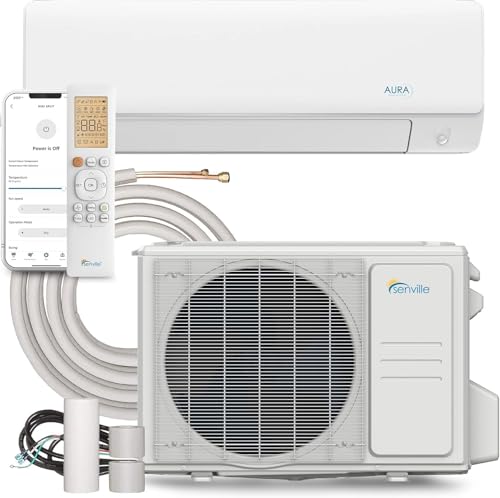
Senville AURA Mini Split Air Conditioner, Heat Pump, White, 15000 BTU
Check price on Amazon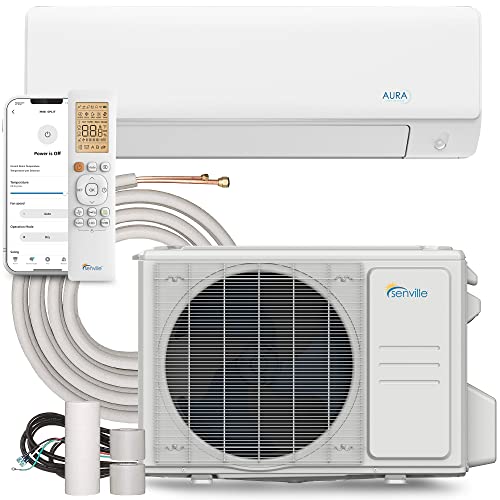
Senville AURA Mini Split Air Conditioner, Heat Pump, White, 12000 BTU | Energy Star Certified, Works with Alexa, Ductless, Wall Mounted, AHRI Certified, 208-230V Inverter
Check price on Amazon
TURBRO 12,000 BTU Ductless Mini Split Inverter AC with Heat Pump 23 SEER2 | R454B 115V 1 Ton Inverter AC System, Energy Star, WiFi Control, Up to 750 Sq Ft, With Installation Kit, Greenland
Check price on Amazon
Cozeware Energy Star 38000 BTU 4 Zone Mini Split AC/Heating System | 12K+12K+9K+9K MultiCoze Pro 23 SEER2 208-230V Pre-charged Inverter Quad Zone Mini Split AC, Compatible with Wi-Fi & App
Check price on AmazonMaintaining Efficiency Over Time
An Energy Star certified mini split is designed to maintain its efficiency across its service life, but only with routine care. The most common causes of declining performance are clogged filters, dirty coils, and blocked condensate drains. Each of these is addressable with basic maintenance.
- Filters: Clean or replace indoor unit filters every one to three months, depending on dust levels and usage.
- Outdoor coil: Keep the condenser free of leaves, pollen, and debris. Rinse the coil gently when it becomes visibly soiled.
- Condensate drain: Check for slow drainage or standing water. A clogged drain can cause water damage and shut down the system.
- Professional service: Schedule an annual tune-up that includes refrigerant charge verification, electrical checks, and a coil cleaning. The overview of HVAC tune-up costs explains what a comprehensive service visit typically includes.
If the system develops performance issues between service visits, the guides to fixing an air conditioner and troubleshooting common problems can help you identify whether the issue is something simple — like a clogged filter — or requires a technician. Prompt attention to minor issues prevents more serious repairs later.
Installation Considerations for Energy Star Mini Splits
Ductless mini split installation is more involved than plugging in a portable unit, but it is less invasive than adding ductwork. The main steps include mounting the indoor and outdoor units, drilling the wall penetration, running the line set and drain, evacuating the system, and commissioning it. Each step affects performance.
One of the most common installation mistakes is inadequate condensate drainage. The indoor unit produces water during cooling, and if the drain is not pitched correctly, water can back up into the unit or damage the wall. Another frequent issue is an improperly torqued flare connection, which can lead to a slow refrigerant leak. A qualified installer will pressure-test and evacuate the system before releasing refrigerant.
For a broader discussion of what professional installation entails, including timeframes and scope, the ductless mini split AC installation cost page is a useful resource. If you are comparing systems that include heat pump functionality, the ductless mini split heat pump installation cost guide covers the additional considerations for heating-focused configurations.
Frequently Asked Questions
What makes an Energy Star ductless mini split different from a standard mini split?
An Energy Star certified ductless mini split meets stricter efficiency thresholds set by the U.S. Environmental Protection Agency. Compared with standard models, certified units typically use a variable-speed inverter compressor, achieve higher SEER2 and HSPF2 ratings, and are independently tested to confirm performance. This means more consistent temperatures, quieter operation, and reduced electricity use over the system's lifespan.
How many zones can an Energy Star ductless mini split support?
Most residential multi-zone Energy Star ductless mini split systems support between two and five indoor air handlers connected to a single outdoor condenser. The number of zones depends on the model's capacity and the manufacturer's specifications. For larger homes, some commercial-grade systems support additional zones, though each zone adds installation complexity and requires careful load calculation.
Do Energy Star ductless mini splits work as heat pumps in winter?
Yes. Most Energy Star ductless mini split systems are air-source heat pumps, meaning they provide both cooling in summer and heating in winter. Models with a high HSPF2 rating perform well in moderate climates, while cold-climate versions are designed to operate at lower outdoor temperatures. This dual functionality makes them a strong year-round comfort solution.
What maintenance does an Energy Star ductless mini split require?
Routine maintenance includes cleaning or replacing indoor air filters every one to three months, keeping the outdoor condenser coil free of debris, checking the condensate drain for clogs, and scheduling a professional tune-up once per year. Proper maintenance preserves efficiency ratings and extends the life of the system.
Can an Energy Star ductless mini split be installed in an older home without ductwork?
Yes, this is one of the primary advantages. Ductless systems require only a small three-inch hole through an exterior wall for the refrigerant line set, power, and drain. This makes them well suited to older homes, additions, and rooms where extending ductwork would be impractical or invasive.
Final Considerations
Choosing an Energy Star ductless mini split is a decision that rewards careful research. The certification provides a verified baseline of efficiency, but the actual performance you experience depends on proper sizing, installation quality, and maintenance. By understanding how these systems work, what the certification verifies, and how product tiers differ, you are in a much stronger position to evaluate installer recommendations and choose a configuration that fits your home.
For a broader comparison of efficient cooling options, the overview of energy-efficient mini split air conditioners provides additional context. If you are exploring the relationship between efficiency certifications and ductless heat pump performance, the Energy Star mini split heat pump guide covers the heating side in more detail.