ENERGY STAR Mini Split Heat Pump: What Certification Means for Your Home
An ENERGY STAR mini split heat pump combines ductless convenience with verified efficiency for both cooling and heating. This guide explains how certification works, what ratings to check, and how to choose a system that matches your climate and your home.
A practical buyer's reference for certified ductless heat pumpsWhy certification matters: Not every mini split heat pump meets ENERGY STAR requirements. Certified models are independently verified to reach efficiency levels above the federal minimum, which typically translates into steadier performance, lower energy use over time, and stronger heating capability in cool weather. For homeowners planning a long-term investment, the certification label is a useful filter before comparing specific models.
What ENERGY STAR Certification Means for Mini Split Heat Pumps
ENERGY STAR is a voluntary labeling program administered by the U.S. Environmental Protection Agency. Products earn the label by meeting or exceeding efficiency specifications that are updated periodically. For mini split heat pumps, the specification covers both cooling and heating performance, which is important because these systems often run year-round.
Certification is model-specific. Two systems from the same brand may look similar but only one may carry the label. The label is not a marketing claim — it reflects test data submitted to the program and verified against published criteria.
The broader context of efficiency labeling is covered in the ENERGY STAR HVAC overview, which explains how the program applies across heating and cooling equipment categories.
Why Both Cooling and Heating Are Evaluated
Older efficiency programs focused mainly on cooling. Modern mini split heat pumps are often used as primary heating sources, so the specification now weighs heating efficiency alongside cooling. That dual focus is what separates a certified heat pump from a certified air conditioner with a heating mode added on.
How a Mini Split Heat Pump Works
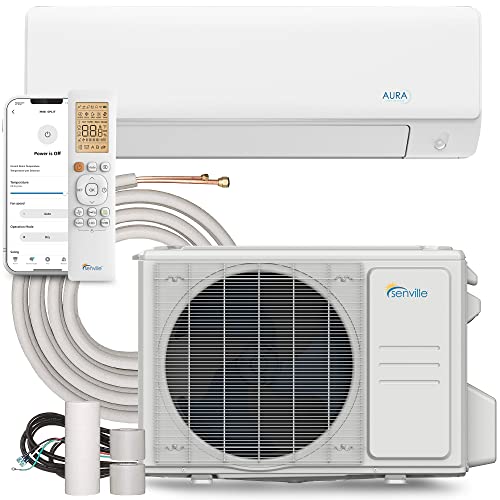
A mini split heat pump has an outdoor unit and one or more indoor air handlers connected by refrigerant lines. In cooling mode, the system absorbs heat from indoor air and releases it outside. In heating mode, a reversing valve changes the refrigerant flow so the system absorbs heat from outdoor air and releases it indoors — even when the outdoor air feels cold.
Most certified models use inverter-driven compressors that modulate speed to match demand. Instead of cycling on and off at full power, the compressor adjusts continuously, which supports steadier temperatures and better humidity control. The difference between this technology and older fixed-speed equipment is explained in the inverter vs non-inverter comparison.
For a broader explanation of ductless systems, the ductless mini split air conditioners and heat pumps guide covers components, configurations, and typical applications.
Efficiency Ratings to Check on a Certified Model
Certification is based on specific ratings, and understanding them helps you compare models that all carry the label. The most relevant ratings are:
- SEER2: Seasonal cooling efficiency. Higher values indicate more efficient cooling across a typical season.
- EER2: Peak cooling efficiency at a specific test condition. Useful for comparing performance on the hottest days.
- HSPF2: Seasonal heating efficiency. Higher values indicate more efficient heating across a typical heating season.
- COP at low temperature: Some listings report heating performance at cold outdoor conditions, which matters in cooler climates.
Certification thresholds are set per category, so a system can be certified without being the most efficient model in its class. If efficiency is a priority, compare ratings among certified models rather than stopping at the label.
Shopping tip: Two certified systems can differ meaningfully in heating efficiency. If the heat pump will carry most of your winter heating load, prioritize HSPF2 and low-temperature heating performance, not just the cooling rating.
Market Tiers Among Certified Mini Split Heat Pumps
Certified models span a range of build quality and features. The tiers below describe relative market position and help set expectations before comparing specific systems.
| Tier | Typical Characteristics | Best For |
|---|---|---|
| Entry-level certified | Meets certification thresholds; standard features; single-zone focus | Supplemental heating and cooling in one or two rooms |
| Mid-range certified | Stronger efficiency ratings; quieter operation; improved filtration | Primary comfort systems in most homes |
| Premium certified | High efficiency across both seasons; advanced controls; refined build | Whole-home comfort and long-term efficiency goals |
| Top-tier certified | Cold-climate heating performance; multi-zone flexibility; smart integration | Homes relying on the heat pump as the main heating source |
Mid-range certified models often provide the most balanced combination of efficiency and features for typical homes. Premium and top-tier systems are worthwhile investments when the heat pump will run frequently or when winter performance is a priority.
Sizing a Certified Mini Split Heat Pump
Sizing matters as much for a certified heat pump as for any other HVAC system. An undersized unit struggles on peak days; an oversized unit cycles too often and may leave humidity high. The table below offers a starting point, but a professional load calculation is always the final word.
| Room Size | Typical Capacity Range | Best For |
|---|---|---|
| Up to 350 sq ft | 9,000 – 12,000 BTU | Bedrooms, home offices, small studios |
| 350 – 550 sq ft | 12,000 – 18,000 BTU | Living rooms, master bedrooms, open kitchens |
| 550 – 800 sq ft | 18,000 – 24,000 BTU | Large living areas, open-plan spaces |
| 800 – 1,200 sq ft | 24,000 – 36,000 BTU | Multi-zone coverage, large additions |
Ceiling height, insulation, window area, sun exposure, and occupancy all shift the calculation. The guides on mini split for 500 square feet, 600 square feet, and 1,200 square feet provide more specific context for common room sizes.
Cold-Climate Performance: What to Look For
Not every certified heat pump is designed for cold climates. Certification confirms efficiency at test conditions, but it does not guarantee strong heating output at very low outdoor temperatures. Homeowners in cooler regions should look for:
- Rated heating capacity at low outdoor temperatures — the closer this stays to the rated capacity, the better the cold-weather performance.
- Operating range — the lowest outdoor temperature at which the system can still provide heat.
- Defrost strategy — how the system manages frost on the outdoor coil.
- Backup heating plan — whether an existing furnace or electric heat will assist on the coldest days.
Comparing a certified heat pump to a standard air conditioner is covered in the heat pump vs air conditioner guide, which explains where heat pumps offer advantages and where the comparison depends on climate.
Installation Quality Determines Real-World Efficiency
A certified system only performs to its rating when installed correctly. Key installation factors include:
- Correct indoor unit placement — clear airflow and a drain path that works with gravity.
- Proper outdoor unit location — shaded, ventilated, and protected from snow accumulation in cold climates.
- Line set length within manufacturer limits — longer runs can reduce capacity.
- Dedicated electrical circuit — confirmed panel capacity before installation.
- Commissioning — verifying refrigerant charge and airflow after installation.
The guides on installing a mini split and installing a mini split AC system walk through the process in more detail. Homeowners planning a multi-zone layout may also want to review the ductwork design guide for context on room-by-room load planning, even though mini splits do not use ducts.
Maintenance That Preserves Efficiency
Certified efficiency can be lost to neglected maintenance. The most important tasks are straightforward:
- Clean or replace filters regularly. Restricted airflow reduces efficiency and can cause coil freezing.
- Keep the outdoor coil clear. Remove leaves, pollen, and debris.
- Check the condensate drain. A blocked drain can cause water backup indoors.
- Schedule annual professional service. A technician can verify refrigerant charge and electrical connections.
- Inspect line set insulation. Damaged insulation reduces heating efficiency in particular.
Many of the troubleshooting principles in the fixing an air conditioner guide apply to mini splits as well, though some checks are specific to ductless equipment.
Certified Mini Split vs Other Efficient Options
| System | Best For | Considerations |
|---|---|---|
| ENERGY STAR mini split heat pump | Ductless homes, additions, zone comfort, year-round heating and cooling | Requires wall or ceiling space for indoor units |
| ENERGY STAR central heat pump | Whole-home systems with existing ducts | Duct losses and installation complexity |
| Standard mini split | Single-room cooling where certification is not a priority | May have lower efficiency and weaker cold-weather heating |
| Window or portable heat pump | Temporary or rental situations | Lower efficiency, exhaust or window requirements |
For homeowners comparing ducted and ductless options, the ductless heating and air conditioning systems guide and the mini split air conditioning and heating systems overview provide additional context.
How to Verify Certification Before You Commit
Because certification is model-specific, verification is a simple but important step:
- Locate the exact model number on the unit or the listing.
- Check the ENERGY STAR product database for that model number.
- Confirm that both the outdoor and indoor units are part of the certified system.
- Compare the certified ratings against other certified models if efficiency is a priority.
Verification tip: Certification applies to a matched system. Mixing an indoor unit from one system with an outdoor unit from another can change performance and may void certification claims.
Common Mistakes to Avoid
- Assuming every mini split heat pump is certified. Verify the model number.
- Choosing by cooling rating alone. If the heat pump will run in winter, heating efficiency matters equally.
- Ignoring cold-climate ratings. Certification does not guarantee strong performance at low outdoor temperatures.
- Oversizing or undersizing the system. Always verify with a room-by-room load calculation.
- Delaying maintenance. Dirty filters and coils erode the efficiency you paid for.
Frequently Asked Questions
What does ENERGY STAR certification mean for a mini split heat pump?
ENERGY STAR certification means the system meets or exceeds efficiency thresholds set by the U.S. Environmental Protection Agency. For mini split heat pumps, certification considers both cooling and heating efficiency, so a certified model is verified to perform at a higher efficiency level than minimum federal standards.
Is an ENERGY STAR mini split heat pump worth choosing over a standard model?
For most homeowners, yes. Certified models typically offer better long-term efficiency, quieter operation, and stronger heating performance in cool weather. The benefit is greatest when the system will run frequently or will serve as the primary heating source.
Do ENERGY STAR mini split heat pumps work in cold climates?
Many certified models are designed for cold-climate operation and maintain meaningful heating capacity at low outdoor temperatures. Performance varies by model, so check the rated heating capacity at your local winter design temperature before deciding.
How do I verify that a mini split is actually ENERGY STAR certified?
Check the ENERGY STAR product database for the exact model number. Certification is model-specific, so confirm the number on the unit's nameplate matches the listing before purchase or installation.
Can a certified mini split heat pump replace a furnace entirely?
In many homes, a cold-climate certified heat pump can handle most or all of the heating load. In very cold climates, a backup heating source may still be recommended. A load calculation and a discussion with an installer will clarify what is realistic for your home.
Ready to Compare Certified Mini Split Heat Pumps?
Use this guide to narrow down capacity, climate performance, and tier. Then review the recommended certified systems below to find a configuration that matches your home.
Explore Ductless Mini Split Systems