
Heating and Air Conditioning in One Unit: The Complete Guide
If you are researching combined heating and cooling systems, you are in the right place. This guide explains how one-unit HVAC systems work, which types suit which homes, how to size them correctly, and what to verify before you commit to a purchase.
Explore System TypesWhy this guide matters: A heating and air conditioning in one unit system is a significant long-term investment for any home. Buyers who understand system types, sizing principles, efficiency ratings, and installation requirements consistently make better decisions than those who choose based on a single spec sheet. Read through the sections below to build that understanding before you compare products.
What Is a Heating and Air Conditioning in One Unit System?
A heating and air conditioning in one unit system combines the functions of a heater and an air conditioner into a single piece of equipment. Instead of purchasing and maintaining two separate appliances, homeowners install one system that handles both seasonal needs. The most common examples are heat pumps, packaged units that pair a gas furnace with an electric air conditioner, and ductless mini-split systems with heat pump capability.
The appeal is straightforward: one unit means one installation point, one set of controls, and one maintenance schedule. Combined systems also tend to save floor and wall space compared with separate heating and cooling appliances. For homes without existing ductwork, ductless combined systems offer a practical path to year-round comfort without a major renovation.
It is important to understand that "one unit" does not always mean "one cabinet." A central heat pump system, for example, uses an outdoor unit and an indoor air handler connected by refrigerant lines, yet it is still classified as a single combined system because both heating and cooling are produced by the same refrigerant cycle. The term describes the function, not necessarily the physical enclosure.
If you want a broader background on how these systems compare with standalone cooling equipment, the article on heat pump vs air conditioner explains the differences in detail and is a useful companion read to this guide.
Types of Heating and Air Conditioning in One Unit Systems
Combined systems fall into several categories, each with distinct installation requirements and ideal use cases. The table below summarizes the main types, followed by a closer look at each one.
| System Type | Heating Method | Ductwork | Best For |
|---|---|---|---|
| Packaged Unit | Gas furnace or electric heat | Required | Homes with limited indoor space |
| Central Heat Pump | Refrigerant cycle (reverse) | Required | Mild to moderate climates |
| Ductless Mini-Split | Refrigerant cycle (reverse) | Not required | Older homes, additions, room-by-room control |
| Window Combination Unit | Electric resistance or heat pump | Not required | Single rooms, apartments, renters |
Packaged Heating and Cooling Unit
A packaged unit houses the compressor, condenser, evaporator, and heating element in a single outdoor cabinet. It is typically installed on a concrete pad beside the home or on the roof. Because all components live outdoors, packaged units free up indoor closet space that a split system would otherwise occupy.
Packaged systems are common in manufactured homes, small commercial buildings, and residences where indoor mechanical space is scarce. They rely on a duct network to distribute conditioned air throughout the home.
Central Heat Pump System
A central heat pump uses the same refrigerant cycle for both heating and cooling. In summer, it moves heat from indoors to outdoors. In winter, a reversing valve changes the flow direction so the system extracts heat from outdoor air and releases it indoors.
These systems are highly efficient in moderate climates. In regions with prolonged freezing temperatures, a supplemental heating element or a dual-fuel configuration may be necessary. The guide on heat pump cooling and heating split systems covers this configuration in more depth.
Ductless Mini-Split with Heat Pump
A ductless mini-split connects one outdoor compressor to one or more indoor air handlers mounted on walls or ceilings. Each indoor unit can be controlled independently, which allows room-by-room zoning without a duct network.
This configuration is particularly valuable in older homes that lack ductwork, in room additions, and in properties where installing ducts would be disruptive or impractical. The article on heating with a mini-split explains how these systems perform in cold weather and what to expect from their heating output.
Window Combination Unit
A window combination unit fits into a standard window frame and provides both heating and cooling for a single room. Heating is usually provided by electric resistance coils or, in more advanced models, by a small heat pump cycle.
These units are the simplest entry point into combined heating and cooling. They require no ductwork and minimal installation work. The article on heat and air conditioner window units covers sizing, installation, and performance expectations for this category.
Two related categories are worth mentioning. Wall-mounted combination units are similar in concept to window units but are installed through an exterior wall; the guide on heat and air units for walls explains the installation differences. Meanwhile, homeowners comparing a combined system against a traditional furnace plus separate air conditioner may find the article on gas furnace with air conditioner configurations helpful for understanding the alternative approach.
How a Single Unit Delivers Both Heating and Cooling
Understanding the underlying mechanism helps you evaluate competing products and ask better questions during a consultation. The exact process depends on the system type, but the core principles are consistent.
Heat Pump Operation
A heat pump moves heat rather than generating it. In cooling mode, the indoor coil absorbs heat from your home's air and transfers it to the outdoor coil, where it is released. In heating mode, a reversing valve switches the direction of refrigerant flow so the outdoor coil absorbs heat from the outside air and the indoor coil releases it into your home.
Because the system moves existing heat instead of burning fuel to create new heat, heat pumps can deliver more heating energy than the electrical energy they consume. This is why efficiency ratings for heat pumps include both a cooling metric and a heating metric.
Packaged Gas-Electric Operation
In a packaged gas-electric unit, the cooling side works like a conventional electric air conditioner, while the heating side uses a gas furnace. The two systems share a cabinet, a blower, and a duct connection, but they operate independently. This configuration is common in regions where natural gas is readily available and where winter temperatures regularly drop below the efficient operating range of a heat pump.
Controls and Air Distribution
All combined systems share a control interface, usually a thermostat that switches between heating, cooling, fan-only, and automatic modes. In ducted systems, a single blower moves air through the same duct network in both seasons. In ductless systems, each indoor head has its own blower and its own control, which allows independent temperature settings per room.
Practical note: A combined system is only as good as its air distribution. If the ductwork is leaky, undersized, or poorly balanced, even a high-efficiency unit will underperform. Before selecting equipment, have the duct system inspected and sealed where necessary. The article on HVAC air duct sealing explains the process and why it matters.
Sizing a Combined Heating and Cooling Unit
Sizing is the single most consequential decision in the selection process. An oversized unit cools a room too quickly, then shuts off before it has removed enough humidity. The result is a space that feels cold and clammy. An undersized unit runs continuously during peak demand, struggles to maintain the set temperature, and wears out faster.
Professional sizing relies on a load calculation, often referred to as a Manual J calculation. The calculation accounts for:
- Conditioned square footage and ceiling height
- Insulation levels in walls, ceilings, and floors
- Window area, glazing type, and shading
- Air infiltration and duct leakage
- Local design temperatures for summer and winter
- Occupancy and internal heat gains from appliances and lighting
For a rough orientation only, cooling capacity is often expressed in BTU per hour, and a common rule of thumb is 20 BTU per square foot of conditioned space. That rule is a starting point, not a final answer. Homes with large west-facing windows, poor insulation, or high ceilings need more capacity than the rule suggests. Homes with excellent insulation and shading need less.
Heating capacity is sized separately. For heat pumps, the calculation considers the balance point, which is the outdoor temperature at which the heat pump's output matches the home's heat loss. Below that point, supplemental heat is needed. A qualified contractor will determine the balance point for your climate and recommend either a cold-climate heat pump or a supplemental heating source.
The article on how to size an air conditioner walks through the calculation in more detail, and the getting started guide provides a broader framework for planning a full HVAC project.
Efficiency Ratings for Combined Systems
Efficiency ratings allow you to compare equipment on a like-for-like basis. For combined systems, you need to look at more than one rating because the system performs two jobs.
| Rating | What It Measures | Applies To | Higher Is Better? |
|---|---|---|---|
| SEER2 | Seasonal cooling efficiency | All cooling systems | Yes |
| EER2 | Peak-load cooling efficiency | All cooling systems | Yes |
| HSPF2 | Seasonal heating efficiency | Heat pumps | Yes |
| AFUE | Annual fuel utilization efficiency | Gas furnaces | Yes |
SEER2 and EER2 replaced the older SEER and EER metrics under updated Department of Energy standards. The new ratings use different test procedures, so a SEER2 value is not directly comparable to a legacy SEER value. When you compare products, make sure you are comparing the same rating system.
HSPF2 measures heating efficiency for heat pumps across a full heating season. Cold-climate heat pumps are designed to maintain capacity at lower outdoor temperatures, and their HSPF2 ratings reflect that capability. AFUE measures how much of the fuel consumed by a gas furnace is converted into usable heat; a higher AFUE means less energy is lost up the flue.
ENERGY STAR certification is a useful filter. Certified models meet or exceed federal minimum efficiency standards, and in many regions they qualify for utility rebates or federal tax credits. The article on high-efficiency heating and air conditioning explains how to evaluate whether a higher-efficiency model is a worthwhile long-term investment for your situation.
Selection principle: Do not assume that the highest efficiency rating is always the right choice. The benefit of higher efficiency depends on your climate, your usage patterns, and how long you plan to remain in the home. A mid-range efficiency model with a well-sealed duct system often outperforms a top-tier model connected to leaky ducts.
Comparison: Which Combined System Fits Your Home?
The right system depends on your home's existing infrastructure, your climate, and how you use your space. The following comparison is organized by use case rather than by product model, which is more useful at the research stage.
| Your Situation | Recommended System Type | Why |
|---|---|---|
| Home has existing ductwork and moderate winters | Central heat pump | Uses existing ducts, efficient in both seasons, single equipment set |
| Home has ducts but very cold winters with natural gas available | Packaged gas-electric unit or dual-fuel heat pump | Reliable heating capacity in low temperatures, shared cabinet or supplemental furnace |
| Older home without ducts, or a room addition | Ductless mini-split with heat pump | No duct installation, room-by-room control, reversible heating and cooling |
| Apartment, rental, or single room | Window combination unit | Minimal installation, no structural changes, portable between units |
| Manufactured or mobile home | Packaged unit designed for mobile homes | Compact footprint, matched to the home's duct layout and structural constraints |
For homes where the choice is between repairing an existing combined system and replacing it, the article on home air conditioner replacement provides a decision framework. For mobile homes specifically, the guide on furnace and air conditioner for mobile homes addresses the structural and ductwork considerations that affect equipment selection.
Installation and Site Requirements
Installation quality has a direct effect on system performance, durability, and safety. A well-installed mid-tier unit will outperform a poorly installed premium unit over time. The following considerations apply broadly, though the specifics vary by system type.
Electrical Requirements
Combined systems typically require a dedicated circuit, and heat pumps often require 240-volt service. Before installation, the electrical panel must be evaluated to confirm it can support the new load. The article on HVAC motor replacement discusses related electrical component considerations, but for overall panel capacity you should consult a licensed electrician.
Outdoor Unit Placement
The outdoor unit needs adequate clearance for airflow, a level pad, and protection from snow accumulation where applicable. Placement should also account for noise transmission to neighboring windows and for service access. Poor placement can reduce efficiency and increase noise levels inside the home.
Refrigerant Lines and Ductwork
For split and ducted systems, refrigerant line length and routing affect performance. Excessively long line sets can reduce capacity and efficiency. Ductwork must be correctly sized, sealed, and insulated, especially if it runs through unconditioned spaces. The article on HVAC air duct sealing explains why this step is critical and how it is performed.
Permits and Contractor Selection
Most jurisdictions require a permit for HVAC replacement or new installation. A reputable contractor will handle the permitting process and arrange inspections. When evaluating contractors, verify licensing and insurance, ask for references, and request a written scope of work that includes equipment model numbers, refrigerant line specifications, and duct modifications. The article on HVAC contracting provides a framework for comparing proposals.
Do not skip the load calculation. A contractor who proposes a size based on the previous system's capacity, or on square footage alone, is cutting a corner. The previous system may have been incorrectly sized, and your home's envelope may have changed since it was installed. Insist on a room-by-room load calculation.
Maintenance and Longevity
Regular maintenance preserves efficiency, extends equipment life, and reduces the likelihood of mid-season breakdowns. Combined systems have more components than single-function units, which makes a consistent maintenance routine even more important.
Homeowner Tasks
- Replace or clean air filters according to the manufacturer's schedule
- Keep the outdoor unit clear of leaves, grass clippings, and debris
- Verify that supply and return vents are unobstructed
- Listen for unusual sounds and note them for the technician
- Check the condensate drain line for clogs
Professional Service
- Schedule a cooling-season tune-up in spring
- Schedule a heating-season tune-up in fall
- Have coils cleaned and refrigerant charge verified
- Inspect electrical connections and capacitors
- Test safety controls on gas-fired equipment
The article on furnace and air conditioner tune-up describes what a thorough service visit includes. For scheduling context, the guide on HVAC maintenance service explains how maintenance plans are structured and what to look for in a service agreement.
Well-maintained combined systems commonly last 12 to 18 years, depending on climate, usage intensity, and installation quality. Heat pumps and packaged units in harsh climates may have shorter service lives than the same equipment in mild climates. Maintenance records also matter if you ever need to make a warranty claim.
Buying Checklist: What to Confirm Before You Choose
Use the following checklist to organize your research and to compare contractor proposals on equal terms. Each item addresses a decision that materially affects performance or longevity.
- Load calculation completed. A room-by-room calculation, not a square-footage guess.
- Ductwork inspected and sealed. Leaky ducts undermine even the best equipment.
- Correct system type for your climate. Heat pump, packaged gas-electric, or ductless, matched to local design temperatures.
- Efficiency ratings appropriate to your usage. Compare SEER2 and HSPF2 or AFUE, not legacy ratings.
- Electrical capacity verified. Panel can support the new equipment without unsafe modifications.
- Outdoor placement planned. Clearances, noise, drainage, and service access considered.
- Permits included. Contractor will pull the permit and arrange inspection.
- Warranty terms reviewed. Equipment warranty and labor warranty are separate; confirm both.
- Maintenance plan available. Regular service preserves efficiency and supports warranty compliance.
- Written proposal with model numbers. Vague proposals make comparison impossible.
If you are still at the early planning stage, the guides on furnace and AC installation and HVAC installation planning explain how projects are scoped and sequenced. For households comparing a combined system against separate appliances, the article on heating and air conditioning units combined discusses configuration options in more detail.
Recommended Combined Heating and Air Conditioning Units
⚠️ AFFILIATE DISCLOSURE: This website contains affiliate links. As an Amazon Associate, we earn from qualifying purchases. If you make a purchase through these links, we may receive a small commission at no additional cost to you. Read our full affiliate policy.

SereneLife 8000 BTU Portable Air Conditioner with Heat, Compact 4-in-1 Portable AC & Heater for Room Up to 350 Sq Ft with Dehumidifier & Fan Function, Remote Control, Window Mount Kit, 13" x 11" x 26"
Check price on Amazon
ROVSUN 8000 BTU Air Conditioner Window Unit with Heat, 4-in-1 Window AC Unit Cooler, Heater, Dehumidifier & Fan with Timer, Remote Control & Installation Kit for Rooms up to 350 Sq. Ft, 115V/60Hz
Check price on Amazon
BPTCUE Dual Use Compact Portable Wall Mounted Air Conditioner Hot Cold for Bedroom, 2 in 1 Air Conditioner Heater
Check price on Amazon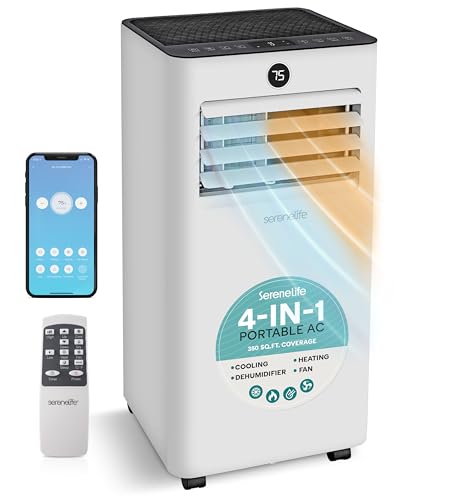
SereneLife 8000 BTU Portable Air Conditioner & Heater with WiFi, 4-in-1 Cooling, Heating, Fan & Dehumidifier, 24-H Timer, Covers 350 Sq Ft, for Bedroom, Home & Office, Includes Window Kit & Remote
Check price on Amazon
ROVSUN 12000 BTU Air Conditioner Window Unit with Heat, 4-in-1 Window AC Unit Cooler, Heater, Dehumidifier & Fan with Timer, Remote Control & Installation Kit for Rooms up to 550 Sq. Ft, 208/230V
Check price on Amazon
AC Infinity Smart Portable Air Conditioner 5-in-1, All-Season Cool & Heat | Auto-Switch Cool and Heat, Drainage-Free, Fan & Dehumidifier, WiFi App, Smart Home, Wireless Remote, 16,000 BTU, 800 sq. ft.
Check price on AmazonFrequently Asked Questions
What is a heating and air conditioning in one unit system?
A heating and air conditioning in one unit system combines both heating and cooling functions in a single piece of equipment. Common examples include packaged units, heat pumps, and ductless mini-split systems with heat pump capability. These systems share the same air distribution, controls, and often the same compressor, making them a space-saving and convenient choice for many homes.
How do I choose the right size for a combined heating and cooling unit?
Sizing a combined unit requires a room-by-room load calculation, often called a Manual J calculation. Factors include square footage, ceiling height, insulation quality, window area, local climate, and occupancy. An oversized unit will cycle frequently and dehumidify poorly, while an undersized unit will struggle during peak demand. Always have a qualified HVAC professional perform the load calculation before selecting a unit.
Is a heat pump the same as a heating and air conditioning in one unit?
A heat pump is one of the most common types of heating and air conditioning in one unit. It uses a reversing valve to move heat either indoors or outdoors, providing both cooling in summer and heating in cooler months. A packaged unit may also combine a gas furnace and an electric air conditioner in a single cabinet. Both qualify as combined systems, but they use different heating mechanisms.
What efficiency ratings should I look for in a combined unit?
For cooling, look at SEER2 ratings, and for heating, check HSPF2 for heat pumps or AFUE for gas furnaces. Higher ratings indicate greater efficiency. ENERGY STAR certified models meet or exceed federal minimums. The right efficiency level depends on your climate, how long you plan to stay in the home, and whether rebates or tax credits are available in your area.
How often should a combined heating and cooling unit be serviced?
Most manufacturers recommend professional maintenance twice per year: once before the cooling season and once before the heating season. Regular tune-ups include filter replacement, coil cleaning, refrigerant level checks, electrical inspections, and airflow verification. Consistent maintenance preserves efficiency, extends equipment life, and helps prevent unexpected breakdowns.