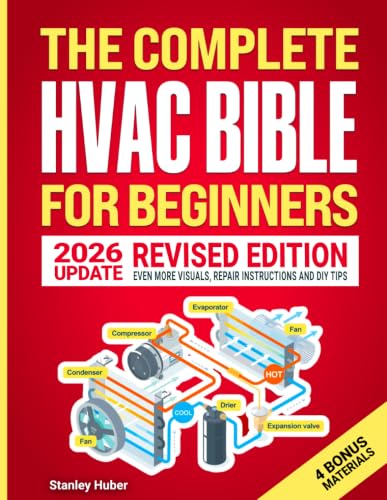
HVAC Professional: The Complete Career and Skill Guide
Everything you need to know about becoming a certified HVAC professional — from training pathways and licensing requirements to the tools, daily responsibilities, and career advancement opportunities in heating, ventilation, and air conditioning.
EXPLORE CAREER PATHSWhy this guide matters: HVAC systems are among the most critical infrastructure elements in any home or commercial building. A qualified HVAC professional keeps those systems running safely, efficiently, and reliably. Whether you are considering a career change, hiring a technician, or simply want to understand the profession, this guide breaks down every stage of the journey.
What Does an HVAC Professional Do?
An HVAC professional is a trained and often licensed technician who installs, maintains, diagnoses, and repairs heating, ventilation, and air conditioning systems. The scope of the role is broader than many people assume — it spans residential furnaces and central air conditioners, commercial rooftop units, refrigeration circuits, ventilation ductwork, and increasingly sophisticated controls systems.
Day to day, an HVAC professional may find themselves reading electrical schematics, brazing refrigerant lines, calibrating thermostats, balancing airflow, or explaining maintenance findings to a homeowner. The trade sits at the intersection of mechanical knowledge, electrical understanding, and customer communication. The broader heat ventilation air conditioning industry depends on these skilled technicians to keep systems compliant with HVAC building codes and operating at peak efficiency.
Installation & Commissioning
Setting up new equipment, running line sets, configuring ductwork, and verifying that a system meets manufacturer specifications and local code before handoff.
Maintenance & Tune-Ups
Seasonal inspections, coil cleaning, filter replacement, refrigerant charge checks, and electrical component testing to extend equipment lifespan.
Diagnostics & Repair
Troubleshooting electrical faults, refrigerant leaks, airflow restrictions, and control failures using multimeters, gauges, and thermal instruments.
System Design Support
Assisting with load calculations, equipment selection, duct sizing, and system layout in coordination with engineers and contractors.
Career Paths for HVAC Professionals
The HVAC trade offers multiple entry points and advancement routes. Some professionals prefer hands-on residential service work, while others move into commercial refrigeration, system design, or business ownership. Understanding the landscape early helps you choose the right training focus.
| Role | Primary Focus | Typical Work Environment | Career Tier |
|---|---|---|---|
| HVAC Installer | New equipment installation and commissioning | Residential and light commercial job sites | Entry-level |
| HVAC Service Technician | Diagnostics, repair, and maintenance | Customer homes, retail, offices | Mid-range |
| Refrigeration Technician | Commercial refrigeration and walk-in systems | Supermarkets, restaurants, warehouses | Mid-range to premium |
| HVAC Controls Specialist | Building automation and smart controls | Commercial buildings, data centers | Premium |
| HVAC Designer / Estimator | Load calculations, system design, project estimating | Office and field surveys | Professional-grade |
| HVAC Business Owner | Operations, staffing, customer acquisition | Company office and field oversight | Top-tier |
Many technicians begin in an entry-level installer role and progress into service work after gaining field experience. From there, specializing in HVAC controls systems or commercial refrigeration can open doors to premium-tier positions. Those who prefer the business side often transition into estimating, project management, or launching their own HVAC companies.
Training and Education Requirements
There is no single mandatory degree to become an HVAC professional, but formal training significantly shortens the learning curve and improves job prospects. Most successful technicians combine classroom instruction with supervised field experience.
- Post-secondary HVAC programs: Community colleges and trade schools offer certificate and associate-level programs covering refrigeration theory, electrical fundamentals, system design, and hands-on lab work. These programs typically run from several months to two years.
- Apprenticeships: Paid apprenticeship programs combine on-the-job training with related classroom instruction. This route is valuable because apprentices earn while learning and graduate with documented field hours.
- EPA Section 608 certification: Required by federal regulation for anyone who handles refrigerants. The certification comes in Type I, II, III, and Universal levels, and is a baseline credential for refrigerant work.
- NATE certification: The North American Technician Excellence program is a widely recognized voluntary certification that validates knowledge across installation and service specialties.
- Manufacturer training: Equipment makers offer brand-specific training on their systems, controls, and diagnostic procedures. These are often available through distributors and are valuable for career advancement.
Beyond formal credentials, strong HVAC professionals build competence in electrical troubleshooting, thermodynamics, airflow measurement, and customer communication. The HVAC maintenance guide is a useful reference for understanding the service side of the trade in greater depth.
Licensing and Regulatory Requirements
Licensing requirements vary by state and municipality. Some jurisdictions require a formal contractor license to perform HVAC work, while others mandate technician registration. Most states also require continuing education to maintain an active license.
In addition to licensing, HVAC professionals must be familiar with refrigerant regulations under the Clean Air Act, local mechanical codes, and permitting requirements for installations. Working without proper licensing can result in fines, invalidated insurance coverage, and liability exposure. Before accepting any work, verify the applicable requirements for your area and confirm that your HVAC license and insurance are current.
Practical tip: If you are hiring rather than training, always confirm that the technician or company holds the required state license and carries liability insurance. Reputable contractors will provide documentation without hesitation.
Essential Tools and Equipment
An HVAC professional's tool kit evolves with experience and specialty. Entry-level technicians typically start with a core set of hand tools and basic instruments, then add specialized equipment as their responsibilities expand.
Hand Tools & Meters
Manifold gauges, multimeters, clamp meters, pipe cutters, tubing benders, screwdrivers, wrenches, and a reliable flashlight. These form the daily diagnostic and repair foundation.
Refrigerant & Vacuum Tools
Recovery machines, vacuum pumps, micron gauges, leak detectors, and refrigerant scales. These are required for safe and compliant refrigerant handling.
Airflow & Diagnostic Instruments
Anemometers, manometers, thermal cameras, combustion analyzers, and electronic refrigerant charging tools for precise system performance verification.
Specialty Equipment
Brazing rigs, nitrogen regulators, duct fabrication tools, and control system programmers used in commercial and high-complexity projects.
Tool quality matters over the long term. A HVAC professional who invests in durable, well-calibrated instruments typically diagnoses faults faster and avoids repeat callbacks. Reading the HVAC design guide alongside hands-on practice also sharpens the judgment needed to interpret readings correctly.
Best Practices for HVAC Professionals
Technical skill alone does not define a great HVAC professional. The most respected technicians combine diagnostic accuracy with disciplined documentation, safety habits, and clear communication.
- Follow a systematic diagnostic sequence: Start with the simplest possible causes — thermostat settings, filters, power supply — before moving to refrigerant or compressor-level analysis. This saves time and reduces unnecessary parts replacement.
- Document everything: Record static pressures, refrigerant superheat and subcooling, amp draws, and voltage readings. Accurate records support warranty claims and future service visits.
- Prioritize refrigerant compliance: Use recovery equipment consistently, never vent refrigerant to the atmosphere, and stay current on recovery machine practices and regulations.
- Verify airflow before charging: Many apparent refrigerant issues are actually airflow restrictions caused by dirty coils, undersized ducts, or blocked filters. Confirm airflow first.
- Respect electrical safety: Lock out and tag out equipment before servicing electrical components. Use properly rated meters and inspect test leads regularly.
- Communicate clearly with customers: Explain findings in plain language, present options without pressure, and document what was discussed. Trust is the foundation of repeat business.
How to Evaluate an HVAC Professional
Homeowners and facility managers often need to evaluate HVAC professionals before committing to a service contract or major installation. A few practical checks separate qualified technicians from unverified operators.
- Confirm state licensing and active insurance coverage.
- Ask about EPA Section 608 certification for any refrigerant-related work.
- Request a written estimate that itemizes labor, equipment, and permit requirements.
- Check whether the technician follows a documented commissioning or maintenance checklist.
- Look for membership in professional associations and ongoing manufacturer training.
For larger projects, obtaining multiple quotes is standard practice. A detailed HVAC quote should clearly describe scope, equipment model numbers, and warranty terms. Avoid verbal-only agreements, and confirm whether permits are included where required. The HVAC buying guide provides additional context on matching equipment to building requirements.
Career Growth and Specialization
HVAC professionals who pursue continuous learning tend to advance quickly. Specialization is one of the most reliable paths to higher-tier roles and greater job stability.
Commercial Refrigeration
Working on supermarket refrigeration, walk-in coolers, and industrial cooling systems demands advanced refrigerant knowledge and precision diagnostics.
Building Automation
Controls specialists program and commission building management systems, integrating HVAC with energy management and smart building platforms.
Energy Efficiency Consulting
Professionals who understand HVAC energy efficiency can advise on system upgrades, retrofits, and load reduction strategies.
Heat Pump Systems
With heat pump adoption rising, technicians trained in HVAC and heat pump systems are increasingly in demand across residential and commercial markets.
Frequently Asked Questions
How long does it take to become an HVAC professional?
Timelines vary. A trade school certificate can be completed in under a year, while associate programs take about two years. Apprenticeships typically run three to five years and combine paid work with classroom learning. Many technicians enter the field after a certificate program and continue building credentials through manufacturer training and NATE certification.
Do I need a license to work as an HVAC technician?
Requirements depend on your state and locality. Some jurisdictions require contractor licensing, others require technician registration, and some require both depending on the scope of work. Always verify the specific rules for your area, and confirm that any company you work for or hire maintains current licensing and insurance.
What certifications are most valuable for HVAC professionals?
EPA Section 608 certification is mandatory for refrigerant handling. NATE certification is widely recognized as a mark of competence. Manufacturer-specific training from equipment makers is also highly valued because it reflects current product knowledge. Many employers look favorably on combination of formal credentials and documented field experience.
What is the difference between an HVAC technician and an HVAC contractor?
An HVAC technician performs hands-on installation, maintenance, and repair work. An HVAC contractor is typically a licensed business entity that contracts directly with customers and may employ multiple technicians. In many states, contractors must hold a separate license and carry insurance, while individual technicians may need their own registration or certification depending on local rules.
How can I verify that an HVAC professional is qualified?
Ask for license numbers, confirm insurance coverage, and request proof of EPA certification for refrigerant work. Reputable technicians will provide documentation and explain their training background. You can also check whether they belong to professional associations or have completed manufacturer training programs. For large projects, compare multiple written quotes before deciding.
Ready to Explore HVAC Equipment Options?
Whether you are a professional specifying equipment for a client or a homeowner planning an upgrade, the right tools and systems make all the difference. Browse our curated selection of professional-grade and mid-range air conditioning units below.
VIEW RECOMMENDED UNITS