What Is HVAC and Why It Matters
HVAC stands for Heating, Ventilation, and Air Conditioning. It refers to the interconnected systems that regulate temperature, humidity, air cleanliness, and airflow inside a building. In a typical home, HVAC is the single largest energy user, and it directly affects comfort, indoor air quality, and durability of the building envelope.
While many people use "HVAC" and "air conditioning" interchangeably, they are not the same. An air conditioner is only one component of a larger HVAC framework. For a clear distinction, see our explainer on HVAC and air conditioning, which breaks down how cooling fits into the broader picture. Understanding this difference early helps you ask the right questions when comparing systems and contractors.
This guide is written for people in the research phase. You likely already know you need a heating or cooling solution, and you want to understand the system as a whole before committing. Below we cover the core components, how the system works, sizing principles, efficiency ratings, maintenance expectations, and how to compare tiers of equipment.
The Core Components of an HVAC System
A modern HVAC system is a network of parts working together. The most important components are:
- Heating unit: A furnace, boiler, or heat pump that generates or moves heat into the home. Heat pumps are increasingly common because they provide both heating and cooling. Read more in HVAC and heat pump.
- Cooling unit: The air conditioner or the cooling mode of a heat pump. It uses refrigerant to absorb heat from indoor air and release it outside.
- Ductwork: The channels that distribute conditioned air throughout the building. Leaky or poorly designed ducts waste energy, so HVAC air duct sealing is often one of the highest-return improvements.
- Fans and blowers: The air handler fan pushes air through the ducts. Blower problems are a common cause of weak airflow; see HVAC blower fan replacement for context.
- Coils: The evaporator coil absorbs heat indoors, and the condenser coil releases heat outdoors. Coil condition strongly affects efficiency — see HVAC coil and HVAC condensers.
- Controls and thermostat: The interface that manages temperature, schedules, and zones. Modern systems use advanced HVAC controls systems for smarter operation.
- Condensate management: Cooling produces water, removed by a drain line and often a HVAC condensate pump.
Each part must be correctly sized and matched. A high-quality condenser paired with an undersized duct system, for example, will underperform. This is why a full-system view matters more than any single component.
How the HVAC Cooling and Heating Cycles Work
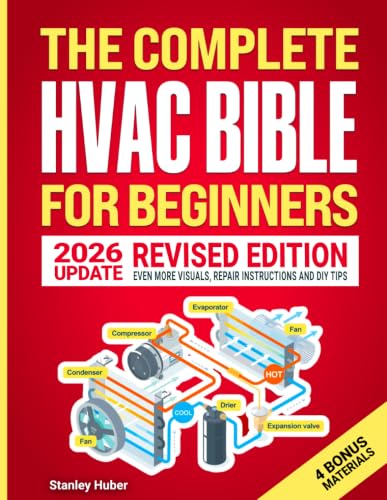
The cooling cycle is a refrigeration loop. Refrigerant moves through the evaporator coil indoors, absorbs heat from the air, and evaporates. The compressor then raises the refrigerant pressure and temperature, and the condenser coil outdoors releases that heat. The refrigerant returns to liquid through the expansion valve and the cycle repeats. Our detailed HVAC cooling cycle article walks through each stage.
Heating works differently depending on the system. A furnace burns fuel to warm air, a boiler heats water for radiators, and a heat pump reverses the cooling cycle to move heat from outdoor air into the home. The broader topic is covered in HVAC and heating. If you are troubleshooting a system that runs but does not deliver results, see HVAC blowing cold air but not cooling the house and HVAC not cooling properly.
Ventilation and Indoor Air Quality
Ventilation is the part of HVAC that is most often overlooked, yet it matters for health and comfort. A well-designed system brings in controlled outdoor air, exhausts stale air, and filters contaminants. Key elements include:
- Filtration: Filters trap dust, pollen, and particles. Filter choice and replacement frequency strongly affect airflow and indoor air quality. See HVAC filter replacement for guidance on timing.
- Duct cleanliness: Dust and debris buildup reduces airflow and can affect air quality. Our guides on HVAC and air duct cleaning and HVAC duct and vent cleaning explain when cleaning is genuinely needed.
- Humidity control: Balanced humidity prevents mold and improves comfort. Learn about HVAC dehumidification and HVAC humidifier options.
- Duct inspection: Leaks and disconnected runs waste energy. See HVAC duct inspection and HVAC ductwork.
Good ventilation also interacts with building performance. Air sealing and insulation reduce the load on the HVAC system, which is why HVAC energy efficiency is a whole-home topic, not just an equipment specification.
HVAC System Types at a Glance
There is no single best HVAC system for every building. The right choice depends on climate, home layout, existing ductwork, and how the space is used. The most common configurations are:
| System Type | Best For | Key Consideration |
|---|---|---|
| Central split system | Homes with existing ductwork | Requires matched indoor and outdoor units |
| Heat pump system | Year-round heating and cooling | Performance varies with climate; modern cold-climate models are strong |
| Ductless mini-split | Homes without ducts or with room-specific needs | Flexible zoning but multiple indoor heads may be needed |
| Packaged unit | Small buildings and rooftop installations | All components in one cabinet; service access matters |
| Commercial-grade systems | Offices, retail, and larger facilities | Higher durability and more complex controls |
For a structured comparison before you shortlist, read the HVAC buying guide. If you are evaluating a mini-split, see HVAC mini-split. For commercial spaces, see HVAC for commercial and HVAC CRAC units for server-room precision cooling.
Sizing and Design: Why Bigger Is Not Better
An oversized system cools too quickly, cycles on and off frequently, removes less humidity, and wears out faster. An undersized system runs constantly and never quite reaches setpoint. Correct sizing uses a load calculation that accounts for square footage, insulation, window area, orientation, occupancy, and local climate.
The design process is covered in our HVAC design guide and HVAC design overview. Duct sizing is part of that work: undersized or restrictive ducts cause high static pressure and reduce delivered capacity. See HVAC ductwork supplies if you are planning a retrofit.
Airflow accessories can help in specific situations. A HVAC booster fan can improve delivery to a weak branch, but it is not a substitute for correcting a poorly balanced system. For larger buildings, proper zoning and controls are essential.
Efficiency Ratings and Energy Performance
HVAC efficiency is expressed through several ratings, depending on the equipment type. For cooling, SEER and EER describe efficiency; for heat pumps, HSPF describes heating efficiency. Higher ratings generally mean lower energy use, but the installed system matters as much as the label. A high-efficiency unit with leaky ducts will not deliver its rated performance.
Whole-system efficiency depends on correct refrigerant charge, clean coils, proper airflow, and sealed ductwork. Refrigerant handling is regulated, and linesets must be matched to the equipment; see HVAC linesets and HVAC recovery machine for context on proper service practices. For a deeper look at efficiency improvements, read HVAC energy efficiency.
Maintenance: The Single Best Long-Term Investment
Regular maintenance is the most reliable way to protect any HVAC system. It preserves efficiency, extends equipment life, and catches small problems before they become failures. A practical maintenance routine includes:
- Replacing or cleaning filters on the schedule the manufacturer recommends.
- Cleaning coils and checking for debris around the outdoor unit.
- Inspecting the condensate drain and pump for clogs.
- Checking refrigerant lines for leaks and insulation damage.
- Testing controls and verifying airflow at supply registers.
Our HVAC maintenance guide provides a full checklist, while HVAC maintenance services and HVAC maintenance plans explain what professional programs typically include. For cleaning specifics, see HVAC cleaning, HVAC coil cleaning, and HVAC evaporator coil cleaning. A structured HVAC inspection checklist is useful before buying a home or after a major repair.
Common HVAC Problems and What They Usually Mean
Most HVAC complaints fall into a few categories: insufficient cooling or heating, unusual noise, water leaks, short cycling, and poor air quality. Some issues are simple, such as a clogged filter or a tripped breaker. Others point to component failure.
- Water near the indoor unit: often a clogged condensate line or a failing drain pan. See HVAC drain pan replacement and HVAC condensate pump.
- No cooling and low airflow: check the filter, blower, and ductwork. See HVAC fans and HVAC blower fan replacement.
- Electrical or control faults: a failing contactor or control board can stop the system. See HVAC contactor replacement and HVAC control board replacement.
- Refrigerant issues: low charge or a restriction affects cooling. See HVAC expansion valve replacement, HVAC evaporator, and HVAC filter drier replacement.
Diagnosing complex issues safely requires trained technicians. Our articles on HVAC professional and HVAC mechanic describe the skills and tools involved. If you are deciding whether to repair or replace, HVAC repair and service covers the decision process.
Choosing a Tier and Comparing Equipment
Instead of comparing systems by headline figures alone, it helps to think in tiers. Most manufacturers offer a range of models that differ in build quality, controls, noise, and efficiency. The tier system below is a practical way to frame the comparison.
Entry-level / Essential tier
Straightforward single-stage or basic two-stage equipment. A solid choice for smaller homes or milder climates where the system runs fewer hours.
Mid-range / Balanced tier
Better controls, quieter operation, and improved efficiency. Typically a good value for its tier for average households.
Premium / Top-tier
Variable-speed compressors, advanced controls, and high efficiency. Best for larger homes, harsh climates, and buyers prioritizing comfort and quiet operation.
Professional / Commercial-grade
Heavy-duty construction and serviceability for offices, retail, and light industrial use, with longer duty cycles and more complex controls.
Tier descriptors are relative to the market rather than tied to specific figures. A mid-tier model usually offers noticeably smoother operation than an entry-level model, and a top-tier system typically delivers the best efficiency and the lowest noise within its class. The right choice depends on how many hours the system runs, how sensitive you are to noise, and how long you plan to stay in the home.
How to Vet HVAC Contractors
Even excellent equipment performs poorly when installed incorrectly. Choosing a qualified contractor is therefore as important as choosing the equipment. Look for proper licensing, insurance, and manufacturer authorization. A written, itemized proposal should specify equipment model numbers, duct work, refrigerant lines, and controls.
Our articles on HVAC license and insurance, HVAC contractor, HVAC contractors, and HVAC installation contractors explain what to verify. For quotes, see HVAC quote, HVAC estimates, and HVAC buying guide. When searching locally, HVAC contractor near me, HVAC in my area, and HVAC dealers in my area help narrow the field. For installation scope, see HVAC installation services and HVAC installation companies.
Building Codes and Compliance
HVAC work is governed by local building codes and by refrigerant regulations. Permits are often required for system replacement, duct changes, and electrical work. Complying with code protects safety and resale value. Our HVAC building codes article explains the main categories of requirements, and HVAC inspection and HVAC inspector cover how inspections typically proceed.
HVAC and Adjacent Systems
HVAC does not operate in isolation. Ductwork, plumbing, and electrical systems interact with it. In some projects, coordination with plumbing is necessary, particularly for boiler systems and condensate routing; see HVAC and plumbing. The broader relationship between the trades is covered in HVAC heating and air conditioning and HVAC heating ventilation and air conditioning.
Quick Reference: Matching System to Situation
| Situation | Likely Fit | Next Step |
|---|---|---|
| Home with existing ducts, replacing an old system | Central split system or heat pump | Get a load calculation and a written proposal |
| Older home without ducts | Ductless mini-split | Review zoning and placement options |
| One room is always too hot or too cold | Zoning, balancing, or a booster fan | Inspect ductwork and airflow first |
| High energy use with an aging system | High-efficiency heat pump | Compare tiers and check available incentives |
| Server room or precision environment | CRAC unit | Review heat load and redundancy needs |
Frequently Asked Questions
What does HVAC stand for?
HVAC stands for Heating, Ventilation, and Air Conditioning. It describes the systems that control temperature, humidity, air quality, and airflow in homes, offices, and commercial buildings.
How does an HVAC system work?
An HVAC system combines heating, cooling, and ventilation components. The cooling cycle uses refrigerant to absorb indoor heat and release it outdoors, the heating side warms air through a furnace or heat pump, and the ventilation side moves and filters air through ductwork and fans.
How often should an HVAC system be serviced?
Most manufacturers recommend professional maintenance twice a year, once before the cooling season and once before the heating season, plus regular filter replacement every one to three months depending on usage.
What is the difference between HVAC and an air conditioner?
An air conditioner only cools and dehumidifies. HVAC is a broader term that includes cooling, heating, ventilation, and air quality control, so an AC is just one part of a complete HVAC system.
Which HVAC tier is right for my home?
Entry-level or essential-tier systems suit smaller homes and mild climates, mid-range or balanced-tier systems fit most average households, and premium or top-tier systems are best for larger homes that need high efficiency, quieter operation, and advanced controls.
Where to Go Next
If you are still in the research phase, the most useful next step is to understand the system in your specific building. Start with the HVAC buying guide, then read the HVAC design guide to see what a proper assessment involves. If you are comparing equipment, look at how heat pumps differ from traditional furnaces in HVAC and heat pump. For installation planning, use the HVAC installation cost overview and the HVAC license and insurance checklist.
When you are ready to compare options, return to the product section below to browse current recommendations and check availability.