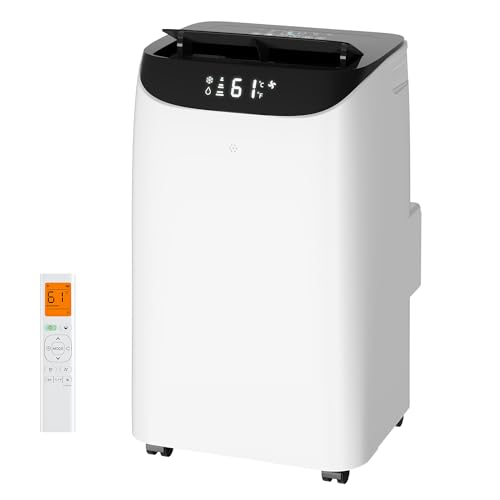
Inverter Dual Hose Portable Air Conditioner: Complete Guide
Everything you need to know about inverter dual hose portable air conditioners — how they work, why the dual hose design matters, how inverter compressors improve efficiency, and how to choose the right model for your room.
Start ReadingWhat Is an Inverter Dual Hose Portable Air Conditioner?
An inverter dual hose portable air conditioner is a freestanding cooling unit that combines two distinct technologies. The first is the inverter compressor, which varies its operating speed continuously instead of switching on and off at full power. The second is the dual hose design, which uses two separate air paths — one to draw in outdoor air for the condenser and another to exhaust hot air back outside.
Together, these features address two of the most common complaints about portable ACs: inconsistent cooling and energy waste. A standard single hose portable unit pulls conditioned indoor air out of the room to cool the condenser, creating negative pressure that draws warm outdoor air back in through gaps. The dual hose design eliminates that problem, while the inverter compressor smooths out temperature swings and reduces power consumption.
If you are comparing this category against other cooling options, our guide to inverter portable air conditioners with heat covers models that also provide heating. For a broader look at compressor technology, see our overview of inverter compressor portable air conditioners.
How Inverter Dual Hose Portable ACs Work
Understanding the internal airflow helps explain why this design performs better in real rooms. A dual hose portable AC separates the indoor and outdoor air circuits:
- Intake hose: Draws outdoor air into the unit to cool the condenser coil.
- Exhaust hose: Expels the heated air from the condenser back outside through the window kit.
- Indoor air loop: The evaporator coil cools room air and blows it back into the space without mixing it with outdoor air.
Because the condenser receives its own outdoor air supply, the unit does not depressurize the room. That means less warm air infiltration through door gaps and window seams — a key reason dual hose units cool more consistently.
The inverter compressor adds a second layer of efficiency. Instead of running at 100 percent until the thermostat is satisfied and then shutting off, an inverter compressor ramps down to a lower speed once the room approaches the set temperature. It then modulates speed to hold that temperature. The result is quieter operation, fewer compressor cycles, and more stable humidity control.
Dual Hose vs Single Hose: What Changes in Practice
Single hose portable ACs are common because they are simpler to install and usually lighter. However, they create a pressure imbalance in the room. Air that is exhausted outside must be replaced, and it is typically replaced by hot outdoor air leaking in through every gap. In a tightly sealed room, the unit can actually struggle to cool because it is constantly pulling in replacement air.
Dual hose models solve this by using outdoor air for the condenser side. The practical differences are noticeable:
| Feature | Single Hose | Dual Hose |
|---|---|---|
| Room pressure | Creates negative pressure | Balanced, no negative pressure |
| Cooling consistency | Variable; warm air infiltration | More stable and predictable |
| Installation | One hose, simpler window kit | Two hoses, slightly larger window kit |
| Energy behavior | Works harder in leaky rooms | More efficient in sealed rooms |
| Best for | Occasional use, small rooms | Frequent use, bedrooms, home offices |
If you plan to run the unit for many hours a day, the dual hose design is generally the better long-term choice. For window-based alternatives, our articles on installing a portable AC in a casement window and crank-out window installations explain how to adapt the window kit for less common window types.
Inverter Compressor Benefits in a Portable Unit
Inverter technology is well established in split systems, and it translates well to portable units. The main advantages include:
- Steady temperature: The compressor modulates speed rather than cycling on and off, so the room stays closer to the set point.
- Lower startup load: Soft-start behavior reduces the power spike that occurs when a conventional compressor kicks in.
- Quieter operation: Running at partial speed for longer periods is generally quieter than repeated full-speed cycles.
- Better humidity control: Longer, gentler run times allow the evaporator coil to remove moisture more consistently.
These benefits are most noticeable in bedrooms and home offices where the unit runs for extended periods. If you are also considering wall-mounted alternatives, our guide to inverter through-the-wall air conditioners explains how the same compressor logic applies to permanent installations.
Sizing and BTU Selection
Portable AC capacity is measured in BTU per hour. Choosing the right size prevents short cycling and ensures the unit can actually reach the set temperature on hot days. As a general starting point:
| Room Size | Suggested Capacity | Typical Use Case |
|---|---|---|
| Up to 150 sq ft | 5,000 – 6,000 BTU | Small bedroom, study |
| 150 – 250 sq ft | 8,000 – 10,000 BTU | Medium bedroom, home office |
| 250 – 400 sq ft | 12,000 – 14,000 BTU | Large bedroom, living area |
| 400 – 600 sq ft | 14,000 – 18,000 BTU | Open-plan living space |
Adjust upward for rooms with large windows, direct sun exposure, or poor insulation. Adjust downward for basements and shaded rooms. For a more detailed method, see our guide on how to size an air conditioner.
Installation and Window Setup
Dual hose portable ACs require a window kit that accommodates two hoses. Most manufacturers include a slider panel that fits vertical or horizontal sliding windows. The basic steps are:
- Place the unit on a level surface near the window, leaving clearance for airflow around the unit.
- Connect the intake and exhaust hoses to the rear of the unit and to the window kit panel.
- Insert the window kit into the window frame and close the window against it.
- Seal any remaining gaps with foam insulation or weather stripping.
- Plug the unit into a dedicated grounded outlet and set the desired temperature.
Proper sealing matters more with dual hose units because the goal is to keep indoor and outdoor air separate. If you have an unusual window configuration, our article on installing a portable air conditioner without a window covers alternative venting approaches.
For rooms without any suitable window, alternatives such as a mini-split air conditioner for a small room may be worth considering.
Product Tiers and Feature Expectations
Inverter dual hose portable ACs are available across several market tiers. The differences between tiers are mainly in build quality, noise control, smart features, and how well the inverter logic is tuned.
| Tier | Typical Characteristics | Best For |
|---|---|---|
| Essential tier | Basic inverter control, manual or simple digital controls, standard dual hose kit, moderate noise levels. | Occasional use in small rooms |
| Balanced tier | Improved inverter modulation, quieter fans, remote control, programmable timer, better window sealing kit. | Daily use in bedrooms and home offices |
| Premium tier | Advanced inverter tuning, low-noise operation, Wi-Fi and app control, dehumidification modes, self-diagnostics. | Long daily runtime and smart-home integration |
| Flagship tier | Top-tier build quality, near-silent operation at low speeds, precise temperature control, premium filtration, full smart features. | Primary cooling in sensitive spaces |
Higher tiers generally deliver smoother inverter behavior and better sealing kits, which matters because the dual hose design depends on a tight window fit. For most households, the balanced tier offers the best combination of performance and features for regular daily use.
Maintenance Tips for Dual Hose Portable ACs
- Clean or replace the filter every two to four weeks during heavy use. A clogged filter forces the compressor to work harder and reduces cooling output.
- Drain the condensate tank regularly. Many models shut off automatically when the tank is full; check the indicator light or use continuous drainage if available.
- Inspect the hoses for kinks or cracks. Damaged hoses leak hot air back into the room and undermine the dual hose advantage.
- Clean the condenser coil seasonally. Dust buildup on the outdoor-air side reduces heat rejection and efficiency.
- Store the unit upright in the off-season. Let it dry completely to prevent mold growth inside the evaporator housing.
For a full seasonal checklist, see our maintenance guide for air conditioning units. If you are also using a mini-split alongside a portable unit, the energy-efficient mini-split air conditioner guide explains how to balance runtime between the two systems.
Frequently Asked Questions
Ready to Compare Models?
Use the recommended products below to compare inverter dual hose portable air conditioners by tier, features, and room suitability. Every listing links to the retailer for detailed specifications.