
Local HVAC: Find Trusted Heating & Cooling Experts
Understand how to evaluate local HVAC contractors, compare service tiers, and make confident decisions for your home comfort system.
EXPLORE SERVICE TIERSWhy local expertise matters: HVAC systems are sized, installed, and serviced differently depending on regional climate, building codes, and utility rates. A local contractor understands your specific conditions — from humidity loads in coastal areas to heating degree days in northern zones — and can recommend equipment and maintenance schedules that match your environment.
What Local HVAC Service Really Means
When homeowners search for local HVAC, they are typically looking for a licensed professional who can install, repair, or maintain heating and cooling equipment within a reasonable driving distance. But the term covers a broad range of providers, from single-technician operations to regional firms with dedicated installation crews. Understanding the landscape helps you match your project to the right type of provider.
A qualified local HVAC contractor should hold state licensing, carry liability and workers' compensation insurance, and be able to pull the required permits for installations. They should also be familiar with local utility rebate programs and energy code requirements, which vary significantly by jurisdiction. For a broader overview of service options, see our guide to local heating and air conditioning service.
Types of Local HVAC Providers
Not every provider handles every job. Matching the provider type to your project saves time and helps you avoid unnecessary call-out fees. Below is a breakdown of the main categories you will encounter when searching for HVAC service companies in your area.
Full-Service HVAC Contractors
These firms handle installation, repair, and maintenance for both residential and light commercial systems. They typically employ certified technicians and offer service agreements. Best suited for system replacements, new construction, and complex diagnostics.
Specialty Installation Crews
Focused on new equipment installation, including ductless mini-splits and high-efficiency heat pumps. Often work alongside general contractors on renovations. Best for planned upgrades and energy-efficiency retrofits.
Maintenance-Focused Technicians
Independent technicians who specialize in seasonal tune-ups, filter replacement, and minor repairs. Best for homeowners with newer systems who want to protect manufacturer warranties through regular service.
Emergency Repair Services
Providers offering rapid-response diagnostics and repair, often outside standard business hours. Best for unexpected breakdowns during extreme weather. Verify licensing carefully, as emergency availability can vary widely.
How to Vet a Local HVAC Contractor
Before scheduling a service visit, run through a structured vetting process. This protects you from substandard work and ensures the contractor can legally perform the job in your jurisdiction. For a detailed walkthrough, refer to our resource on HVAC service technicians.
Pre-Hire Verification Checklist
- License check: Confirm the contractor holds an active state or local HVAC license. Most states publish license lookup tools online.
- Insurance verification: Request a certificate of insurance showing general liability and workers' compensation coverage. Call the insurer to confirm the policy is active.
- Permit responsibility: Ask whether the contractor will pull the required permits. A reputable provider will handle this as standard practice.
- Written quote: Insist on a written estimate that itemizes equipment, labor, and any additional materials. Verbal quotes leave room for unexpected charges.
- References: Request two or three references from recent installations in your area. Ask specifically about post-installation follow-up and warranty support.
- Warranty registration: Confirm the contractor will register the equipment warranty on your behalf, as many manufacturers require registration within a set period to validate coverage.
- Response time: Ask about typical response windows for service calls and emergency availability. Local providers often have faster response times than regional chains.
HVAC Service Tiers Explained
HVAC providers and equipment lines generally fall into recognizable tiers. Understanding these tiers helps you align your expectations with what each level of service delivers, without needing to anchor decisions to specific pricing figures. Use the table below to compare provider and equipment tiers across key criteria.
| Tier | Typical Provider Profile | Equipment Level | Best For | What to Expect |
|---|---|---|---|---|
| Essential Tier | Independent technicians and small local firms | Entry-level single-stage systems | Basic repairs, seasonal tune-ups, budget-conscious replacements | Straightforward service, standard warranties, limited after-hours availability |
| Mid-Tier | Established local contractors with dedicated service teams | Two-stage and variable-speed systems | Full system replacements, planned maintenance plans, efficiency upgrades | Comprehensive diagnostics, extended labor warranties, scheduled maintenance programs |
| High-End Tier | Regional firms with manufacturer certifications (e.g., variable refrigerant flow specialists) | Premium inverter-driven heat pumps, high-SEER2 systems | Whole-home comfort upgrades, ductless multi-zone systems, energy-efficiency retrofits | Advanced load calculations, commissioning reports, manufacturer-backed labor warranties |
| Commercial-Grade | Contractors with light commercial divisions and engineering support | Packaged rooftop units, split systems with economizers | Small business, multi-family, and light commercial properties | Design-build support, code compliance documentation, service-level agreements |
Tier placement is not a guarantee of quality. A mid-tier contractor with strong local reviews can outperform a high-end firm with poor communication. Use the tiers as a starting framework, then validate with licensing checks, references, and written quotes. For more on comparing service providers, see HVAC service providers.
Repair or Replace? A Decision Framework
One of the most common questions local HVAC contractors field is whether to repair an aging system or replace it. The answer depends on age, refrigerant type, repair frequency, and efficiency losses. Use the framework below to structure your decision, and consult our detailed guide on HVAC replacement for a deeper analysis.
- System age: Systems older than 12 to 15 years are typically nearing the end of their efficient service life. Even if repairs are possible, parts availability and efficiency losses may favor replacement.
- Refrigerant type: Systems using R-22 (HCFC) face phase-out constraints. Retrofitting or replacing is often the practical path forward, as covered in our efficient system guide.
- Repair frequency: Two or more major repairs within a few years signal declining reliability. Frequent service calls add up and disrupt comfort.
- Efficiency gap: Older systems may operate at SEER ratings well below current minimum standards. Upgrading can reduce long-term energy use, as discussed in our energy-efficient systems resource.
- Comfort complaints: Uneven temperatures, humidity issues, or noise problems often point to system design limitations that repairs cannot fix.
What to Expect During a Local HVAC Service Visit
A professional service visit should follow a structured process. Understanding the steps helps you ask the right questions and verify that the work meets industry standards. For maintenance-specific guidance, see our HVAC maintenance overview.
Intake and System Review
The technician reviews your system history, filters, thermostat settings, and any recent symptoms. They should ask about comfort issues and recent energy bill changes.
Physical Inspection
Indoor and outdoor units are inspected for cleanliness, refrigerant line condition, electrical connections, and condensate drainage. Coil condition is a key checkpoint.
Performance Measurement
Technicians measure refrigerant pressures, temperature split across the evaporator coil, and airflow. These readings indicate whether the system is operating within manufacturer specifications.
Written Report
A proper visit concludes with a written report summarizing findings, measurements, and recommended actions. Ask for this in writing — it supports warranty claims and future service decisions.
Local HVAC and Energy Efficiency
Local contractors are well positioned to advise on efficiency upgrades that make sense for your climate zone and utility rate structure. In cooling-dominated climates, high-SEER2 systems and ductless mini-splits often deliver the best returns. In mixed climates, heat pumps with strong HSPF ratings may be the better fit. Our guides on efficient split systems and whole-home efficiency cover the technical details.
Beyond equipment selection, local contractors can assess ductwork condition, insulation levels, and air sealing opportunities. These envelope improvements often reduce loads enough to allow downsizing equipment, which improves comfort and reduces long-term energy use. If your home has ductwork issues, our resource on mold in HVAC ductwork explains when remediation is needed before efficiency upgrades.
Common Questions Homeowners Ask Local HVAC Pros
How often should I schedule HVAC maintenance?
Most manufacturers recommend professional service once per year for each system — typically cooling service in spring and heating service in fall. Homes in dusty or high-pollen areas may benefit from more frequent filter changes between visits. Regular maintenance supports warranty compliance and helps catch small issues before they become failures.
Should I repair or replace my aging system?
Consider replacement when the system is over 12 to 15 years old, uses phased-out refrigerant, requires repeated repairs, or when efficiency losses are driving up energy use. A local contractor can perform a load calculation and compare repair costs against the long-term value of a modern high-efficiency system.
What certifications should I look for in a technician?
Look for NATE certification (North American Technician Excellence) for core competency, EPA Section 608 certification for refrigerant handling, and manufacturer-specific training for the equipment being installed. These credentials indicate the technician has passed standardized knowledge assessments.
How do I compare quotes from different HVAC contractors?
Compare quotes on scope, not just the bottom line. Check whether each quote includes equipment model numbers, SEER2 ratings, labor warranty terms, permit responsibility, and warranty registration. A quote that omits these details leaves room for ambiguity later. Our guide to HVAC quotes breaks down what a complete proposal should include.
Are ductless mini-splits a good option for my home?
Ductless systems are ideal for homes without existing ductwork, room additions, and spaces where extending ducts is impractical. They offer high efficiency and zone control. Our resources on installing a mini-split and mini-split heat pumps cover design and installation considerations.
Building a Long-Term Relationship with Your Local HVAC Provider
The best outcomes come from ongoing relationships, not one-off transactions. A local contractor who knows your system history can spot trends, recommend timely upgrades, and respond faster when problems arise. Consider enrolling in a maintenance plan, which typically includes priority scheduling and seasonal tune-ups.
Keep records of every service visit, including measurement readings and parts replaced. These records support warranty claims and help future technicians diagnose issues faster. If you are moving into a new home, request the service history from the previous owner and schedule an inspection with a HVAC repair technician to establish a baseline.
For homes with special requirements — such as server rooms, sunrooms, or converted garages — local contractors can recommend specialized solutions. Our guides on residential HVAC and HVAC service companies provide additional context for matching provider capabilities to your project.
Before you call: Write down your system model number, installation date (if known), and a short description of the symptoms. This information helps the dispatcher route the right technician and reduces diagnostic time. If your system is not cooling, our guide on air conditioning options without a window covers alternatives while you wait for service.
Recommended HVAC Equipment for Local Installations
⚠️ AFFILIATE DISCLOSURE: This website contains affiliate links. As an Amazon Associate, we earn from qualifying purchases. If you make a purchase through these links, we may receive a small commission at no additional cost to you. Read our full affiliate policy.

HVAC Guys Flow Treat AC Pan Tablets, 200 Count | AC Drain Line Cleaner Tabs | Made in the USA | Condensate Pan Tablets for Central AC, Mini Splits & Heat Pumps | Prevents Clogs, Overflow & Odors
Check price on Amazon
Pipe Layers Local 69 Funny Plumbing HVAC Tee Shirt For Men Construction Work T-Shirts
Check price on Amazon
The Local Service Business Blueprint: Building a Profitable HVAC, Plumbing, or Electrical Company in 2026
Check price on Amazon
Grow Your Plumbing & HVAC Business: How to Dominate Your Market in the Age of AI
Check price on Amazon
URCERI MT-93D Temperature Humidity Meter with Remote Sensor | High-Precision Local Readings; Dew Point, Wet Bulb & RH; Min/Max Hold; Coiled Cable; for HVAC & Indoor Use
Check price on Amazon
The Profit Making Plumber: How to Digitally Dominate the Plumbing and HVAC Market
Check price on Amazon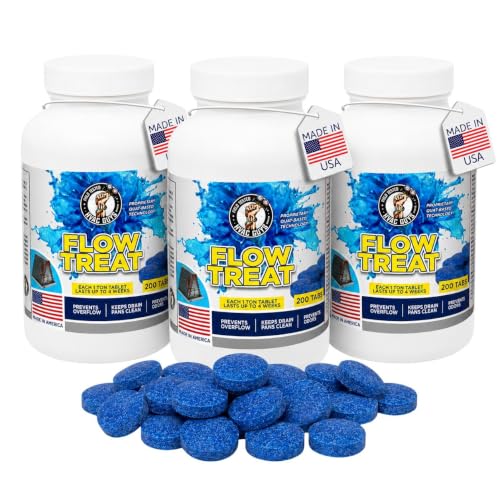
HVAC Guys Flow Treat AC Pan Tablets, 600 Count | AC Drain Line Cleaner Tabs | Made in the USA | Condensate Pan Tablets for Central AC, Mini Splits & Heat Pumps | Prevents Clogs, Overflow & Odors
Check price on Amazon