
HVAC Residential: The Complete Home Comfort System Guide
Everything homeowners need to understand about residential heating, ventilation, and air conditioning — from system types and sizing to installation, maintenance, and long-term efficiency. Learn first, then choose with confidence.
START LEARNINGWhat Is Residential HVAC?
HVAC residential refers to the integrated system of heating, ventilation, and air conditioning equipment installed in homes to maintain comfortable indoor temperatures, healthy air quality, and proper humidity levels. Unlike commercial HVAC, residential systems are sized and configured for the specific load profile of a house — typically ranging from a small apartment to a large multi-story home.
A well-designed residential HVAC system does more than cool and heat. It filters airborne particles, manages moisture, distributes fresh air, and works with the home's insulation and ductwork to create a comfortable indoor environment year-round. Understanding how these pieces fit together is the foundation of making a smart decision — whether you are building a new home, replacing an aging system, or simply trying to get more from what you already have.
Homeowners who understand the basics of residential HVAC are better equipped to ask the right questions when working with contractors, evaluate equipment options, and recognize when professional help is genuinely needed. If you are at the stage of gathering estimates, exploring HVAC quotes from multiple providers is a smart first step.
Main Types of Home HVAC Systems
Residential HVAC systems fall into several broad categories, each suited to different home layouts, climates, and ductwork situations. The right choice depends on whether your home already has ductwork, how much space you have for equipment, and how you want to control temperature across different zones.
1. Central Split Systems
The most common configuration in North American homes. A central split system pairs an outdoor condenser with an indoor air handler or furnace, connected by refrigerant lines and ductwork that distributes conditioned air throughout the house. This is the default choice for homes with existing ducts and offers strong whole-home performance.
2. Ductless Mini-Split Systems
Mini-splits deliver heating and cooling without ductwork, using one outdoor unit connected to one or more indoor heads mounted on walls, ceilings, or floors. They are ideal for homes without ducts, additions, and room-by-room zoning. For a deeper look, see the guide on mini-split AC systems.
3. Heat Pump Systems
Heat pumps provide both heating and cooling by moving heat rather than generating it. Modern cold-climate heat pumps perform well in freezing temperatures, making them a strong all-season option. Homeowners in colder regions should explore hyper heat mini-split technology for low-temperature performance.
4. Packaged Systems
In packaged units, all components — compressor, condenser, evaporator, and often the furnace — are housed in a single outdoor cabinet. These are common in homes with limited indoor space or where ductwork runs through the attic or crawlspace.
5. Hybrid and Dual-Fuel Systems
Hybrid systems combine a heat pump with a gas furnace, automatically switching to the most efficient fuel source based on outdoor temperature. This approach can be a strong long-term investment for homeowners in mixed climates.
| System Type | Best For | Ductwork Required | Zoning Flexibility |
|---|---|---|---|
| Central Split System | Homes with existing ducts | Yes | Moderate (with dampers) |
| Ductless Mini-Split | No-duct homes, additions, single rooms | No | High (per-head control) |
| Heat Pump | Year-round heating and cooling | Depends on configuration | Moderate to high |
| Packaged System | Limited indoor space | Yes | Low to moderate |
| Hybrid / Dual-Fuel | Mixed climates, long-term efficiency | Yes (typically) | Moderate |
Key Components of a Residential System
Regardless of configuration, most residential HVAC systems share a common set of components. Understanding what each does helps you recognize which part may be failing and why maintenance matters.
- Compressor: The heart of the cooling cycle, pressurizing refrigerant to move heat from indoors to outdoors.
- Condenser coil: Releases heat to the outside air; must be kept clean for efficient operation.
- Evaporator coil: Absorbs heat and moisture from indoor air as refrigerant evaporates.
- Air handler / blower: Circulates conditioned air through the ductwork.
- Ductwork: Distributes air; leaks and poor insulation here waste a significant share of capacity.
- Thermostat / controls: Manages setpoints, schedules, and increasingly, smart-home integration.
- Filtration: Captures dust, pollen, and particles; a clogged filter strains the entire system.
In hydronic homes, hydronic air handlers pair with a boiler to deliver heated air, a configuration worth understanding if your home uses hot-water heating.
How to Size a Home HVAC System
Correct sizing is one of the most consequential decisions in residential HVAC. An oversized system short-cycles — cooling too quickly without removing humidity — while an undersized system runs constantly and struggles to keep up. Neither is comfortable, and both wear out equipment prematurely.
Professional sizing uses a Manual J load calculation, which accounts for square footage, ceiling height, window area and orientation, insulation levels, air infiltration, and local climate data. A simplified rule of thumb — roughly 20 BTU per square foot of living space — can offer a rough starting point, but it should never replace a proper load calculation for a real installation decision.
Factors that push the required capacity upward include large south- or west-facing windows, poor insulation, vaulted ceilings, and high occupancy. Factors that reduce it include shade, tight construction, and efficient glazing. For a detailed walkthrough, see how to size an air conditioner.
Efficiency Ratings Explained
Efficiency ratings allow apples-to-apples comparison between systems. The main metrics homeowners encounter are SEER2 for cooling, HSPF2 for heat pump heating, and AFUE for furnaces.
- SEER2: Seasonal Energy Efficiency Ratio, updated to reflect modern testing conditions. Higher is better; current federal minimums vary by region.
- HSPF2: Heating Seasonal Performance Factor for heat pumps; higher values indicate more efficient heating.
- AFUE: Annual Fuel Utilization Efficiency for furnaces; a 96% AFUE furnace converts 96% of fuel into heat.
High-efficiency systems typically sit in the premium tier of the market and can be a worthwhile long-term investment in climates with long cooling or heating seasons. Mid-range systems often strike a balance between upfront outlay and operating efficiency, while entry-level models meet minimum standards and suit milder climates or shorter run seasons. For a deeper dive, read what a SEER rating is and how it affects real-world performance.
Practical note: Efficiency ratings are measured under standard test conditions. Actual performance depends heavily on duct sealing, refrigerant charge, filter condition, and installation quality. A premium-tier system installed poorly can underperform a mid-range system installed correctly.
Installation Considerations
Installation quality has an outsized effect on system performance, longevity, and comfort. Even a top-tier system will underdeliver if the ductwork is leaky, the refrigerant charge is off, or the air handler is undersized for the plenum.
Key things to verify before and during installation:
- Load calculation: Confirm the contractor performed a room-by-room Manual J calculation rather than relying on square footage alone.
- Duct inspection: Existing ducts should be inspected for leaks, disconnections, and insulation gaps. Sealing ducts is often one of the highest-return improvements available.
- Line set and charge: Refrigerant lines must be correctly sized, properly brazed, and evacuated before charging.
- Permits and inspection: Most jurisdictions require permits for HVAC replacement; confirm the contractor will pull them.
- Condensate management: Proper drainage and a secondary pan or float switch prevent water damage.
Choosing the right installer matters as much as choosing the right equipment. Resources on HVAC service companies and local HVAC providers can help you vet candidates and compare scope of work. If you are still at the estimate stage, gathering multiple quotes keeps the comparison fair.
Maintenance That Extends Lifespan
Routine maintenance is the single most reliable way to protect a residential HVAC investment. Most of the work is simple and can be done by homeowners, while more involved tasks should be handled by a qualified technician.
Homeowner Tasks (Monthly to Seasonally)
- Replace or clean air filters every 1–3 months, more often in dusty homes or with pets.
- Keep the outdoor condenser clear of leaves, debris, and vegetation.
- Check condensate drain lines for clogs and confirm water is draining properly.
- Verify thermostat batteries and schedule accuracy.
Professional Tasks (Twice Yearly)
- Check refrigerant charge and inspect for leaks.
- Clean evaporator and condenser coils.
- Inspect electrical connections and tighten terminals.
- Lubricate moving parts and test capacitors and contactors.
- Inspect ductwork for leaks and insulation gaps.
Homeowners interested in structured, ongoing care can explore HVAC maintenance programs or maintenance HVAC service plans, which typically bundle seasonal tune-ups with priority scheduling. For those who prefer to handle more themselves, the guide on maintenance HVAC best practices covers the full checklist.
Common Problems and Solutions
Most residential HVAC issues fall into a handful of recognizable patterns. Recognizing them early often prevents a minor service call from becoming a major repair.
- System not cooling: Often a clogged filter, low refrigerant charge, or a failing capacitor. Start with the filter and thermostat settings.
- Short cycling: Frequent on-off cycling usually points to oversized equipment, a failing thermostat, or a refrigerant issue.
- Water leakage: A clogged condensate line or a frozen evaporator coil are the usual culprits. Mini-split owners may find the guide on mini-split leaking water inside the house helpful.
- Uneven temperatures: Often a ductwork or zoning problem rather than an equipment fault.
- Strange odors: Can indicate mold in ductwork, a dirty filter, or a drainage issue. See the resource on mold in HVAC ductwork for guidance.
- Excessive noise: Loose panels, failing blower bearings, or debris in the outdoor unit.
When a problem exceeds basic troubleshooting, the right move is to bring in a qualified technician. Resources on HVAC repair technicians and HVAC repair in your area can help you find qualified help quickly. For ongoing service relationships, exploring HVAC service providers and HVAC service technicians gives you a shortlist to compare.
Repair or Replace?
The repair-versus-replace decision is one of the most common crossroads for homeowners. There is no single right answer, but a few practical signals point clearly in one direction.
Lean toward repair when: the system is under 10 years old, the problem is isolated, and the system has a solid maintenance history.
Lean toward replacement when: the system is over 12–15 years old, repairs are becoming frequent, efficiency has fallen noticeably, or parts are hard to source. Replacement also makes sense when the existing system is significantly undersized or oversized for the home.
When replacement is the right path, explore HVAC replacement guidance to understand what the process involves, and compare options through HVAC service companies in your area. Homeowners planning ahead may also benefit from understanding the most efficient heating and cooling systems available today.
Ready to Take the Next Step?
Whether you are gathering estimates, scheduling maintenance, or weighing a replacement, the right provider makes all the difference. Compare qualified local professionals and move forward with confidence.
Compare HVAC QuotesFrequently Asked Questions
What does HVAC residential mean?
HVAC residential refers to the heating, ventilation, and air conditioning systems designed specifically for homes. It covers the equipment, ductwork, and controls that manage indoor temperature, humidity, and air quality in houses, apartments, and other dwelling units — as opposed to commercial HVAC, which serves larger buildings with different load profiles.
How often should a residential HVAC system be serviced?
Twice per year is the standard recommendation — once in spring before cooling season and once in fall before heating season. Regular professional maintenance keeps the system running efficiently, catches small issues before they become major repairs, and helps preserve the manufacturer's warranty terms.
What is the lifespan of a residential HVAC system?
With proper maintenance, most residential HVAC systems last 15 to 20 years. Central air conditioners typically last around 15 years, heat pumps 12 to 15 years, and furnaces 20 years or more. Lifespan depends heavily on installation quality, maintenance consistency, and how hard the system works in your climate.
Should I repair or replace my home HVAC system?
The decision hinges on age, repair frequency, efficiency, and comfort. If the system is over 12 years old, needs frequent repairs, or has an efficiency rating well below current standards, replacement is often the better long-term investment. For newer systems with an isolated problem, repair is usually the sensible choice.
How do I know what size HVAC system my home needs?
Proper sizing requires a Manual J load calculation performed by a qualified contractor. It accounts for square footage, insulation, window area and orientation, ceiling height, air infiltration, and local climate. A rough rule of thumb — about 20 BTU per square foot — can offer a starting estimate, but it should not replace a professional calculation for an installation decision.
Can I install a residential HVAC system myself?
In most jurisdictions, HVAC installation requires permits and licensed professionals, particularly for refrigerant handling and electrical connections. DIY installation of a full system is not advisable — improper installation can void warranties, create safety hazards, and lead to performance problems that cost more to fix than professional installation would have.
Top-Rated Residential HVAC Equipment
⚠️ AFFILIATE DISCLOSURE: This website contains affiliate links. As an Amazon Associate, we earn from qualifying purchases. If you make a purchase through these links, we may receive a small commission at no additional cost to you. Read our full affiliate policy.

HVAC Technician’s Field Diagnostics Mastery: Advanced Diagnostics, Installation & Real-World Troubleshooting for Residential & Light Commercial Systems | For Apprentices and Professional Technicians
Check price on Amazon
HVAC Troubleshooting and Diagnostics: A Practical Field Workbook for Diagnosing Common Residential HVAC Problems
Check price on Amazon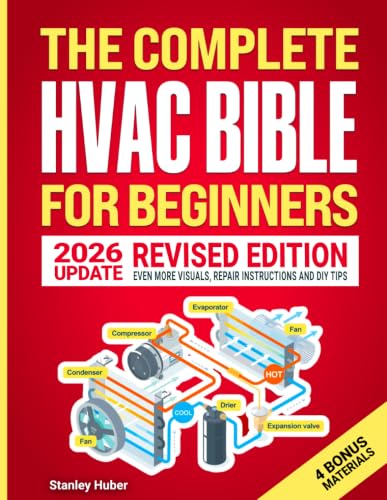
The Complete HVAC BIBLE for Beginners: The Most Practical & Updated Guide to Heating, Ventilation, and Air Conditioning Systems | Installation, Troubleshooting and Repair | Residential & Commercial
Check price on Amazon
Manual D - Residential Duct Systems
Check price on Amazon
Residential Load Calculation Manual J®, Eighth Edition, Version 2.50
Check price on Amazon
Residential Load Calculation Manual J®, Abridged Edition
Check price on Amazon
Residential Construction Academy HVAC
Check price on Amazon