Mini Split Air Conditioning Unit: The Complete Buyer's Guide
Understand how ductless mini split systems work, their efficiency advantages, sizing considerations, and how to choose the right unit for your home or specific rooms.
Learn How It WorksQuick Summary: A mini split air conditioning unit is a ductless system consisting of an outdoor condenser and one or more indoor air handlers connected by a small conduit. It delivers cooling (and often heating) without ductwork, making it an excellent choice for room additions, older homes, and spaces where a window or portable unit is impractical.
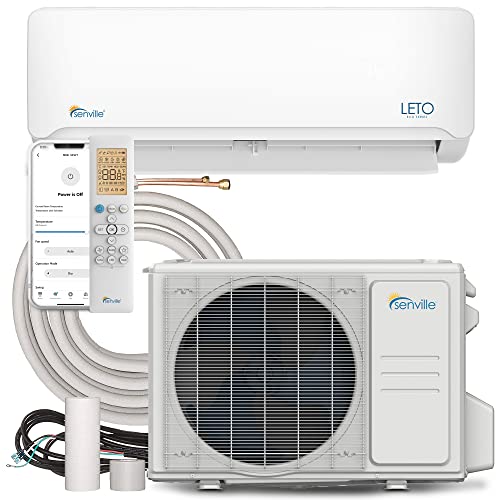
A mini split air conditioning unit is one of the most versatile cooling solutions available today. Unlike a central air conditioner that distributes cool air through ductwork, a mini split uses a small indoor unit mounted on a wall, ceiling, or floor to deliver conditioned air directly into the space. The indoor unit is connected to an outdoor compressor by a narrow conduit that carries refrigerant lines, power, and condensate drainage.
This design offers a significant advantage: it eliminates the energy losses associated with ductwork, which in many homes account for a meaningful share of total cooling output. Mini splits are also highly flexible — a single-zone system cools one room, while a multi-zone system can cool several rooms from one outdoor unit. For homeowners considering a new cooling system, understanding the mini split category is essential before comparing it with other options.
How a Mini Split Air Conditioning Unit Works
The mini split operates on the same refrigerant cycle as a conventional air conditioner, but its components are split between an outdoor unit and one or more indoor air handlers. Refrigerant travels between the two through small insulated lines, absorbing heat from the indoor air and releasing it outdoors. The indoor unit contains an evaporator coil, a blower fan, and a filter; the outdoor unit contains the compressor and condenser coil.
Because the indoor and outdoor units are connected by a small conduit rather than large ducts, installation is less invasive. This makes mini splits especially appealing for homes that were built before central air was common, or for additions and converted spaces where running new ductwork would be impractical or costly. Our guide on ductless air conditioning for older homes explores this use case in detail.
Types of Mini Split Systems
Mini splits are available in several configurations, each suited to a different application.
Single-Zone Mini Split
One indoor unit paired with one outdoor unit. Best for cooling a single room, addition, or open-plan space. Entry-level to mid-range tier depending on capacity and features.
Multi-Zone Mini Split
One outdoor unit connected to multiple indoor units. Ideal for cooling several rooms from a single location. Mid-range to premium tier; installation complexity is higher.
Ducted Mini Split
Uses short runs of ductwork from a concealed indoor unit. Good for whole-floor conditioning where a small amount of ductwork is feasible. Premium tier.
Mini Split Heat Pump
A reversible system that provides both cooling and heating. Highly efficient in moderate climates. Top-tier for year-round comfort.
Mini Split vs Other AC Types
To choose the right system, it helps to see how the mini split compares with the main alternatives.
| System | Best For | Considerations |
|---|---|---|
| Mini split | Room additions, older homes, individual rooms | No ductwork required; higher upfront outlay than window units |
| Central AC | Whole-home cooling with existing ducts | Requires ductwork; efficiency depends on duct condition |
| Window AC | Single rooms, apartments, renters | Requires a suitable window; less efficient for multiple rooms |
| Portable AC | Temporary or rental spaces | Needs an exhaust path; noise level can be higher |
For a broader comparison of the main categories available for homes, see our overview of the different types of air conditioning for homes. Homes without existing ducts are the clearest candidate for a mini split, especially when whole-home cooling is the goal.
Key Advantages of a Mini Split Air Conditioning Unit
The mini split category has grown quickly because it solves several problems at once. The most important advantages are:
- No ductwork required. Installation requires only a small hole through an exterior wall for the conduit, making it far less invasive than a central system.
- High efficiency. Eliminating duct losses means more of the cooling reaches the room. Many mini split systems achieve top-tier efficiency ratings.
- Zoned cooling. Multi-zone systems allow each room to be controlled independently, so unoccupied rooms do not need to be cooled.
- Quiet operation. The compressor sits outdoors, and indoor units are engineered to operate quietly — typically around the level of a soft conversation.
- Heating capability. Many models are heat pumps, providing efficient heating in cooler months as well as cooling in summer.
- Better air quality. Multi-stage filtration is common, and because there are no ducts, there is no distribution of accumulated dust through the home.
Sizing a Mini Split System
Correct sizing is essential for comfort and efficiency. An undersized unit runs constantly without reaching the setpoint; an oversized unit cools too quickly and leaves humidity high, which feels clammy. The table below provides general starting points, but a professional load calculation is the most reliable way to size a system.
| Room Size | Typical Capacity Range | Common Application |
|---|---|---|
| Up to 500 sq ft | 9,000 – 12,000 BTU | Bedroom, small living room, studio |
| 500 – 800 sq ft | 12,000 – 18,000 BTU | Large living room, open-plan area |
| 800 – 1,200 sq ft | 18,000 – 24,000 BTU | Multi-room area or small home |
| 1,200 – 1,800 sq ft | 24,000 – 36,000 BTU | Whole-home cooling in mild climates |
For room-specific sizing, our guides on a mini split AC unit for 500 square feet and a mini split air conditioner for 600 square feet walk through the calculation with real examples. Larger applications benefit from a dedicated discussion of a mini split AC unit for 1200 sq ft, while whole-home systems with several rooms are covered in our guide to a five-zone mini split.
Sizing note: Room square footage is only the starting point. Ceiling height, insulation, window area, sun exposure, and occupancy all influence the correct capacity. A professional load calculation is the only way to size a system with confidence.
Installation Considerations
Mini splits are less invasive than central systems, but they are not a casual DIY project. Proper installation requires refrigerant handling, electrical work, and careful placement to ensure performance and longevity.
- Indoor unit placement. The indoor unit should be mounted high on a wall with clear airflow and a path for the condensate drain. Placement affects both comfort and efficiency.
- Outdoor unit placement. The outdoor unit needs adequate clearance, a solid base, and protection from snow and debris. A wall bracket or ground stand is often used.
- Conduit routing. The line set, drain, and electrical cable run together through a single hole in the wall. Routing should be planned carefully to minimize visible conduit.
- Electrical requirements. Mini splits typically require a dedicated circuit. Confirm the electrical panel capacity before installation.
- Refrigerant handling. Only a licensed technician can legally handle refrigerant. Improper charging reduces efficiency and can damage the compressor.
For homeowners evaluating installation options, our guide on installing a mini split AC system covers the process in detail. If you are comparing quotes from contractors, understanding ductless mini split AC installation cost factors and how to review HVAC quotes helps you evaluate proposals fairly.
Efficiency and Operating Benefits
Mini splits are among the most efficient cooling systems available for homes. The key reasons:
- No duct losses. Central systems can lose a meaningful share of cooled air through leaky ducts. Mini splits deliver conditioned air directly into the room.
- Inverter compressors. Most modern mini splits use inverter technology, which modulates compressor speed to maintain temperature steadily rather than cycling on and off.
- Zoned operation. Multi-zone systems let you cool only the rooms in use, reducing total energy consumption.
- Heat pump capability. Reversible models provide efficient heating, often at a lower running outlay than electric resistance heating.
Buyers comparing efficiency should review the SEER and SEER2 ratings of specific models. ENERGY STAR certified units meet higher efficiency thresholds and are a sensible reference point for comparison. For context on what those ratings mean, our guide on energy efficient HVAC systems explains the standards in plain language.
Maintenance for Long-Term Performance
A mini split requires less routine maintenance than a central system, but it is not maintenance-free. The essentials are:
- Clean or replace indoor filters every few weeks during heavy use. This is the single most impactful maintenance step.
- Clean the indoor coil and blower annually. Dust accumulation reduces efficiency and can lead to odors.
- Inspect the outdoor unit each season. Clear debris, check for damage, and ensure the unit is level.
- Flush the condensate drain periodically. A clogged drain can cause water backups and trigger shutdowns.
- Schedule professional maintenance annually. A technician can verify refrigerant charge, clean the coils thoroughly, and catch small issues early.
If the unit stops cooling, the diagnostic process is similar to a conventional system. Our guide on why a house is not cooling from the air conditioner covers the checks a homeowner can perform before calling a technician.
Ready to Choose a Mini Split System?
If you have sized your rooms and identified your zoning needs, browse our recommended mini split air conditioning units to compare options for your home.
Explore Recommended UnitsFrequently Asked Questions
What is a mini split air conditioning unit?
A mini split is a ductless air conditioning system consisting of an outdoor compressor unit and one or more indoor air handlers connected by a narrow conduit. It delivers cooled (and often heated) air directly into a room without ductwork.
How many rooms can a mini split cool?
A single-zone mini split cools one room or open area. A multi-zone system can cool two to five rooms from one outdoor unit, with each indoor unit controlled independently. Larger homes may use multiple outdoor units to cover more zones.
Is a mini split more efficient than central AC?
In most homes, yes, because mini splits avoid the energy losses associated with ductwork. In homes with well-sealed, efficient ducts, the difference is smaller, but ductless systems still often hold an efficiency edge.
Can a mini split also provide heating?
Yes. Many mini splits are heat pumps, which means they can run in reverse to provide heating in cooler weather. In moderate climates, a mini split heat pump can serve as a primary heating and cooling system.
How long does a mini split system last?
With proper installation and regular maintenance, a mini split system typically provides many years of service. Lifespan depends on installation quality, usage patterns, and whether filters and coils are kept clean.
Do mini splits need a dedicated electrical circuit?
Yes. Most mini split systems require a dedicated circuit sized to the unit's capacity. An electrician should confirm panel capacity and install the circuit before the unit is commissioned.
Recommended Mini Split Air Conditioning Units
⚠️ AFFILIATE DISCLOSURE: This website contains affiliate links. As an Amazon Associate, we earn from qualifying purchases. If you make a purchase through these links, we may receive a small commission at no additional cost to you. Read our full affiliate policy.

Albott 12,000 BTU Mini Split Air Conditioner and Heater SEER2 18, 115V | Inverter Energy-Efficient AC with Self-Cleaning, Remote and APP Control, HVAC Tech Needed, Cools up to 750 Sq.Ft.
Check price on Amazon
Rellytech Mini Split AC/Heating System, 18000 BTU, 19 SEER2 208-230V | Ductless air conditioner, energy efficient, pre-charged system, up to 1250sq.ft coverage, inverter heating and cooling
Check price on Amazon
Rellytech Mini Split AC/Heating System, 12000 BTU, 19 SEER2 115V/110V | Ductless air conditioner, energy efficient, pre-charged system, up to 750sq.ft coverage, inverter heating and cooling
Check price on Amazon
ROVSUN 9000 BTU Wifi Enabled Mini Split Air Conditioner & Heater with Inverter, 20 SEER2 Energy Saving 115V Ductless Split AC Unit with Pre-Charged Condenser, Heat Pump & Installation Kit
Check price on Amazon
COSTWAY 12000BTU Mini Split Air Conditioner& Heater | 20 SEER2 115V Wall-Mounted Ductless AC Cools up to 750 Sq. Ft, Energy Efficient Inverter AC with Heat Pump
Check price on Amazon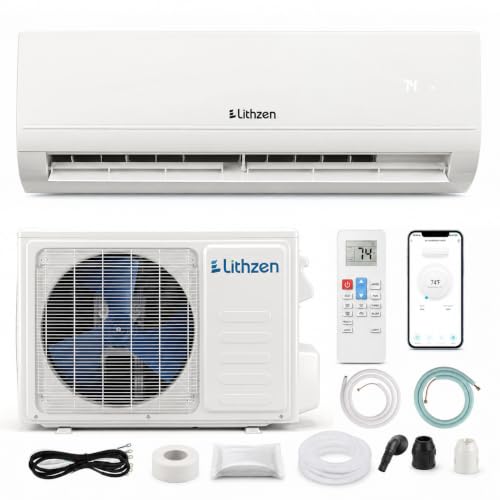
LITHZEN 12000 BTU Mini Split AC/Heating System, 17 SEER2 115V | Wifi Ductless Inverter AC w/1 Ton Heat Pump & Installation Kit, Compatible with Alexa, Cools Rooms Up to 750 Sq.Ft
Check price on Amazon