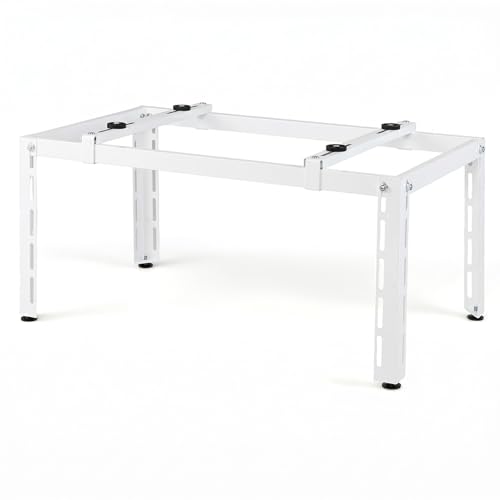
Mini Split Stand: Choosing the Right Mount for Your Outdoor Unit
A mini split stand is one of the most overlooked components in a ductless installation, yet it directly affects noise, drainage, service access, and the long-term condition of the outdoor unit. The condenser sitting on a proper stand is easier to service, less exposed to ground moisture and debris, and less likely to transmit vibration into the structure of the home. The wrong mount — or no mount at all — creates problems that surface slowly but are expensive to correct.
This guide walks through the main types of mini split stands, how to choose between ground and wall mounting, the materials that hold up over time, and the installation factors that determine whether the mount actually does its job. If you are still deciding on the broader equipment configuration, the overview of mini split AC system options is a useful companion read, and the guide to installing a mini split AC system covers the installation process around the mount itself.
Short answer: A ground stand is the most common choice for most homes. It elevates the unit, isolates vibration with rubber pads, and provides the clearance the condenser needs. Wall brackets are better when ground space is limited or the unit needs to be lifted above snow line. Match the stand's load rating to the weight of the outdoor unit, and always follow the manufacturer's clearance requirements.
Why a Proper Mini Split Stand Matters
The outdoor unit is designed to live outside, but it is not designed to sit directly on dirt, gravel, or concrete without support. A stand addresses several practical concerns that become obvious within the first year of operation if they are not handled correctly.
- Moisture protection — keeps the base of the condenser above standing water and snow accumulation.
- Debris reduction — lifts the unit away from leaves, grass clippings, and dirt that can clog the coil.
- Vibration isolation — pads and stand design reduce noise transfer into the home and structure.
- Airflow clearance — ensures the manufacturer-specified clearances are maintained on all sides.
- Service access — makes the unit easier to reach for routine maintenance and repairs.
- Longevity — reduces corrosion at the base, which is a common failure point on units installed directly on the ground.
Homes near the coast or in areas with heavy snow see the largest benefit from a proper stand, because moisture and salt exposure accelerate corrosion of the condenser base and cabinet. For homeowners planning an installation, the guidance on how much to install split air conditioner covers the broader installation scope, of which the mount is one part.
The Main Types of Mini Split Stands
There are three broad categories of mini split stand, each suited to a different installation scenario. Understanding the trade-offs makes the choice straightforward once the site is known.
1. Ground Stand (Freestanding Frame)
A ground stand is a freestanding frame, typically made of powder-coated steel or aluminum, that elevates the outdoor unit above the ground. It is the most common choice for installations with available ground space and is straightforward to install on a level surface such as a concrete pad or patio.
- Best for: homes with ground space next to the exterior wall, patios, side yards, and installations where service access matters.
- Advantages: easy to service, simple to install, compatible with anti-vibration pads, and available in height options that clear snow.
- Limitations: requires a level surface and enough ground clearance; not suitable for tight urban lots with limited footprint.
2. Wall Bracket (Wall-Mounted)
A wall bracket mounts the outdoor unit directly to the exterior wall of the home, elevated above ground level. This is common in urban installations, upper-floor apartments, and homes with limited ground space. Wall brackets keep the unit clear of snow and debris but require a solid mounting surface and careful attention to vibration isolation.
- Best for: urban homes, upper floors, tight side yards, and installations where ground space is unavailable.
- Advantages: saves ground space, keeps the unit clear of snow and moisture, and protects against tampering.
- Limitations: requires solid wall structure, transmits more vibration into the wall if not properly isolated, and can be more difficult to service.
3. Roof or Platform Mount
In some installations, the outdoor unit is placed on a roof or elevated platform. This is less common for residential mini splits but is used in commercial settings or homes where ground and wall mounting are both impractical. Roof mounts require structural assessment and additional weatherproofing.
- Best for: commercial properties, flat roofs, and buildings where ground and wall mounting are not feasible.
- Advantages: removes the unit from ground level and shared spaces.
- Limitations: requires structural verification, more complex installation, and careful planning for service access.
The comparison of mini split air conditioning unit configurations is useful for understanding which outdoor unit size you are mounting before choosing the stand. For a broader look at installation choices, installing a mini split covers the sequence of work around the mount.
Ground Stand vs Wall Bracket: Side-by-Side Comparison
The table below summarizes the practical differences between the two most common mounting options. Descriptors are qualitative and independent of any currency, so the comparison stays useful as the market changes.
| Category | Ground Stand | Wall Bracket | Best For |
|---|---|---|---|
| Installation complexity | Simple, requires level surface | Requires solid wall and correct anchor selection | Ground stand for most residential installs |
| Vibration control | Easy to isolate with anti-vibration pads | Requires careful isolation to avoid wall vibration | Ground stand for noise-sensitive homes |
| Ground space | Requires footprint next to the wall | Frees up ground space entirely | Wall bracket for tight lots and urban homes |
| Snow and debris | Elevation clears most conditions; snow height is a factor | Naturally clear of snow and ground debris | Wall bracket in heavy snow regions |
| Service access | Easy to reach from the ground | Requires ladder or lift for servicing | Ground stand for routine maintenance |
| Structure requirements | Level surface and drainage planning | Solid wall structure and proper anchoring | Ground stand for most installations |
| Market tier | Entry-level to mid-range | Mid-range to high-end tier | Match tier to site constraints and service needs |
Important: Tier descriptors describe relative product positioning, not a specific figure. The right choice depends on the site, not on the tier alone. Ask the installer which mount they recommend and why before the job begins.
Materials and Durability
The stand lives outdoors for the life of the equipment, so material choice matters as much as design. Three materials dominate the market, each with different trade-offs.
Powder-Coated Steel
The most common material for ground stands and wall brackets. Powder coating provides a durable, weather-resistant finish that resists chipping and corrosion. Heavy-duty steel construction with a rust-proof finish holds up well in most climates, though coastal installations benefit from additional protective measures.
Aluminum
Lighter than steel and naturally corrosion-resistant. Aluminum stands are a good fit for coastal installations where salt exposure accelerates corrosion of steel. The trade-off is generally lower load capacity, so the stand should be rated appropriately for the outdoor unit.
Stainless Steel
Premium construction that offers excellent corrosion resistance and durability. Stainless steel stands are used in demanding environments where longevity is the priority. They are heavier and typically positioned at the top of the market tier, but the long-term investment can be justified in coastal or industrial areas.
For homes in humid climates, the guidance on drip pan for AC unit in attic full of water is a reminder of how moisture management affects all parts of an HVAC system, including the outdoor mount.
Installation Factors That Determine Whether the Stand Works
Even a well-made stand will underperform if it is installed without attention to the site. The factors below are the ones that most often separate a solid installation from one that creates ongoing problems.
- Level surface — the unit must sit level to keep the compressor lubricated and to prevent stress on refrigerant lines.
- Drainage — the stand should not sit in a location where water pools around the base.
- Anti-vibration pads — rubber or cork pads between the unit and the stand are essential for noise control.
- Manufacturer clearances — minimum distances from walls, obstacles, and other units must be respected.
- Wall structure — for wall brackets, the mounting surface must be solid enough to hold the unit plus dynamic loads.
- Anchor selection — the correct anchors for concrete, brick, or wood are critical; the wrong anchor can fail over time.
- Snow height — in cold climates, the stand should elevate the unit above the expected snow line.
- Service clearance — the installer should be able to reach the service valves and the electrical box safely.
For a full picture of the installation process, the guide to installing a mini split AC system covers the sequence in which the mount is prepared. Homeowners in cold climates considering heating and cooling together should also review mini split heating and air conditioning systems to understand how the outdoor unit is configured in those setups.
Reducing Noise with a Mini Split Stand
Noise is one of the most common complaints after a mini split installation, and the stand plays a direct role in how much of it reaches the living space. The compressor and fan produce vibration that travels through the cabinet, through the stand, and into the ground or the wall.
- Use anti-vibration pads — rubber or cork pads under each foot of the unit isolate vibration from the stand.
- Choose a heavier stand — mass helps damp vibration, so a heavier stand outperforms a lighter one for noise control.
- Avoid direct wall contact — even on wall brackets, isolation pads are essential to prevent the wall from becoming a speaker.
- Keep the unit clear of resonating surfaces — avoid mounting on hollow walls or thin metal panels.
- Confirm the compressor is not touching the cabinet — sometimes the noise source is inside the unit, not at the stand.
Homeowners sensitive to noise should also review the broader quiet operation discussion in inverter vs non-inverter, since inverter-driven compressors are generally quieter at low load. For installations near bedrooms, the guidance on AC making noise solution covers additional troubleshooting steps.
Stand Size and Load Rating
The stand must be rated for the weight of the outdoor unit plus a safety margin. Undersized stands can deform, rust faster under load, and create vibration problems. The size and rating you need depend on the capacity of the system you are installing.
- Single-zone systems — outdoor units for single-zone mini splits are relatively light and can be supported by most mid-tier stands.
- Multi-zone systems — outdoor units with more capacity are heavier and may require a reinforced or professional-grade stand.
- Heat pump configurations — heat pump outdoor units operate year-round and see more hours of vibration, so a heavier stand with good isolation is worthwhile.
For sizing context on the equipment itself, the guidance on mini split AC unit for 500 square feet and mini split AC unit for 1200 sq ft shows how outdoor unit capacity scales with the space being conditioned. Homeowners installing a multi-zone system can also review five zone mini split for a sense of the outdoor unit scale involved.
Maintaining the Stand Over Time
The stand itself requires little attention, but a quick check each season prevents small issues from becoming larger ones. The routine below is straightforward and can be completed during regular outdoor maintenance.
- Inspect for rust — especially at welds and anchor points. Touch up the finish if any bare metal is visible.
- Check anchor tightness — wall brackets and ground anchors can loosen over time due to vibration.
- Confirm pads are intact — replace cracked or compressed anti-vibration pads.
- Clear debris — remove leaves and grass from around the base of the stand.
- Verify the unit is still level — settling can occur on some surfaces, especially after the first year.
- Check drainage — make sure condensate drains away from the stand and does not pool around the base.
For broader maintenance guidance, the reference on HVAC service companies covers how to choose a service provider if a more serious issue arises. The overview of first week after AC installation is also useful for the initial period after a new unit is mounted.
Frequently Asked Questions
Do I need a mini split stand for my outdoor unit?
A mini split stand is recommended for most installations. It keeps the outdoor unit off the ground, protects it from moisture and debris, reduces vibration and noise transmission, and provides the clearance the condenser needs for proper airflow. Wall-mounted brackets are an alternative when ground space is limited.
What is the difference between a ground stand and a wall bracket?
A ground stand is a freestanding frame that elevates the outdoor unit above the ground, typically with anti-vibration pads. A wall bracket mounts the unit directly to the exterior wall. Ground stands are easier to service and simpler to install, while wall brackets save ground space and keep the unit clear of snow and debris.
How much clearance does a mini split stand need?
Manufacturers typically specify minimum clearances on all sides of the outdoor unit, with the largest clearance usually required in front of the fan. The stand itself should elevate the unit enough to keep it clear of snow and standing water, and provide clearance for service access. Always follow the manufacturer's installation manual for the specific equipment.
Will a mini split stand reduce noise?
Yes, when combined with anti-vibration pads. The stand lifts the unit off the ground, and the pads isolate vibration from the surface beneath. This reduces both the low-frequency hum and the structural vibration that can travel through walls or floors.
Can I install a mini split stand myself?
Some homeowners install ground stands themselves on a level surface, but the process becomes more complex with wall brackets, where structural anchoring and vibration isolation must be handled correctly. If the stand is part of a new installation, the installer will typically supply and install the mount as part of the project scope. For guidance on installation scope, see how much to install split air conditioner.
Key Takeaways
- A mini split stand protects the outdoor unit, reduces vibration, and improves service access.
- Ground stands are the most common choice; wall brackets are better for tight lots and snow regions.
- Material matters — powder-coated steel for general use, aluminum or stainless steel for coastal areas.
- Anti-vibration pads are essential for noise control on both ground and wall mounts.
- Clearances, drainage, and level mounting determine whether the stand actually performs as intended.
- Match the stand's load rating to the outdoor unit and check the mount each season.