Mini Split Wall Thermostat: The Complete Guide
Everything you need to know about choosing, installing, and using a wall thermostat with your ductless mini split system — from wiring basics to smart home integration.
Start ReadingWhy this guide matters: A mini split system's efficiency and comfort depend heavily on how precisely it can read and control room temperature. The factory remote works fine, but a dedicated wall thermostat gives you fixed-point sensing, programmable schedules, and often smart home access. This guide explains what a mini split wall thermostat does, which types exist, how to install one safely, and how to match it to your system — so you can make a confident decision before you buy.
What Is a Mini Split Wall Thermostat?
A mini split wall thermostat is a wall-mounted control device that measures room temperature and sends commands to your ductless system's indoor air handler. Instead of relying solely on the handheld remote, it provides a fixed sensor location, a permanent interface, and often features like scheduling, backlit displays, and Wi-Fi connectivity.
Ductless systems differ from central HVAC in one important way: the indoor unit usually has its own built-in temperature sensor and control board. A wall thermostat can work in three ways — as a wired controller connected to the indoor unit's terminal block, as a wireless (radio frequency) remote sensor, or as an IR-based smart controller that emulates the original remote. Understanding which method your system supports is the first step in choosing the right device.
How it differs from the handheld remote
The standard mini split remote is a handheld IR device. It sends a command once, and the indoor unit then regulates based on its own internal sensor. A wall thermostat, by contrast, can stay in one place and continuously report room temperature, giving more stable control. For households that want set-and-forget operation, a wall-mounted thermostat is a practical upgrade.
If you are exploring broader options for remote control, the guide on mini split remote thermostats covers the wireless and smart alternatives in more detail.
Types of Wall Thermostats for Mini Splits
Not every thermostat works with every ductless system. The right type depends on your indoor unit's control interface, your budget tier, and whether you want smart features.
Wired Wall Thermostats
Connected directly to the indoor unit's low-voltage control terminals. Reliable and continuous, but installation requires running wire through walls. Best for new installations or remodels.
Wireless / RF Thermostats
Communicate with a receiver module wired to the indoor unit. Avoid long wire runs and are easier to retrofit. Range and interference are the main considerations.
Smart / Wi-Fi Thermostats
Offer app control, voice assistant integration, geofencing, and energy reports. Many work through brand-specific adapters or IR blasters. Verify compatibility carefully.
IR-Emulating Controllers
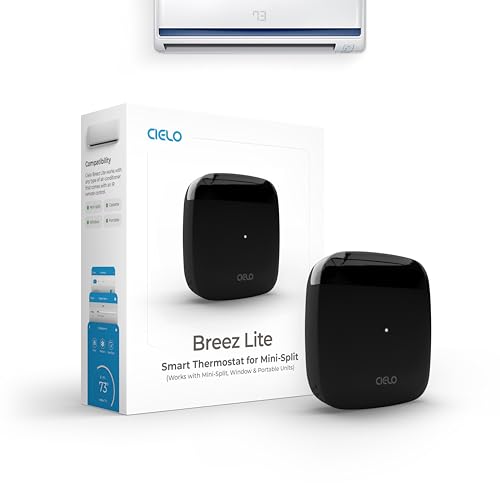
Mounted on the wall and aimed at the indoor unit, these mimic the original remote. Simple and non-invasive, but require line of sight and precise placement.
Key Features That Matter
When comparing wall thermostats for a mini split, focus on the features that affect daily comfort and long-term reliability. Below are the ones that make the biggest practical difference.
- Temperature accuracy: Look for sensors rated within ±1°F. Better accuracy means fewer short cycles and more consistent comfort.
- Programmable schedules: Seven-day programming lets you align cooling and heating with your routine, which supports energy efficiency.
- Backlit display: Useful for bedrooms and hallways, especially when adjusting settings at night.
- Fan and mode control: Confirm the thermostat can control fan speed, mode (cool, heat, dry, fan), and swing — not just setpoint temperature.
- Smart home integration: Wi-Fi, Alexa, Google Assistant, and Apple Home compatibility add convenience but require verified support for your specific unit.
- Remote sensor support: Some thermostats accept an additional remote sensor for rooms where temperature varies significantly.
For a deeper look at pairing wall controls with ductless hardware, see the overview of mini split heads and how indoor units are configured.
Choosing by Tier: Entry-Level to Premium
Instead of focusing on figures, it helps to think about wall thermostats in terms of market position and build quality. The table below maps common tiers to their typical strengths.
| Tier | Best For | Typical Strengths |
|---|---|---|
| Entry-level | Basic setpoint control in a single room | Simple display, manual mode switching, straightforward wiring. Solid choice for its tier when you only need fixed-point sensing. |
| Mid-range | Households wanting schedules and better displays | 7-day programming, backlit screen, fan and mode control, improved sensor accuracy. A balanced tier for most homes. |
| High-end tier | Smart home users and multi-room setups | Wi-Fi app control, voice assistant support, geofencing, energy usage reports, and compatibility with remote sensors. |
| Professional-grade | Contractors and commercial installations | Heavy-duty construction, wider compatibility across brands, advanced diagnostics, and robust wired communication. |
Installation Basics: What to Expect
Installation complexity varies significantly by thermostat type. Wireless and IR-based units are the simplest to retrofit, while wired thermostats involve running control wire from the wall location to the indoor unit.
Wired installation steps (overview)
- Turn off power to the mini split at the breaker.
- Choose a wall location on an interior wall, roughly 4–5 feet above the floor, away from sunlight, drafts, and heat sources.
- Run low-voltage control wire from the thermostat location to the indoor unit's control board.
- Connect wires to the matching terminals (typically labeled for communication and power).
- Mount the thermostat base, attach the faceplate, and restore power.
- Configure the thermostat to match the indoor unit's model and communication settings.
Because mini split control boards vary by brand and model, wired installation is usually best handled by a licensed HVAC technician. Incorrect wiring can damage the indoor unit and may void the warranty. If you are planning a new system, the guide on mini split heating and cooling installation explains the broader installation process.
Compatibility: Matching Thermostat to System
Compatibility is the single most important factor in a successful purchase. Mini split systems use several control approaches:
- Manufacturer-specific wired controllers: The safest and most reliable option. These are designed by the brand for its own indoor units.
- Third-party wired thermostats: Some universal thermostats support mini splits through dedicated adapter modules. Verify the adapter lists your model.
- IR-based smart controllers: These work with any unit that uses a standard IR remote, but require line of sight and careful aiming.
- Wireless receiver kits: A receiver connects to the indoor unit's control terminals, and the thermostat communicates wirelessly.
If you are still comparing system types, the overview of mini split heat pumps and ductless mini split AC systems explains how indoor and outdoor components communicate, which helps clarify where a thermostat fits in.
Smart Thermostats and Mini Splits
Smart thermostats can add meaningful convenience: remote control from a phone, automatic adjustments based on occupancy, and detailed usage history. However, mini split compatibility with popular smart thermostat brands is limited compared with central HVAC.
Three approaches work in practice:
- Brand-native smart controllers: Many mini split manufacturers offer their own Wi-Fi modules and apps. These are the most reliable path to smart control.
- Adapter kits: Third-party adapters translate a smart thermostat's signals into the mini split's protocol. Compatibility lists are essential.
- IR blaster hubs: A smart hub with an IR emitter can replicate remote commands. These work broadly but lack feedback on actual system state.
For broader context on accuracy and sensor behavior, the article on the most accurate AC thermostat explains how sensor placement and calibration affect comfort.
Common Issues and Quick Fixes
The thermostat display is blank
Check the breaker, confirm the control wire connections at both ends, and verify that the thermostat batteries (if applicable) are fresh. For wired units, a loose terminal screw is a frequent cause.
Room temperature does not match the thermostat reading
Placement is usually the culprit. Sunlight, drafts, lamps, and nearby electronics can skew readings by several degrees. Relocate the thermostat or use a remote sensor if supported.
The system short cycles
Short cycling often indicates a thermostat setpoint that is too close to room temperature, an oversized system, or a sensor calibration issue. Verify the deadband setting and confirm the thermostat is configured for the correct system type.
Commands from the thermostat are ignored
For wireless models, check the receiver module and battery level. For IR controllers, ensure a clear line of sight to the indoor unit. For wired models, confirm the communication wire is seated and the thermostat model matches the indoor unit's protocol.
If the system runs but does not cool properly, the troubleshooting guide on compressor running but not cooling covers the mechanical side. For thermostat-specific remote control options, see mini split remote thermostat.
Pre-Purchase Checklist
- Identify your indoor unit's exact model number.
- Confirm which control method your unit supports (wired, wireless, IR).
- Check the manufacturer's approved accessories list.
- Decide whether you need scheduling, smart features, or just basic control.
- Plan the mounting location: interior wall, away from heat, sunlight, and drafts.
- Arrange professional installation for wired models to protect your warranty.
- Verify the thermostat supports fan speed, mode, and swing control, not just temperature.
Frequently Asked Questions
Does a mini split need a wall thermostat?
Most mini split systems ship with a handheld remote that doubles as a thermostat, so a wall thermostat is optional. However, a wall-mounted thermostat adds convenience, enables scheduling, and can integrate with smart home systems, making it a worthwhile upgrade for many households.
Can I install a wall thermostat for my mini split myself?
DIY installation is possible for wireless thermostats that pair with the indoor unit, but wired thermostats usually require running low-voltage control wire through walls and connecting to the indoor unit's control board. This work is best handled by a licensed HVAC technician to protect the system warranty.
Why does my wall thermostat not match the remote reading?
The remote reads temperature near where it sits, while a wall thermostat reads the room air at its mounting location. Differences of two to four degrees are common due to placement, sunlight, drafts, and sensor calibration. Choose one device as the control source and avoid placing it near heat sources.
Are smart thermostats compatible with all mini splits?
No. Many mini split brands use proprietary communication protocols. Some smart thermostats work via adapter kits or IR control, while others require a manufacturer-specific gateway. Confirm compatibility with your indoor unit model before purchasing.
Where is the best place to mount a mini split wall thermostat?
Mount it on an interior wall about four to five feet above the floor, away from direct sunlight, drafts, heat-producing appliances, and the airflow path of the indoor unit. A central location in the room gives the most representative temperature reading.
Final Thoughts
A mini split wall thermostat is a small upgrade with an outsized effect on daily comfort. The right device gives you stable temperature control, convenient scheduling, and — in the smart tier — remote management from anywhere. The key is compatibility: confirm your indoor unit's control method, choose a thermostat designed for it, and plan the installation carefully.
If you are still evaluating your broader ductless setup, the guide on mini split heating and air conditioning systems explains how wall thermostats fit into the full picture, while multi-zone mini split systems show how thermostats can manage separate zones independently.
Once you have selected the right wall thermostat, you will be ready to enjoy more consistent temperatures, better energy efficiency, and a more comfortable home — one that responds precisely to the way you live.