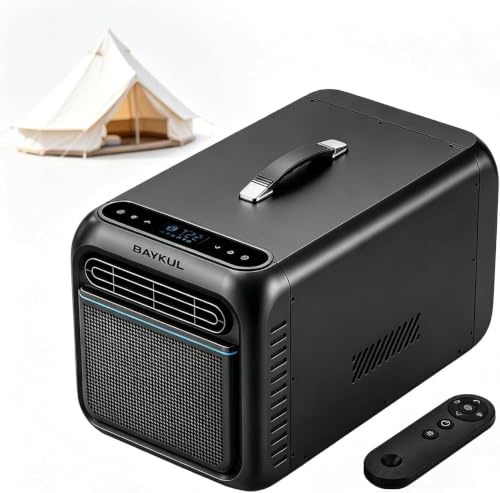
Can You Really Use a Portable AC Unit in a Tent?
Yes — but with important caveats. A portable air conditioner can absolutely cool a tent, and many campers use one for RV trips, glamping setups, and summer tent camping. However, a tent presents challenges that a room does not: fabric walls leak cool air, the space is small relative to the unit's output, and you must route the exhaust hose outside without leaving a gaping hole that lets hot air (and insects) back in.
The good news is that modern portable AC units — especially vented and non-vented portable AC designs — have become far more camping-friendly. Compact form factors, lower wattage draw, and flexible window or flap kits make it possible to cool a tent effectively when the setup is done right.
Before you continue, it helps to understand the broader category first. Our guide to portable AC units covers the fundamentals of how these machines work, which will make the tent-specific advice below much easier to apply.
How Much Cooling Power Does a Tent Need?
Tent sizing is different from room sizing. A tent has poor insulation, so heat gain is higher than you might expect from the square footage alone. As a rule of thumb, add roughly 20–30% more cooling capacity to a tent compared to an equivalent indoor room, and factor in direct sun exposure.
Use this quick reference to estimate the right capacity tier for your tent:
| Tent Size (Floor Area) | Recommended Capacity Tier | Best For |
|---|---|---|
| Up to 60 sq ft (2-person dome) | Entry-level compact tier (5,000–6,000 BTU) | Single sleeper, shaded sites |
| 60–120 sq ft (4-person tent) | Mid-tier portable (8,000–10,000 BTU) | Couples and small families |
| 120–200 sq ft (6–8 person tent) | High-end tier (10,000–12,000 BTU) | Family camping, full sun |
| 200+ sq ft (cabin tents, glamping) | Top-tier or dual-unit setup | Glamping, extended stays |
For a deeper capacity breakdown, our portable air conditioner for 200 square feet guide is a useful companion, and if your tent is larger you may want to review the 300 square feet recommendation as well.
Pro Tip: Oversizing Is a Real Risk in Tents
An oversized unit will cool the air quickly but cycle on and off too frequently, leaving the tent clammy and humid. In a small tent, a modest mid-tier unit running steadily is usually more comfortable than a flagship model that short-cycles. Match capacity to tent volume, not to marketing numbers.
The Venting Question: How to Exhaust Hot Air From a Tent
Every compressor-based portable AC produces hot exhaust air that must leave the tent. This is the single biggest practical hurdle in tent cooling. There are three main approaches:
1. Zip a Window Flap Around the Hose
Most tents have a window or a zippered flap. You can route the exhaust hose out through the opening and seal the gap with a fabric sleeve, duct tape, or a purpose-made exhaust hose insulation sleeve. This is the simplest method and works well for occasional use.
2. Use a Dedicated Tent Vent Kit
Some portable AC manufacturers and third-party sellers offer tent-specific vent kits with a fabric boot that seals around the hose and attaches to the tent wall. This is the cleanest and most weather-tight solution.
3. Consider a Non-Vented or Evaporative Option
If cutting or sealing a vent opening is not an option, look at portable AC that does not need to be vented designs or evaporative coolers. Be aware that non-vented compressor units are rare and evaporative coolers only work well in dry climates. If you are camping off-grid, our off-grid cooling solutions overview covers alternatives like 12V and solar-friendly options, and the portable 12 volt air conditioner guide explains the low-power route in detail.
Critical Venting Rule
Never run a compressor-based portable AC in a fully sealed tent. The exhaust must go outside, and the unit needs some intake airflow. A sealed tent with a running compressor unit is both ineffective and a safety concern. Always keep a low vent or mesh panel open for makeup air.
Powering a Portable AC at a Campsite
Power is the second major constraint. A typical portable AC draws between 800 and 1,400 watts when running, with a startup surge that can be higher. That has real implications for campsite power:
- Electric hookup sites: The easiest scenario. A standard 15A or 20A campsite pedestal can usually handle a mid-tier portable unit, provided you do not run other high-draw appliances on the same circuit.
- Generator power: You need a generator rated well above the unit's running wattage to absorb startup surge. Inverter generators are preferable because they deliver cleaner power.
- Battery and solar: Running a compressor AC from battery alone is demanding. Review our off-grid solar AC guide for realistic expectations and system sizing.
- 12V DC units: Purpose-built 12V camping ACs draw far less power and pair well with deep-cycle batteries, but their cooling output is modest. See the 12V portable AC breakdown for the trade-offs.
If you are setting up a more permanent cooling arrangement for a cabin tent or a converted space, the principles in our portable AC for a room without windows guide apply closely to tents with limited openings.
Choosing the Right Portable AC Type for Tent Use
Not all portable AC form factors suit tent life. Here is how the main categories compare for camping:
| Type | Tier | Best For in a Tent |
|---|---|---|
| Single-hose portable AC | Entry-level to mid-range | Small tents, occasional trips, simple venting |
| Dual-hose portable AC | Mid-range to premium | Larger tents, better efficiency, less negative pressure |
| Evaporative (swamp) cooler | Essential tier | Dry climates only, low power draw, no exhaust hose |
| 12V DC camping AC | Starter to mid-tier | Off-grid setups, battery/solar power, small sleeping areas |
| Personal / spot cooler | Entry-level | Cooling one sleeper directly, not whole-tent cooling |
Dual-hose units are generally the stronger choice for tents because they avoid pulling hot outside air into the cooled space through gaps in the fabric. If you are weighing whether a portable AC is even worthwhile for your situation, our honest take in are portable air conditioners any good is a good reality check.
Moisture, Condensation, and Drainage in a Tent
Portable AC units remove humidity from the air, and that moisture has to go somewhere. In a tent, drainage is often overlooked until there is a puddle under the sleeping bag. Most units offer three drainage modes:
- Manual drain: You empty a tank periodically. Simple, but inconvenient overnight.
- Continuous drain: A hose routes water outside. Best for tent use, but you need a gentle downhill slope.
- Self-evaporative: The unit re-evaporates condensate through the exhaust. Convenient, but less effective in very humid conditions.
For tent camping, continuous drain is the most reliable. Our guide to portable AC that does not need to be drained explains self-evaporative models in more detail if you prefer a hands-off setup. Also consider pairing the AC with a small dehumidifier function — see the portable air conditioner dehumidifier overview for combo units.
Safety and Setup Checklist for Tent Cooling
- Place the unit on a stable, level surface — never on soft bedding or uneven ground where it can tip.
- Keep the exhaust hose as short and straight as possible to maximize cooling efficiency.
- Seal the vent opening with a sleeve or tape to keep hot air and insects out.
- Maintain makeup airflow with a low mesh vent or slightly open flap.
- Route the drain hose outside with a downward slope.
- Never leave a running unit unattended for long periods in a fabric structure.
- Check your campsite's generator and electrical rules before plugging in.
- Keep the unit away from tent walls to allow proper air intake and exhaust clearance.
If your unit starts misbehaving on a trip, our portable AC unit repair guide covers the most common field-fixable issues.
Alternatives Worth Considering
A portable AC is not the only path to a cooler tent. Depending on your climate and power situation, these alternatives may serve you better:
- Evaporative coolers — excellent in dry heat, very low power draw. See the portable air conditioner evaporative cooler comparison.
- Personal cooling devices — neck fans and spot coolers for targeted relief. The personal cooling device guide covers the category.
- Shade and airflow strategy — a reflective tarp and a battery fan often outperform a small AC in mild climates.
- Off-grid systems — for extended boondocking, review off-grid cooling options before committing to a compressor unit.
Frequently Asked Questions
Can a portable AC cool a tent effectively?
Yes, if the unit is correctly sized and the exhaust is vented outside. Tents lose cool air quickly, so expect the AC to run more continuously than it would in a room. A mid-tier unit matched to your tent's floor area delivers the most consistent comfort.
Do I need a special vent kit for a tent?
Not strictly, but a dedicated tent vent kit makes the setup far more effective and weather-tight. At minimum, seal the gap around the exhaust hose with fabric or tape so hot air does not re-enter the tent.
How many watts does a portable AC use in a tent?
Most portable units draw roughly 800 to 1,400 watts while running, with a higher startup surge. Check your campsite's electrical capacity or generator rating before plugging in, and avoid sharing the circuit with other high-draw devices.
Will a portable AC make my tent damp?
It can if condensate is not managed. Use continuous drain mode with a hose routed outside, and avoid oversized units that short-cycle and leave residual humidity. In humid climates, a unit with a dehumidifier function helps.
Is a 12V camping AC better than a standard portable AC?
It depends on your power source. A 12V unit is far more battery- and solar-friendly and easier to run off-grid, but its cooling output is lower. A standard portable AC cools more aggressively but needs a hookup or a substantial generator.
Can I use a portable AC in a tent without a window?
Yes, but you must create a vent path. Route the exhaust through a zippered flap, a purpose-made port, or a sealed fabric sleeve. Never run a compressor unit in a fully sealed tent. Our portable AC for a room without windows guide offers transferable techniques.
The Verdict: Is a Portable AC Unit for a Tent Worth It?
For campers who regularly face hot, humid summer nights and have access to electrical hookups or a capable generator, a portable AC unit is a genuine comfort upgrade. The key is matching capacity to tent size, committing to a proper venting solution, and managing drainage. If you camp off-grid or in dry climates, a 12V unit or evaporative cooler may be the smarter fit. Whichever route you choose, size conservatively, vent carefully, and prioritize safety — then enjoy the coolest tent on the loop.