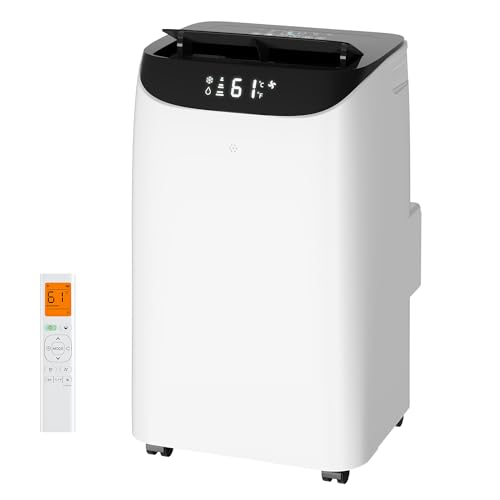
Portable Air Conditioner: Are They Any Good?
A practical, no-nonsense guide to portable air conditioners. Understand how they work, where they shine, where they fall short, and whether one is the right cooling solution for your space.
Read the VerdictShort answer: Yes, portable air conditioners are genuinely good — under the right conditions. A properly sized, dual-hose vented portable AC can comfortably cool a single room, is simple to install, and moves with you. The catch is that they are less efficient than window units, need a venting path, and require regular draining. If you rent, lack window support, or need flexible cooling for one room, a portable unit is a solid choice. If you own your home and have a suitable window, a window AC usually outperforms it for the same capacity.
How a Portable Air Conditioner Works
A portable air conditioner is a self-contained cooling appliance on casters. Inside the unit, a compressor and refrigerant loop cool the air, while a fan pushes cold air into the room. The heat removed from the room, along with the heat generated by the compressor itself, has to go somewhere — and that is why portable ACs need a venting hose that exhausts hot air through a window, a wall opening, or a dedicated vent kit.
There are two main configurations. A single-hose model pulls room air in, uses it to cool the condenser, and exhausts it outside. That creates a slight negative pressure in the room, which can pull warm outside air back in through gaps. A dual-hose model uses one hose to bring in outside air for the condenser and a second hose to exhaust it, which is more efficient and avoids the negative-pressure problem. If you are comparing portable AC units, dual-hose designs are generally the stronger performer.
It is worth separating true air conditioners from evaporative coolers. A portable evaporative cooler adds moisture to the air and only works well in dry climates. A true portable AC uses refrigerant and dehumidifies as it cools. If you need genuine cooling in a humid climate, you want a vented refrigerant-based unit, not an evaporative air cooler.
Are They Any Good? The Honest Assessment
The answer depends on what you expect. A portable AC is not a replacement for central air or a whole-home ductless system. It is a focused, single-room solution. Within that scope, modern units are genuinely capable. A well-sized dual-hose unit with a decent EER rating can bring a bedroom or home office down to a comfortable temperature on a hot day, and it does so without permanent installation.
Where portable ACs earn their reputation is flexibility. You can move the unit from the bedroom during the day to the living room in the evening, roll it into a home office, or take it with you when you move. For renters, that matters. For anyone who cannot install a window unit because of landlord rules, casement windows, or structural constraints, a portable AC is often the only realistic option. If you are dealing with an air conditioner for a room without windows, a portable unit with a wall vent or a suitable alternative venting path becomes even more relevant.
Where portable ACs disappoint is efficiency and raw cooling power per unit of floor space. The hose run loses some cooling, the compressor has to work harder, and the unit itself generates heat that partially offsets its output. In a large open-plan room, a single portable AC will struggle. In a small, well-sealed bedroom, it performs well. The honest verdict is that portable ACs are good for the right room and the right user, and mediocre when pushed beyond their design limits.
Pros and Cons at a Glance
Strengths
- No permanent installation required — ideal for renters and temporary setups.
- Moves easily between rooms on casters.
- Works with window types that cannot hold a window unit, including casement windows with the right kit.
- Dual-hose models cool efficiently and avoid negative-pressure issues.
- Many units include dehumidification and fan-only modes.
- Simple to operate with remote controls and programmable timers.
Trade-offs
- Less efficient than window ACs of the same capacity.
- Requires a venting path and a window or wall kit.
- Condensate tank needs regular draining unless self-evaporative.
- Noticeably louder than a split system.
- Takes up floor space and is heavier than it looks.
- Single-room cooling only — not a whole-home solution.
Portable vs Window vs Mini-Split
Choosing between cooling formats is the first real decision. The table below summarizes how portable units compare with the two most common alternatives for single-room cooling.
| Factor | Portable AC | Window AC | Ductless Mini-Split |
|---|---|---|---|
| Installation | Minimal; vent kit needed | Requires window support | Professional installation |
| Efficiency | Moderate | Good | High |
| Portability | High | Low | None |
| Noise level | Moderate to high | Moderate | Low |
| Renter friendly | Yes | Sometimes | Rarely |
| Best for | Single rooms, renters, flexible spaces | Single rooms with suitable windows | Long-term whole-room or multi-room cooling |
If you own your home and have a suitable window, a window unit is usually the more efficient pick. If you want a long-term, quiet, efficient solution and can invest in professional installation, a ductless mini-split AC is the stronger choice. Portable ACs win on flexibility, not on efficiency. For homes without ductwork, the broader cooling options for older homes without ducts are worth reviewing before committing.
Sizing and BTU: Matching the Unit to Your Room
Portable AC capacity is measured in BTU per hour. Undersizing means the unit runs constantly and never quite catches up; oversizing means it cools quickly but dehumidifies poorly and cycles noisily. For a standard room with average ceiling height and normal sun exposure, the rough guide below is a reasonable starting point.
| Room Size | Suggested Capacity | Typical Use Case |
|---|---|---|
| Up to 150 sq ft | 5,000 – 6,000 BTU | Small bedroom, nursery, study |
| 150 – 250 sq ft | 8,000 – 10,000 BTU | Standard bedroom, home office |
| 250 – 400 sq ft | 12,000 – 14,000 BTU | Living room, large bedroom |
| 400 – 550 sq ft | 14,000 – 16,000 BTU | Open living area, studio apartment |
Adjust upward for south-facing windows, poor insulation, kitchen heat, or multiple occupants. Adjust downward for a well-shaded, well-insulated room. If you are unsure, use a room sizing guide to calculate the load more precisely. For specific room dimensions, you can also review dedicated recommendations such as a portable AC for a 100 sq ft room or a portable air conditioner for 300 square feet.
Installation and Venting Requirements
Every vented portable AC needs a path for hot air to leave the room. The standard approach is a window kit: a sliding panel that fits into the window frame with a hole for the exhaust hose. The hose should be as short and straight as possible, because long, kinked runs reduce cooling performance and put extra strain on the compressor. Keep the hose run under the manufacturer's stated maximum and avoid sharp bends.
Casement and awning windows need a dedicated kit. If you have a casement window, a casement window portable AC kit is the correct accessory. For sliding windows, most units ship with a compatible panel. If you want to avoid the window entirely, a wall vent is an option, though it is a permanent modification. Some users ask about portable AC units that do not need venting — these are evaporative coolers, not true air conditioners, and they will not deliver refrigerant-based cooling.
Placement matters. Keep the unit away from curtains and soft furnishings, leave clearance around the intake and exhaust, and make sure the exhaust hose slopes slightly downward toward the window so condensate does not pool. If the hose runs through a hot space, an exhaust hose insulation sleeve can reduce heat gain.
Draining, Maintenance, and Daily Operation
Portable ACs pull moisture from the air, and that moisture has to go somewhere. Most units collect condensate in a tank that needs emptying every few hours in humid conditions. Self-evaporative models use the condensate to cool the condenser and discharge much of it with the exhaust air, which reduces how often you drain. Some units support a continuous drain hose, which is the most convenient option if you can route it to a floor drain or outside.
Routine maintenance is straightforward: clean or replace the air filter every two to four weeks during heavy use, wipe the intake grille, and check the exhaust hose for cracks. If the unit is not cooling well, a clogged filter or a kinked hose is the most common cause. For persistent issues, a portable AC repair guide covers the typical fixes. If you want to reduce draining entirely, look at a portable AC that does not need frequent draining or a self-evaporative model.
Who Should (and Should Not) Buy One
A portable AC is a strong fit if you:
- Rent your home and cannot install a permanent unit.
- Need to cool a single bedroom, office, or studio apartment.
- Have casement or unusual windows that cannot hold a window unit.
- Want the option to move cooling between rooms.
- Need a temporary solution during a heat wave or renovation.
A portable AC is a weaker fit if you:
- Need to cool a large open-plan living area.
- Own your home and have a suitable window for a window unit.
- Want the quietest possible operation.
- Are looking for a long-term, whole-home cooling solution.
For apartment dwellers, a portable air conditioner for an apartment is often the most practical choice. For bedrooms specifically, a portable AC for a bedroom balances cooling with manageable noise if you choose a quieter model.
Buying Checklist
What to Verify Before You Commit
- BTU rating matches your room size and heat load.
- Hose configuration: dual-hose is more efficient than single-hose.
- Efficiency rating: a higher EER means better performance per unit of electricity.
- Noise level: check the decibel rating, especially for bedroom use.
- Drainage: self-evaporative or continuous-drain capability reduces hassle.
- Window kit compatibility: confirm it fits your window type.
- Weight and casters: you will move it, so check the footprint.
- Smart features: Wi-Fi, timers, and programmable modes add convenience.
Ready to Compare Portable AC Options?
Browse our curated selection of portable air conditioners and match the right unit to your room size and venting setup.
View Portable AC RecommendationsFrequently Asked Questions
Are portable air conditioners any good at cooling a room?
Yes, a vented portable air conditioner can effectively cool a single room when it is correctly sized in BTU and properly vented through a window or wall. They perform best in smaller, enclosed spaces and struggle in open-plan areas.
Do portable air conditioners need to be vented?
Most single-hose and dual-hose portable air conditioners must be vented to exhaust hot air. Non-vented evaporative coolers exist but they add humidity and are not true air conditioners. A vented unit is the only reliable option for genuine cooling.
Are portable air conditioners as effective as window units?
Generally, a window air conditioner is slightly more efficient for the same BTU because it does not lose cooling through a hose. However, a well-designed dual-hose portable unit narrows that gap and offers flexibility that a window unit cannot match.
Can a portable air conditioner cool more than one room?
No. Portable air conditioners are designed for single-room cooling. They work best in enclosed spaces where the cooled air is not escaping into adjacent rooms or hallways.
Do portable air conditioners require draining?
Most portable air conditioners collect condensate in a tank that needs periodic draining. Some models offer self-evaporative technology that reduces draining frequency, and a few can be fitted with a continuous drain hose.