Portable Air Con Units for Home: The Complete Buyer's Guide
Everything you need to know before choosing a portable air conditioner for your home — sizing, venting, drainage, features, and the trade-offs that matter most.
Start With SizingWhy this guide exists: Portable air con units for home use solve a very specific problem — cooling a room without permanent installation, ductwork, or window modification. If you are researching portable ACs, you already know you want one. This guide helps you choose the right one by explaining how they work, what the specifications actually mean, and which features are worth prioritizing for your situation.
What Is a Portable Air Conditioner?
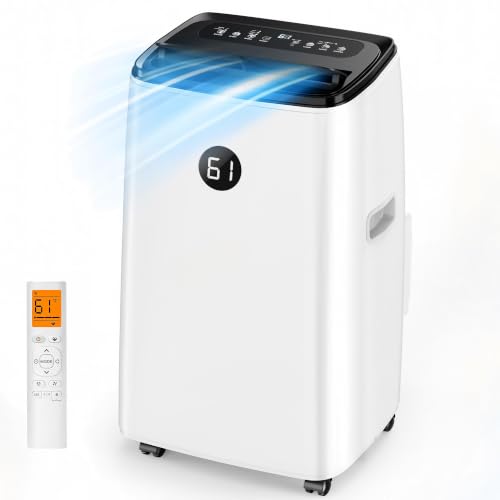
A portable air conditioner is a freestanding cooling unit that sits on the floor inside your room. Unlike a window AC, it does not need to be mounted in a window frame. Instead, it draws indoor air, cools it, and exhausts hot air through a flexible hose that routes out a window or wall opening. Most models also function as dehumidifiers, and some include a heating mode or fan-only operation.
The key distinction from other cooling options is mobility. A portable AC can be rolled from the bedroom to the living room, stored in a closet during cooler months, and set up in spaces where permanent installation is not practical — such as rental apartments, rooms without windows suited for a window unit, or older homes without ductwork. If you are comparing against fixed options, our guide on cooling older homes without ducts covers the broader alternatives.
How to Size a Portable AC for Your Room
Sizing is the single most important decision. An undersized unit will run constantly without reaching your target temperature. An oversized unit cools quickly but cycles on and off inefficiently and removes less humidity. The standard starting point is roughly 20 BTU per square foot of floor area, then adjusted upward for factors that increase heat load.
| Room Size | Suggested Capacity | Typical Use Case |
|---|---|---|
| Up to 150 sq ft | 5,000 – 6,000 BTU | Small bedroom, home office, nursery |
| 150 – 250 sq ft | 8,000 – 10,000 BTU | Standard bedroom, small living area |
| 250 – 400 sq ft | 12,000 – 14,000 BTU | Large bedroom, studio apartment, living room |
| 400 – 600 sq ft | 14,000 – 16,000 BTU | Open-plan living space, loft, basement |
After establishing a baseline, adjust for these real-world factors:
- Ceiling height: Rooms taller than 8 feet need more capacity because there is more air volume to cool.
- Sun exposure: South- or west-facing rooms with large windows absorb significant solar heat; size up accordingly.
- Occupancy: Each person adds roughly 400 BTU of heat load. A room used by several people needs extra capacity.
- Kitchen or appliance heat: If the room contains cooking appliances or electronics, account for the additional heat.
- Insulation quality: Poorly insulated rooms lose cooling faster and benefit from a slightly higher capacity.
If you are cooling a specific room type, our targeted guides cover the details: a portable AC for a bedroom has different priorities than a portable AC for an apartment or a room without windows.
Venting: How Portable ACs Remove Heat
Every portable AC produces heat as a byproduct of cooling. That heat must go somewhere. The exhaust hose — typically 5 to 7 feet long and 5 to 6 inches in diameter — connects the unit to a window kit or wall vent. Proper venting is not optional for sustained cooling performance; without it, the unit recirculates hot air and loses efficiency.
Window Kit Options
Most portable ACs ship with a sliding window kit that fits double-hung and sliding windows. If your home has casement or crank-out windows, you will need a specialized adapter — our guide on portable AC for casement windows explains the compatible kits and installation approach.
A related consideration is whether the unit requires venting at all. There is a category of portable AC that doesn't need to be vented, but these are evaporative coolers rather than true refrigerant-based air conditioners — they work differently and suit dry climates, not humid ones. If you are curious about ventless or low-venting models, our overview of portable AC units that do not require venting clarifies the trade-offs.
Drainage: Managing Condensation
As a portable AC cools air, it condenses moisture. That water collects in one of two ways: an internal tank that you empty manually, or a continuous drain hose that routes water to a floor drain or outside. How often you drain depends on humidity and usage.
- Manual tank models: Require periodic emptying. Some have a full-tank shutoff to prevent overflow.
- Self-evaporative models: Recycle most condensate through the exhaust stream, reducing drainage frequency but not eliminating it in high humidity.
- Continuous drain models: Include a port for a garden hose or drain line, allowing unattended operation.
In humid climates, drainage becomes a bigger practical concern. Our guides on a portable AC that doesn't need to be drained and a portable AC you don't have to drain cover models with self-evaporative or continuous-drain designs that minimize maintenance.
Key Features to Evaluate
Cooling Capacity (BTU)
Match capacity to room size and heat load. Do not oversize just because a higher number sounds better — cycling losses and poor humidity removal offset the raw cooling power.
Energy Efficiency
Look for an ENERGY STAR certified model if efficiency is a priority. Higher EER values indicate more cooling per unit of electricity, which matters for units used daily. See our guide on ENERGY STAR certified portable ACs.
Noise Level
Portable ACs are generally noisier than window units because the compressor sits inside the room. Look for decibel ratings in the low 50s for bedroom use, and check whether the model offers a night or quiet mode.
Dehumidification Mode
Most units can run as standalone dehumidifiers, which is useful in humid climates. Our guide on portable AC dehumidifier models explains how this mode works.
Heating Capability
Some models offer a heat pump or electric heating mode for year-round use. If you need both functions, our comparison of a portable AC and heater combo covers the options.
Smart Controls
Wi-Fi and app control allow scheduling and remote adjustments. A useful convenience but not a substitute for correct sizing and venting.
Portable AC Tier Overview
Portable air conditioners fall into broad market tiers. Rather than focusing on numeric labels, understand what each tier typically delivers:
| Tier | Typical Characteristics | Best For |
|---|---|---|
| Entry-level | Basic cooling, manual controls, single-speed compressor, manual drain tank | Occasional use, small rooms, short cooling seasons |
| Mid-range | Digital controls, programmable timer, improved drainage, moderate noise reduction | Regular bedroom or living room use |
| Premium | Higher efficiency, quieter operation, smart controls, self-evaporative or continuous drain | Daily use, humid climates, larger rooms |
| Top-tier | Feature-rich for its class, dual-hose or high-efficiency designs, refined airflow and control | Extended daily operation, households prioritizing efficiency and comfort |
Within each tier, feature sets vary. A mid-range model from a well-engineered line may outperform an entry-level unit from a different brand more than the tier labels alone suggest. Focus on the specific features that matter to your room and usage pattern.
Single-Hose vs Dual-Hose Design
Most portable ACs are single-hose: they draw indoor air, use it to cool the condenser, and exhaust it outside. This creates a slight negative pressure in the room, which can pull in warm outside air through gaps. Dual-hose models separate the intake and exhaust airstreams, reducing negative pressure and generally performing better in larger or less-sealed rooms. Dual-hose units are typically larger and positioned in the upper tiers.
Installation and Placement
Portable AC installation is straightforward compared to fixed systems, but placement affects performance significantly:
- Near the window: Keep the unit close to the venting window to minimize hose length.
- Clear airflow: Leave at least 12 to 18 inches of clearance around the unit for intake and exhaust.
- Level surface: Compressors require a stable, level surface to operate correctly and quietly.
- Avoid heat sources: Do not place the unit near ovens, radiators, or direct sunlight if avoidable.
If your space lacks a suitable window entirely, explore our guide on a portable AC unit for a room without windows for alternative venting approaches.
Portable AC vs Other Cooling Options
Portable ACs are not the right answer for every home. Understanding the alternatives helps you make a confident decision:
- Window AC: More efficient and typically quieter, but requires a suitable window and often blocks the view. Better for long-term single-room cooling.
- Ductless mini-split: The most efficient single-room solution and the quietest, but requires professional installation and a permanent wall or ceiling mount. A long-term investment rather than a temporary measure.
- Central AC: The best whole-home solution where ductwork exists, but not applicable to rooms without ducts or rentals where modification is not possible.
- Evaporative cooler: Effective only in dry climates; adds humidity rather than removing it, which is counterproductive in humid regions. Our guide on a portable air conditioner evaporative cooler explains when these make sense.
Maintenance Essentials
Portable ACs need regular maintenance to sustain performance:
- Clean or replace the air filter every two to four weeks during heavy use. A clogged filter reduces airflow and cooling capacity.
- Empty the drain tank before it reaches the shutoff point, or set up continuous drainage.
- Inspect the exhaust hose for kinks, cracks, or disconnections that leak hot air back into the room.
- Clean the exterior and intake grilles to prevent dust buildup.
- Store properly in the off-season: drain fully, clean the filter, and cover the unit to prevent dust accumulation.
For repair concerns, our guide on portable AC unit repair covers common issues and when to seek professional service.
Frequently Asked Questions
Do portable air con units for home use need to be vented?
How many BTU do I need for a portable AC?
Do portable air conditioners need to be drained?
Are portable air con units good for home use?
Can a portable AC cool more than one room?
Ready to Compare Portable AC Options?
Use the sizing table and feature checklist above to narrow your shortlist. The recommended models below are organized to help you compare across tiers and use cases.
View Recommended Models