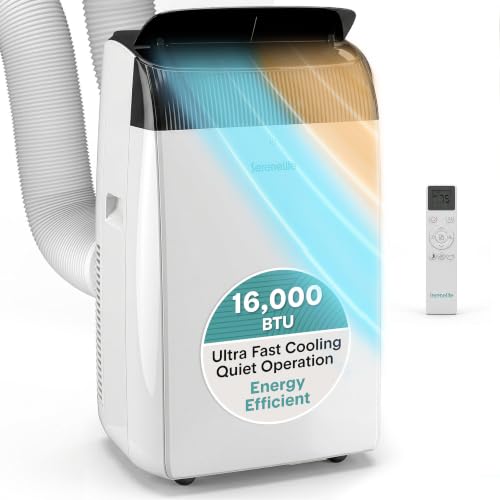
Portable Air Conditioner and Heater Combo
One unit for every season. Learn how 2-in-1 portable AC and heater combos work, what to look for, and how to pick the right model for year-round comfort in any room.
START READINGWhy a combo unit? A portable air conditioner and heater combo packs cooling, heating, and often dehumidification into a single wheeled appliance. Instead of storing a window AC in winter and a space heater in summer, one compact unit handles both seasons. For renters, apartment dwellers, and anyone with limited storage, that flexibility is a real advantage.
What Is a Portable Air Conditioner and Heater Combo?
A portable air conditioner and heater combo is a freestanding appliance that delivers both cool and warm air from the same housing. Most models rely on a reverse-cycle heat pump: in cooling mode the unit removes heat from the room and exhausts it through a hose, and in heating mode the refrigerant cycle reverses so the unit releases heat indoors. Some entry-level combos use an electric heating element for the warm-air function instead of a full heat pump.
These units are distinct from simple portable air conditioners, which only cool. They also differ from fixed ductless mini-split systems, which require permanent wall installation. A combo unit stays mobile, plugs into a standard outlet, and can move from bedroom to living room as needed. If you want to explore the broader category, our guide to portable air and heater options covers the full landscape.
How Does the 2-in-1 Cooling and Heating Work?
Understanding the mechanics helps you evaluate whether a combo fits your space. Here is how the two modes typically operate:
Cooling Mode
The compressor circulates refrigerant through an evaporator coil. Warm room air passes over the cold coil, giving up heat and humidity. The absorbed heat is vented outside through the exhaust hose, and cooled air blows back into the room.
Heating Mode (Heat Pump)
A reversing valve flips the refrigerant flow. The indoor coil becomes the condenser and releases heat into the room, while the outdoor exhaust handles the cold side. Heat-pump heating is far more efficient than resistive electric heating.
Heating Mode (Electric Element)
Entry-level combos may use a simple resistive heater. These are straightforward and reliable but consume more electricity per unit of heat delivered compared with a heat-pump design.
Dehumidification
Most combo units include a dedicated dry mode that pulls moisture from the air without significant cooling. This is useful in humid climates and in basements or rooms that feel clammy.
Who Should Consider a Portable AC and Heater Combo?
A combo unit is not the right fit for every home, but it excels in specific situations. Consider one if any of the following applies:
- Renters and apartment dwellers: No permanent installation, no landlord approval, and no window unit to remove each season. See our guide to portable AC for an apartment for sizing advice.
- Rooms without ductwork: Older homes and additions often lack central ducts. A combo unit is a practical fix, as discussed in our article on older homes with no ducts.
- Spaces with no suitable window: Basements and interior rooms can still use a combo if you can route the exhaust hose through a small opening. Our guide to portable AC for a room without windows explains the options.
- Year-round temperature swings: A room that is too hot in summer and chilly in shoulder seasons benefits from one appliance that handles both.
- Limited storage: One unit replaces two seasonal appliances, freeing up closet and garage space.
Sizing a Combo Unit for Your Room
Cooling capacity is measured in BTU (British Thermal Units). Undersizing leaves the room uncomfortable, while oversizing wastes energy and can short-cycle the compressor. As a starting point, aim for roughly 20 BTU per square foot of floor area, then adjust for sun exposure, ceiling height, and occupancy.
| Room Size | Typical Cooling Capacity | Best For |
|---|---|---|
| Up to 200 sq ft | 8,000 – 10,000 BTU | Bedrooms, small offices |
| 200 – 400 sq ft | 10,000 – 14,000 BTU | Living rooms, studios |
| 400 – 600 sq ft | 14,000 – 16,000 BTU | Open-plan spaces |
| 600 – 1,000 sq ft | 16,000 BTU and above | Large rooms, basements |
Heating capacity is usually expressed differently, often in watts or a separate BTU rating. Check that the heating output is appropriate for your climate; a heat-pump combo typically delivers less heating capacity than cooling capacity. For precise room-by-room sizing, see our detailed guides for a 200 square foot room, a 400 square foot room, and a 500 square foot room.
Key Features to Compare Before You Buy
Heat Pump vs. Electric Heater
A reverse-cycle heat pump is the more efficient heating method and is common in mid-range and premium combos. Electric-element heating is typical of entry-level units.
Exhaust Hose and Window Kit
Every portable AC needs to vent hot air. Confirm the kit fits your window type; casement windows may need a specialized adapter. See our notes on window kits for casement windows.
Condensate Management
Some units require manual draining; others evaporate condensate automatically. If you prefer low maintenance, look for a portable AC that doesn't need to be drained.
Noise Level
Portable units are louder than mini-splits. Look for published decibel ratings and, if the room is a bedroom, favor models marketed as quiet.
Smart Controls
Wi-Fi, app control, and programmable timers let you schedule heating and cooling around your routine. This is now common across mid-tier and high-end models.
Efficiency Ratings
In the U.S., portable AC efficiency is often expressed as CEER. Higher ratings indicate better efficiency. ENERGY STAR models are available in this category.
Pros and Cons of Portable AC and Heater Combos
Advantages
- One appliance for cooling and heating
- No permanent installation required
- Moves between rooms on casters
- Works in spaces without ductwork
- Often includes dehumidification
- Renter-friendly
- Saves storage compared with two seasonal units
Limitations
- Requires an exhaust hose and window opening
- Louder than window or mini-split units
- Heating capacity can be modest in cold climates
- Condensate may need manual draining
- Less efficient than central or mini-split systems
- Takes up floor space
Setup and Placement Tips
Proper placement makes a noticeable difference in performance:
- Place the unit near the window that will receive the exhaust hose, and keep the hose as short and straight as possible.
- Leave clearance around the intake and exhaust grilles; do not push the unit into a corner.
- Seal gaps around the window kit to prevent hot outside air from leaking back in.
- Keep the unit level so condensate drains correctly and the compressor runs smoothly.
- In heating mode, confirm the unit is rated for the outdoor temperature range in your area; heat-pump performance drops as outside air gets colder.
- If you need to cool a space without a standard window, review our guide to portable AC units that do not need a window.
Maintenance for Year-Round Reliability
A combo unit runs in two seasons, so upkeep matters. Clean or replace the air filter every two to four weeks during heavy use. Empty the condensate tank or check the drain line regularly. Inspect the exhaust hose for cracks, and clean the grilles with a soft brush. At the end of each season, run the unit in fan-only mode for a short time to dry internal components before storage. Our broader AC maintenance guide covers the full checklist.
Combo vs. Other Portable Cooling and Heating Options
| Option | Cooling | Heating | Best For |
|---|---|---|---|
| Portable AC and heater combo | Yes | Yes | Renters, ductless rooms, year-round use |
| Portable AC only | Yes | No | Summer-only cooling |
| Window AC | Yes | Rarely | Permanent window installation |
| Ductless mini-split | Yes | Yes (heat pump) | Permanent, high-efficiency solution |
| Space heater only | No | Yes | Winter-only heating |
If you own your home and plan to stay long term, a ductless mini-split generally offers better efficiency and quieter operation. If you rent or need mobility, a combo unit is the more practical choice. For a closer look at related formats, see our pages on portable air conditioner and heater in one and portable air conditioner and heater units.
Frequently Asked Questions
Can a portable AC and heater combo replace central air conditioning?
No. A combo unit cools one room at a time. Central systems condition an entire home through ductwork. A combo is a room-level solution, best for targeted comfort rather than whole-house coverage.
Do combo units need to be vented?
Yes. In cooling mode the exhaust hose must vent hot air outside. In heat-pump heating mode the hose also handles the cold side. Window kits are included with most models.
How effective is the heating mode in cold weather?
Heat-pump combos lose heating capacity as outdoor temperatures fall. They work best in mild to moderate climates or as supplemental heat. In very cold regions, a dedicated heating appliance may be needed.
Can I use a combo unit in a basement?
Yes, if you can route the exhaust hose to a window or vent opening. Basements often benefit from the dehumidification mode as well. See our guide to portable AC for basement windows.
How often should I drain the condensate tank?
It depends on humidity and usage. Some units evaporate condensate automatically; others require draining every few hours in humid conditions. Check the manual and never let the tank overflow.
Ready to Compare Models?
Use the sizing guidance above, confirm your window type and heating needs, then browse recommended combo units below.
View Recommendations