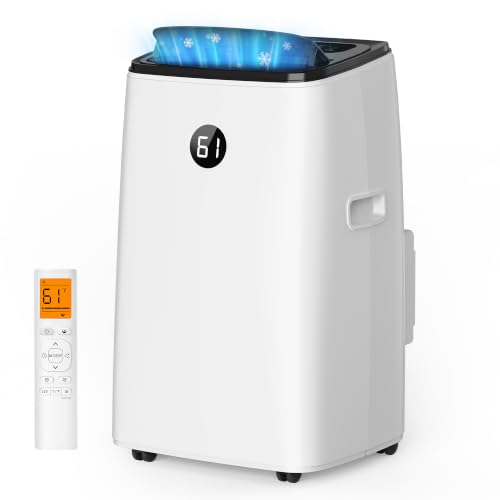
Portable Air Conditioner for 400 Sq Ft Room: The Complete Buyer's Guide
Everything you need to know to choose the right portable AC for a 400 square foot space — from BTU sizing and hose configuration to real-world performance expectations.
Start With BTU SizingQuick answer: For a 400 sq ft room, you generally need a portable air conditioner with 10,000 to 12,000 BTU of cooling capacity. If the room has large windows, direct sun exposure, high ceilings, or multiple heat sources, step up to 12,000 to 14,000 BTU. This guide explains exactly how to make that decision and what else to check before you buy.
In This Guide
BTU Sizing for a 400 Sq Ft Room
Cooling capacity is measured in British Thermal Units (BTU). The general rule of thumb for residential cooling is about 20 BTU per square foot, which would suggest roughly 8,000 BTU for a 400 sq ft room. In practice, that baseline almost never tells the full story. Most manufacturers and HVAC professionals recommend rounding up to account for real-world conditions such as sun load, occupancy, and ceiling height.
That is why the practical recommendation for a 400 sq ft room lands in the 10,000 to 12,000 BTU range for a typical setup, and 12,000 to 14,000 BTU for a space with heavier heat gain. Choosing a unit that is slightly above the minimum avoids the most common mistake buyers make: undersizing, which leads to a unit that runs constantly and never quite reaches a comfortable temperature.
| Room Scenario | Recommended BTU Range | Best For |
|---|---|---|
| Standard room, average windows, moderate sun | 10,000 – 12,000 BTU | Bedrooms, home offices, small living areas |
| Large windows, direct afternoon sun, top floor | 12,000 – 14,000 BTU | Sunrooms, lofts, west-facing rooms |
| High ceilings, multiple occupants, heat-generating devices | 12,000 – 14,000 BTU | Open-plan studios, home gyms, media rooms |
| Well-shaded room, mild climate, few occupants | 10,000 BTU | Guest rooms, shaded bedrooms, mild summers |
Why oversizing is also a problem
A portable AC that is dramatically oversized cools the air quickly but removes less moisture, leaving the room feeling cold and clammy. It also cycles on and off more frequently. Aim for the upper end of the recommended range rather than far beyond it. If you want a deeper dive into sizing logic, see our guide on how to size an air conditioner.
Factors That Change Your BTU Need
Two rooms of identical square footage can need very different cooling capacities. Before finalizing a BTU figure, evaluate these variables:
Ceiling Height
Standard calculations assume an 8-foot ceiling. Rooms with 10-foot or vaulted ceilings contain significantly more air volume, so increase capacity by roughly 10–20 percent.
Sun Exposure
West- and south-facing rooms absorb more radiant heat in the afternoon. Large, unshaded windows can push a 10,000 BTU requirement up to 12,000–14,000 BTU.
Occupancy
Each person adds sensible and latent heat load. Add roughly 400–600 BTU per additional regular occupant beyond the first two.
Appliances & Electronics
Computers, televisions, kitchen appliances, and lighting generate heat. A home office with multiple monitors or a media room may need a step up in capacity.
Insulation & Air Sealing
Poorly insulated rooms with leaky windows and doors lose cool air quickly. If the space is drafty, choose a higher-capacity unit.
Climate & Humidity
In humid climates, a unit that can dehumidify effectively matters as much as raw BTU. Look for strong moisture removal ratings and consider a portable AC with dehumidifier capability.
If your situation combines several of these factors, move toward the top of the recommended range. When in doubt, sizing slightly up is safer than sizing down — just avoid going far beyond the range, since oversized units short-cycle and dehumidify poorly.
Single-Hose vs Dual-Hose Portable AC
The hose configuration has a direct effect on cooling performance in a 400 sq ft room. Here is how the two designs differ:
| Configuration | How It Works | Strengths | Trade-offs |
|---|---|---|---|
| Single-hose | Draws indoor air to cool the condenser, then exhausts it outside. | Simpler setup, lighter weight, usually more compact. | Creates negative pressure that pulls warm outside air into the room; less efficient overall. |
| Dual-hose | Draws outside air for the condenser and exhausts it back outside in a separate hose. | Better efficiency, no negative pressure, more consistent cooling in larger rooms. | Bulkier, needs two window openings or a wider vent kit, generally higher tier in the market. |
For a 400 sq ft room — which is relatively large for a portable unit — a dual-hose model is usually the better choice when budget permits. It maintains room pressure better and delivers more stable cooling over long run times. Single-hose units can still work well in this size range, particularly in dry climates or well-sealed rooms, but they are more sensitive to installation quality.
If you are exploring venting constraints, see our related guides on portable AC for a room without windows and portable AC window kits for casement windows.
Features That Matter for a 400 Sq Ft Room
Capacity is the foundation, but the day-to-day experience depends heavily on secondary features. These are the ones worth prioritizing for a space of this size:
Cooling Capacity and Efficiency
Confirm the BTU rating is a true cooling capacity (sometimes listed as ASHRAE or DOE BTU). Efficiency ratings such as CEER help compare models within the same capacity class. For eco-conscious buyers, ENERGY STAR certified portable air conditioners typically offer better efficiency and lower long-term energy use.
Dehumidification
A 400 sq ft room benefits from meaningful moisture removal, especially in summer. Look for a unit with a dedicated dehumidify mode and a stated moisture removal rate in pints per day. A portable AC and dehumidifier combo can be a practical choice for humid climates.
Auto-Evaporation and Draining
In humid conditions, a portable AC in a 400 sq ft room can produce a surprising amount of condensate. Auto-evaporation uses that water to help cool the condenser, reducing how often you must empty the tank. If manual draining is a concern, explore portable AC units that don't need to be drained as frequently.
Noise Level
Larger capacity units often run louder. For bedrooms and home offices, check decibel ratings and look for sleep or quiet modes. Our guide on quiet air conditioners covers what to look for in more detail.
Smart Controls and Scheduling
Wi-Fi control, programmable timers, and remote access are increasingly common. For a room used on a predictable schedule, a smart AC with Wi-Fi control lets you pre-cool the space and avoid running the unit when it is not needed.
Air Quality Features
Washable filters are standard; some models add HEPA or carbon filtration. If allergies are a concern, a portable AC and air purifier combo provides dual functionality without adding a second appliance.
Heating Capability (Optional)
Some units include a heat pump or heating element for year-round use. A portable AC and heater combo can be valuable in spaces that need both seasonal functions, though dedicated heating solutions often perform better for primary winter use.
Product Tiers Explained
Portable air conditioners in the 10,000–14,000 BTU range span several market tiers. Instead of focusing on currency figures, it helps to understand what each tier typically delivers so you can match the product to your priorities.
Essential Tier
Basic single-hose designs with manual controls, standard filters, and straightforward venting. Suitable for occasional use in mild conditions, or as a secondary cooling solution.
Balanced Tier
Improved efficiency, quieter operation, digital controls, timers, and often auto-evaporation. A solid choice for daily use in a 400 sq ft bedroom or living area.
High-End Tier
Dual-hose configurations, higher efficiency ratings, smart connectivity, multi-stage filtration, and refined build quality. Best for primary living spaces and longer daily run times.
Flagship Tier
Maximum capacity within the portable category, premium materials, advanced humidity control, and the quietest operation available. Appropriate when the portable unit is the main cooling source for the room.
As a general pattern, mid-range models offer noticeably smoother operation and better moisture handling than entry-level units, while premium and flagship models add efficiency, connectivity, and quieter performance. Choose the tier that matches how often the unit will run and how much comfort refinement matters to you.
Installation and Venting
A portable air conditioner is only as effective as its installation. For a 400 sq ft room, venting is the most common source of underperformance.
- Window kit placement: Use the included window kit to seal the exhaust hose opening. Gaps around the kit let hot outside air back in and undermine cooling.
- Hose routing: Keep the exhaust hose as short and straight as possible. Long, kinked, or looping hose runs reduce airflow and cooling efficiency.
- Insulate the hose: Exhaust hoses get hot. A portable AC exhaust hose insulation sleeve helps reduce radiant heat gain inside the room.
- Seal the opening: Use foam boards, weatherstripping, or purpose-made sealing kits around the window vent. This matters more in a 400 sq ft room than in a small bedroom because the unit runs longer.
- Clearance: Leave space around the unit for air intake and exhaust, and keep it away from curtains and furniture that could block airflow.
If your window type is unusual, our guides on portable AC crank-out window kits and portable air conditioners for casement windows cover the common workarounds. For rooms with no suitable window, review portable AC units that do not need a window and portable AC for rooms without windows to understand the realistic options.
Electrical considerations
Most 10,000–12,000 BTU portable units run on a standard 115V household circuit. Check the rated amperage on the product label and avoid sharing the circuit with other high-draw appliances. If you are unsure about your wiring, review our guide on amps and breaker size for AC units or consult a licensed electrician.
Operation Tips for Better Cooling
Once installed, a few habits can make a noticeable difference in how well a portable AC handles a 400 sq ft room:
- Pre-cool before the hottest part of the day. Starting the unit earlier reduces the load it must overcome later.
- Close doors and blinds. Blocking direct sun with curtains or blinds can reduce the cooling load substantially.
- Use the right temperature setting. A setting around 75–78°F is comfortable for most people and reduces run time. Our guide on the ideal AC temperature setting explains the reasoning.
- Combine with a ceiling fan. Air movement improves perceived comfort without lowering the thermostat further. See how to use a ceiling fan with AC.
- Clean the filter regularly. A clogged filter reduces airflow and cooling capacity, which is especially noticeable in a larger room.
Maintenance and Draining
Portable units require more routine attention than window or central systems, mainly because of condensate management. In a 400 sq ft room during humid weather, a portable AC can fill its internal tank quickly.
- Check the drain tank or drain hose: Many units have a continuous drain option using a hose to a floor drain or outside. This is often the most practical setup for long run times.
- Clean the filter every two to four weeks: Rinse or vacuum depending on the filter type. Some models have washable mesh filters; others add carbon or HEPA layers.
- Inspect the exhaust hose and window seal: Look for cracks, gaps, or loose connections that let hot air back in.
- Store properly in the off-season: Drain all water, clean the filter, and cover the unit to prevent dust buildup.
If draining is a frequent hassle, consider a unit with strong auto-evaporation or explore portable AC options that don't require frequent draining. For troubleshooting when cooling performance drops, our article on portable AC unit repair covers common fixes.
Common Mistakes to Avoid
- Buying by square footage alone. A 400 sq ft room with west-facing windows and a home office setup may need 12,000–14,000 BTU, not 8,000–10,000 BTU.
- Ignoring the hose configuration. Single-hose units can work, but dual-hose models generally perform better in larger rooms and humid climates.
- Poor window sealing. An unsealed vent kit lets hot air in and makes even a well-sized unit feel weak.
- Skipping the dehumidification spec. In muggy conditions, moisture removal is as important as cooling capacity. A unit that cools without dehumidifying leaves the room feeling sticky.
- Placing the unit in a corner or behind furniture. Restricted airflow reduces performance. Give the unit room to breathe.
- Expecting central-air-like results. A portable AC is a targeted cooling solution. In a 400 sq ft room it can be very effective, but managing sun exposure and air leaks is part of getting the most from it.
Frequently Asked Questions
What size portable air conditioner do I need for a 400 sq ft room?
For a typical 400 sq ft room, choose a portable air conditioner with 10,000 to 12,000 BTU. If the room has large windows, direct sun, high ceilings, or multiple heat sources, choose 12,000 to 14,000 BTU. Avoid going far below 10,000 BTU for this size, as the unit will struggle to maintain comfort.
Can a portable air conditioner cool a 400 sq ft room effectively?
Yes — when properly sized and vented. A 10,000–12,000 BTU portable AC can cool a 400 sq ft room effectively if the exhaust is sealed well and the room is not excessively leaky. For open-plan spaces or rooms with heavy heat gain, choose a higher-capacity dual-hose model.
How many BTUs do I need for a 400 square foot room?
The baseline rule of about 20 BTU per square foot suggests roughly 8,000 BTU. However, real-world conditions usually push the practical requirement to 10,000–12,000 BTU for reliable comfort, and higher for challenging rooms. Use the baseline only as a starting point, then adjust for sun, occupancy, ceiling height, and insulation.
Do portable air conditioners need to be vented out a window?
Most portable air conditioners require venting through a window or wall to exhaust hot air. Window kits are typically included. Some models offer alternative venting methods, but all single-hose and dual-hose units need an exhaust path. Ventless evaporative coolers exist, but they work on a different principle and are not true air conditioners.
How many amps does a portable air conditioner for 400 sq ft use?
A 10,000–12,000 BTU portable AC typically draws around 8–12 amps on a standard 115V circuit. Most models can run on a dedicated 15-amp household circuit, but check the product label and avoid sharing the circuit with other high-draw appliances. For more detail, see our guide on amps and breaker size for AC units.
Can I use a portable air conditioner in a room without windows?
Portable ACs need to exhaust hot air somewhere. In a room without windows, you may need to vent through a wall, a drop ceiling, or a sliding door. Without any exhaust path, a standard portable AC cannot operate effectively. Review our guide on portable AC for a room without windows for the available options.
How often should I drain the portable air conditioner?
In humid conditions, a 400 sq ft room portable AC may need draining every 4–8 hours. Many modern units feature auto-evaporation technology that reduces drainage frequency. Self-evaporating models may only need draining in very high humidity, while some require manual emptying several times a day. A continuous drain hose is a practical upgrade for long run times.
Is a dual-hose portable AC better than a single-hose for a 400 sq ft room?
Dual-hose portable air conditioners are generally more efficient because they draw in outside air for cooling the condenser and exhaust it back out, rather than pulling conditioned indoor air out of the room. For a 400 sq ft space, a dual-hose unit often provides more consistent cooling and better energy efficiency than a single-hose model.
Ready to Compare Portable AC Options for Your 400 Sq Ft Room?
Browse our curated selection of portable air conditioners suited to medium and large rooms, with the features that matter most for daily comfort.
View Recommended Portable ACs