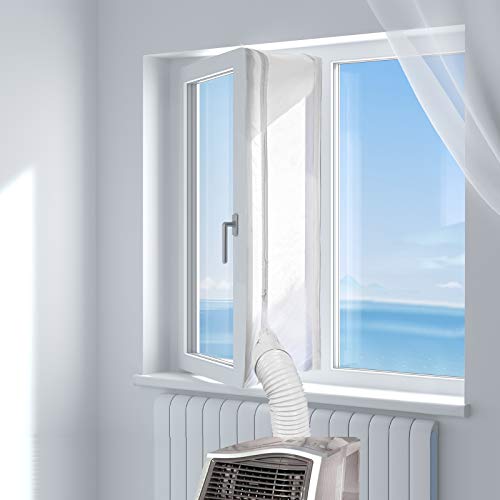
Portable Air Conditioner for Casement Windows: What You Need to Know
Casement windows crank outward instead of sliding, which means the standard window kit in most portable AC boxes will not fit. This guide explains how to vent a portable air conditioner through a casement window, which kits and adapters to look for, and how to choose a unit that actually cools the room.
Short answer: A portable air conditioner can work perfectly with a casement window — you just need a casement-specific venting kit or a custom panel instead of the flat sliding panel that ships with the unit. Once the exhaust path is properly sealed, cooling performance matches any other window setup.
Why Casement Windows Complicate Portable AC Setup
A portable air conditioner works by pulling heat out of the room air and dumping it outside through an exhaust hose. The hose must connect to the outdoors through a sealed opening. On a double-hung or sliding window, the included flat panel does this neatly — it sits in the track and the sash closes onto it.
Casement windows, sometimes called crank-out windows, swing outward on a hinge. The frame geometry is different, the sash moves in a different arc, and there is no vertical or horizontal track for a flat panel to rest in. Forcing the standard panel into the opening leaves large gaps, lets hot outdoor air back into the room, and makes the portable AC recirculate warm air rather than cool it.
That is the entire problem in one sentence: the window is the bottleneck, not the AC. Once you solve the venting question, the portable air conditioner itself performs as designed. Renters and homeowners in buildings with casement windows face this issue frequently, which is why dedicated kits and adapters exist.
How to Vent a Portable AC Through a Casement Window
There are several ways to solve the venting problem, ranging from off-the-shelf kits to custom solutions. Each has trade-offs in effort, cost of materials, and how permanent the installation becomes.
1. Dedicated Casement Window Kit
The cleanest solution. A rigid or adjustable panel sized to the opening, with a hose collar and weather seal, plus a bracket to hold the sash closed. Works on most standard casement windows. Details are in our portable AC window kit for casement windows guide.
2. Crank-Out Window Adapter
An adapter built specifically for the crank mechanism, sometimes called a portable air conditioner crank out window kit. These handle the geometry of windows that pivot outward rather than slide, and often include a frame that the sash clamps against.
3. Side-Opening Window Panel
For casement windows that open to the side rather than crank out, a portable air conditioner side opening window panel may be the right fit. Measure the opening and hinge side before ordering.
4. Custom Acrylic or Plywood Panel
Local glass or hardware shops can cut a rigid panel to your exact opening with a pre-drilled hose hole. Often the most reliable solution for unusual windows, and the cleanest visually. Seal edges with foam weatherstrip.
Whichever route you choose, the seal matters more than the panel material. A small leak around the vent panel lets hot outdoor air back in and undermines the portable AC's cooling capacity. Foam gaskets, weatherstripping, and a sash-lock bracket are not optional accessories — they are the difference between a working system and a frustrating one.
Choosing the Right Capacity for Your Room
Casement windows are common in bedrooms, studios, and apartments — usually small to medium rooms. Match capacity to room size, then adjust for sun exposure and occupancy.
5,000 – 8,000 BTU
Up to ~150 sq ft
8,000 – 10,000 BTU
150 – 250 sq ft
10,000 – 14,000 BTU
250 – 400 sq ft
14,000 – 18,000 BTU
400 – 700 sq ft
If the room is a small bedroom, a portable air conditioner for very small room keeps capacity matched to the load. For studios and small apartments, a portable air conditioner for 500 sq ft room class unit covers most needs. For larger apartments or open-plan spaces, multiple smaller units often cool more evenly than a single oversized one — our overview of a portable air conditioner for 1000 square feet arrangement explains the logic.
Remember that portable ACs vent heat through a hose, and that hose must go outdoors. The bigger the unit, the more heat it needs to dump, which puts more importance on a well-sealed window connection. A perfectly sized unit with a leaky casement panel will underperform a slightly smaller unit with a tight seal.
Features That Matter for Casement Window Setups
Beyond capacity and venting, a few features make portable ACs noticeably easier to live with in a casement window room.
Dual-Hose Venting
Two-hose units pull condenser intake air from outside rather than the room, keeping pressure balanced and improving efficiency. Especially useful when the vent panel has to fit a smaller opening.
Self-Evaporating System
Recycles condensate to cool the condenser, reducing how often you have to empty the tank. A portable air conditioner with self evaporating system is a significant convenience in humid rooms.
Inverter Compressor
Variable-speed compressors run quieter and hold temperature more steadily than single-speed models. A portable air conditioner with inverter technology is worth considering for bedroom use.
Wi-Fi and Smart Control
Pre-cool the room before you arrive or schedule cooling around your routine. A portable air conditioner with WiFi control adds meaningful convenience for daily use.
Dehumidification Mode
In humid climates, moisture removal matters as much as temperature. A portable air conditioner for humid climates with a strong dry mode keeps rooms comfortable without overcooling.
Heating Function
Combined cool-and-heat units extend usability across seasons. A portable air conditioner and heater unit is useful in rooms with inconsistent seasonal comfort.
Also weigh hose diameter and length. A shorter, straighter hose run performs better than a long, kinked one. In tight casement setups, where the hose sometimes has to route around a windowsill or through a curtain, plan the path before you commit to a kit.
What About Rooms Without Suitable Windows?
If the casement window is too small, sealed, or otherwise unsuitable, there are alternatives. Some buyers use a portable air conditioner for room with no window setup, which may involve venting through a door or a custom wall opening. Others look at evaporative options with a portable air conditioner with evaporative technology, though those work best in dry climates and are not equivalent to refrigerated AC.
Portable AC Tiers: Which Class Fits a Casement Window Room?
Portable ACs fall into recognizable market tiers. The right pick depends on how long the unit runs each day and how much convenience you want.
| Tier | Typical Characteristics | Best For |
|---|---|---|
| Essential tier | Single-hose venting, basic controls, manual drain tank, modest airflow, modest noise | Occasional spot cooling in a small bedroom or home office |
| Balanced tier | Dual-hose or improved single-hose, self-evaporating system, programmable timer, washable filter | Daily use in bedrooms, studios, and living areas |
| High-end tier | Inverter compressor, Wi-Fi control, low-noise operation, heat pump capability, smart scheduling | Long daily runtime, sleeping rooms, remote management, multi-season use |
| Professional-grade | Heavy-duty cabinet, high airflow, commercial spot-cooling duty cycle, rugged casters | Workshops, server rooms, temporary event spaces, commercial use |
In most casement window rooms — typically bedrooms, studios, and apartments — a balanced-tier or high-end-tier unit offers the best experience. The quieter operation and steadier temperature control of higher tiers make a real difference in rooms where you sleep or work. If you need cooling in a larger commercial space, a portable commercial air conditioning unit is built for extended duty cycles.
If you are comparing portable AC to another cooling format, our guide to the most energy efficient room air conditioner explains how portable, window, and mini-split options differ in efficiency and installation flexibility.
Installation Tips and Common Mistakes
Setting up a portable AC with a casement window takes a little more planning than a sliding window, but it is straightforward once you have the right kit. Follow these steps and watch for the pitfalls.
- Measure the opening precisely. Width, height, hinge side, and sash depth. Measure at the narrowest point — older casement windows are often out of square.
- Confirm hose diameter and kit compatibility. The kit collar must match the hose outlet on your portable AC. Adapters exist but add a failure point.
- Test-fit before sealing. Place the panel or frame in the opening and close the sash against it before applying foam or weatherstrip.
- Seal the edges. Foam gasket along the panel edges and sash contact line. Any gap lets hot air back in.
- Secure the sash. Use the included bracket or lock so the window cannot be forced open from outside.
- Insulate the exhaust hose. An insulation sleeve reduces heat radiating back into the room from the hose itself.
- Position the AC to allow airflow. Do not block the front grille; keep the exhaust run as short and straight as possible.
For a closer look at the intake and exhaust airflow dynamics, the portable air conditioner intake and exhaust guide explains why the exhaust path matters and what happens when it is not sealed properly. If cooling still feels weak after installation, the portable air conditioner not cooling enough troubleshooting guide walks through the checks.
Frequently Asked Questions
Can a portable air conditioner work with a casement window?
Yes, as long as the exhaust hose can vent outdoors through a sealed opening. The standard flat window panel included with most portable ACs will not fit a casement window, so you need a dedicated casement kit, a crank-out adapter, or a custom panel cut to fit the opening.
What kind of window kit do I need for a casement window?
A casement-specific kit with a rigid or adjustable panel that matches your opening dimensions, a hose collar compatible with your portable AC, weather sealing, and a sash-lock or bracket. A custom acrylic panel from a local shop is also a solid option for unusual windows.
Do I need a special portable AC model for casement windows?
No. The portable AC itself does not change — the venting kit does. Any standard portable AC will work once you have a suitable vent path. Focus your model selection on capacity, features, and noise rather than window type.
Can I just leave the casement window partly open for the hose?
Not recommended. An open window with no sealing panel lets hot outdoor air in around the hose, undermining cooling. The purpose of the vent panel is to seal the opening while allowing only the exhaust air to pass through.
What if my casement window is too small for a kit?
Options include a custom-cut acrylic panel, a side-opening window adapter if the window opens to the side, or a different cooling category. If the window truly cannot accommodate a vent path, portable cooling may not be practical for that room.
Does the vent panel affect cooling performance?
Significantly. A well-sealed panel keeps the exhaust air outside and prevents hot outdoor air from leaking in around the hose. A poorly sealed panel wastes cooling capacity. Weatherstripping and foam gasket are not optional if you want the system to perform at its rated capacity.
Bottom Line
A portable air conditioner is a practical cooling solution for rooms with casement windows — you simply need a vent path designed for that window type. Choose a casement kit, crank-out adapter, or custom panel that fits your opening, seal it carefully with foam and weatherstripping, and secure the sash against the panel. Then match the unit to your room size and lifestyle: a balanced-tier or high-end-tier portable AC with dual-hose venting, self-evaporating design, and a quiet compressor will outperform a cheaper unit straining against a leaky setup every time. For a deeper look at the venting hardware itself, read our dedicated guide to the portable AC window kit for casement windows.