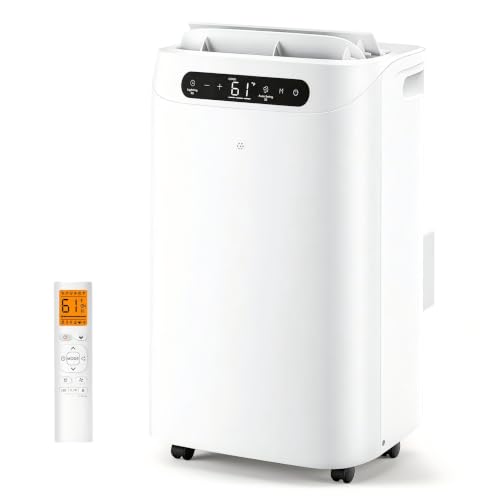
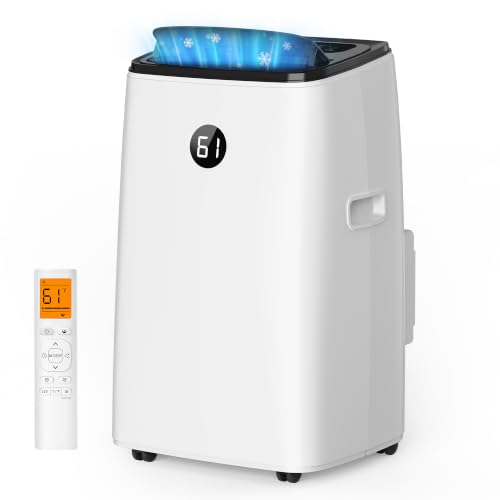
Portable Air Conditioner for 500 Sq Ft Room
A 500 square foot room sits in the medium-capacity range for portable cooling. This guide explains the BTU sizing you need, which features matter most at this size, and how to avoid the common mistakes that leave medium rooms undercooled.
Start With SizingWhy 500 sq ft is a meaningful threshold: Below roughly 300 square feet, almost any portable air conditioner can keep a room comfortable. At 500 square feet, the cooling demand rises enough that hose design, airflow placement, and correct BTU sizing start to determine whether the unit actually works. A 12,000 to 14,000 BTU portable AC is the typical starting point, but the right choice depends on sun exposure, insulation, ceiling height, and how the unit is vented. This page walks through those variables so you can choose a portable AC that cools the space rather than just circulating air.
How to Size a Portable AC for 500 Sq Ft
The baseline rule for portable air conditioners is roughly 20 BTU per square foot of floor area. For a 500 sq ft room, that places the starting point at about 10,000 BTU before adjustments. In practice, most 500 sq ft rooms need more than the baseline because portable units lose efficiency through the exhaust hose and window kit. The table below shows how the requirement shifts with room conditions.
| Room Condition | BTU Range | Tier | Best For |
|---|---|---|---|
| Shaded room, good insulation, standard 8 ft ceiling | 10,000 – 12,000 BTU | Entry-Level | Mild climates and rooms used mainly in the evening |
| Average room, some sun exposure, moderate insulation | 12,000 – 14,000 BTU | Mid-Range | Most bedrooms, living rooms, and open-plan spaces |
| Heavy sun, large windows, or poor insulation | 14,000 – 16,000 BTU | High-End Tier | West-facing rooms and warmer climates |
| Kitchen-adjacent, high ceiling, or multiple occupants | 16,000 BTU and above | Flagship Tier | Demanding spaces where cooling load is consistently high |
Oversizing a portable AC is not as harmful as oversizing a central system, but it still matters. An oversized portable unit cools quickly, then cycles off, leaving humidity higher than expected and wasting energy on restart. If your room falls near a boundary, choose the lower capacity that matches your actual conditions rather than the highest available number. For a closer look at the broader category, see our guide to portable AC units.
Single-Hose vs Dual-Hose: The Deciding Factor at 500 Sq Ft
At 500 square feet, hose design has more impact on real cooling performance than most buyers expect. A single-hose unit pulls indoor air through the condenser and exhausts it outside, which creates negative pressure in the room. That pressure draws warm outdoor air back in through gaps, doors, and window frames, forcing the unit to work harder. A dual-hose unit separates intake and exhaust, so room pressure stays balanced and cooling efficiency holds up in larger spaces.
Single-Hose Units
Simpler and lighter, but create negative pressure. Better suited to smaller rooms or short cooling sessions than to sustained use in 500 sq ft.
Dual-Hose Units
Better airflow balance and cooling performance at 500 sq ft. Heavier and require two window openings or a wider kit, but usually the stronger choice.
Inverter Compressors
Variable-speed operation reduces energy use and temperature swings. At 500 sq ft, an inverter model can maintain comfort more evenly than a fixed-speed unit.
Self-Evaporating Systems
Reduce manual draining by evaporating condensate through the exhaust. Helpful in medium rooms where the unit runs long hours.
Features That Matter Most at This Room Size
A 500 sq ft room is large enough that small feature differences add up. The following features have the most practical impact on comfort and efficiency at this size.
- Accurate thermostat and timer: A responsive thermostat prevents the compressor from running past the target temperature. Programmable timers reduce runtime during unoccupied hours.
- Multiple fan speeds: Higher fan speeds help distribute cool air across a larger room. Lower speeds reduce noise during sleep.
- Dehumidification mode: Useful in humid climates, where cooling alone leaves the room feeling clammy. See our notes on portable AC for humid climates.
- Window kit quality: A tight-fitting kit prevents warm air from leaking around the exhaust hose. Sliding and casement windows may need dedicated kits.
- Noise rating: At 500 sq ft, the unit sits farther from the bed or sofa than in a small room, but noise still matters if the space is used for sleep or work.
- Drainage options: Continuous drain or self-evaporating designs reduce the need to empty a tank mid-season.
- Wi-Fi and scheduling: Optional, but helpful in larger spaces where the unit runs unattended.
Placement and Venting in a 500 Sq Ft Room
Placement determines how much of the room actually receives cool air. In a 500 sq ft space, a portable AC pushed into a corner will cool that corner and little else. Position the unit near the window or door used for venting, with the front discharge facing the open room. Keep the exhaust hose as short and straight as possible. Bends and loops trap heat and reduce airflow. If the window is far from the center of the room, consider a longer hose and a second small fan to circulate air toward the far side of the space.
Keeping a Medium-Room Portable AC Efficient
Portable air conditioners in medium rooms run longer than units in small rooms, so maintenance has a greater effect on long-term performance. Clean the filter every two to four weeks during heavy use. Check the exhaust hose for kinks or leaks. Empty or drain the condensate tank regularly unless the unit is self-evaporating. Inspect the window kit each season and replace any seal that has compressed or torn. These simple habits keep the unit close to its rated efficiency and extend its service life.
Compare Portable ACs for Medium Rooms
Browse portable air conditioners sized for 500 sq ft rooms, including dual-hose, inverter, and self-evaporating models. Compare features before you choose.
View Recommended ModelsFrequently Asked Questions
What size portable air conditioner do I need for a 500 sq ft room?
A 500 sq ft room typically requires a portable air conditioner in the 12,000 to 14,000 BTU range. Rooms with heavy sun exposure, high ceilings, or poor insulation may need the upper end of that range or slightly more.
Can a portable air conditioner cool a 500 sq ft room effectively?
Yes, a correctly sized portable air conditioner can cool a 500 sq ft room, provided it is vented properly and the room is reasonably sealed. Single-hose units are less efficient than dual-hose models in larger spaces because they create negative pressure that draws warm air back in.
Should I choose a single-hose or dual-hose portable AC for a 500 sq ft room?
Dual-hose portable air conditioners are generally the better choice for a 500 sq ft room. They separate intake and exhaust air, avoiding the negative pressure problem that reduces cooling performance in larger spaces.
Where should I place a portable air conditioner in a 500 sq ft room?
Place the unit near a window or sliding door where the exhaust hose can vent outside with minimal bending. Keep the front discharge unobstructed and avoid corners where airflow stagnates. Central placement in the room improves air distribution.