
Portable Air Conditioner Without Dehumidifier: What to Know
Not every portable AC includes a dedicated dehumidify mode. This guide explains what that means in practice, who benefits from a cooling-only design, and how to choose a unit that matches your climate and room.
Jump to the Selection FrameworkKey clarification: A portable AC without a dehumidifier is not a moisture-free machine. It still removes some humidity while cooling. What it lacks is a standalone dry mode that prioritizes moisture removal over temperature drop.
How Cooling-Only Portable ACs Work
Every compressor-based portable air conditioner moves heat from inside the room to the outside air. A fan draws warm room air across a cold evaporator coil. The refrigerant absorbs heat, the air returns to the room cooler, and the absorbed heat is rejected at the condenser and pushed out through the exhaust hose.
Moisture removal is a natural consequence of this process. When warm air meets the cold evaporator coil, water vapor condenses on the coil. That condensate either drips into a collection tank or, in self-evaporative designs, is picked up by the exhaust airflow and carried outside. This happens whether or not the unit has a dehumidify mode.
What a unit without a dehumidifier lacks is a separate operating mode. A dedicated dehumidify mode typically runs the compressor with the fan at low speed, which maximizes the time air spends in contact with the cold coil and pulls more moisture out. A cooling-only unit runs at normal fan speed to prioritize temperature drop. The result is that humidity falls somewhat, but the primary goal is a cooler room, not a drier one.
If humidity is your main concern and cooling is secondary, a unit with a dry mode or a standalone dehumidifier is the better fit. The general heater and dehumidifier combination guide explains how combined units handle both functions, while the dehumidifier and heater overview covers the broader category.
Who This Configuration Suits
A cooling-only portable AC is not a compromise for every buyer. In the right setting, it is the simpler and more appropriate choice.
Dry-Climate Households
In regions with low outdoor humidity, excess moisture removal is not a priority. A cooling-focused unit avoids an unnecessary mode and keeps operation straightforward. The humid climates overview is useful as a contrast for understanding when the opposite applies.
Small Rooms and Bedrooms
Compact rooms cool quickly, and moisture buildup is limited. A portable AC for a very small room benefits from a simple cooling design with fewer modes to manage.
Temporary and Rental Setups
When the unit will be used for a season and then stored, simplicity matters. The portable AC units for rent overview covers practical constraints.
Cooling-First Workloads
Home offices and bedrooms where the goal is temperature comfort rather than moisture control fit well with a cooling-only unit, especially when paired with a correctly sized sliding window kit or other venting solution.
If you are still deciding whether a portable AC is the right format at all, the general portable air conditioner guide covers capacity, drainage, and feature trade-offs across the category.
Trade-offs and Limitations
The main trade-off is comfort in humid conditions. A cooling-only unit lowers temperature quickly, but the room may still feel clammy if the outdoor humidity is high and the unit is not running long enough to remove much moisture. Short cycling makes this worse: an oversized unit cools fast, shuts off, and leaves moisture behind.
Condensate handling is the second consideration. Without a dedicated dry mode, moisture removal is tied to cooling run time. In very humid weather, a standard tank may fill faster than expected. Self-evaporative designs reduce manual draining, and the self-evaporating system overview explains how they behave. If draining is a concern, units that do not need draining or are marketed as no-drain-required are worth comparing.
Feature set is the third. Many combined units add heating and dehumidification, which increases flexibility but also complexity. The portable AC and heater unit overview and the heater and AC in one unit guide cover the trade-offs of combined designs.
Without vs With Dehumidifier: A Direct Comparison
The table below summarizes the practical differences. Neither configuration is universally better; the right choice depends on climate, room, and how you plan to use the unit.
| Consideration | Without Dehumidifier | With Dehumidifier |
|---|---|---|
| Primary function | Cooling | Cooling plus standalone moisture removal |
| Humidity handling | Incidental, tied to cooling run time | Controllable via a dedicated dry mode |
| Best climate | Dry to moderate | Humid to very humid |
| Operating complexity | Lower | Higher, with more modes |
| Tier positioning | Essential tier to mid-tier | Mid-tier to high-end tier |
| Typical use | Bedrooms, offices, short cooling sessions | Whole-room comfort in humid seasons |
For buyers in humid regions who still prefer a portable unit, the high humidity portable AC guide explains which specifications matter most. The dehumidifier and heater combination is worth reviewing if you want both functions in a single unit.
Climate and Room Fit
Climate is the first filter. In dry climates, cooling-only units are a natural fit. In humid climates, a dry mode is usually worth the added complexity. In mixed climates, the decision depends on which season matters more and whether the room has other moisture sources.
Room characteristics matter too. Kitchens and bathrooms add moisture, so a dry mode is more useful there. Bedrooms and home offices in dry climates rarely need it. Basements often run humid, so a unit with stronger moisture handling is safer; the basement window portable AC guide covers this. Small rooms cool quickly and accumulate less moisture, which favors simpler designs.
Cooling capacity still drives performance. An undersized unit runs constantly and removes more moisture as a side effect but never reaches the set temperature. An oversized unit short-cycles and leaves moisture behind. Match capacity to room size using the general sizing method, and adjust for ceiling height, sun exposure, and occupancy.
Venting quality also affects perceived humidity. A leaky window kit lets humid outdoor air back in, which undermines any moisture handling the unit provides. Confirm that the kit seals properly and that the exhaust hose is short and insulated. The insulated exhaust hose overview explains the benefit.
Selection Framework
Work through these steps to decide whether a cooling-only portable AC fits your situation.
- Check your climate. If outdoor humidity is consistently high, prioritize a unit with a dehumidify mode. If it is dry or moderate, a cooling-only unit is a solid choice.
- Size the unit to the room. Capacity drives both cooling and incidental moisture removal. Use room size and adjust for ceiling height, sun, and occupancy.
- Decide on condensate handling. Choose between a tank model and a self-evaporative design based on how much maintenance you are willing to do.
- Confirm the venting path. Match the window kit to your window type, and verify that the hose length and diameter fit the unit.
- Review the mode set. If you need heating or a dedicated dry mode, choose a combined unit. If you only need cooling, keep the feature set simple.
For commercial or continuous-operation settings, the requirements shift toward duty cycle and airflow rather than moisture control; see the commercial portable AC guide. If multi-room coverage is the real goal, a mini-split or multi-zone system is the more effective long-term solution; the multi-zone mini-split guide explains when that path is better.
Frequently Asked Questions
Can a portable air conditioner cool without a dehumidifier mode?
Yes. Every compressor-based portable AC removes some moisture as a byproduct of cooling. A unit without a dedicated dehumidify mode still lowers humidity somewhat; it simply lacks a standalone setting that prioritizes moisture removal.
Is a portable AC without a dehumidifier suitable for humid climates?
It can work, but performance depends on capacity and condensate handling. In humid climates, a dry mode and self-evaporative design are usually more comfortable. If humidity is the main issue, a dedicated dehumidifier or a unit with a strong dry mode is the better fit.
Does a portable AC without a dehumidifier still produce water?
Yes. Condensate forms on the evaporator coil during cooling regardless of whether a dehumidify mode exists. Most units either collect water in a tank or use a self-evaporative system that routes moisture out with the exhaust air.
What is the difference between cooling mode and dehumidify mode?
Cooling mode runs the compressor and fan to lower air temperature. Dehumidify mode runs the compressor at a lower fan speed to maximize moisture removal while cooling more gently. A cooling-only unit cannot prioritize moisture removal in this way.
Should I choose a portable AC without a dehumidifier for a dry climate?
Yes, this is often the better fit. In dry climates, excess moisture removal is not a priority, so a cooling-focused unit simplifies operation. Focus on capacity sizing and a proper exhaust kit instead.
Recommended Portable Air Conditioners Without Dehumidifier
⚠️ AFFILIATE DISCLOSURE: This website contains affiliate links. As an Amazon Associate, we earn from qualifying purchases. If you make a purchase through these links, we may receive a small commission at no additional cost to you. Read our full affiliate policy.

10000 BTU Portable Air Conditioners, Air Conditioner for Room Cools Up to 450 Sq.Ft with 24H Timer, Remote Control, Dehumidifier, 3-IN-1 AC Unit with Window Kit for Bedroom, Indoor Rooms, Home Office
Check price on Amazon
BLACK+DECKER Portable Air Conditioner, 10,000 BTU, BPACT10WT, White | 5,500 BTU SACC for Rooms up to 450 Sq. Ft., 3-in-1 Portable AC, Fan and Dehum with Follow Me Remote Control
Check price on Amazon
MEPTY 12000BTU Portable Air Conditioners, Portable AC Unit with Dehumidifier, Sleep Mode, 24H Timer, Cools Room up to 550 sq.ft, Room Air Conditioners with Self-evaporation System for Bedroom
Check price on Amazon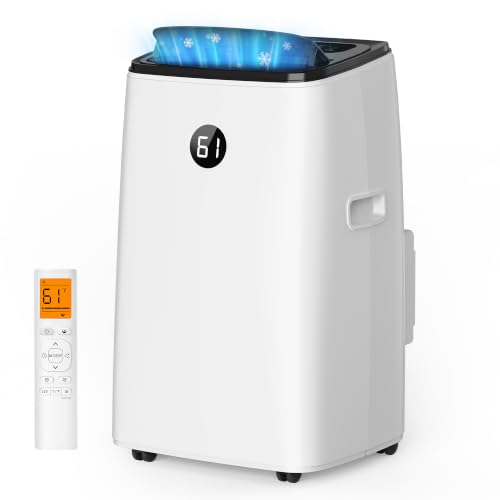
AGTANA 14000 BTU Portable Air Conditioner for Large Room up to 700 Sq. Ft, 3-in-1 Self-Evaporating AC with Fan & Dehumidifier, Floor Standing Portable AC Unit with Remote Control, Auto Swing, White
Check price on Amazon
16000 BTU Portable Air Conditioners with WiFi, App Control & Dehumidifier | Enjoy versatile comfort with cooling, fan, dehumidifier, sleep mode and 24H timer, plus smart app and remote operation.
Check price on Amazon
10,000BTU Energy Saving Portable Air Conditioners for Rooms up to 550 Sq Ft | Self-Evaporating Portable AC Unit with Remote Control&24H Timer, Cool/Dry/Fan/Sleep, LED Display&Installation Kits for Home
Check price on Amazon
BLACK+DECKER Portable Air Conditioner, 9,000 BTU, BPACT08WT, White | 5,300 BTU SACC for Rooms up to 400 Sq. Ft., 3-in-1 Portable AC, Fan and Dehum with Follow Me Remote Control
Check price on Amazon