Portable Air Conditioner for Small Window
A small window does not rule out portable air conditioning. The key is choosing a unit whose exhaust hose and vent kit fit the opening, then sealing it well enough to keep hot air out. This guide explains the options.
Compare Window Kit OptionsWhy small windows are a challenge: Portable air conditioners exhaust hot air through a hose, and that hose needs a secure path to the outdoors. Standard window kits assume an opening of roughly 20 to 50 inches wide and at least 16 inches tall. When the window is narrower, shorter, or of an unusual type, the included kit may not seal. The result is warm air leaking back in, reduced cooling, and a unit that seems to run constantly without reaching the set temperature. The good news is that compact and specialized vent kits exist for exactly this situation.
Window Kit Options for Small Windows
The window kit is the component that makes or breaks portable AC performance in a small opening. Several types are available, and the right choice depends on the window's dimensions and style.
Compact Adjustable Panel Kits
Sliding panels designed to fit narrower openings, often from about 16 inches upward. These are the most common solution for small standard windows.
Fabric Window Seals
Flexible cloth or nylon surrounds that seal around the hose and attach to the window frame with zippers or hook-and-loop strips. They work on irregular shapes and very small openings.
Sliding Window Kits
Vertical panels sized for sliding windows, with a small version available for narrow vertical openings. See our guide to portable AC sliding window kits.
Casement and Crank-Out Adapters
Specialized kits for windows that open outward. These often use a rigid or fabric panel to bridge the opening. See portable AC for casement windows for details.
Small Window Venting Options Compared
The table below compares the main venting approaches for small windows using a consistent tier framework, so you can match the option to your window type and room.
| Venting Option | Tier | Best Window Type | Best For |
|---|---|---|---|
| Compact Adjustable Panel Kit | Mid-Range | Double-hung and standard single-hung windows | Most small windows with a straight opening |
| Fabric Window Seal | Entry-Level | Any window, including irregular or very small frames | Tight openings where rigid panels cannot fit |
| Sliding Window Vertical Kit | Mid-Range | Sliding windows with vertical openings | Narrow vertical openings in apartments |
| Casement / Crank-Out Adapter | High-End Tier | Casement and crank-out windows | Windows that open outward rather than vertically |
| Universal Seal + Short Hose Setup | High-End Tier | Mixed window types and unusual frames | Small openings that need a custom, flexible solution |
Choosing the Right Portable AC for a Small Window
Not every portable air conditioner is a good match for a small window. The unit's hose diameter, hose length, and included kit determine how well it will vent. Consider these factors before choosing a model.
- Hose diameter: Smaller-diameter hoses are easier to fit through narrow openings. Confirm the hose diameter against your window before purchase.
- Hose length: A shorter hose is easier to route through a small window without kinks. Long hoses add heat and reduce efficiency.
- Included kit type: Check whether the unit ships with an adjustable panel, a fabric seal, or a sliding kit. Some models include only a basic panel that may not fit small openings.
- Capacity matching: A small window often indicates a smaller room, so a 8,000 to 10,000 BTU unit may be sufficient. Oversizing wastes energy and can feel clammy. See our guide to portable AC for small rooms.
- Single vs dual hose: Dual-hose units are more efficient but need two openings or a wider kit. For a very small window, a single-hose unit with a compact kit may be the practical choice.
- Weight and portability: Smaller units are easier to move and reposition near the window, which matters in tight spaces.
Sealing the Window for Maximum Cooling
A small window leaves little room for error. Any gap around the vent panel lets hot outdoor air in, and a single-hose unit will pull even more warm air through those gaps because of the negative pressure it creates. Seal the opening as completely as possible.
Use Foam or Weatherstripping
Fill gaps between the vent panel and the window frame with foam tape or weatherstripping. This simple step has a large effect on cooling performance.
Insulate the Exhaust Hose
An insulated hose sleeve reduces heat radiating back into the room. See our guide to insulated exhaust hoses.
Keep the Hose Straight
Avoid loops and sharp bends. In a small window, route the hose as directly as possible to the panel opening.
Seal the Window Itself
If the window does not close completely around the kit, use a fabric seal or a fitted insert to close the remaining gap.
Alternatives When the Window Is Too Small
In some cases, the window is simply too small for a standard portable AC setup, or the opening is blocked by the building's design. Several alternatives can provide cooling without a full venting kit.
- Fabric window seal kit: A flexible seal can work where rigid panels cannot, wrapping around the hose and the window frame.
- Through-the-wall vent: Some installations use a small wall sleeve to exhaust air outside, bypassing the window entirely. This requires permission and modification of the wall.
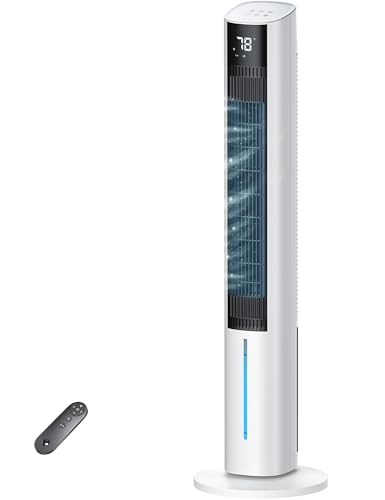
- Evaporative cooler: In dry climates, a portable evaporative air cooler provides cooling without an exhaust hose.
- Non-vented portable unit: Some portable units are designed to operate without venting, though they cool only small spaces. See portable air conditioners with no venting required.
- Window AC with a smaller frame: A compact window air conditioner may fit the small opening better than a portable unit and vent kit combination.
Compare Portable ACs for Small Windows
Browse portable air conditioners that include compact vent kits, fabric seals, and small-diameter hoses suitable for narrow windows. Compare features before you decide.
View Recommended ModelsFrequently Asked Questions
Can a portable air conditioner work with a small window?
Yes, a portable air conditioner can work with a small window, but the window must be large enough for the exhaust hose and a compatible window kit. Windows shorter than about 16 inches or narrower than the hose diameter may need a specialized kit or a different venting approach.
What if my window is too small for the included window kit?
You can use a compact or universal window kit, a fabric venting panel, or a portable AC window seal designed for smaller openings. Some kits are adjustable and fit windows as narrow as 16 inches, while fabric seals work around irregular or very small frames.
Does a small window reduce portable AC performance?
A small window can reduce performance if the vent kit does not seal properly, allowing hot outdoor air back into the room. A tight seal and a short, straight exhaust hose help preserve cooling performance even with limited window space.
Can I use a sliding or casement window with a portable AC?
Yes, but you will likely need a dedicated kit. Sliding windows use a vertical panel kit, while casement and crank-out windows need specialized adapters. Small versions of these kits exist for compact window openings.