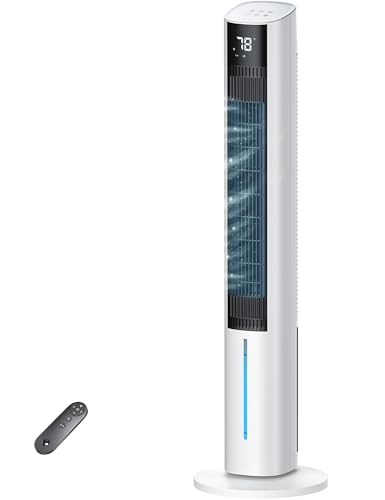
Portable Air Conditioner for a Room With No Window: Solutions That Work
A windowless room presents a real cooling challenge, but it is not an impossible one. This guide explains how to vent a portable AC without a window, which alternatives actually work, and how to choose the right solution for your space.
Table of Contents
- The Core Challenge of Cooling a Windowless Room
- Venting Options for Portable ACs Without a Window
- Ventless Cooling Options
- Comparison: Vented vs Ventless Approaches
- How to Choose the Right Solution
- Safety and Practical Considerations
- Permanent Alternatives Worth Considering
- Frequently Asked Questions
The Core Challenge of Cooling a Windowless Room
Every compressor-based air conditioner produces heat as a byproduct of cooling. In a portable AC, that heat is carried away through an exhaust hose. If the hose cannot be routed outside, the heat ends up back in the room, and the unit effectively cancels out its own cooling. This is why a standard portable AC cannot simply be placed in a sealed windowless room and expected to work.
To cool a room with no window, you have two broad paths:
- Route the exhaust somewhere outside the room. This might mean venting through a wall, through a doorway into an adjacent space that connects to the outdoors, or through a drop ceiling or mechanical chase.
- Use a cooling method that does not require venting. Evaporative coolers and personal cooling devices fall into this category, though they have important limitations.
Key principle: The heat removed from the room must go somewhere. Either it leaves through a vent, or the cooling method must avoid producing a net heat gain in the first place. Any product that claims to cool a sealed room with a compressor and no venting should be treated with skepticism.
Venting Options for Portable ACs Without a Window
If you want real, compressor-based cooling in a windowless room, venting is the most reliable path. The following approaches are the most common and practical:
1. Vent Through a Wall
This is the most effective permanent solution. A vent hole can be cut through an exterior wall, and the exhaust hose can be routed through it using a wall vent kit. This requires some carpentry and, in some cases, a permit. The result is a clean, reliable exhaust path. If you are handy, a wall vent kit can be installed as a DIY project; otherwise, a contractor can handle it. Our guide to the portable air conditioner without window vent covers the logistics in more detail.
2. Vent Through a Door
If the room has a door leading to a hallway, another room with a window, or an exterior door, you can use a door vent kit or a custom fabric panel to hold the exhaust hose in the doorway. The adjacent space must ultimately connect to the outdoors, or the heat will simply accumulate there. This approach is temporary and works best when the door can be kept slightly open. See our guide to the portable air conditioner without window access for related strategies.
3. Vent Through a Drop Ceiling or Mechanical Chase
In some buildings, a drop ceiling or mechanical chase connects to the outdoors or to a ventilation system. Venting into such a space is sometimes possible, but it must be done carefully to avoid pushing hot, moist air into building cavities where it can cause damage. This approach is best evaluated by a professional.
4. Vent Through a Chimney or Existing Duct
If the room has a chimney flue or an existing duct that vents outside, it may be possible to route the exhaust through it. Again, professional assessment is advisable to avoid safety and moisture problems.
Important: Never vent a portable AC into an enclosed interior space such as a closet, attic, or crawl space. The heat and moisture must go outside, or you risk damaging the building and creating a mold problem.
If your room has no window but does have a small opening — such as a small window, a casement window, or a sliding door — there may be specialized kits available. Our guides to the portable air conditioner for small window and the sliding window kit cover these scenarios.
Ventless Cooling Options
If venting is truly impossible, ventless cooling devices are the alternative. These do not use a compressor and therefore do not produce concentrated heat that must be exhausted. However, each has limitations you should understand before purchasing.
Evaporative Coolers (Swamp Coolers)
Evaporative coolers cool air by passing it through a water-saturated pad. They work best in dry, low-humidity climates where evaporation is rapid. In humid climates, their cooling effect is minimal, and they can make the room feel clammy. They also work best with some airflow to the outside, so a completely sealed windowless room is not ideal even for these units. For a detailed look, see our guide to the portable evaporative air cooler and the portable air conditioner with evaporative technology.
Personal Cooling Devices
Personal cooling fans, neck coolers, and small desktop units provide localized relief. They do not cool an entire room, but they can improve comfort significantly for a person sitting at a desk or in a bed. Our guide to the personal wearable portable air conditioner covers this category in detail.
Ice-Based Air Coolers
Some devices use ice or frozen packs to chill air as it passes through the unit. These provide short bursts of cooler air but are not designed for continuous whole-room cooling. They are best regarded as spot-cooling devices.
Portable Cooling Fans
High-velocity fans do not lower air temperature but improve comfort by increasing air movement across the skin. Our guide to the portable cooling fan and the broader category of portable cooling devices explain the options.
Realistic expectation: Ventless cooling devices are not equivalent to a true air conditioner. They can make a windowless room more comfortable in the right conditions, but they will not deliver the same temperature reduction as a vented AC. Set expectations accordingly.
Comparison: Vented vs Ventless Approaches
The following table summarizes how the main approaches compare for a windowless room:
| Approach | Cooling Capability | Requirements | Best For |
|---|---|---|---|
| Portable AC vented through wall | Strong, true room cooling | Exterior wall access; some installation work | Permanent or semi-permanent cooling of a windowless room |
| Portable AC vented through door | Good, if adjacent space connects to outdoors | Door leading to a space with outdoor access | Temporary or seasonal cooling |
| Evaporative cooler | Moderate, in dry climates only | Low humidity; some airflow helps | Dry climates; spot or supplementary cooling |
| Personal cooling device | Localized only | None | Personal comfort at a desk, bed, or workstation |
| Portable cooling fan | No temperature reduction; improves comfort | None | Air movement in mild conditions |
If your room has no window but does have a wall to the outside, the wall-vent approach is generally the most effective. If not, the door-vent approach or a ventless cooler may be your best option. For an overview of portable AC types, see our portable AC units guide and the portable air conditioner overview.
How to Choose the Right Solution
Use the following decision framework to narrow down your options:
Step 1: Assess your venting possibilities
Does the room have any access to the outdoors? Check for exterior walls, doors leading to spaces with windows, chimneys, or existing ducts. If any of these exist, a vented portable AC is viable.
Step 2: Consider the climate
If your climate is dry, an evaporative cooler is a legitimate ventless option. If it is humid, evaporative cooling will disappoint, and you should prioritize finding a venting path.
Step 3: Determine your cooling needs
If you need to cool the entire room, a vented AC is the only reliable solution. If you need personal comfort at a desk or bed, a personal cooling device may be sufficient. Our guide to the portable air conditioner for a very small room covers small-space considerations.
Step 4: Match the unit to the space
For a small windowless room, a compact portable AC with a wall or door vent may be sufficient. For larger rooms, sizing matters. Our guides to the portable air conditioner for a 500 sq ft room and the portable air conditioner for 1000 square feet cover sizing in detail.
Step 5: Consider noise and maintenance
If the room is a bedroom or home office, noise matters. Look for quieter models and consider features like inverter compressors. Maintenance requirements vary by type; evaporative coolers need regular water changes, while vented ACs need filter cleaning and condensate management. Our guide to the portable air conditioner with no drain required covers drainage options.
Safety and Practical Considerations
Cooling a windowless room introduces some practical and safety considerations that are worth keeping in mind:
- Ventilation: Even with a vented AC, the room should not be completely sealed. Compressor-based portable ACs draw air from the room and exhaust it, which can create negative pressure. A small gap under a door helps equalize pressure.
- Electrical safety: Portable ACs draw significant current. Use a dedicated circuit if possible and avoid extension cords. Our guide to amps and breaker size for AC explains the electrical requirements.
- Moisture management: Evaporative coolers add humidity. In a sealed room, this can lead to condensation and mold. Ensure some ventilation and monitor humidity levels.
- Carbon monoxide: Never use a fuel-burning appliance or generator indoors. This is not directly related to portable ACs but is a critical safety point in any enclosed space.
- Building codes: If you are cutting a hole in an exterior wall, check local building codes and obtain any necessary permits. Our guide to how to get an AC permit provides an overview.
Safety reminder: If you are unsure about venting through a wall, chimney, or duct, consult a qualified HVAC technician or contractor. Improper venting can cause moisture damage, mold, or safety hazards.
Permanent Alternatives Worth Considering
If cooling a windowless room is a long-term need, several permanent or semi-permanent solutions may be worth exploring:
- Ductless mini-split: A mini-split can cool a room without needing a window, as long as a small hole can be made in an exterior wall for the refrigerant lines. This is often the best long-term solution. Our guide to the ductless mini-split AC covers the details.
- Through-the-wall AC: A through-the-wall unit can be installed in an exterior wall, providing a clean, permanent cooling solution. See our guide to the through-the-wall AC for more information.
- Central air with a dedicated zone: If the home already has central air, adding a zone to the windowless room may be possible. Our guide to HVAC zoning systems explains how zoning works.
- Off-grid or battery-powered cooling: For unique situations, off-grid cooling and battery-powered portable ACs may be relevant.
If you are comparing long-term options, our overviews of the most reliable air conditioner and the most energy efficient room air conditioner can help frame the decision.
Frequently Asked Questions
Can a portable air conditioner work in a room with no window?
A compressor-based portable air conditioner requires some form of exhaust venting to remove heat. In a windowless room, venting can be routed through a wall, a door, a drop ceiling, or another adjacent space that leads outside. Ventless alternatives like evaporative coolers and personal cooling devices can also be used, but they do not provide the same level of cooling as a true air conditioner.
What is the best portable AC for a windowless room?
The best option depends on your venting possibilities. If you can route an exhaust hose through a wall or door, a dual-hose portable AC is the most effective choice. If venting is impossible, an evaporative cooler works in dry climates, and personal cooling devices provide localized relief. For a permanent solution, a ductless mini-split may be worth considering.
Can I vent a portable AC through a door?
Yes, in many cases. You can use a door vent kit or fabricate a panel that fits into the doorway and holds the exhaust hose. The door must lead to a space that connects to the outdoors, such as a hallway with open windows or a room with an exterior door. Venting into an enclosed interior space will not work.
Do ventless portable coolers really cool a windowless room?
Evaporative coolers can lower temperatures in dry climates by adding moisture to the air, but they require some airflow to be effective. In humid climates, they are far less effective and can make the room feel clammy. Personal cooling devices provide localized relief but do not cool the whole room.
Is it safe to vent a portable AC into an attic or crawl space?
No. Venting hot, moist air into an enclosed space such as an attic, crawl space, or closet can cause moisture damage and mold growth. The exhaust must go outside, or into a space that is directly and adequately ventilated to the outdoors. If you are unsure, consult a professional.
Can I use a portable AC in a basement with no window?
Basements often have some venting possibilities, such as a dryer vent, a rim joist area, or a small window well. If none exist, you may need to install a vent through the foundation wall or use a ventless cooling approach. Our guide to the portable air conditioner for basement window covers basement-specific considerations.
Explore Portable AC Options for Windowless Rooms
Compare vented portable ACs, wall vent kits, and ventless cooling devices to find the right solution for your space.
Explore OptionsCooling a room with no window is not impossible, but it does require a deliberate approach. The most reliable path is to find a way to vent a compressor-based portable AC — through a wall, a door, or an existing duct. Where venting is truly impossible, evaporative coolers and personal cooling devices can provide meaningful relief in the right conditions, provided you set realistic expectations. For long-term needs, a ductless mini-split or through-the-wall unit may be the better investment. Use the guidance in this article to weigh your options, and explore the recommended models above when you are ready to choose.