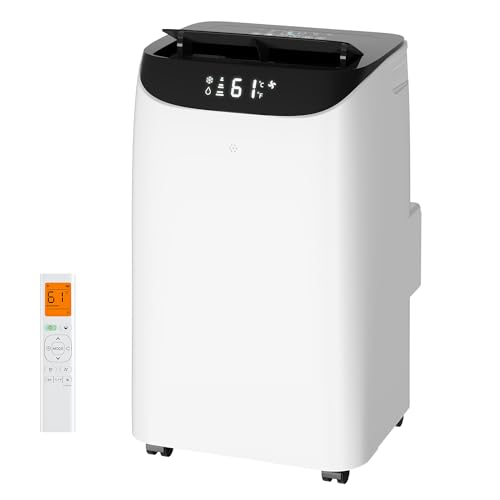
Portable Air Conditioner with Inverter Compressor
Understand how variable-speed compressor technology changes portable cooling — from energy efficiency and temperature stability to noise and long-term reliability — before you decide which model fits your space.
Explore Buying FactorsWhy this page exists: Most portable air conditioners use a single-speed compressor that cycles on and off at full power. An inverter compressor changes that behavior entirely. If you are researching this technology, you are likely past the "what is an AC" stage and want to know whether the added complexity is genuinely useful for your room, your climate, and your usage pattern. This guide answers that question in depth.
What Is a Portable AC with an Inverter Compressor?
A portable air conditioner with an inverter compressor uses a variable-speed motor inside the compressor. Instead of running at a fixed maximum speed and shutting off when the room reaches the set temperature, the inverter adjusts the compressor speed continuously — slowing down as the room approaches the target and speeding up only when additional cooling is needed.
This is the same principle used in modern mini-split systems and high-efficiency central units. In a portable form factor, it means the unit behaves less like an on-off appliance and more like a modulated cooling device. The result is smoother temperature control, reduced cycling wear on the compressor, and generally lower energy consumption over long operating sessions.
It is important to separate marketing claims from engineering reality: an inverter compressor does not eliminate the need for an exhaust hose or a window vent. The heat removed from your room still has to go somewhere. What changes is how the compressor manages the workload internally, not the basic physics of portable cooling. If you are working with an unusual window configuration, you may want to review how a portable air conditioner for vertical windows is set up, since venting remains the primary installation constraint regardless of compressor type.
How Inverter Compressor Technology Works in a Portable Unit
Conventional portable air conditioners operate in a binary mode: the compressor runs at full capacity until the thermostat is satisfied, then shuts off completely. When the room warms again, the compressor restarts at full power. This cycle repeats throughout the day, and each restart draws a burst of current while producing a noticeable temperature swing.
An inverter compressor converts incoming AC power to DC, then uses a variable-frequency drive to control the motor speed. The compressor can run at, for example, 30% capacity during mild conditions and ramp up to 100% only during peak heat. Because it rarely stops entirely, the room temperature stays closer to the set point and the compressor avoids the mechanical stress of constant start-stop cycles.
This variable-speed behavior is closely related to what you would find in a portable air conditioner with inverter technology marketed under different naming conventions. The underlying principle is consistent: modulated compressor output rather than fixed-speed operation. Understanding this distinction helps you evaluate spec sheets more critically, especially when efficiency ratings are listed alongside conventional models.
Key Benefits of an Inverter Portable Air Conditioner
Stable Temperature Control
Because the compressor modulates instead of cycling on and off, the room temperature fluctuates less. This is particularly noticeable in small bedrooms or home offices where a conventional unit can overshoot and undershoot the set point.
Better Energy Efficiency Over Time
Inverter compressors avoid the energy spike associated with repeated full-power restarts. During long cooling sessions — overnight or through a full workday — this typically results in lower overall energy use compared to single-speed designs.
Quieter Steady-State Operation
When the compressor slows down after reaching the target temperature, the noise level drops. Many users find the smoother sound profile more tolerable than the abrupt on-off cycling of a conventional portable AC.
Reduced Compressor Wear
Start-stop cycling is mechanically stressful. A compressor that runs continuously at modulated speed experiences fewer high-torque restarts, which can contribute to a longer service life for the unit's most critical component.
Inverter vs Non-Inverter Portable AC: Feature Comparison
The table below compares the two compressor architectures across the factors that matter most during the research stage. Use it to determine whether the inverter advantage aligns with how you actually intend to use the unit.
| Factor | Inverter Compressor | Conventional (Non-Inverter) |
|---|---|---|
| Compressor behavior | Variable speed, continuous modulation | Fixed speed, on-off cycling |
| Temperature stability | High — narrow fluctuation band | Moderate — noticeable swings |
| Energy use during long sessions | Generally more efficient | Less efficient due to restart spikes |
| Noise profile | Smoother, quieter at steady state | Abrupt cycling noise |
| Compressor longevity | Favored by reduced start-stop stress | More wear from frequent restarts |
| Market positioning | Mid-tier to premium | Entry-level to mid-tier |
What to Look For Before Buying
Choosing an inverter portable AC is not only about the compressor. Several other specifications determine whether the unit will actually perform well in your specific room. The following checklist covers the factors that experienced buyers prioritize during the research phase.
Buyer's Checklist for Inverter Portable AC Units
- Cooling capacity in BTU: Match the rated BTU to your room size, ceiling height, sun exposure, and occupancy. An undersized unit will run continuously, negating the efficiency benefit of the inverter. Review portable air conditioner for small bedroom sizing guidance if your room is compact.
- Energy efficiency rating: Look for the efficiency ratio listed on the spec sheet. Inverter models often score well here, but the rating still varies between brands and tiers.
- Exhaust system design: Single-hose units are simpler but can create negative pressure in the room. Dual-hose designs reduce this effect and are generally preferred for longer cooling sessions.
- Condensate management: Some units use a self-evaporating system to reduce manual draining. If you plan to run the unit overnight, a portable air conditioner with no drain required is worth considering to avoid mid-night interruptions.
- Noise level in decibels: Inverter technology helps, but the fan and housing design still matter. Check the manufacturer's stated dB range and read owner feedback where possible.
- Window kit compatibility: Confirm the included kit fits your window type. Sliding, casement, and crank-out windows each require different adapters. See our notes on a portable air conditioner sliding window kit if you have a horizontal slider.
- Smart features and controls: Wi-Fi, programmable timers, and remote control are common on higher-tier models. Determine whether these features are useful for your routine or simply add complexity.
- Physical footprint and mobility: Portable units are heavy. Check caster quality and unit weight, especially if you plan to move it between rooms.
Who Should Choose an Inverter Portable AC?
Inverter portable air conditioners are particularly well suited to users who run the unit for extended periods rather than short bursts. If you work from home, sleep with the AC on through the night, or cool a room that receives consistent heat load, the modulated compressor behavior delivers its efficiency and comfort advantages most clearly.
They are also a strong fit for rooms where temperature stability matters — nurseries, home offices with sensitive equipment, or spaces with irregular heat gain. The narrower temperature fluctuation is a tangible comfort improvement over conventional cycling units.
Conversely, if you only need occasional short cooling for a room that rapidly reaches the target temperature, the inverter premium may not translate into meaningful daily benefits. In that scenario, the decision is less about efficiency and more about long-term usage habits. For a studio or compact living area, a dedicated portable air conditioner for studio apartment guide can help you weigh room-specific factors.
Common Misconceptions About Inverter Portable Units
Misconception 1: Inverter models do not need venting. They do. The inverter changes compressor behavior, not the need to exhaust hot air. Units marketed as "no vent" still require some form of heat rejection, and performance depends heavily on proper installation.
Misconception 2: Inverter always means lower electricity use. It generally improves efficiency during long sessions, but the actual result depends on room size, insulation, and how the unit is sized. An oversized inverter unit can still waste energy.
Misconception 3: All inverter portable ACs are premium tier. The technology has moved into mid-tier models as well. There is a growing range of inverter options across the market spectrum, though build quality and feature sets still vary substantially.
Maintenance Considerations for Inverter Portable ACs
Inverter compressors are generally robust, but they still depend on clean airflow and proper drainage to perform well. The same maintenance routine that applies to conventional portable units applies here: clean or replace the air filter regularly, keep the intake and exhaust paths unobstructed, and empty or check the condensate reservoir according to the manufacturer's schedule.
One additional note: because inverter units often run for longer continuous periods, dust accumulation on the evaporator coil can degrade performance more gradually but more persistently. A monthly filter check is a practical habit during peak cooling season. If the unit begins to lose cooling performance, review the portable air conditioner not cooling enough troubleshooting guide before assuming the compressor is at fault.
Related Guides for Portable Cooling Research
- Portable AC with Inverter Technology
- Portable AC: What to Look For
- Portable AC for Single Room
- Portable AC for Small Apartment
- Portable AC with Heat Pump
- Portable AC with Air Purifier
- Portable AC with Dehumidifier
- Portable AC Single Hose Design
- Portable AC for Windowless Room
- Portable AC to Supplement Central Air
Frequently Asked Questions
What is an inverter compressor in a portable air conditioner?
An inverter compressor uses variable-speed technology to adjust its operating speed continuously, instead of switching on and off at full power like a conventional non-inverter compressor. This allows the unit to maintain a more stable temperature and use energy more efficiently.
Is a portable AC with an inverter compressor more energy efficient?
Yes. Inverter compressors modulate their speed to match the cooling demand, which reduces the energy wasted during repeated start-up cycles. Over long operating periods, this generally translates to lower energy consumption compared to single-speed compressor designs.
Are inverter portable air conditioners quieter?
In most cases, yes. Because the compressor runs continuously at a lower speed rather than cycling on and off at full power, the overall noise profile is smoother and often quieter, especially during steady-state operation.
Does an inverter portable AC still need an exhaust hose?
Yes. Inverter technology changes how the compressor operates, not the physics of portable cooling. The unit still needs to exhaust hot air outside, typically through a hose and window kit, so a suitable window or venting opening is still required.
Ready to Compare Inverter Portable AC Models?
Review the recommended units below to see how inverter technology is implemented across different tiers and form factors.
View Recommended Models