Portable Air Conditioner Single Hose: The Complete Buyer's Guide
Single hose portable air conditioners remain one of the most practical cooling solutions for renters, small apartments, home offices, and rooms without ductwork. This guide explains exactly how a one-hose system works, where it performs best, how to size it correctly, and what to check before you commit to a model.
How a Single Hose Portable Air Conditioner Works
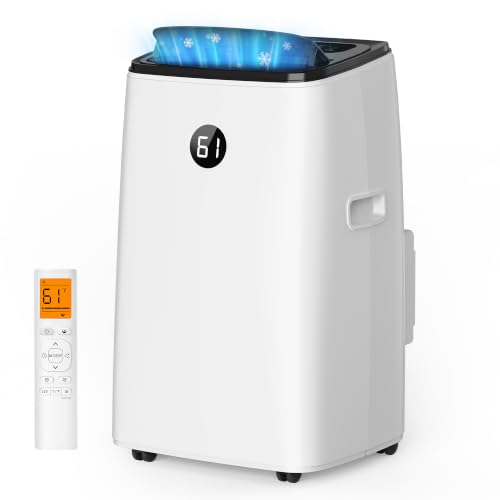
A single hose portable air conditioner is a floor-standing unit that pulls warm room air across an evaporator coil, cools it, and blows the chilled air back into the room through a front grille. The heat absorbed during that process, along with the heat generated by the compressor, is rejected outdoors through one flexible exhaust duct routed to a window or wall opening.
The defining feature of this design is that all of the exhaust air leaves through the same hose. There is no separate intake duct bringing outdoor air into the condenser. As a result, the unit creates a slight negative pressure inside the room: every cubic foot of hot air pushed outside must be replaced by air entering through gaps under doors, around window frames, or through other openings.
For a deeper comparison of the broader category, including ventless options and alternative configurations, see the full guide to portable air conditioners and the overview of portable AC intake and exhaust behavior.
The Cooling Cycle in Simple Terms
- Warm room air enters the front intake of the unit.
- It passes over the cold evaporator coil, transferring heat into the refrigerant.
- The chilled air is blown back into the room.
- The refrigerant carries heat to the condenser coil at the rear.
- The condenser fan pushes that heat out through the single exhaust hose.
- Moisture removed from the air is collected in a tank or evaporated through the exhaust stream.
Single Hose vs Dual Hose: What Actually Changes
Single hose and dual hose portable air conditioners share the same core refrigeration cycle. The difference is how air is supplied to the condenser. A dual hose system uses one duct to draw outdoor air into the condenser and a second duct to expel hot air. A single hose system uses room air for condenser cooling and expels it outside, which is why the room pressure balance differs.
| Characteristic | Single Hose | Dual Hose |
|---|---|---|
| Exhaust ducts | One | Two |
| Room pressure effect | Slightly negative | Near neutral |
| Outdoor air intake | None through dedicated duct | Dedicated intake duct |
| Cooling efficiency | Good in sealed rooms | Generally higher in hot climates |
| Setup complexity | Simple, one window opening | Moderate, larger window kit |
| Weight and footprint | Usually lighter and more compact | Usually bulkier |
| Tier positioning | Common in entry-level and mid-range | Common in mid-range and premium |
Neither design is universally better. In a well-sealed bedroom where the occupant wants a compact unit and a simple window setup, a single hose model is often the more practical fit. In a hot, poorly sealed living area where the unit must run for long stretches, a dual hose configuration usually maintains temperature more consistently.
If you are weighing other portable configurations, the comparison of portable AC without an outdoor unit and the explanation of portable AC without window venting clarify what is and is not physically possible.
Pros and Cons of Single Hose Portable AC Units
Advantages
- Straightforward installation: one hose and one window panel are usually enough, which suits renters and temporary setups.
- Compact footprint: single hose units tend to be lighter and easier to move than dual hose equivalents.
- Broad window compatibility: many models ship with kits for sliding, casement, and crank-out windows.
- Lower entry point into portable cooling: this design is common in entry-level and mid-range tiers, making it a solid choice for occasional use.
- No permanent modification: the unit can be removed and stored seasonally without structural changes.
Limitations
- Negative pressure effect: exhaust air must be replaced, which can pull in warm outdoor air through gaps.
- Efficiency depends on room sealing: performance drops noticeably in drafty rooms.
- Hose heat gain: an uninsulated exhaust hose can radiate heat back into the room.
- Noise level: compressor and fan noise are noticeable in small rooms, especially at high fan speeds.
- Condensate management: in humid climates the tank may need frequent emptying.
BTU Sizing: Matching the Unit to the Room
Portable air conditioner capacity is measured in British Thermal Units. A widely used starting guideline is 20 BTU per square foot of floor area, adjusted for ceiling height, sun exposure, occupancy, and heat-producing appliances.
| Room Area | Typical BTU Range | Common Use |
|---|---|---|
| Up to 150 sq ft | 5,000 - 6,000 BTU | Bedroom, dorm room, small office |
| 150 - 250 sq ft | 8,000 - 10,000 BTU | Studio apartment, home office |
| 250 - 400 sq ft | 12,000 - 14,000 BTU | Living room, open-plan studio |
| 400 - 600 sq ft | 14,000 - 18,000 BTU | Large living area, converted garage |
Adjust upward by roughly 10 percent for a south- or west-facing room with large windows, for rooms with more than two regular occupants, and for kitchens where cooking heat is present. Adjust downward for heavily shaded rooms and basements.
Oversizing a single hose unit is not harmless: a unit that cools too quickly may cycle the compressor on and off, which removes humidity less effectively and increases wear. Undersizing means the unit runs continuously and never reaches the set point. For focused guidance on very compact spaces, see portable AC for a very small room and portable air conditioners for small rooms.
Larger spaces need different planning. The guide to portable AC for a 500 sq ft room and the discussion of portable AC for 1,000 square feet explain why a single portable unit struggles beyond a certain area and what alternatives to consider.
Efficiency, Negative Pressure, and Realistic Expectations
The single hose design has one well-known efficiency weakness: the air pushed outside must be replaced. In a leaky room, that replacement air is hot outdoor air, which means the unit is partly cooling air that it just pulled in. In a tightly sealed room, the pressure difference is smaller and the performance penalty is reduced.
Practical steps that improve efficiency
- Seal gaps around doors and windows with weatherstripping or a door draft stopper.
- Keep the exhaust hose as short and straight as possible.
- Use an exhaust hose insulation sleeve to limit heat radiating back into the room.
- Shade windows during the hottest hours with blinds or curtains.
- Run the unit on a timer or programmable schedule rather than continuously.
- Close interior doors to define the cooling zone.
- Keep the rear of the unit at least 12 to 20 inches from furniture and walls for airflow.
For readers comparing efficiency across form factors, the analysis of the most energy efficient room air conditioner options provides useful context on how portable units compare with window and mini-split systems.
If efficiency is the primary priority, a portable AC with inverter technology can modulate compressor speed instead of cycling on and off, which is generally smoother and more consistent in long run sessions.
Installation and Window Kit Compatibility
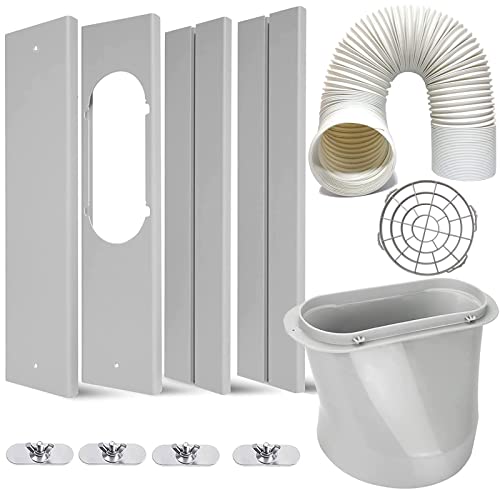
Most single hose portable air conditioners ship with a window kit: a sliding panel assembly plus a hose connector. Installation generally takes 15 to 30 minutes and requires no tools beyond what is included.
Standard installation steps
- Place the unit on a level surface near the window, leaving clearance at the rear.
- Assemble the window panel and insert it into the window opening.
- Attach the hose connector to the panel and to the rear of the unit.
- Close the window against the panel to secure it.
- Seal remaining gaps with foam weatherstripping if needed.
- Plug in, set the mode and fan speed, and let the unit stabilize.
Window type matters more than many buyers expect. Sliding windows are the easiest fit with standard kits. Casement and crank-out windows require specific adapters, covered in the guides to portable AC for casement windows and window kits for casement windows. Side-opening and crank windows are addressed in the resources on side-opening window setups, crank-out window configurations, and the crank-out window kit overview.
Sliding window users will find targeted guidance in the sliding window kit article. Small openings are covered in the note on portable AC for a small window.
Drainage, Humidity, and Condensate Handling
Portable air conditioners remove moisture from the air as they cool. Single hose units manage that condensate in one of two ways: a self-evaporating system that dispenses moisture through the exhaust stream, or an internal tank that requires manual emptying.
In moderate humidity, self-evaporating models often run for days without intervention. In hot and humid climates, the tank can fill faster than the exhaust can disperse moisture, and the unit may shut off automatically as a safety measure. In that situation, a gravity drain hose connected to a floor drain or bucket is the practical solution.
Related reading covers portable AC with no drain required, units that do not need draining, the self-evaporating system design, and the option of running a unit without a drain hose. For humid-climate buyers, the guides to portable AC for high humidity and humid climate operation are directly relevant.
Best Use Cases for Single Hose Portable ACs
Where this design shines
- Rentals: no permanent installation and no landlord approval needed for a window panel. See the guide to portable air conditioning units for rent.
- Bedrooms: compact units fit beside a bed and cool a defined sleeping zone efficiently.
- Home offices: direct cooling for a workspace that is occupied for defined hours.
- Basements and converted rooms: spaces without existing ductwork or window unit support.
- Temporary and seasonal cooling: guest rooms, attics, and spaces used only part of the year.
- Camping and RV-adjacent use: covered in the guide to portable air conditioning units for camping.
Where a different system makes more sense
- Whole-home cooling: a single portable unit cannot distribute air across multiple rooms. Central air or a multi-zone mini-split is the appropriate class of solution.
- Rooms without any exhaust path: the articles on portable AC for a room with no window and portable AC units for rooms without windows explore the limited options.
- Outdoor and off-grid use: compressor-based portable units need reliable power; see off-grid cooling and off-grid solar AC for the alternative approaches.
Spaces with unusual geometry benefit from dedicated coverage. Basement window setups are addressed in the basement window guide, and the bedroom-specific advice in the bedroom unit guide helps with placement and noise planning.
Single Hose Portable AC Buying Checklist
Use this checklist to compare models on the factors that matter most in real use.
| Factor | What to Look For | Why It Matters |
|---|---|---|
| Capacity | BTU rating matched to room area with adjustments | Prevents short cycling and continuous running |
| Window kit | Panel type compatible with your window style | Determines whether installation is straightforward |
| Hose design | Length, diameter, and insulation quality | Affects heat gain and placement flexibility |
| Drainage | Self-evaporating system or gravity drain option | Reduces manual maintenance in humid climates |
| Noise | Decibel rating at low and high fan speed | Critical for bedrooms and shared spaces |
| Controls | Timer, remote, and optional Wi-Fi | Improves scheduling and convenience |
| Filtration | Washable or replaceable filter | Maintains airflow and indoor air quality |
| Build tier | Entry-level, mid-range, or premium construction | Signals expected durability and feature depth |
Buyers who want remote scheduling should review the options for portable AC with Wi-Fi control. Those who want a unit that can also heat should consider the portable air conditioner and heater unit category, while combination cooling, dehumidification, and heating is covered in the portable AC with heater and dehumidifier overview.
Mobility is another practical factor. Wheels and handle design are addressed in the portable AC on wheels guide, and cordless or battery-based options are discussed in the article on a portable AC that uses batteries.
Maintenance and Common Troubleshooting
Routine maintenance
- Clean or replace the air filter every two to four weeks during heavy use.
- Empty the condensate tank before it reaches the shutoff level.
- Inspect the exhaust hose for kinks, cracks, or detached connectors.
- Vacuum the rear intake grille to remove dust buildup.
- Store the unit upright and covered during the off-season.
Common problems and where to read more
- Not cooling enough: check filter condition, hose sealing, and room size against capacity. See portable AC not cooling enough.
- Compressor not running: the troubleshooting steps in my AC compressor is not running apply to portable units as well.
- Unit runs but air is not cold: the diagnostics in my AC is off but still blowing air and my AC is turning on but not blowing air help isolate fan versus compressor issues.
- General cooling failure: the broader checklist in my AC isn't blowing cold air covers refrigerant, airflow, and thermostat causes.
- Outdoor unit problems: not applicable to portable units, but readers comparing systems may find outside AC unit not running useful context.
If a unit repeatedly trips a breaker or shows an error code that persists after a filter clean and a full drainage, service by a qualified technician is the appropriate next step rather than continued operation.
Ready to Choose a Single Hose Portable AC?
You now understand how one-hose systems work, how to size them, and which features matter in daily use. Compare the recommended models below, check window kit compatibility for your space, and select a unit that matches your room area and drainage preference.
Compare Recommended ModelsFrequently Asked Questions
What is a single hose portable air conditioner?
A single hose portable air conditioner is a floor-standing cooling unit that exhausts hot air through one flexible duct routed to a window. It draws room air across an evaporator coil to cool it, then rejects heat through the same hose, unlike dual hose models that use separate intake and exhaust ducts.
Why does a single hose portable AC create negative pressure?
A single hose unit pushes hot exhaust air outdoors, which slightly depressurizes the room. Replacement air is drawn in through gaps around doors and windows, which can reduce cooling efficiency in poorly sealed spaces. Sealing the room and insulating the hose mitigates this effect.
How many BTU do I need for a single hose portable air conditioner?
A common sizing guideline is 20 BTU per square foot of floor area. A 150 square foot room typically needs around 5,000 to 6,000 BTU, a 250 square foot room around 8,000 to 10,000 BTU, and a 400 square foot room around 12,000 to 14,000 BTU, adjusting upward for sun exposure, occupancy, and kitchen heat.
Are single hose portable air conditioners energy efficient?
Single hose models are generally less efficient than dual hose or window units of comparable capacity because exhaust air must be replaced by unconditioned outdoor air. Efficiency improves when the room is well sealed, the exhaust hose is short and insulated, and the unit runs on a timer rather than continuously.
Do single hose portable air conditioners need draining?
Many single hose units include a self-evaporating system that disposes of condensate through the exhaust stream in moderate humidity. In very humid climates the internal tank may fill, requiring manual drainage or a gravity drain hose connection to keep cooling performance consistent.
Can a single hose portable AC be used in a room without a window?
A single hose unit requires a path for exhaust air. Without a window, alternatives include routing the hose through a sliding door kit, a wall vent, a drop ceiling, or a dryer vent opening. Units advertised as ventless still require some exhaust path and should be evaluated carefully.