
Portable Air Conditioning Unit with Heat Pump: Your Year-Round Comfort Solution
A portable air conditioning unit with heat pump combines cooling and heating in one mobile appliance. This guide explains how these dual-function units work, how to size them correctly, what features matter most, and how to choose a model that delivers reliable comfort in every season.
Quick Summary: A portable AC with heat pump is the most versatile freestanding comfort appliance available. It cools in summer and warms in shoulder seasons without permanent installation. Mid-range and high-end tier models deliver the best balance of dual-function performance, noise control, and durable construction.
What Is a Portable Air Conditioning Unit with Heat Pump?
A portable air conditioning unit with heat pump is a freestanding appliance that can both cool and heat a room using a reversible refrigeration cycle. Unlike a standard portable AC that only cools, a heat pump model includes a reversing valve that allows the refrigerant flow to switch direction. In cooling mode, the unit extracts heat from indoor air and exhausts it outside. In heating mode, the cycle reverses and the unit extracts heat from outdoor air and releases it indoors.
This dual-function design makes these units ideal for spaces where a permanent HVAC system is impractical. Renters, owners of older homes without ductwork, and people who need supplemental comfort in a specific room all benefit from this flexibility. The appliance remains fully portable, typically rolling on casters and requiring only a window vent kit for exhaust.
Compared to a traditional portable air conditioner that only cools, the heat pump version adds year-round utility. The trade-off is a slightly higher initial position in the market and a somewhat more complex internal mechanism. For many buyers, the added functionality justifies the step up.
How Does a Portable Heat Pump AC Work?
Understanding the mechanism helps you evaluate which features matter. The unit contains four core components: a compressor, an evaporator coil, a condenser coil, and a reversing valve. In cooling mode, the evaporator coil absorbs heat from your room while the condenser coil releases it through the exhaust hose. A fan circulates cooled air back into the room.
When you switch to heating mode, the reversing valve changes the refrigerant direction. The coil that was the evaporator becomes the condenser, and vice versa. The unit now absorbs heat from the outside air and releases it indoors. This is the same principle used by a heater and air conditioner combination, though in a portable format.
Most portable heat pump units operate efficiently down to an outdoor temperature of around 41°F (5°C). Below that threshold, heating capacity declines. In regions with mild winters, these units can serve as a primary heating source for a single room. In colder climates, they work best as supplemental heat during transitional seasons.
Cooling and Heating Capacity: What to Expect
Portable heat pump AC units are rated in BTU (British Thermal Units) for both cooling and heating. Cooling capacity typically ranges from 8,000 BTU to 14,000 BTU. Heating capacity is often similar or slightly higher, though it can vary by model. A unit rated at 12,000 BTU cooling might deliver 12,000 BTU or more in heating mode.
For sizing guidance, use the same square-footage formula as a standard portable AC. A 10,000 BTU unit generally cools 250 to 350 square feet, while a 14,000 BTU unit handles 400 to 500 square feet. The same capacity applies to heating, though ceiling height, insulation, and window area all influence real-world performance.
If you are unsure about sizing, review a small air conditioning unit guide for compact spaces or consult a BTU calculator. Oversizing a portable unit wastes energy and can create uneven temperatures, while undersizing leaves the room uncomfortable during peak conditions.
Key Features to Evaluate Before Buying
Not all portable heat pump units are built to the same standard. The following features separate essential-tier models from top-tier performers:
- Dual-hose vs single-hose design: Dual-hose units draw in outdoor air for condenser cooling and exhaust it separately, maintaining better pressure balance and cooling efficiency. Single-hose units are simpler but less efficient in larger rooms.
- Noise level: Portable units produce more noise than window or mini-split systems. Premium models operate around 50-55 dB on low, while entry-level models can exceed 60 dB.
- Dehumidification mode: Most heat pump portables include a dehumidifier function, which is useful in humid climates.
- Smart controls and scheduling: Wi-Fi connectivity, remote control, and programmable timers add convenience. Some models support voice assistant integration.
- Self-evaporating system: Higher-tier models recycle condensate to improve efficiency and reduce manual draining.
- Window vent kit quality: A well-sealed vent kit prevents hot air from re-entering the room. Universal sliding window kits are more effective than basic fabric seals.
- Filtration: Washable filters and optional HEPA or carbon filters improve indoor air quality.
For a broader comparison of portable form factors, the through-the-wall portable air conditioner guide covers alternative installation approaches.
Portable Heat Pump vs Other Heating and Cooling Options
Before committing to a portable heat pump unit, compare it against alternatives:
| Option | Best For | Installation | Tier Positioning |
|---|---|---|---|
| Portable AC with heat pump | Renters, single rooms, seasonal flexibility | Minimal; window vent kit only | Mid-range to premium |
| Window AC with heater | Permanent window installation, smaller rooms | Moderate; window frame required | Entry-level to mid-range |
| Ductless mini-split | Whole-room comfort, quiet operation | Professional installation | Premium to luxury |
| Central heat pump system | Whole-home comfort | Professional installation with ductwork | High-end to luxury |
For a permanent window-based solution that also heats, consider a window-mounted air conditioner and heater. For quiet, efficient whole-room comfort, a split ductless air conditioning system is the superior long-term investment but requires professional installation.
Where a Portable Heat Pump AC Works Best
These units excel in specific scenarios:
- Home offices and studios: A dedicated portable unit keeps a workspace comfortable without altering the home's central system.
- Rental properties: No permanent modifications are needed, and the unit moves with you.
- Older homes without ductwork: If installing ducts is impractical, a portable heat pump offers an immediate solution. See the guide on installing air conditioning in an old house for broader context.
- Seasonal rooms: Sunrooms, converted garages, and attics benefit from targeted heating and cooling.
- Camping and RV use: Some compact models are suitable for mini portable air conditioner for camping, though venting requirements vary.
Maintenance Tips for Long-Term Performance
Portable heat pump units require regular maintenance to maintain efficiency and extend service life:
- Clean or replace the air filter every two to four weeks during heavy use. A clogged filter reduces airflow and strains the compressor.
- Drain the condensate tank regularly, or use the self-evaporating function if available. Standing water can promote mold growth.
- Inspect and clean the exhaust hose and window kit seals for leaks.
- Check the outdoor exhaust area for obstructions.
- Schedule a professional tune-up annually if the unit runs year-round. An HVAC tune-up helps maintain peak performance.
For general maintenance guidance, refer to the HVAC maintenance plan overview.
Common Problems and Troubleshooting
Portable heat pump units are generally reliable, but owners may encounter:
- Insufficient cooling or heating: Often caused by a clogged filter, blocked exhaust, or undersized unit for the room.
- Water leakage: Usually indicates a full condensate tank or a blocked drain line.
- Noise or vibration: Check that the unit sits level and that the compressor is not loose.
- Error codes: Consult the manufacturer's manual; many codes relate to temperature sensors or drainage.
If the unit is not blowing cold air, the troubleshooting steps in my air conditioner is not blowing out cold air apply to portable units as well.
Buying Checklist: What to Confirm Before You Purchase
Use this checklist to narrow your options:
- Confirm the unit is explicitly rated for both cooling and heating (not just a fan-only heater mode).
- Match BTU capacity to your room size and ceiling height.
- Check the minimum operating temperature for heating mode if you plan to use it in cool weather.
- Verify the window vent kit fits your window type (sliding, casement, or crank). A portable air conditioner crank window guide helps with specific window styles.
- Review noise ratings and choose a model suited to your tolerance.
- Look for dual-hose design if efficiency is a priority.
- Confirm warranty terms and availability of replacement filters.
Final Thoughts: Is a Portable Heat Pump AC Right for You?
A portable air conditioning unit with heat pump is a smart choice for anyone who needs flexible, room-specific comfort without permanent installation. It delivers cooling in summer and supplemental heating in cooler months, making it a genuinely year-round appliance. The best models occupy the mid-range to premium tiers, offering quieter operation, better sealing, and more durable construction.
If your primary need is whole-home comfort, a central heat pump or ductless mini-split is the better long-term investment. But for targeted, movable, and installation-light comfort, a portable heat pump unit is hard to beat. Review the recommended models below to compare features and find the right fit for your space.
Recommended Portable AC Units with Heat Pump
⚠️ AFFILIATE DISCLOSURE: This website contains affiliate links. As an Amazon Associate, we earn from qualifying purchases. If you make a purchase through these links, we may receive a small commission at no additional cost to you. Read our full affiliate policy.

SereneLife 12,000 BTU Portable Air Conditioner with Dehumidifier, Heat, & Fan | Wi-Fi Enabled Portable AC Unit for Rooms up to 550 Sq Ft | Compact Standing Air Conditioner with Window Kit
Check price on Amazon
Shinco 10,000 BTU Grey Portable Air Conditioner with Heater up to 400 Sq. Ft, Ac Heater Combo Window Unit, Portable AC Unit with Dehumidifier & Fan, Cools & Heats,Remote Control and Window Kit
Check price on Amazon
Amazon Basics 4-In-1 Portable Air Conditioner with Remote, Timer, Sleep Mode, Auto Swing, Cool/Heat/Dry/Fan-Only Functions, 13500 BTU (ASHRAE), Cools Up to 550 Sqf, Energy Saving, White
Check price on Amazon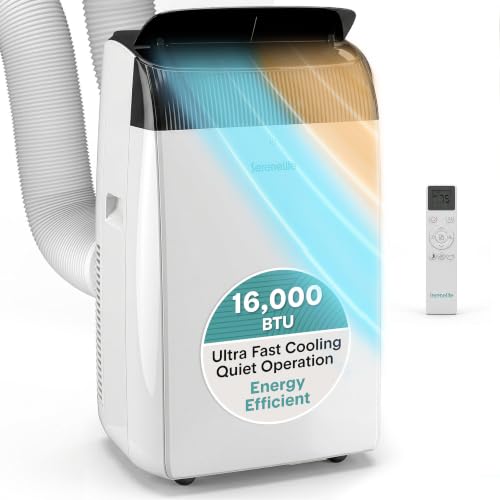
SereneLife 16,000 BTU Dual Hose Inverter Portable Air Conditioner | Portable Air Conditioner with Heat, Dehumidifier & Fan | Floor AC Unit for Bedroom, Living Room, & Office with Window Kit
Check price on Amazon
SereneLife 10,000 BTU Portable Air Conditioner and Heater, Small AC with Dehumidifier and Fan, Mini AC Unit with 450 Sq. Ft. Coverage, Includes Remote Control and Window Mount Kit
Check price on Amazon
AC Infinity Smart Portable Air Conditioner 5-in-1, All-Season Cool & Heat | Auto-Switch Cool and Heat, Drainage-Free, Fan & Dehumidifier, WiFi App, Smart Home, Wireless Remote, 16,000 BTU, 800 sq. ft.
Check price on Amazon
Hisense Smart SACC 8,000 BTU Cool / 9,000 BTU Heat - Dual Hose Portable Air Conditioner with Heat Pump, 550 sq.ft., 4 modes (Cool, Heat, Fan, Dehumidifier), White - AP55023HR1GD
Check price on AmazonFrequently Asked Questions
Can a portable AC with heat pump really heat a room?
Yes. These units use a reversing valve to operate as an air-source heat pump. They are most effective in mild to moderate climates and can serve as supplemental heat in colder regions. Heating capacity declines as outdoor temperatures drop below roughly 41°F (5°C).
Do portable heat pump units need to be vented?
Yes. Both cooling and heating modes require exhaust venting through a window or wall kit. The exhaust hose removes heat (in cooling mode) or cold air (in heating mode) from the condenser side. Without proper venting, the unit cannot function efficiently.
How often should I drain the water tank?
In humid conditions, the condensate tank may need draining every few hours during peak cooling. Models with self-evaporating technology reduce the frequency. Always drain before storage and inspect for mold or algae growth.
Are dual-hose models worth the upgrade?
Dual-hose units maintain better pressure balance and cooling efficiency, especially in larger rooms. They are typically positioned in the mid-range to premium tiers. For small rooms, a single-hose unit may be sufficient.
Can I use a portable heat pump in a room without a window?
Venting is required, so a window or wall opening is necessary. For rooms without windows, consider a small room air conditioner with no window alternative, or explore portable AC units that do not need venting for very small spaces, though heating performance is limited.