Power Vac: The Complete Guide to HVAC Vacuum Equipment
Understand what a power vac does, how it differs from a shop vacuum, which features matter for duct cleaning and coil maintenance, and how to choose a unit that matches the way you work — so you can restore airflow and keep HVAC systems running cleanly.
Explore Power Vac OptionsWhy this guide exists: Power vac equipment sits at the intersection of HVAC maintenance and heavy-duty cleanup, yet many buyers confuse it with an ordinary wet/dry shop vacuum. The difference matters — airflow, filtration, and continuous-duty design determine whether a unit can handle real duct cleaning or only light surface pickup.
This guide explains how a power vac works, how to match capacity and filtration to the job, which features separate entry-level units from professional-grade systems, and how to maintain the unit so suction stays strong season after season.
What Is a Power Vac?
A power vac is a high-capacity vacuum unit engineered for demanding cleaning tasks, most commonly air duct cleaning, evaporator coil cleaning, and general HVAC maintenance. It combines a powerful motor, a large collection drum or bag, and multi-stage filtration to capture fine dust and debris that ordinary vacuums cannot handle at sustained airflow.
In residential and light commercial HVAC work, a power vac is used to remove accumulated dust, pet hair, construction debris, and biological buildup from duct runs and return plenums. Contractors also use it during residential air duct cleaning to restore airflow and reduce the load on the blower. When paired with agitation tools and HEPA filtration, it becomes the core of a proper duct cleaning setup.
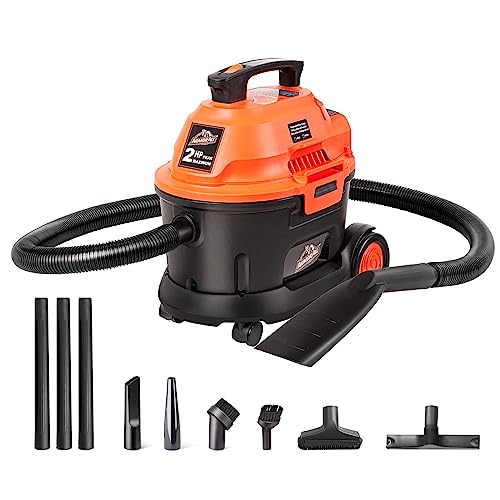
It is important to separate a power vac from a standard shop vacuum. A shop vacuum handles occasional wet and dry pickup, but it is not built for sustained high-static-pressure work or fine particulate control. A power vac is designed for continuous operation, larger debris volumes, and filtration that traps particles small enough to affect indoor air quality.
How Power Vac Equipment Works
Power vac operation relies on three interacting elements: airflow, static pressure, and filtration. Airflow moves debris from the duct into the collection chamber. Static pressure — the suction force that overcomes resistance in long duct runs — determines how effectively the unit pulls material through bends and transitions. Filtration captures the particles so they do not exhaust back into the space.
Key mechanical details shape real-world performance:
- Motor and impeller design: Bypass motors separate the airstream from the motor, which extends life during heavy particulate pickup. Through-flow designs are simpler but less tolerant of fine dust. Professional-grade units typically use bypass motors with cooling airflow paths.
- Filtration stages: A primary filter captures large debris, while secondary HEPA or cartridge filters trap fine dust. Multi-stage filtration is essential when cleaning occupied homes, because exhaust air must not reintroduce contaminants.
- Collection capacity: Drum size and bag configuration determine how long the unit runs before emptying. Larger capacity reduces downtime on whole-home jobs but increases unit weight and footprint.
- Hose and inlet diameter: Larger diameter hoses move more air but reduce static pressure at the far end. Duct cleaning setups often use a combination of large main hose and smaller agitation tools to balance airflow and reach.
Placement also matters. Keep the hose run as short and straight as possible, avoid sharp bends that choke airflow, and position the unit where exhaust air does not recirculate into the work area. When the unit is used for preventive maintenance of air conditioning units, sealing the work zone with negative pressure containment improves results.
Where Power Vac Equipment Fits in HVAC Work
Power vacs serve several distinct roles depending on the task. Understanding the application helps narrow the feature set you actually need.
| Application | Typical Demand | Filtration Priority | Best For |
|---|---|---|---|
| Air duct cleaning | High static pressure, long hose runs | HEPA or multi-stage | Whole-home and light commercial duct work |
| Evaporator coil cleaning | Moderate suction, fine debris | Fine-particle capture | Routine AC servicing |
| Return plenum and register pickup | Moderate airflow, short reach | Primary filter sufficient | Seasonal maintenance visits |
| Construction debris cleanup | High volume, coarse material | Large primary filter | Post-renovation HVAC prep |
| Garage and vehicle pickup | General dry debris | Basic filtration | Secondary household use |
If the primary goal is keeping a home's cooling system clean, a power vac pairs well with the routine described in our seasonal AC checklist. For whole-system servicing, it complements the steps covered in servicing HVAC systems.
Entry-Level, Mid-Range, and Professional Tiers
Power vac equipment falls into three broad market tiers. The descriptors below compare relative positioning and feature depth — not absolute specifications — so you can set expectations before comparing individual units.
Essential Tier
A starting point for light maintenance and occasional pickup. Suits homeowners and technicians handling small jobs.
- Single-stage filtration
- Compact drum or bag capacity
- Standard hose diameter
- Intermittent-duty motor
- Basic on/off control
Balanced Tier
The practical choice for regular HVAC maintenance and residential duct cleaning. Stronger suction and better filtration.
- Two-stage filtration with HEPA option
- Larger collection capacity
- Bypass motor for continuous duty
- Reinforced hose and casters
- Variable suction control
Professional-Grade
Built for full-time HVAC service work, whole-home duct cleaning, and light commercial jobs.
- Multi-stage HEPA filtration
- High-capacity drum with quick-release
- Heavy-duty bypass motor
- Large-diameter inlet and long hose
- Durable construction with reinforced housing
Mid-range units typically deliver the most balanced experience for technicians who run regular maintenance visits. They handle residential duct cleaning without the footprint of a full commercial rig, and their filtration is sufficient for occupied homes. Professional-grade units make sense when the power vac is the centerpiece of a duct cleaning service, when daily runtime is high, or when the unit must handle both residential and light commercial jobs.
Key Features to Compare
Once tier and application are settled, the feature list determines day-to-day usability. Focus on the features that affect suction, filtration, and workflow rather than the ones that only look good on a spec sheet.
Suction and Static Pressure
Static pressure — often expressed in inches of water lift — is the number that matters for duct cleaning. High airflow alone is not enough when the hose runs long or the duct has tight bends. Look for a unit that maintains strong lift at the working end of the hose, not just at the inlet.
Filtration and Exhaust Safety
Multi-stage filtration with a HEPA final stage protects occupants during duct cleaning. A unit without adequate filtration can exhaust fine dust back into the home, which defeats the purpose. Check whether filters are washable or replaceable, and confirm the exhaust path is sealed.
Collection Capacity and Emptying
Drum size and bag design affect how often you stop to empty. Quick-release latches and disposable bags reduce exposure to collected debris. For larger homes, a bigger drum saves time; for tight service vehicles, a compact bag system may be more practical.
Hose, Inlet, and Tool Compatibility
Hose diameter and length determine reach and airflow. Confirm that the inlet accepts the agitation tools and brushes you plan to use. A unit with a standard inlet size is easier to integrate with existing duct cleaning accessories. Our notes on rectangular ductwork explain how duct geometry affects tool selection.
Durability and Mobility
Reinforced housings, heavy-duty casters, and protected hose connections extend service life in daily use. Weight matters when the unit must be carried up stairs or loaded into a service vehicle. A solid build with weather-resistant coating is worth prioritizing for field work.
Advantages and Limitations
A power vac solves specific problems well, but it is not a universal replacement for every vacuum in a service vehicle. Understanding both sides helps you set realistic expectations.
✔ Advantages
- Strong static pressure for long duct runs.
- Multi-stage filtration protects indoor air quality.
- Continuous-duty motors handle extended jobs.
- Large collection capacity reduces downtime.
- Integrates with standard duct cleaning tools.
- Durable construction suited to field work.
✖ Limitations
- Heavier and bulkier than a shop vacuum.
- Requires regular filter servicing to maintain suction.
- Specialized design is less versatile for wet pickup.
- Higher-tier units demand more storage space.
- Hose and tool compatibility must be verified before use.
- Not a substitute for a full containment setup on heavy jobs.
For tasks outside duct cleaning, a general-purpose vacuum may be more practical. If the goal is keeping the cooling system itself clean, pair the power vac with the routines in servicing a furnace and humidifier maintenance so the entire air path stays clean.
Maintenance That Keeps Suction Strong
Power vac maintenance is straightforward but easy to neglect. A few recurring tasks protect airflow and extend motor life.
- Inspect and clean filters after every significant job. A clogged filter reduces suction and forces the motor to work harder. Follow the manufacturer schedule for deep cleaning or replacement.
- Empty the collection drum before it reaches capacity. Overfilling restricts airflow and can damage the motor. Use disposable bags where available to reduce exposure to debris.
- Check hoses and connections for leaks. A loose cuff or cracked hose bleeds suction. Inspect seals and replace worn parts before they affect performance.
- Clean the exterior and cooling vents. Dust buildup on the housing and motor cooling paths reduces efficiency. A soft brush or compressed air handles most of it.
- Store the unit dry and upright. Moisture in the drum or filter can promote odor and mold. Allow components to dry fully before storage. Our seasonal notes on AC maintenance apply to the broader HVAC tool kit as well.
If suction drops despite clean filters and tight connections, the cause may be a worn motor brush, a failing impeller, or a damaged seal. Those are service-level repairs. General guidance on preventive maintenance of air conditioning units explains when professional service is warranted for the system being cleaned.
Common Buying Mistakes to Avoid
Most disappointing power vac experiences trace back to a few avoidable decisions:
- Choosing by airflow alone: High CFM without strong static pressure fails on long duct runs. Match lift and airflow to the job.
- Ignoring filtration: A unit without HEPA or multi-stage filtration can exhaust fine dust into occupied spaces.
- Undersizing collection capacity: A small drum means frequent stops on whole-home jobs, which adds time and disruption.
- Overlooking hose compatibility: A unit that does not accept your existing agitation tools creates workflow friction.
- Skipping maintenance: Neglected filters and overfilled drums are the most common causes of weak suction and motor wear.
Related Reading
If you are mapping out a broader HVAC maintenance plan, these guides may help clarify adjacent topics:
- Residential air duct cleaning — how duct cleaning is structured and why airflow matters.
- Seal air ducts for efficiency — reducing leakage after cleaning.
- Rectangular ductwork — how duct geometry affects tool selection and airflow.
- Servicing air conditioning units — the broader maintenance routine.
- Preventive maintenance of AC units — when to schedule professional service.
- Seasonal AC checklist — a recurring maintenance schedule for cooling systems.
- Roof air vents — ventilation components that interact with duct cleaning.
- Replacing an air conditioner — when cleaning is no longer the right answer.
Frequently Asked Questions
What is a power vac used for in HVAC work?
A power vac is a high-capacity vacuum unit used to remove dust, debris, and buildup from air ducts, evaporator coils, and other HVAC components. Contractors use it during duct cleaning and preventive maintenance to restore airflow and reduce airborne contaminants.
How does a power vac differ from a shop vacuum?
A power vac is built for continuous heavy-duty operation with higher airflow, larger collection capacity, and HEPA or multi-stage filtration. A shop vacuum handles occasional wet and dry pickup but is not designed for sustained duct cleaning or fine particulate control.
What size power vac do I need for residential duct cleaning?
Residential duct cleaning typically calls for a unit with strong static pressure and enough collection capacity to handle a whole-home job without frequent emptying. Entry-level units suit single-room or light maintenance, while mid-range and high-end tier units are built for full residential and light commercial work.
Can a power vac be used for car interiors or garage cleanup?
Many power vac units handle general dry pickup in garages and vehicle interiors, but the primary design intent is HVAC and duct cleaning. Check the filtration rating and hose diameter before using a duct-focused unit for general cleanup tasks.
How often should a power vac filter be serviced?
Inspect the filter after every significant cleaning job and clean or replace it according to the manufacturer schedule. Heavy use in dusty environments may require more frequent servicing. A clogged filter reduces suction and puts extra load on the motor.