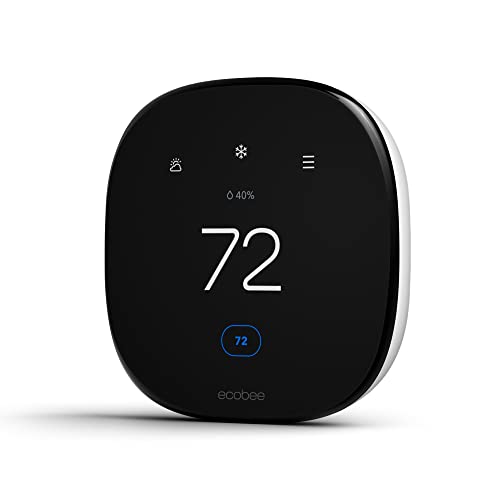
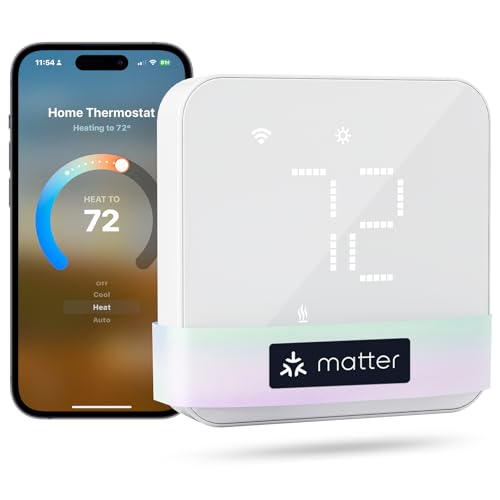
Smart Thermostat HVAC: The Complete Guide to Smart Climate Control
Everything you need to know about choosing, installing, and getting the most from a smart thermostat for your heating, ventilation, and air conditioning system.
Explore Smart ThermostatsWhy a smart thermostat? A smart thermostat is the easiest entry point into a smarter, more efficient home. It replaces your old dial or programmable thermostat with a connected device that learns your schedule, responds to occupancy, and lets you control comfort from anywhere. This guide explains how smart thermostat HVAC systems work, what to check before buying, and how to get the best results from your upgrade.
What Is a Smart Thermostat HVAC System?
A smart thermostat HVAC system pairs a Wi-Fi-enabled thermostat with your existing heating and cooling equipment. Unlike a basic programmable thermostat that follows a fixed schedule, a smart thermostat can adapt to your behavior, respond to sensors, and be controlled remotely through a smartphone app.
Most smart thermostats work with conventional 24V HVAC systems, including central air conditioners, furnaces, and heat pumps. They are part of the broader smart heating and air conditioning ecosystem, which can also include room sensors, smart vents, and zone controllers.
In terms of market positioning, smart thermostats range from entry-level models with basic app control to premium units with occupancy sensing, remote room sensors, and deep smart home integration. Most homeowners find a mid-range model offers the best balance of features and usability.
Core Features of a Smart Thermostat
Feature sets vary by model and tier, but the most useful smart thermostat capabilities fall into a few clear categories. Understanding these helps you decide what matters for your home.
Remote App Control
Every smart thermostat includes a companion app for adjusting temperature, schedules, and modes from anywhere. You can also review usage history and receive alerts about filter changes or system issues.
Scheduling and Learning
Basic models support manual schedules, while advanced models learn your patterns over time and adjust automatically. Learning thermostats reduce the need for manual adjustments after the first week or two.
Geofencing
Geofencing uses your phone's location to switch the system to an away mode when you leave and resume comfort settings when you return. This is one of the most effective ways to avoid conditioning an empty home.
Occupancy Sensing
Built-in or remote sensors detect when rooms are occupied and adjust conditioning accordingly. This is especially useful for homes with irregular schedules or multiple zones.
Smart Home Integration
Most smart thermostats support Amazon Alexa, Google Assistant, or Apple HomeKit. Integration allows voice control and automation routines that tie climate control to other smart devices.
Energy Usage Reports
Many apps provide detailed reports on runtime and energy consumption. These insights help you identify inefficiencies and adjust settings for better long-term performance.
HVAC Compatibility: What to Check Before Buying
Not every smart thermostat works with every HVAC system. Before you purchase, verify compatibility with your equipment to avoid installation issues or reduced functionality.
Common Compatibility Factors
- System type: Conventional central AC and furnace systems are widely supported. Heat pumps require thermostats that explicitly support heat pump wiring and auxiliary heat.
- Wiring: Check the number and type of wires at your current thermostat. Most smart thermostats use standard terminals (R, W, Y, G, C, O/B, AUX).
- C-wire: Many smart thermostats need a C-wire for continuous power. If yours lacks one, look for models with a power adapter or battery operation. See our guide on smart thermostat C-wire requirements.
- Multi-stage systems: If you have a two-stage furnace or AC, choose a thermostat that supports multi-stage wiring.
- Communicating systems: Some high-end HVAC systems use proprietary communicating wiring. These often require the manufacturer's own smart thermostat.
| HVAC System | Thermostat Type Needed | Typical Tier | Best For |
|---|---|---|---|
| Single-stage AC + Furnace | Standard smart thermostat | Entry-level to mid-range | Most homes with conventional systems |
| Heat Pump | Heat pump-compatible smart thermostat | Mid-range | Year-round heating and cooling |
| Two-stage / Variable Speed | Multi-stage smart thermostat | Mid-range to high-end tier | Advanced comfort and efficiency |
| Mini Split | Native Wi-Fi or IR controller | Essential to high-end tier | Ductless single-room control |
| Baseboard / Radiant | Line-voltage smart thermostat | Mid-tier | Zoned electric heating |
Wiring Basics and the C-Wire Question
The most common installation hurdle for smart thermostats is the C-wire. A C-wire (common wire) provides continuous 24V power to the thermostat, which smart devices need for Wi-Fi and display functions.
If your current thermostat has a C-wire, installation is usually straightforward. If not, you have several options:
- Battery-powered models: Some smart thermostats can run on batteries, though Wi-Fi features may be limited.
- Power adapter kits: Many manufacturers include an adapter that draws power from existing wiring without a dedicated C-wire.
- Professional C-wire installation: An HVAC technician can run a new C-wire from the air handler to the thermostat location.
- Adapter modules: Third-party C-wire adapters can be installed at the air handler to provide the needed power.
For a detailed breakdown, see our guide on smart thermostats without a C-wire.
Installation: DIY vs Professional
Many smart thermostats are designed for DIY installation, but not every situation is suitable for a self-install. Here is how to decide.
DIY-Friendly Scenarios
- Replacing a standard 24V thermostat with a compatible smart model.
- Existing wiring includes a C-wire or the thermostat includes a power adapter.
- Single-stage heating and cooling systems with conventional wiring.
- You are comfortable turning off power at the breaker and labeling wires.
When to Call a Professional
- Your system uses proprietary communicating wiring.
- You need a new C-wire run from the air handler.
- You have a multi-stage heat pump or dual-fuel system with complex wiring.
- You are adding zone controllers or smart vents that require ductwork modification.
If you are unsure about compatibility or wiring, a professional HVAC technician can verify the setup and test the system after installation. For more on integration with specific system types, see our guide on smart thermostats for split systems and smart thermostats for air conditioners.
Market Tiers: What to Expect at Each Level
Smart thermostats are available at several market tiers, each with different feature sets and build quality. Here is how the market typically segments.
- Entry-level: Basic app control, manual scheduling, and simple installation. Good value for its tier for apartments or single-room systems.
- Mid-range: Learning capabilities, geofencing, remote sensors, and voice assistant support. A solid choice for the tier for most homes.
- High-end tier: Advanced occupancy sensing, multi-stage support, detailed energy reports, and premium build. Well-specified for the category and efficient in the long run.
- Premium: Whole-home integration with room sensors, smart vents, and deep smart home platform support. A long-term investment for comprehensive climate control.
Getting the Most from Your Smart Thermostat
Once installed, a few simple habits help you get the best results from your smart thermostat HVAC system.
- Complete the initial setup fully, including location and equipment type.
- Let the learning algorithm run for at least two weeks before making major schedule changes.
- Add remote sensors to rooms with temperature imbalances.
- Enable geofencing if your schedule is irregular.
- Review monthly energy reports to spot inefficiencies.
- Update thermostat firmware when prompted.
- Replace HVAC filters on schedule — a clean filter improves efficiency regardless of thermostat features.
For a broader view of connected comfort, explore our smart HVAC technology guide and smart home AC thermostat overview.
Frequently Asked Questions
What is a smart thermostat HVAC system?
A smart thermostat HVAC system pairs a Wi-Fi-enabled thermostat with your heating and cooling equipment to automate temperature control. It supports remote access, scheduling, learning behavior, and integration with smart home platforms, improving comfort and energy efficiency.
Does a smart thermostat work with any HVAC system?
Most smart thermostats work with conventional 24V HVAC systems, including central AC, furnaces, and heat pumps. However, proprietary communicating systems, line-voltage heating, and some mini splits may require specific models or adapters. Always check compatibility with your system before purchasing.
Do I need a C-wire for a smart thermostat?
Many smart thermostats require a C-wire for continuous power. If your HVAC system lacks a C-wire, some thermostats include power adapters or can run on batteries. Alternatively, a professional can install a C-wire or use a C-wire adapter kit. See our guide on smart thermostat C-wire requirements.
Can I install a smart thermostat myself?
Yes, many smart thermostats are designed for DIY installation, especially for single-stage systems with conventional wiring. However, if you have a heat pump, multi-stage system, or lack a C-wire, professional installation is recommended to ensure correct wiring and safe operation.
How does a smart thermostat save energy?
A smart thermostat saves energy by reducing unnecessary heating and cooling. Features like scheduling, geofencing, occupancy sensing, and adaptive learning ensure the HVAC system runs only when needed, avoiding waste from conditioning empty rooms.
Can a smart thermostat control a mini split?
Some smart thermostats are compatible with mini splits, especially models with native Wi-Fi or IR blaster control. However, many mini splits use proprietary controls and may require the manufacturer's own app or a dedicated controller. See our guide on smart thermostats for mini splits.
Ready to upgrade your home's climate control? Browse our curated selection of smart thermostats and compatible HVAC accessories.
View Recommended ProductsRelated Guides
Explore more resources to build a complete understanding of smart climate control:
- Smart thermostat — overview of smart thermostat options
- Smart thermostat guide — comprehensive buying and setup advice
- Smart thermostat for air conditioner — AC-specific compatibility
- Smart thermostat for heating and cooling — dual-system considerations
- Smart thermostat for split systems — mini split and ductless integration
- Smart thermostat mini split — ductless-specific controls
- Smart thermostat without C-wire — wiring alternatives
- Smart home AC thermostat — whole-home automation
- Simple AC thermostat — basic non-smart alternatives