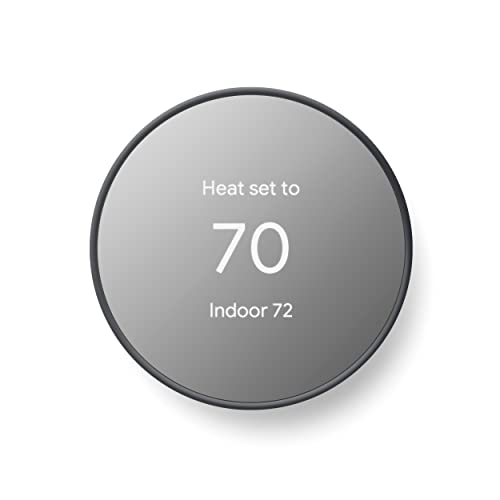
Smart Thermostat for Heating and Cooling
A complete research guide to smart thermostats that manage both heating and cooling — how they work, compatibility requirements, essential features, and how to choose the right model for your HVAC system.
Why this guide matters: A smart thermostat is one of the highest-impact upgrades you can make to a heating and cooling system. It gives you precise control, remote access, and the ability to reduce wasted energy. But choosing the wrong model can lead to compatibility issues or missed features. This guide walks you through everything you need to decide with confidence.
What Is a Smart Thermostat for Heating and Cooling?
A smart thermostat for heating and cooling is a Wi-Fi-enabled control device that manages both your furnace (or heat pump) and your air conditioner from a single interface. Unlike a basic programmable thermostat that follows a fixed schedule, a smart thermostat can learn your habits, detect when you are away, and adjust temperature automatically to balance comfort and efficiency.
Most models integrate with smartphone apps, voice assistants, and home automation platforms. Some support geofencing, which uses your phone's location to switch between home and away modes. Higher-tier models add occupancy sensors, room-by-room temperature averaging, and detailed energy reports.
If you are exploring the broader category of connected HVAC controls, see this overview of a smart thermostat and how it fits into a modern home.
How Smart Thermostats Control Heating and Cooling
The thermostat reads the ambient temperature and compares it to your set point. When heating is needed, it signals the furnace or heat pump to engage. When cooling is needed, it signals the compressor and air handler. The "smart" layer adds scheduling, learning, and remote control on top of this basic function.
Single-Stage vs Multi-Stage Systems
A single-stage system has one level of heating and one level of cooling output. A multi-stage system has two or more levels, allowing gentler operation at partial load. Smart thermostats vary in how many stages they support. If your system is multi-stage, confirm the thermostat is rated for the same number of stages. This topic is covered in more detail in the single-stage AC guide.
Heat Pump Compatibility
Heat pumps reverse the refrigeration cycle to provide both heating and cooling. Smart thermostats must be explicitly compatible with heat pumps, including auxiliary and emergency heat stages. Not all models support dual-fuel systems (heat pump plus gas furnace). Check the compatibility list before purchasing.
Adaptive Learning
The thermostat studies your schedule and preferences, then builds an automatic program that reduces runtime when the home is empty.
Geofencing
Uses your phone's location to switch between home and away modes, so the system is not cooling or heating an empty house.
Remote Access
Adjust temperature, change modes, and review usage from anywhere via a smartphone app or voice assistant.
Energy Reports
Detailed usage history helps you identify patterns and adjust settings to reduce waste over time.
Compatibility: The Most Important Check
Before choosing a smart thermostat, confirm it is compatible with your HVAC system. The main compatibility factors are wiring, system type, and voltage.
| System Type | Typical Compatibility | Key Consideration |
|---|---|---|
| Conventional gas furnace + AC | Widely supported | Standard 4–5 wire setup; most models work |
| Heat pump (with aux heat) | Model-dependent | Must support aux/emergency heat and reversing valve |
| Dual-fuel (heat pump + furnace) | Limited support | Requires explicit dual-fuel compatibility |
| Multi-stage systems | Model-dependent | Thermostat must support the same number of stages |
| Mini-split / ductless | Usually proprietary | Most mini-splits use manufacturer-specific controls; see smart thermostat for mini-split |
| Line-voltage (baseboard, 240V) | Requires special model | Standard low-voltage smart thermostats are not compatible |
C-wire tip: Most smart thermostats need a C-wire (common wire) for continuous power. If your existing thermostat has only four wires (R, W, Y, G), you may need a power adapter kit or a professional install. Some models are designed to work without a C-wire — see smart thermostat without C-wire and C-wire guide.
Key Features to Evaluate
Feature sets vary widely between entry-level and top-tier smart thermostats. Focus on the features that match your home, climate, and daily routine.
Smart Thermostat Tier Comparison
Smart thermostats fall into three broad market tiers. The right tier depends on your HVAC complexity and how much automation you want.
| Tier | Typical Capabilities | Best For |
|---|---|---|
| Entry-level | Wi-Fi control, scheduling, basic app, single-stage support | Simple homes with conventional single-stage HVAC |
| Mid-range | Geofencing, room sensors, multi-stage support, voice assistant integration | Homes with multi-stage systems or multiple zones |
| Top-tier | Advanced learning, heat pump and dual-fuel support, detailed energy reports, premium build | Complex HVAC systems and users who want maximum automation |
Entry-level models are typically simpler to install and adequate for basic systems. Mid-range units add the features most households actually use, such as geofencing and room sensors. Top-tier models are the right choice for heat pumps, dual-fuel systems, and homes that want detailed data on energy use.
Installation and Setup
Installation difficulty depends on your existing wiring and system type. A like-for-like replacement on a conventional single-stage system is usually a straightforward DIY task. Heat pumps, multi-stage systems, and units without a C-wire may require professional installation.
For an overview of how thermostats fit into the broader HVAC system, see the simple AC thermostat guide. If you are considering a room-by-room approach, this overview of smart vents explains how they complement a smart thermostat.
How Smart Thermostats Save Energy
Smart thermostats reduce energy use through several mechanisms. Scheduling avoids conditioning an empty home. Geofencing catches unexpected departures. Adaptive learning adjusts pre-heating and pre-cooling so the system runs during efficient periods rather than at peak demand.
Usage reports help you spot patterns — for example, a room that is consistently too warm or a system that runs longer than expected. Some utilities offer demand-response programs that pair with smart thermostats to reduce load during peak events.
Scheduling
Programmed temperature changes for wake, away, home, and sleep periods reduce runtime when comfort is not needed.
Geofencing
Automatically switches to away mode when the last occupant leaves, preventing wasted conditioning.
Adaptive Recovery
Learns how long the system takes to reach target temperature and starts early so the home is comfortable at the scheduled time.
Demand Response
Some utilities offer incentives for allowing brief temperature adjustments during peak demand events.
Smart Thermostat vs Programmable Thermostat
A programmable thermostat follows a fixed weekly schedule. A smart thermostat adds learning, remote access, and automation. For homes with a predictable routine, a programmable model may be sufficient. For homes with variable schedules, frequent travel, or a desire for remote control, a smart thermostat offers more practical value.
| Feature | Programmable Thermostat | Smart Thermostat |
|---|---|---|
| Fixed schedule | Yes | Yes |
| Remote app control | No | Yes |
| Geofencing | No | Yes (most models) |
| Learning / adaptive | No | Yes (mid-range and top-tier) |
| Energy reports | No | Yes |
| Voice assistant integration | No | Yes |
| Installation complexity | Low | Low to moderate |
Frequently Asked Questions
A smart thermostat for heating and cooling is a Wi-Fi-enabled device that controls both your heating and air conditioning systems from a single interface. It learns your schedule, adjusts temperature automatically, and can be managed remotely through a smartphone app or voice assistant.
Most smart thermostats require a C-wire (common wire) to provide continuous power. Some models include a power adapter kit or can draw power from existing wiring without a C-wire. Check compatibility before purchasing, or consult a professional installer if your system lacks a C-wire. See smart thermostat C-wire for a detailed explanation.
Yes, many smart thermostats are compatible with heat pumps, including dual-fuel systems. However, not all models support multi-stage heat pumps or auxiliary heat. Verify compatibility with your specific heat pump model before choosing a thermostat.
Smart thermostats can reduce heating and cooling energy use by automatically adjusting temperature when you are away or asleep. Savings vary by climate, home insulation, and usage patterns. Features like geofencing, scheduling, and adaptive learning contribute to efficiency gains over time.
Most mini-split systems use manufacturer-specific controls and are not compatible with standard low-voltage smart thermostats. Some brands offer their own Wi-Fi adapters or proprietary smart thermostats. See smart thermostat for mini-split and smart thermostat for split systems for guidance.
Making Your Final Choice
Choosing a smart thermostat for heating and cooling comes down to three factors: compatibility, feature fit, and installation path. Verify that the model supports your system type — especially if you have a heat pump or multi-stage equipment. Then match features to your routine: geofencing for variable schedules, room sensors for uneven temperatures, and energy reports for households that want detailed data.
If you want a broader overview of HVAC controls, see smart thermostat HVAC and smart home AC thermostat. For specialized setups, explore smart thermostat for air conditioner, smart thermostat for heating and cooling, and smart thermostat guide. If you are planning a wider smart home upgrade, the overview of smart HVAC technology and smart air conditioner options provides useful context.