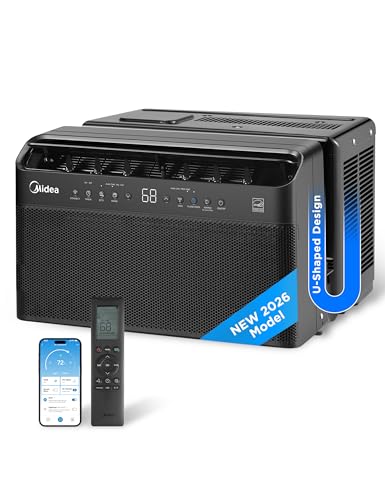
U-Shaped Smart Inverter Window Air Conditioner
A modern window cooling solution that combines flexible installation, inverter efficiency, and smart controls for bedrooms, offices, and apartments.
EXPLORE RECOMMENDED MODELSQuick Summary: A U-shaped smart inverter window air conditioner is a window-mounted cooling unit with a flexible, open-bottom chassis. This design allows the window to close over the unit, reduces vibration, and enables smart features such as app control, voice commands, and scheduling. Combined with inverter compressor technology, these units can run quieter and more consistently than traditional single-stage window air conditioners.
What Is a U-Shaped Smart Inverter Window AC?
A U-shaped smart inverter window air conditioner is a relatively new category of window cooling equipment. Its name comes from the U-shaped chassis that wraps around the window sash. Unlike older window AC designs that block part of the window opening, the U-shaped frame lets the window glass sit inside the unit's channel. As a result, the window can often remain closed and locked during operation, which improves security and reduces air leakage around the unit.
The "smart" part refers to built-in Wi-Fi connectivity. Many models pair with a mobile app, support voice assistants, and allow you to change temperature, fan speed, and operating mode remotely. Some units also provide usage reports and scheduling, which helps households manage cooling routines more consistently.
The "inverter" part refers to the compressor. A traditional window AC cycles the compressor on and off at full power. An inverter compressor can vary its speed, staying at lower output once the room reaches the set temperature. This usually results in steadier temperatures, less mechanical wear, and quieter operation. For more background on compressor technology, see our guide on inverter AC systems.
How the U-Shaped Design Differs from Standard Window ACs
Standard window air conditioners are typically box-shaped and rest on the window sill. They often need support brackets, and the window must be opened slightly or blocked with filler panels. The U-shaped design changes several practical details:
- Window closure: The window sash slides into the U-shaped gap, allowing the window to close more completely.
- Reduced vibration: Because the compressor is often mounted on the outdoor section with additional isolation, the indoor portion tends to vibrate less.
- Easier cleaning: Some models allow the indoor section to slide out for filter access without removing the entire unit from the window.
- Flexible window fit: Many U-shaped units fit single-hung and double-hung windows within a specified width range.
These differences matter most in bedrooms and home offices, where noise and window security are common concerns. If you are comparing installation approaches, our guide on mounting a window AC unit explains the structural considerations for different window types.
Key Benefits of a U-Shaped Smart Inverter Window AC
Buyers researching this category usually care about a few practical outcomes. Here is what the U-shaped smart inverter design typically offers:
Quieter Operation
Inverter compressors rarely run at full speed for long periods. Once the room is cool, the compressor slows down, which reduces the on/off cycling noise that many people notice with traditional window units. The U-shaped chassis also helps isolate vibration from the window frame. If quiet operation is a priority, this category is worth comparing against our list of efficient small window air conditioners.
Better Window Security
Because the window can close over the unit, the opening is less exposed. This is a meaningful improvement for ground-floor apartments and bedrooms. Standard window AC installations often require additional locks or brackets to secure the window opening.
Smart Controls and Scheduling
Wi-Fi connectivity allows remote operation through a smartphone app. You can turn the unit on before arriving home, set a schedule, or integrate it with voice assistants. This is similar in concept to using a programmable thermostat, though window AC smart controls are usually app-based rather than wall-mounted.
Inverter Efficiency
Inverter compressors generally use energy more evenly than single-stage compressors. The actual efficiency depends on the model's SEER or CEER rating, room size, and installation quality. For a broader explanation of efficiency ratings, read our guide on what a SEER rating means.
Flexible Installation
Many U-shaped models are designed for tool-light installation in compatible single-hung or double-hung windows. That said, larger units still need proper support and weather sealing. Our installation guide covers the general steps for window and through-the-wall units.
Who Should Consider This Type of Window AC?
A U-shaped smart inverter window air conditioner is a good fit for specific situations:
- Renters and apartment dwellers who need cooling without ductwork or permanent structural changes.
- Bedroom and home office users who want quieter operation and app-based scheduling.
- Older homes without ducts where central air or mini-splits are not practical. Our article on installing air conditioning in an old house covers related options.
- Households that value window security and want the window to close over the unit.
- Buyers who prefer inverter technology for steadier temperatures and potentially lower long-term energy use.
If your room is large or your home has multiple zones, a single window unit may not be enough. In that case, compare with split ductless air conditioning systems or a whole-house AC system.
How to Choose the Right U-Shaped Smart Inverter Window AC
Before choosing a model, work through the following checks. They help you avoid a unit that is undersized, oversized, or incompatible with your window.
1. Match BTU Capacity to Room Size
Window AC capacity is measured in British Thermal Units (BTU). A unit that is too small will struggle on hot days, while an oversized unit may cool too quickly and leave the room feeling damp. As a general starting point:
- Up to 150 sq ft: around 5,000–6,000 BTU
- 150–250 sq ft: around 8,000–10,000 BTU
- 250–400 sq ft: around 12,000–14,000 BTU
These are rough ranges. Ceiling height, sun exposure, insulation, and occupancy all affect the right size. Use our BTU calculator by room size for a more tailored estimate, and read how to size an air conditioner for the full method.
2. Check Window Compatibility
U-shaped units specify a window width range and a minimum window height. Measure your window opening before buying. Most models fit single-hung and double-hung windows, but casement and sliding windows usually require different solutions. If you have a casement window, see window air conditioner for casement window installation.
3. Review Efficiency Ratings
Look for the CEER or SEER rating on the unit's label. Higher ratings generally indicate better efficiency within the same capacity class. ENERGY STAR models meet a defined efficiency threshold. Our article on top-rated energy-efficient air conditioners explains how to compare ratings across categories.
4. Confirm Smart Features You Will Actually Use
Not every smart feature is equally useful. Consider whether you need app control, voice assistant support, scheduling, or geofencing. If you mainly want remote temperature control, app scheduling may be enough. If you want broader home automation, check compatibility with your existing smart home platform. Our guide on smart window air conditioners compares common feature sets.
5. Check Noise Levels and Fan Speeds
Manufacturers publish decibel ratings, but real-world noise depends on fan speed and installation quality. Inverter models tend to be quieter at steady state, but the highest fan setting can still be noticeable. Read owner reviews that mention nighttime use if the unit is for a bedroom.
6. Plan for Drainage and Maintenance
Window AC units produce condensate. Some U-shaped models are designed to drain water toward the outdoor section, while others require a drain hose or a slight tilt. Regular filter cleaning is essential. See how to clean an AC filter for a step-by-step method.
Installation Considerations for U-Shaped Window ACs
Installation is usually simpler than a mini-split or central system, but it still requires care. Key points include:
- Support: Follow the manufacturer's instructions for outdoor support brackets. Larger units should not rely on the window sill alone.
- Sealing: Use the included foam insulation and side panels to close gaps. Poor sealing lets hot air in and reduces efficiency.
- Electrical requirements: Most window units run on 115V household circuits, but larger capacities may require a dedicated circuit. Check the plug type and breaker requirements. Our guide on amps and breaker size for AC explains the basics.
- Permits: Most window AC installations do not require a permit, but some buildings have rules about exterior modifications. See how to get an AC permit for general guidance.
If you are replacing an existing window unit, our article on window air conditioner replacement covers sizing and removal steps. For through-the-wall alternatives, compare the smallest through-the-wall air conditioner options.
Maintenance Tips to Keep Your U-Shaped Window AC Running Well
Regular maintenance extends the life of any window air conditioner and helps maintain cooling performance. A practical routine includes:
- Clean the filter every two to four weeks during peak cooling season. A clogged filter reduces airflow and forces the compressor to work harder.
- Inspect the outdoor coil for leaves and debris. Gently rinse according to the manufacturer's instructions.
- Check the seal around the window at the start of each season. Replace worn foam as needed.
- Listen for unusual sounds such as rattling or grinding. Addressing small issues early can prevent larger repairs.
- Schedule professional service if cooling performance drops noticeably. Our guide on HVAC tune-ups explains what a technician typically checks.
For troubleshooting common problems, read my air conditioner is not blowing out cold air and AC not cooling solutions.
U-Shaped Window AC vs Other Cooling Options
It helps to compare this category with alternatives before deciding:
- Standard window AC: Usually a lower entry point in the category, but often louder and less secure because the window cannot close completely.
- Portable AC: Flexible placement, but requires venting and generally cools less efficiently than a window unit of similar capacity. See portable air conditioners.
- Mini-split: Quieter and more efficient, but requires professional installation and a wall penetration. See ductless mini-split AC.
- Central AC: Best for whole-home cooling, but requires ductwork and a significant installation project. See central air conditioning.
For a direct comparison of ducted and ductless approaches, read ductless vs ducted AC.
Common Questions About U-Shaped Smart Inverter Window ACs
Do U-shaped window ACs fit all windows?
No. They are designed for specific window width and height ranges, usually single-hung and double-hung windows. Measure your window before buying, and check the manufacturer's compatibility chart.
Is an inverter compressor worth it in a window AC?
For many households, yes. Inverter compressors tend to provide steadier temperatures and quieter steady-state operation. The benefit depends on how often you run the unit and how well the room is insulated.
Can I control a U-shaped smart window AC with my phone?
Most smart models include a mobile app for remote control, scheduling, and mode changes. Voice assistant support varies by model, so check the feature list before buying.
How often should I clean the filter?
Every two to four weeks during heavy use is a practical routine. If you have pets or live in a dusty area, check more often. A clean filter supports airflow and cooling performance.
Does the window really close over the unit?
In most U-shaped designs, yes. The window sash sits in the U-shaped channel, which allows the window to close and often lock. Always follow the manufacturer's installation instructions for your specific window type.
Can a U-shaped window AC be installed in a wall?
These units are designed for window mounting. If you need a through-the-wall solution, compare dedicated through-the-wall models such as 8,000 BTU 115V through-the-wall air conditioners.