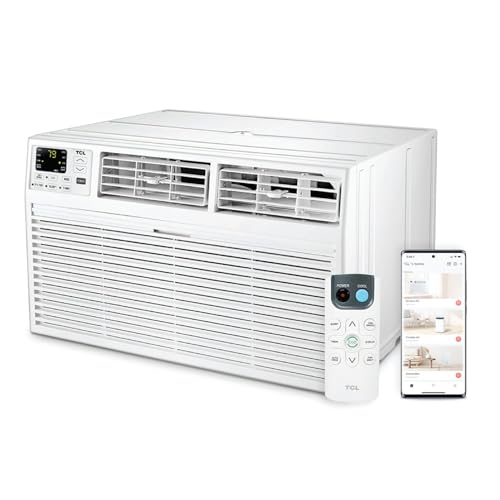
Wall Mounted Air Conditioning Heating Units
Everything you need to know about ductless wall-mounted units that heat and cool — how they work, how to size them, what separates the tiers, and how to choose confidently.
Explore Recommended UnitsWho this guide is for: You already know you want a wall-mounted unit that both heats and cools, and you are now comparing options before buying. This page fills in the technical and practical gaps so you can make a well-informed purchase through the product links below.
What Are Wall Mounted Air Conditioning Heating Units?
Wall mounted air conditioning heating units are ductless systems whose indoor air handler is mounted high on a wall and delivers both cooling and heating from one appliance. The indoor unit houses the blower, evaporator coil, and filters, while an outdoor condenser manages heat exchange. In heating mode, a reversing valve flips the refrigerant cycle so the system extracts heat from outdoor air and releases it indoors.
Because the indoor unit hangs on the wall rather than sitting on the floor or in a window, these systems save floor space and distribute conditioned air more evenly across a room. They are closely related to wall mounted heating and air conditioning units and fall within the broader family of wall mounted air conditioner and heating units. For a wider category overview, see wall air conditioners and heaters.
How Wall Mounted Heating and Cooling Units Work
These systems are a form of split system air conditioner and heat pump. The indoor and outdoor units are connected by refrigerant lines and a communication cable. In cooling mode, the indoor coil absorbs heat and humidity from room air and rejects it outdoors. In heating mode, the process reverses: the outdoor coil absorbs ambient heat and the indoor coil releases it into the room.
This is why wall mounted air conditioning heating units are often described as split system heat pumps — they move heat rather than generating it from fuel, which is why they can be highly efficient across a wide range of outdoor temperatures. Cold-climate models add enhanced defrost logic and compressor technology to maintain capacity well below freezing. For a closer look at the underlying technology, our guide to split air conditioner heating explains the reversing cycle in detail.
Key Features to Evaluate Before Buying
Heating Capacity & Cold-Climate Rating
Check rated heating output at low outdoor temperatures. Cold-climate models maintain stronger performance and are preferable where winters regularly drop below freezing.
Efficiency Ratings (SEER2 / HSPF2)
Higher efficiency means lower long-term energy use. Look at both cooling and heating ratings — a unit that excels in one mode may be average in the other.
Inverter Compressor
Inverter-driven compressors modulate speed instead of cycling on and off, improving comfort, quietness, and efficiency. See our comparison of inverter AC technology.
Noise Level
Indoor sound ratings matter for bedrooms and offices. Premium tiers typically run quieter, especially at low fan speeds.
Smart Controls & Thermostat Compatibility
Wi-Fi control, scheduling, and compatibility with a thermostat that controls heat and cool add convenience and can improve efficiency.
Filtration & Air Quality
Multi-stage filters, washable screens, and self-cleaning cycles reduce maintenance and support healthier indoor air.
Sizing Wall Mounted Air Conditioning Heating Units
Sizing is the single most important decision. An undersized unit runs continuously and struggles on peak days; an oversized unit short-cycles, dehumidifies poorly, and wears out faster. Start with room square footage and ceiling height, then adjust for window area, insulation quality, sun exposure, and occupancy.
For a structured approach, use our BTU calculator by room size and our guide on how to size an air conditioner. For whole-home installations, a Manual J load calculation gives the most accurate result. If you are unsure about the consequences of getting sizing wrong, read what happens if an AC is too big or too small.
Market Tiers: Entry-Level to Premium
Wall mounted air conditioning heating units fall into recognizable market tiers. The table below summarizes what each tier typically delivers so you can match your expectations to the product class.
| Tier | Best For | Typical Strengths |
|---|---|---|
| Entry-level | Single rooms, seasonal use, straightforward installations | Essential cooling and heating, basic filtration, simple controls, solid build for the class |
| Mid-range | Primary living spaces, bedrooms, home offices used year-round | Inverter compressor, quieter operation, improved efficiency, Wi-Fi and scheduling options |
| High-end tier | Whole-home comfort, cold climates, premium quiet requirements | Cold-climate heating performance, very low indoor noise, advanced filtration, smart integration |
| Professional-grade | Multi-zone systems, light commercial, heavy-duty duty cycles | Reinforced construction, multi-zone controllers, extended operating range, commercial-grade components |
As a general guide, mid-range models typically offer smoother compressor modulation than entry-level units, while high-end tiers add cold-climate capacity and quieter indoor fans. The best choice depends on your climate, room usage, and how much you value quiet operation and smart controls.
Installation Considerations
Proper installation determines performance, efficiency, and longevity. Key factors include:
- Indoor unit placement: High on the wall, unobstructed airflow, away from direct sunlight and heat sources.
- Outdoor unit placement: Shaded, well-ventilated, and clear of snow accumulation in winter.
- Line set routing: Short, well-insulated runs reduce efficiency losses.
- Electrical requirements: Confirm the circuit and breaker match the unit's requirements; see our guide on amps and breaker size for AC.
- Permits and codes: Many jurisdictions require a permit for refrigerant line work — see how to get an AC permit.
For a detailed walkthrough of the process, read wall-mounted air conditioning unit installation and wall-mounted air conditioner heater combo installation. If you plan to hire a professional, our guide on how to choose an HVAC contractor helps you vet bids.
Maintenance and Long-Term Care
Regular maintenance keeps efficiency high and extends service life. Clean or replace filters every few weeks during heavy use, keep the outdoor coil free of debris, and schedule professional service annually. Our split system air conditioning maintenance guide covers the seasonal checklist, and wall-mounted air conditioner cleaning service explains when to call a professional.
If something goes wrong, start with our split system air conditioning repairs overview and troubleshooting air conditioning guide before scheduling a service call.
Pro tip: Pair your wall mounted unit with a compatible smart thermostat. A thermostat that automatically switches from AC to heat can smooth seasonal transitions and reduce wasted energy.
Where Wall Mounted Heating and Cooling Units Fit Best
These systems shine in specific scenarios:
- Apartments and rentals: No ductwork required and minimal structural changes — see wall-mounted air conditioner for apartment.
- Small rooms and bedrooms: Quiet operation and precise temperature control — see wall-mounted air conditioner for small room.
- Additions and converted spaces: Garages, sunrooms, and attics where extending ducts is impractical.
- Year-round heating and cooling: A single system replaces separate AC and space-heating appliances — see wall mounted heating and air conditioning.
If you are comparing formats, our overview of wall mounted air conditioning and heating units and the wall mount heat and air conditioning unit format will help you see the full range of designs.
Frequently Asked Questions
Ready to Compare Wall Mounted Heating and Cooling Units?
Browse our curated selection below. Each listing links to a trusted retailer where you can view full specifications, availability, and verified customer feedback.
View Recommended Units