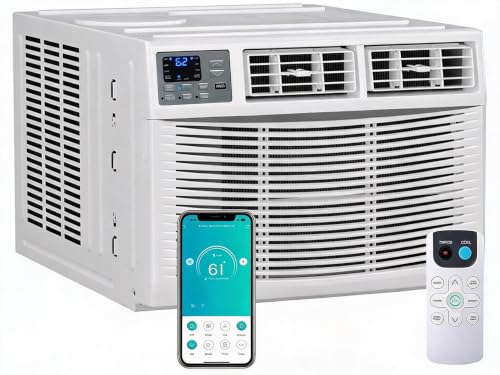
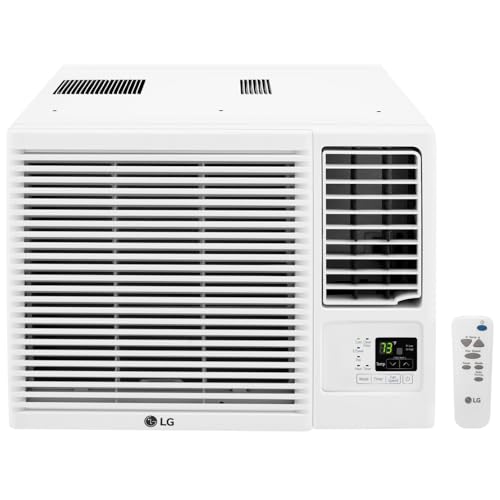
18,000 BTU Through-the-Wall Air Conditioner with Heat
A complete buyer's guide to wall-mounted cooling and heating units that deliver year-round comfort without ductwork, window space, or a permanent floor footprint.
Why this guide matters: An 18,000 BTU through-the-wall air conditioner with heat is a serious investment in whole-room comfort. It cools and warms a large space through a single wall opening, keeps your window view clear, and frees up floor space. But the wrong unit wastes energy, underperforms in cold weather, and creates installation headaches.
This guide walks you through sizing, heating performance, sleeve compatibility, efficiency ratings, installation realities, and maintenance. By the end, you will know exactly which configuration fits your room and how to evaluate models within their tier.
What an 18,000 BTU Through-the-Wall AC with Heat Actually Does
An 18,000 BTU through-the-wall unit is a self-contained packaged air conditioner that slides into a wall sleeve. Unlike a window unit, it does not rely on a window frame, so it preserves natural light and your view. The "with heat" designation means the unit includes a heating function, typically either a resistance heater or a reverse-cycle heat pump.
In cooling mode, 18,000 BTU is roughly equivalent to 1.5 tons of cooling capacity. That places it in the large-room segment, well above compact 8,000–10,000 BTU models and below the 24,000 BTU and 25,000 BTU class used for open-plan spaces.
The heat function is the differentiator. Some units use electric resistance coils, which are simple and reliable but draw more power. Others use a heat pump cycle, which moves heat rather than generating it and performs far more efficiently in mild to moderate climates. Understanding which type you need is the single most important decision in this category.
Is 18,000 BTU the Right Capacity for Your Room?
Sizing is where most buyers either succeed or struggle. An 18,000 BTU unit is generally appropriate for a room in the 700 to 1,000 square foot range under average conditions. That estimate assumes standard ceiling height, reasonable insulation, and a moderate climate.
Real-world sizing depends on more than square footage. Use these factors to adjust your target:
- Ceiling height: Rooms above 8 feet need more capacity per square foot.
- Sun exposure: West- and south-facing rooms with large unshaded windows gain more heat.
- Occupancy: Each additional person adds meaningful heat load.
- Kitchen proximity: Open kitchens add appliance heat and moisture.
- Insulation quality: Older homes with poor insulation need headroom in capacity.
If your room falls between two sizes, avoid oversizing. An oversized unit cools too quickly, cycles off before removing humidity, and leaves the room feeling clammy. For a deeper walkthrough of load calculations, see our guide on 18,000 BTU cooling area and the broader method for how to size an air conditioner.
Practical rule: If your room is heavily shaded, well insulated, and in a mild climate, 18,000 BTU can comfortably handle the upper end of the range. If your room is sun-baked, poorly insulated, or in a hot climate, treat 18,000 BTU as the lower boundary and consider stepping up to a 20,000 BTU through-the-wall unit or a 24,000 BTU through-the-wall model.
Heating Performance: Resistance Heat vs Heat Pump
The heating side of an 18,000 BTU through-the-wall unit deserves careful attention because it determines how usable the unit is in cooler months.
Electric Resistance Heat
Resistance heating uses a coil that converts electricity directly into heat. It works in any outdoor temperature, starts instantly, and has few moving parts. The trade-off is energy intensity: it consumes significantly more electricity per unit of heat delivered. Resistance heat is best suited for mild climates, supplemental heating, or rooms where the heat function is used occasionally rather than as a primary source.
Reverse-Cycle Heat Pump
A heat pump reverses the refrigerant cycle to move heat from outdoor air into the room. It delivers several units of heat per unit of electricity in moderate conditions, making it far more efficient than resistance heat. Performance declines as outdoor temperatures drop, and in freezing conditions the unit may rely on a backup resistance element or lose capacity.
If you plan to use the unit as a primary heating source in a climate with mild winters, prioritize a heat pump model. If you need guaranteed heat in freezing weather or only use heating occasionally, resistance heat is simpler and dependable.
Sleeve and Wall Opening Compatibility
Through-the-wall units are built around standardized wall sleeves, and compatibility is non-negotiable. The sleeve is the metal box permanently installed in the wall; the air conditioner slides into it and is secured with screws and a trim kit.
Before choosing a unit, confirm three measurements:
- Sleeve width and height: Common sleeves are sized for 26-inch-wide chassis, but 20-inch and 22-inch configurations also exist for tighter openings.
- Chassis depth: The unit must fit flush or with acceptable protrusion.
- Trim kit and rear grille: These finish the installation and protect the outdoor side.
If your wall opening is non-standard, review options built for narrower sleeves, such as a 20-inch wide through-the-wall air conditioner or a 22-inch wide through-the-wall unit. If you need a new sleeve, a 26-inch wall sleeve is the most widely supported standard.
Installation note: Replacing an existing unit is usually straightforward if the sleeve matches. Installing a new wall opening requires cutting masonry or framing, proper flashing, and outdoor drainage. This is not a typical do-it-yourself project in exterior walls.
Electrical Requirements and Circuit Planning
An 18,000 BTU through-the-wall air conditioner with heat draws substantial current, especially when the heating element engages. Most units in this class require a dedicated 230/240-volt circuit, typically protected by a 20-amp or 30-amp breaker depending on the model's rated draw.
Check the unit's nameplate for amperage and confirm your panel has capacity for a dedicated circuit. A shared circuit will trip under load. If your room only has standard 115-volt outlets, you will need an electrician to run a new circuit, or you may need to explore a 14,000 BTU through-the-wall unit with heat that may align better with available power.
For related electrical topics, see our references on a 220 electrical outlet and 30-amp AC plug.
Efficiency Ratings: What to Look For
Efficiency in this category is measured primarily by CEER for cooling and by heating efficiency for the heat function. Higher CEER means lower electricity consumption for the same cooling output.
When comparing models, focus on:
- CEER: The higher, the more efficient the cooling cycle.
- Heating COP or rated heating watts: Heat pump models list a coefficient of performance; higher is better.
- ENERGY STAR status: A useful shorthand for units that meet efficiency thresholds.
- Smart features: Programmable timers and app control reduce runtime waste.
For a broader explanation of efficiency metrics, see our article on what a SEER rating is and the related ENERGY STAR certified AC overview. If efficiency is your top priority, compare models through our 18,000 BTU ENERGY STAR air conditioner roundup.
Market Tiers in This Category
To compare products without focusing on fluctuating figures, it helps to classify units by market position. The descriptors below are relative and consistent across this guide.
Entry-Level Wall Units
Basic mechanical or digital controls, resistance heat, standard efficiency, and straightforward installation. A solid choice for supplemental cooling and occasional heating in mild climates.
Mid-Range Models
Improved efficiency, better airflow design, programmable controls, and often a heat pump option. Well-specified for the category and a strong fit for daily use in a primary room.
High-End Units
Higher CEER, quieter operation, durable construction, smart controls, and refined heating performance. Suited to buyers who want long-term efficiency and premium comfort.
Entry-level units usually prioritize simplicity and dependable cooling. Mid-range models typically offer smoother cycling and better humidity control. High-end models focus on efficiency, noise reduction, and smart integration. Choose the tier that matches how often you will run the unit and how much you value quiet, efficient operation.
Comparison Snapshot
| Configuration | Typical Use | Heating Type | Best For |
|---|---|---|---|
| 18,000 BTU with resistance heat | Large room cooling plus occasional heating | Electric coil | Mild climates, supplemental heat |
| 18,000 BTU with heat pump | Year-round primary comfort | Reverse-cycle | Moderate climates, efficient heating |
| 18,000 BTU with smart controls | Scheduled, remote-managed comfort | Varies by model | Busy households, rental properties |
| 18,000 BTU ENERGY STAR | Efficiency-focused daily operation | Varies by model | Long-term efficiency priority |
Installation Realities You Should Plan For
Through-the-wall installation is more involved than a window unit but far less disruptive than central ductwork. Here is what the process typically involves:
- Confirm sleeve compatibility: Measure the existing sleeve or plan the new opening precisely.
- Verify electrical supply: Confirm a dedicated 230/240-volt circuit with correct breaker size.
- Prepare drainage: Ensure the sleeve slopes slightly outward so condensate drains away from the wall.
- Seal and insulate: Use trim kits and weather sealing to prevent air leaks and moisture intrusion.
- Secure the chassis: Fasten the unit to the sleeve per manufacturer instructions.
If you are replacing an existing unit, the job is usually a direct swap when the sleeve matches. For a new wall opening, work with a qualified installer to protect the wall structure and exterior finish. For cost planning without figures, review our installation cost estimate guide and installation cost breakdown, which explain the components that drive the scope of work.
Maintenance That Protects Performance
A through-the-wall unit with heat sees year-round use, so maintenance matters more than for a seasonal window unit.
- Clean or replace the air filter monthly during heavy use. A clogged filter reduces airflow, strains the compressor, and worsens humidity control.
- Inspect the outdoor grille and coil annually. Debris, pollen, and lint reduce heat exchange efficiency.
- Check the condensate drain path. Standing water in the sleeve can corrode components and cause odors.
- Test the heating function before cold season. Confirm the element or heat pump engages and warms the room as expected.
- Schedule professional service every few years for coil cleaning, refrigerant checks, and electrical inspection.
For a step-by-step routine, see our guide to cleaning an AC filter and the seasonal AC checklist. If you notice reduced cooling, review common fixes for AC not cooling before assuming a major failure.
How This Compares to Other Large-Room Options
An 18,000 BTU through-the-wall unit is one option among several for large rooms. Understanding the alternatives helps you confirm the best fit:
- Window units: A 18,000 BTU window air conditioner with heat pump is easier to install but blocks window space and may not fit modern window frames.
- Mini-splits: An 18,000 BTU mini-split heat pump is quieter and more efficient but requires refrigerant line installation and a wall-mounted indoor head.
- Portable units: A 15,000 BTU portable air conditioner offers flexibility but is less efficient and takes floor space.
- Larger wall units: If the room is very large or open-plan, step up to a 25,000 BTU through-the-wall unit.
Choose through-the-wall when you want a permanent, flush installation, year-round heating, and no floor footprint or window obstruction.
Common Mistakes to Avoid
- Oversizing for the room. Too much capacity causes short cycling and poor dehumidification.
- Ignoring the heating type. Resistance heat and heat pump performance differ dramatically in cool weather.
- Skipping sleeve measurements. A unit that does not fit the sleeve cannot be installed safely.
- Overlooking the electrical circuit. An 18,000 BTU unit with heat needs dedicated power.
- Neglecting sealing and drainage. Poor sealing wastes energy; poor drainage damages the wall.
Frequently Asked Questions
What size room does an 18,000 BTU through-the-wall AC with heat cool?
Under average conditions, it handles roughly 700 to 1,000 square feet. Adjust downward for poor insulation or heavy sun exposure, and upward for open layouts.
Is a heat pump better than resistance heat in this category?
A heat pump is more efficient in moderate climates. Resistance heat is simpler and reliable in freezing temperatures. Choose based on your winter climate and how often you use the heating function.
Can I install an 18,000 BTU wall unit myself?
Replacing a unit in an existing matching sleeve is often manageable with care. Cutting a new wall opening and running a dedicated 230/240-volt circuit should be handled by a qualified installer or electrician.
What electrical circuit does it require?
Most units in this class need a dedicated 230/240-volt circuit, commonly protected by a 20-amp or 30-amp breaker. Always verify the nameplate rating before installation.
How does it compare to a 14,000 BTU wall unit?
An 14,000 BTU through-the-wall unit with heat suits smaller rooms and may align with a 115-volt supply. Step up to 18,000 BTU when the room is larger or the heat load is higher.
Ready to Compare Your Options?
Explore available 18,000 BTU through-the-wall air conditioners with heat, then match capacity, heating type, and sleeve compatibility to your room. Check availability and review specifications before you decide.
Explore Options