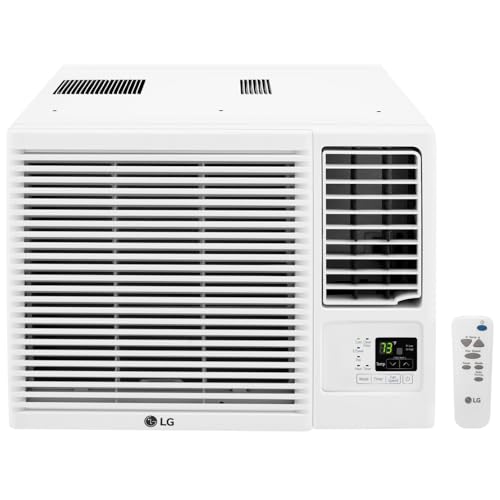
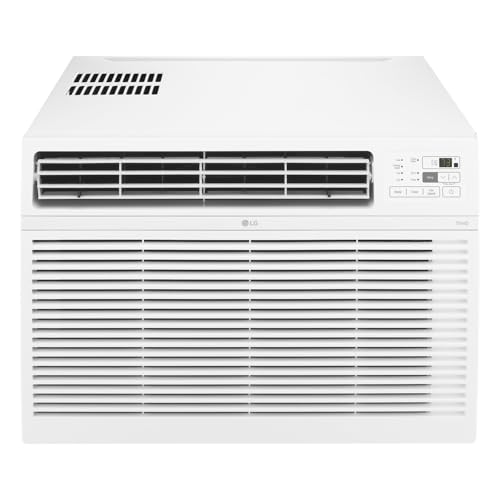
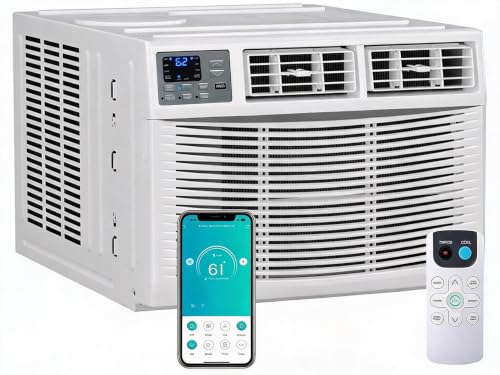
220 Volt Window Air Conditioner with Heat: The Complete Guide
A 220 volt window unit with heating capability delivers the cooling power of a larger system without ductwork, and adds a secondary heat source for shoulder seasons. This guide covers electrical requirements, sizing, efficiency, installation, and how to choose the right tier for your space.
What Is a 220 Volt Window Air Conditioner with Heat?
A 220 volt window air conditioner with heat is a self-contained, window-mounted unit that operates on a higher-voltage circuit than the familiar 110/120 volt household outlet. That higher voltage allows the compressor and heating element to draw more power efficiently, which is why these units are typically reserved for larger rooms and higher-capacity cooling jobs.
In practical terms, a 220 volt unit behaves like a conventional window air conditioner — it mounts in a double-hung or sliding window, exhausts heat to the outdoors, and delivers conditioned air directly into the room. The difference is that it pairs a more powerful compressor with a built-in heating function, so the same chassis can cool in summer and warm the space during cooler months.
How the Two Functions Coexist
Cooling and heating share the same cabinet, fan, and control board but use different internal paths. In cooling mode the compressor and evaporator coil remove heat and humidity from the room. In heating mode the unit either reverses the refrigerant cycle (heat pump models) or energizes a resistance element (electric heat models). The changeover is managed by the thermostat and the mode selector on the control panel or remote.
Key distinction: A "220 volt window air conditioner with heat" is not the same as a heat pump mini-split. It is a single packaged unit that fits a window opening, and its heating capacity is sized to supplement — not replace — a home's primary heating system in most climates.
Who These Units Are Built For
- Homeowners with large bedrooms, living rooms, or open-plan areas that overwhelm a 110 volt unit.
- Households without ductwork that want a single appliance for both cooling and shoulder-season heating.
- Workshops, garages, and sunrooms where a permanent central system is impractical.
- Anyone replacing an older through-the-wall unit who already has a 220 volt circuit available. If your opening is wall-mounted rather than window-mounted, see the 230 volt through-the-wall air conditioner category for comparable specifications.
Why Choose 220 Volts Over 110 Volts?
The voltage choice is not a preference — it is dictated by capacity. As cooling capacity rises, the amperage required at 110 volts becomes impractical for a plug-in appliance. Doubling the voltage halves the current for the same power, which allows larger compressors to run on smaller conductors and with less voltage drop.
The Practical Advantages
- Higher cooling capacity. Units in the 12,000 to 25,000 BTU range are the natural territory of 220 volt window models. A typical 15,000 BTU window unit is near the practical ceiling for 115 volt designs.
- More efficient compressor operation. Lower current means less resistive loss in the circuit and a compressor that runs closer to its design point.
- Room for heating. Adding a heating element or reversing valve on top of a large compressor is only realistic on a higher-voltage supply.
- Better cold-weather starting. The compressor motor handles startup torque more gracefully on a 220 volt feed, which matters in heating mode when the unit may cycle frequently.
The Trade-Offs You Should Know
A 220 volt unit cannot simply be plugged into an existing wall outlet. It requires a dedicated circuit, a matching receptacle, and typically a permit and licensed electrician. If your home does not already have a 220 volt outlet near the intended window, the electrical work becomes part of the project scope. That is the single biggest reason buyers hesitate — and the reason it pays to plan the electrical side before shopping for the unit itself.
Safety note: Never modify a 110 volt circuit, use an adapter, or run an extension cord to power a 220 volt air conditioner. The current draw and continuous duty cycle of these appliances make improvised wiring a genuine fire and shock hazard.
Electrical Requirements and Safety
Understanding the electrical side is the most important preparation step. A 220 volt window AC with heat is a continuous-duty appliance, meaning it may run for hours at a time, and the circuit must be sized for that load plus the startup surge.
Circuit and Receptacle Basics
- Dedicated circuit. The unit should have its own circuit breaker with no other outlets or appliances sharing it.
- Receptacle type. Most residential 220 volt window units use a NEMA 6-15R or 6-20R receptacle, which is a three-wire, two-pole configuration. The plug on the unit must match the receptacle exactly.
- Breaker. A double-pole breaker sized to the unit's nameplate amperage and the conductor gauge. The installation manual specifies the maximum overcurrent protection.
- Conductor gauge. Sized per the manufacturer's requirement and local code, typically 12 or 10 AWG copper for these loads.
What to Check Before You Buy
Existing Outlet
Confirm whether a 220 volt receptacle already exists near the window. Check the slot pattern against the unit's plug type.
Panel Capacity
Have an electrician verify your service panel has space and capacity for an additional double-pole breaker.
Permit Rules
Most jurisdictions require a permit for a new 220 volt circuit. Factor the inspection timeline into your plan.
Dedicated Line
If the nearest 220 volt outlet is shared with a dryer or range, it cannot be used. A new dedicated line is required.
If you are also evaluating related electrical accessories, the 220 electrical outlet reference explains receptacle types in more detail, and the 30 amp AC plug guide covers the higher-amperage connector families used by larger units. For a fuller picture of how these circuits are configured in practice, the 220 air conditioner window unit overview is a useful companion read.
Rule of thumb: Budget the electrical work as a separate line item from the appliance itself. In many homes the circuit installation is the larger portion of the project, and it must be completed by a licensed electrician before the unit can be powered.
BTU Sizing for Your Room
Correct sizing determines whether the unit cools comfortably and dehumidifies properly, or short-cycles and leaves the room clammy. The starting point is square footage, then adjustments for real-world conditions.
The Base Calculation
Allow roughly 20 BTU of cooling capacity per square foot of conditioned floor area. A 500 square foot room therefore lands near 10,000 BTU, while a 900 square foot open area approaches 18,000 BTU. Because 220 volt units generally begin where 110 volt units leave off, most buyers in this category are sizing rooms of 400 square feet and above.
Adjustments That Matter
- Sun exposure. A west- or south-facing window with direct afternoon sun adds 10 to 20 percent to the load.
- Occupancy. Each additional person adds roughly 600 BTU.
- Kitchen adjacency. Add about 4,000 BTU if the unit cools an open kitchen.
- Ceiling height. Rooms taller than 8 feet need proportional upward adjustment.
- Insulation and window quality. Poorly insulated spaces with single-pane glass require more capacity.
| Room Size | Baseline BTU | Typical Voltage | Notes |
|---|---|---|---|
| 300 – 400 sq ft | 8,000 – 10,000 | 110 / 115 V | Usually at the upper limit of 110 volt designs |
| 400 – 550 sq ft | 10,000 – 12,000 | 110 V or 220 V | Transition zone; choose voltage based on outlet availability |
| 550 – 750 sq ft | 12,000 – 15,000 | 220 V | Sweet spot for most 220 volt window units |
| 750 – 1,000 sq ft | 15,000 – 20,000 | 220 V | Confirm window opening width and weight support |
| 1,000 – 1,250 sq ft | 20,000 – 25,000 | 220 V | Largest window units; consider a mini-split alternative |
If your room is in the 12,000 BTU range, the 12,000–14,000 BTU AC category provides a closer comparison of options. For larger spaces, the 18,000 BTU cooling area guide helps translate square footage into a realistic capacity target.
Do not oversize. A unit that is too large cools the air quickly but shuts off before it removes humidity, leaving the room cold and damp. Size to the calculated load, not to the largest unit available.
Heating Options: Heat Pump vs Electric Resistance
The heating side of a "cool and heat" window unit comes in two main forms, and the difference affects both comfort and long-term electricity consumption.
Heat Pump Heating
A heat pump model reverses the refrigerant cycle so the outdoor coil absorbs heat from the outside air and releases it indoors. Because it moves existing heat rather than creating it, a heat pump delivers roughly two to three units of heat for every unit of electricity consumed, depending on outdoor temperature. Performance declines as the outdoor air gets colder, so these units are strongest in mild to moderate winter climates.
Electric Resistance Heating
A resistance element converts electricity directly into heat at essentially one unit of heat per unit of electricity. It is simpler, has no defrost cycle to manage, and works regardless of outdoor temperature — but it consumes considerably more electricity for the same delivered warmth. In a window unit, resistance heat is typically a supplemental feature rather than a primary heating source.
| Heating Type | Efficiency Profile | Best For | Limitations |
|---|---|---|---|
| Heat Pump | High — moves heat rather than generating it | Mild winters, shoulder seasons, long-term efficiency | Output falls in deep cold; defrost cycles needed |
| Electric Resistance | Lower — one unit of heat per unit of electricity | Occasional supplemental heat, colder climates | Higher electricity consumption during extended use |
Related capacities in this family include the 15,000 BTU window air conditioner with heat and the 14,000 BTU window air conditioner with heat, both of which pair a mid-to-large cooling load with a heating function. If you need a much larger cooling capacity with heat, the 25,000 BTU window air conditioner with heat represents the upper end of the window-mounted category.
Efficiency Ratings Explained
Efficiency ratings tell you how much cooling or heating you get per unit of electricity. For a continuous-duty appliance like a window AC, a modest efficiency difference compounds into meaningful consumption over a season of use.
The Ratings That Matter
- SEER and SEER2. Seasonal efficiency for cooling, expressed as BTU of cooling per watt-hour of electricity over a representative season. SEER2 is the updated test procedure aligned with current DOE standards.
- EER and CEER. Steady-state and combined efficiency at a fixed outdoor temperature. CEER is the rating used on the yellow EnergyGuide label for room air conditioners.
- HSPF and HSPF2. Heating seasonal performance for heat pump models. Higher values mean more efficient heating.
- ENERGY STAR. Indicates the unit meets or exceeds the efficiency threshold set for its capacity class. It is the simplest shorthand for a well-specified model.
The SEER rating explained guide breaks down how the seasonal metric is calculated, and the SEER vs SEER2 comparison clarifies which rating appears on current product labels. For a broader look at qualifying models, see the ENERGY STAR certified AC overview.
How to use the ratings: Compare units within the same capacity class, not across classes. A higher-capacity unit with a strong rating may still consume more total electricity than a smaller, less efficient unit that is correctly sized for the room.
Installation and Window Fit
Physically, a 220 volt window AC with heat installs much like any window unit — but the higher weight and larger cabinet demand more attention to support and sealing. Most units in this class weigh between 80 and 150 pounds, and some require two people to lift safely.
Window Compatibility Checklist
- Window type. Double-hung windows are the most straightforward. Sliding and casement windows need specific bracket kits or adapter panels.
- Opening width and height. Measure the clear opening, not the glass pane. The unit's minimum and maximum window width are listed in the specifications.
- Support. Use the manufacturer's support bracket or a properly anchored exterior bracket. Do not rely on the window sash alone for a heavy unit.
- Sealing. Insulate the gap with the supplied foam and side panels, and seal gaps with weatherstripping to prevent air leakage and insect entry.
- Drainage. Confirm the unit has a slight downward tilt toward the exterior so condensate drains correctly.
Placement and Clearance
Keep the outdoor side clear of obstructions — shrubs, fences, or deck rails within a few feet will reduce heat rejection and hurt efficiency. Indoors, aim the louvers so conditioned air reaches the occupied zone rather than blowing directly at seating. For rooms with unusual window configurations, the 18,000 BTU casement window air conditioner reference shows how casement-specific mounting differs.
Before installation: Confirm the circuit is complete, inspected, and labeled at the panel. Do not plug the unit in to "test" it before the electrical work is signed off — a miswired 220 volt circuit can destroy the compressor instantly.
Quality Tiers and What to Expect
Rather than shopping by price, think in terms of tiers. Each tier reflects a different balance of build quality, feature depth, and refinement — and each is appropriate for different buyers.
| Tier | What Defines It | Best For | Trade-Offs |
|---|---|---|---|
| Entry-Level | Mechanical controls, basic thermostat, single fan speed | Seasonal use, workshops, backup cooling | Louder operation, fewer efficiency refinements |
| Mid-Range | Digital controls, remote, multiple fan speeds, sleep mode | Primary bedroom or living room cooling | Heavier cabinet; still a single-zone solution |
| Premium | Inverter compressor, heat pump heating, smart controls, quieter fan | Year-round comfort with efficiency as a priority | Higher upfront investment; more complex service |
| Flagship | Top-tier efficiency, advanced filtration, app integration, premium build | High-use spaces where refinement matters | Largest cabinet footprint; needs careful window planning |
A mid-range model is usually the most sensible starting point for a 220 volt window unit with heat: it adds digital control and a usable heating function without the complexity of an inverter system. Buyers who expect to run the unit daily across both seasons should look seriously at premium-tier inverter models, where the efficiency gain over years of use offsets the higher initial outlay. The inverter AC overview explains why variable-speed compressors behave differently from fixed-speed designs.
Tier thinking: Compare units by what they include at their tier — controls, fan design, heating type, filtration — rather than by any single number. A well-specified mid-range unit can outperform a stripped-down premium-labeled one.
Features Worth Prioritizing
Feature lists on window ACs have grown long, but only a handful of items materially affect day-to-day satisfaction.
High-Impact Features
- Thermostat accuracy. A digital thermostat that holds within a degree or two prevents the on-off cycling that makes rooms feel uneven.
- Fan speed range. At least three speeds, including a genuinely low setting for nighttime.
- Sleep mode. Gradually raises the setpoint overnight and reduces fan noise.
- Remote control and scheduling. Useful when the unit is mounted high or behind furniture.
- Washable filter with access door. A filter you can remove without tools gets cleaned more often.
- Auto-restart. The unit resumes its previous settings after a power interruption.
Nice-to-Have Features
- Wi-Fi and app control. Convenient for pre-cooling a room or adjusting settings remotely. See the AC with Wi-Fi and smart control category for examples.
- Enhanced filtration. Washable electrostatic or carbon filters help with dust and odors but add maintenance steps.
- Self-cleaning or dry mode. Runs the fan after shutdown to reduce moisture on the evaporator coil.
- Quiet-mode engineering. Look for sound ratings below 55 dB on low fan speed if the unit is in a bedroom.
Buyers who prioritize low noise should compare the quiet air conditioner category. Those who want the heating function to double as a mild air-quality aid may find value in the AC with air purifier options. And if a self-cleaning cycle matters to you, the AC with self cleaning roundup is a useful reference.
Maintenance and Longevity
A window AC with heat works harder than a cooling-only unit because it operates across two seasons. A simple maintenance rhythm keeps efficiency stable and extends service life.
Monthly During Heavy Use
- Remove and wash the air filter. A clogged filter is the most common cause of reduced cooling and frozen coils.
- Wipe the indoor grille and check the drain path for standing water.
- Inspect the outdoor side for leaves, pollen, or debris blocking the coil.
Seasonal
- Before cooling season, clean the condenser coil with a soft brush or coil cleaner approved for the unit.
- Before heating season, test the heating function for a full cycle and confirm no burning smell on first use — a light dust smell is normal, but persistent odor warrants inspection.
- Check the window seal and support bracket for looseness or water intrusion.
- If the unit is removable, store it indoors during the off-season to protect the cabinet and coil.
The how to clean an AC filter guide gives a step-by-step method, and the seasonal AC checklist covers the broader pre-season inspection. If you notice the unit running but not cooling, the AC not cooling solutions article walks through the common causes from filter restriction to refrigerant issues.
Long-term view: A properly sized, well-maintained 220 volt window unit with heat can serve for a decade or more. Regular filter cleaning is the single highest-return habit.
Frequently Asked Questions
Can a 220 volt window air conditioner with heat run on a standard outlet?
No. It requires a dedicated 220 volt circuit with a matching receptacle, typically a NEMA 6-15R or 6-20R, wired with the correct conductor gauge and a double-pole breaker. A standard 110/120 volt household outlet cannot safely power these units.
Do I need an electrician to install one?
In most jurisdictions, yes. A licensed electrician must run the dedicated circuit and install the receptacle, and a permit is often required. Placing the unit in the window can usually be done by the homeowner, but all electrical work should be handled by a qualified professional.
How many BTUs do I need?
Start with about 20 BTU per square foot and adjust upward for sun exposure, occupancy, ceiling height, and kitchen adjacency. Rooms suited to a 220 volt unit generally fall in the 12,000 to 25,000 BTU range.
Is heat pump heating better than electric resistance?
For mild to moderate cold, a heat pump is substantially more efficient because it moves heat rather than generating it. Electric resistance works in colder conditions but consumes more electricity. For shoulder-season heating, a heat pump model is the stronger long-term investment.
What SEER rating should I look for?
Look for a unit that meets or exceeds current DOE minimums for its capacity class, and favor models rated for ENERGY STAR qualification. Higher SEER and CEER values translate directly into lower electricity consumption over the unit's service life.
Can a 220 volt window unit replace central heating?
In most cases, no. Window-unit heating is designed as a supplemental or single-room heat source. It is not sized to carry a whole home through freezing weather, and it lacks the distribution system a central furnace provides.
How heavy are these units?
Most weigh between 80 and 150 pounds depending on capacity and cabinet design. Plan for two-person installation and use the manufacturer's support bracket rather than relying on the window sash alone.
What if my window is a sliding or casement type?
Sliding and casement windows need specific adapter panels or bracket kits. Check the unit's documentation for supported window types before purchasing, or consult the casement-specific guidance on this site.
Next Steps Before You Decide
By this point you should have a clear picture of whether a 220 volt window unit with heat fits your home. Before moving to product comparisons, confirm three things: the room's calculated BTU load, the availability and capacity of a 220 volt circuit near the window, and the physical window opening dimensions.
Those three facts eliminate most of the uncertainty. From there, choose a tier that matches how often you expect to run the unit and whether heating is a primary or occasional need. If you are still narrowing capacity, the how to size an air conditioner guide and the BTU calculator by room size reference are the most direct next reads.
Ready to Compare Models?
Browse hand-picked 220 volt window air conditioners with heat and compare features, tiers, and specifications side by side.
Explore Options