5 Ton Mini Split AC: Complete Guide for Large Spaces
Understand capacity, multi-zone configurations, efficiency ratings, installation requirements, and maintenance essentials before choosing a 5 ton ductless mini split system.
EXPLORE THE GUIDEWho this guide is for: Homeowners with very large open-concept layouts, multi-story properties, additions, or commercial spaces who want ductless cooling without the complexity of a full ducted system. A 5 ton mini split delivers substantial cooling capacity while preserving the flexibility and zoning benefits of ductless technology.
What Is a 5 Ton Mini Split?
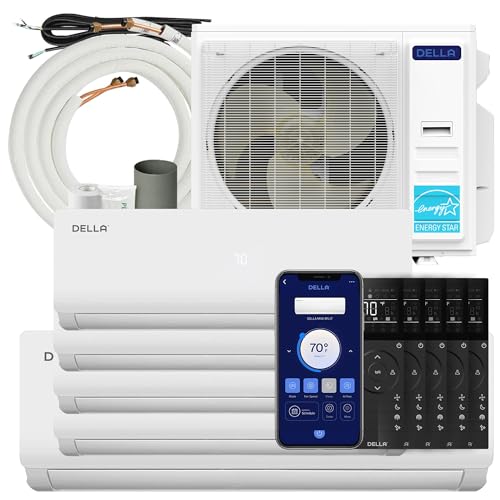
A 5 ton mini split is a ductless air conditioning system with a cooling capacity of 60,000 BTU per hour. It typically consists of one large outdoor condenser connected to multiple indoor air handlers, each serving a different room or zone. Unlike a single-room mini split, a 5 ton system is engineered for whole-home or light commercial applications where individual zone control is still desirable.
The term "5 ton" refers to the cooling capacity, not the physical weight of the equipment. One ton of cooling equals 12,000 BTU, so a 5 ton system provides 60,000 BTU of cooling output. This places it among the largest residential ductless configurations available, bridging the gap between standard multi-zone mini splits and full central air systems. If you are comparing ductless options, our 24,000 BTU mini split guide explains how capacity scales across smaller systems.
Because of its size, a 5 ton mini split is usually a multi-zone system. The outdoor unit modulates its compressor speed to match the combined demand of the indoor units, which can improve efficiency compared to a single-stage central system. For a broader comparison of system types, see our buying guide and air conditioner shopping guide.
Key Characteristics at a Glance
| Attribute | Typical Specification |
|---|---|
| Cooling capacity | 60,000 BTU (5 tons) |
| Recommended floor area | Approximately 2,500 to 3,000 sq ft (climate-dependent) |
| Zones supported | Four to eight indoor units, depending on model |
| Compressor technology | Inverter-driven variable speed |
| Typical SEER2 range | 18 to 22+ depending on tier |
| Electrical requirement | Dedicated 240V circuit, often 40 to 50 amps |
| Refrigerant | R410A or R32/R454B depending on generation |
Electrical requirements vary by model and should always be confirmed with a licensed electrician. For related guidance, see our installation cost breakdown and warranty registration guide.
Capacity and Sizing: Is 5 Tons Right for You?
A 5 ton mini split is a significant investment in cooling power. Sizing it correctly matters more than almost any other decision, because an oversized or undersized system can lead to comfort problems, higher energy use, and premature equipment wear. The rough square footage guidance below is a starting point, not a final answer.
| Home Size | Recommended Capacity | Notes |
|---|---|---|
| Up to 1,200 sq ft | 1.5 to 2 tons | Single or dual zone |
| 1,200 to 1,800 sq ft | 2 to 3 tons | Multi-zone typically |
| 1,800 to 2,500 sq ft | 3 to 4 tons | Multi-zone or ducted |
| 2,500 to 3,000 sq ft | 4 to 5 tons | 5 ton often appropriate |
| 3,000+ sq ft | 5 tons or multiple systems | Consider zoning strategy |
Factors That Change the Calculation
- Climate: Hotter climates increase the load, while mild climates may allow a smaller system.
- Insulation and air sealing: Poorly insulated homes need more capacity to maintain comfort.
- Ceiling height: Vaulted or high ceilings increase the volume of air to be conditioned.
- Window area and orientation: Large south- or west-facing windows add significant solar gain.
- Occupancy and appliances: Kitchens, home offices, and entertainment spaces add internal heat.
- Ductwork: If existing ducts are leaky or poorly designed, a ductless system can bypass those losses.
For a more detailed sizing discussion, review our guide on how to size an air conditioner and the BTU calculator by room size. If you are also considering a ducted system, our 5 ton air conditioning unit guide provides a useful comparison.
Single Zone vs Multi-Zone Configuration
Most 5 ton mini splits are installed as multi-zone systems. A single 5 ton indoor air handler is uncommon because it would need to move a very large volume of air through one location, which is often impractical and less comfortable. Multi-zone configurations allow each room or area to have its own air handler and thermostat, so unoccupied zones can be set back or turned off.
Typical configurations include:
- Four-zone systems: Common in large homes with distinct living, sleeping, and utility areas.
- Five- to six-zone systems: Suitable for multi-story homes or layouts with many separate rooms.
- Seven- to eight-zone systems: Used in larger properties or light commercial spaces where granular control is valuable.
The total connected capacity of the indoor units should generally match or slightly exceed the outdoor unit capacity, but the system's simultaneous operation limit means not all zones will necessarily run at full output at once. A qualified installer should perform a room-by-room load calculation to confirm the configuration.
If you are weighing ductless against ducted options, our split-type ductless system guide and central air conditioning overview can help you compare trade-offs.
Efficiency and Operating Characteristics
Efficiency is one of the strongest reasons to choose a 5 ton mini split over a traditional single-stage central system. Inverter-driven compressors modulate their speed continuously, which reduces cycling losses and improves part-load efficiency. The SEER2 rating is the standard metric for cooling efficiency, and a higher rating generally indicates lower energy consumption over the cooling season.
For a 5 ton mini split, look for the following efficiency ranges:
- Entry-level tier: SEER2 around 18 to 19, suitable for standard comfort needs.
- Mid-range tier: SEER2 around 19 to 21, a balanced choice for most homes.
- High-end tier: SEER2 of 22 or higher, often paired with additional features such as enhanced filtration or smarter controls.
To understand efficiency ratings in more depth, see our guides on what is a SEER rating and SEER vs SEER2 DOE standards. If you are also interested in heating performance, our 5 ton 18 SEER AC unit with heat pump page covers a related system type.
Tier Descriptors for 5 Ton Mini Splits
Standard Efficiency
Solid build and dependable cooling for buyers who prioritize straightforward operation and a proven design over advanced features. Well-specified for the category.
Mid-Range Efficiency
Competitive within its class, with improved modulation and often quieter operation. A good value for its tier for most large homes.
High-End Efficiency
Feature-rich for its class, with premium materials, advanced controls, and higher SEER2 ratings for buyers focused on long-term efficiency.
Installation Considerations
Installing a 5 ton mini split is not a do-it-yourself project. The system requires refrigerant line sets, electrical work, condensate management, and careful placement of both indoor and outdoor units. Professional installation protects warranty coverage and ensures the system performs as designed.
Outdoor Unit Placement
- Choose a location with adequate clearance for airflow and service access.
- Keep the unit off the ground on a sturdy pad or wall bracket to protect it from moisture and debris.
- Avoid enclosed spaces where discharged air can recirculate.
- Consider noise impact on neighboring rooms and property lines.
Indoor Unit Placement
- Mount each air handler high on a wall or ceiling where conditioned air can circulate freely.
- Avoid direct airflow onto seating areas or beds if possible.
- Plan condensate drainage with a slight downward slope to a safe discharge point.
- Keep line set runs as short and direct as practical to reduce refrigerant charge and pressure loss.
Electrical and Refrigerant
A 5 ton system typically requires a dedicated 240V circuit, often in the 40 to 50 amp range depending on the model. The refrigerant line set must be properly sized and evacuated before charging. Local permits and inspections may apply. For related topics, see our 110V vs 240V guide and permit guide.
For a broader look at installation costs and contractor selection, see our installation cost breakdown and how to choose an HVAC contractor.
Maintenance Essentials
A 5 ton mini split represents a significant long-term investment, and routine maintenance protects both performance and equipment lifespan. The larger number of indoor units means more filters to monitor, but the core tasks are straightforward.
Homeowner Tasks
- Clean or replace filters: Every four to eight weeks during heavy use. Clogged filters reduce airflow and efficiency.
- Keep indoor units clear: Remove dust from the front grille and keep the intake and discharge unobstructed.
- Clear the outdoor unit: Remove leaves, debris, and vegetation within the clearance zone.
- Check condensate lines: Ensure water drains freely and there are no signs of overflow.
- Inspect the outdoor pad: Confirm the unit remains level and stable.
Professional Service
- Schedule at least one professional service per year, ideally before the cooling season.
- Have refrigerant pressures and electrical connections checked by a qualified technician.
- Clean coils and drain pans as recommended by the manufacturer.
- Address unusual noises, vibration, or performance changes promptly.
For related maintenance guidance, see our pages on condenser maintenance, cleaning a mini split, and when to replace an AC filter.
Common Issues and Troubleshooting
Even well-installed systems can develop issues over time. Recognizing early warning signs helps you act before a minor problem becomes a major repair.
| Symptom | Possible Cause | Suggested Action |
|---|---|---|
| Weak airflow from one indoor unit | Clogged filter or blocked intake | Clean or replace filter, clear obstructions |
| Water dripping from indoor unit | Blocked condensate line | Check drain slope and clear blockage |
| System not cooling adequately | Low refrigerant, dirty coils, or sensor fault | Schedule professional diagnosis |
| Outdoor unit short cycling | Oversized system, thermostat issue, or low charge | Review load calculation and call technician |
| Unusual noise or vibration | Loose panel, fan imbalance, or worn bearing | Inspect and service promptly |
For more detailed troubleshooting, see our related guides on AC not cooling, AC short cycling, and AC frozen coils.
5 Ton Mini Split vs Alternative Systems
Choosing between a 5 ton mini split, a central air system, and multiple smaller mini splits depends on layout, budget positioning, and long-term goals. The table below summarizes key differences using tier descriptors rather than numeric figures.
| System Type | Best For | Tier Positioning | Considerations |
|---|---|---|---|
| 5 ton multi-zone mini split | Large homes with distinct zones and no existing ductwork | Premium tier for ductless | Independent zone control, no duct losses, multiple indoor units |
| 5 ton central air system | Homes with existing ductwork and a single thermostat approach | Mid-range to premium depending on SEER2 | Simpler equipment count, but duct losses and less granular control |
| Multiple smaller mini splits | Properties with widely separated areas or phased installation | Entry-level to mid-range per unit | Flexible but more outdoor units and maintenance points |
For related reading, our 1200 square foot house guide and 2200 sq ft house guide illustrate how sizing decisions change with home size.
Ready to Explore 5 Ton Mini Split Options?
Compare features, zone configurations, and efficiency tiers to find the system that fits your property and long-term goals.
VIEW RECOMMENDED MODELSFrequently Asked Questions
What size space can a 5 ton mini split cool?
A 5 ton mini split, equivalent to 60,000 BTU, typically cools around 2,500 to 3,000 square feet depending on climate, insulation, ceiling height, window area, and occupancy. It is best suited for very large open-concept homes or commercial spaces. A room-by-room load calculation is always recommended before finalizing the capacity.
Is a 5 ton mini split a single zone or multi-zone system?
A 5 ton mini split is usually configured as a multi-zone system with one large outdoor condenser connected to several indoor air handlers. This allows independent temperature control for different rooms or zones. Single-zone 5 ton configurations exist but are uncommon because of airflow and placement constraints.
How many indoor units can a 5 ton mini split support?
Most 5 ton multi-zone condensers support four to eight indoor units depending on the manufacturer and model. The total connected capacity of indoor units should generally match or slightly exceed the outdoor unit capacity. Your installer should confirm the configuration based on room-by-room load calculations.
What SEER rating should I look for in a 5 ton mini split?
For a 5 ton mini split, look for a SEER2 rating of at least 18 to 20 for standard models and 22 or higher for premium high-efficiency models. Higher SEER2 ratings generally mean lower long-term energy consumption. Our SEER rating guide explains how to interpret these figures.
How often should a 5 ton mini split be serviced?
A 5 ton mini split should be professionally serviced at least once per year, ideally twice per year in heavy-use climates. Homeowners should clean or replace filters every four to eight weeks and keep the outdoor unit clear of debris. See our AC maintenance guide for a seasonal checklist.
Final Thoughts
A 5 ton mini split is a serious cooling solution for large properties. It offers the zone control and ductless flexibility of a mini split while delivering the capacity of a central system. The key to a successful installation is accurate sizing, thoughtful zone planning, and professional execution. Use the information in this guide as a research foundation, then work with a qualified HVAC contractor to confirm the right configuration for your home or commercial space.
For more educational content, explore our AC types overview, recommendations, and tips and maintenance sections.