5 Ton Air Conditioning Unit: The Complete Guide
If you are researching a 5 ton air conditioning unit, you already know this is a serious piece of cooling equipment. It is built for large homes, open-plan layouts, and light commercial spaces. This guide explains sizing, efficiency ratings, installation requirements, maintenance, and how to choose between entry-level and premium 5 ton systems so you can decide with confidence.
Explore the GuideWhat Exactly Is a 5 Ton Air Conditioning Unit?
A 5 ton air conditioning unit delivers 60,000 BTUs of cooling capacity per hour. In air conditioning terms, one ton equals 12,000 BTUs, so a 5 ton system is five times that baseline. This class of equipment sits at the top end of residential cooling and the entry point of light commercial cooling. It is commonly found in large single-family homes, multi-zone layouts, and spaces such as home gyms or converted open-plan living areas.
Unlike smaller window or portable units, a 5 ton unit is almost always a split system, a packaged system, or a ducted configuration. That means the equipment is installed permanently, connected to ductwork, and wired into the home's electrical panel. Understanding this upfront matters, because the installation and supporting infrastructure are as important as the unit itself.
Key sizing principle: A 5 ton unit is not automatically the right answer for every large home. Oversizing is one of the most common and most damaging mistakes in HVAC. The correct approach is a room-by-room load calculation, not a square-footage guess.
If you are still early in the research stage, start with our AC sizing guide before committing to any capacity.
Is a 5 Ton Unit the Right Size for Your Space?
Sizing is the single most consequential decision in this entire process. A 5 ton unit that is correctly sized will run in long, steady cycles, dehumidify effectively, and last for many years. A 5 ton unit that is oversized will short-cycle, leave the space feeling clammy, and place unnecessary stress on the compressor. A 5 ton unit that is undersized will run continuously and never quite reach the set temperature on the hottest days.
As a rough reference point, a 5 ton system is typically appropriate for a home in the 2,400 to 3,000 square foot range in a moderate climate. However, that range shifts significantly based on ceiling height, window area and glazing quality, insulation levels, local design temperatures, and how the home is zoned. A well-insulated 2,800 square foot home in a mild climate may need less than 5 tons, while a poorly insulated 2,500 square foot home in a hot, humid climate may need more.
- Confirm capacity with a professional Manual J load calculation, not a rule of thumb.
- Account for sun exposure, attic insulation, duct leakage, and air infiltration.
- Consider zoning if the home has distinct temperature zones or unused rooms.
- Factor in future changes such as added square footage or a finished basement.
- Review ductwork capacity, since existing ducts may not support 5 tons of airflow.
For broader context on whole-home capacity planning, see our guide to AC sizing for the whole home and the BTU calculator by room size.
Efficiency Ratings: What to Look For on a 5 Ton System
Efficiency is where the long-term operating profile of a 5 ton unit is determined. The current benchmark for split systems in the United States is SEER2, and the federal minimum for most residential split systems is 14.3 SEER2. Entry-level 5 ton units tend to sit near that floor, while mid-range and premium models climb into the 16 to 20+ SEER2 range.
| Tier | Typical SEER2 Range | Best For |
|---|---|---|
| Entry-level | 14.3 – 15 | Standard compliance, shorter seasonal use |
| Mid-range | 15 – 17 | Balanced efficiency for year-round use |
| Premium / high-end | 17 – 20+ | Hot climates, high runtime, long-term investment |
Higher SEER2 ratings generally come with variable-speed compressors, more advanced coil designs, and smarter controls. If your 5 ton system will run heavily through a long cooling season, the efficiency step-up pays dividends over the life of the equipment. If you want a deeper explanation of the metric itself, our SEER rating guide covers the fundamentals, and SEER vs SEER2 explains the updated DOE standards.
Common Configurations for a 5 Ton Air Conditioning Unit
A 5 ton capacity does not dictate a single form factor. Several configurations can deliver that capacity, and the right choice depends on the building, the existing infrastructure, and how the space is used.
5 Ton Central AC
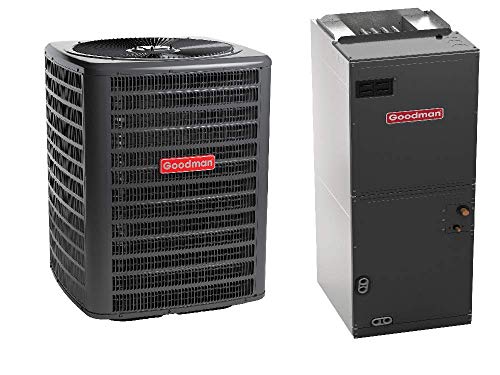
The most common configuration for large homes. A split system with an outdoor condensing unit and an indoor air handler or furnace coil, connected to ductwork. Requires adequate duct sizing and a dedicated electrical circuit.
5 Ton Mini-Split
A ductless or ducted mini-split configuration for homes without ductwork. Often deployed as multi-zone systems. Explore 5 ton mini-split options if ducts are not present.
5 Ton Heat Pump
Combines cooling and heating in one system. A strong fit for climates with moderate winters. See the 5 ton 18 SEER heat pump guide for a closer look.
If your project involves new construction rather than a replacement, the design phase is the ideal time to specify duct sizing, electrical capacity, and equipment location together. Our AC for new construction guide covers that workflow. For homes transitioning from heating-only systems, adding air conditioning to an existing furnace explains how a 5 ton coil and condenser can be integrated.
Electrical and Installation Requirements
Installing a 5 ton air conditioning unit is not a plug-and-play task. The equipment draws substantial current, and the electrical infrastructure must be verified before installation begins. Most 5 ton central condensing units operate on 240V single-phase power and require a dedicated breaker in the 40 to 60 amp range, depending on the specific model's nameplate rating.
- Verify the electrical panel has sufficient capacity and available breaker slots.
- Confirm wire gauge and disconnect requirements against the manufacturer's installation manual.
- Plan for a condensate drain path, including a secondary drain or float switch.
- Confirm the outdoor pad or bracket location meets clearance requirements for airflow.
- Check duct static pressure and airflow, since 5 ton systems move a large volume of air.
- Obtain any required permits before work begins.
For a full picture of what professional installation involves, review our installation cost breakdown and how to choose an HVAC contractor. If you want to understand why proper refrigerant handling matters, see EPA refrigerant handling rules.
Maintenance Priorities for 5 Ton Systems
Large-capacity systems benefit disproportionately from consistent maintenance, because the equipment runs longer and moves more air than a smaller unit. A disciplined maintenance routine protects the compressor, preserves efficiency, and reduces the likelihood of mid-summer breakdowns.
- Replace or clean air filters on a regular schedule, based on filter type and household conditions.
- Clean the outdoor condenser coil and keep the area free of debris and vegetation.
- Inspect and clean the indoor evaporator coil according to the manufacturer's guidance.
- Check condensate drain lines and the drain pan for buildup and standing water.
- Schedule a professional seasonal inspection to verify refrigerant charge and electrical connections.
- Monitor for short cycling, unusual noise, or reduced cooling performance early.
For step-by-step guidance, see condenser maintenance, cleaning evaporator coils, and cleaning the drain pan. If you notice performance problems, the troubleshooting articles on short cycling and central air working but not cooling the house are useful starting points.
How to Evaluate 5 Ton Air Conditioners Before You Buy
At this capacity, the equipment is an investment in the home's comfort infrastructure. Evaluate candidates using consistent criteria rather than a single headline number. The most useful comparison dimensions are efficiency tier, compressor technology, warranty coverage, noise rating, and the availability of qualified local service.
- Efficiency tier: match SEER2 to your climate and expected runtime.
- Compressor technology: single-stage, two-stage, or variable-speed, each with different comfort and humidity profiles.
- Warranty: compare compressor and parts coverage terms and registration requirements.
- Noise: check the sound rating of the outdoor unit if it sits near a patio or bedroom window.
- Service network: confirm authorized technicians are available in your area.
- Compatibility: verify the indoor coil, air handler, and ductwork are matched to the outdoor unit.
For a structured approach, read our buying guide and air conditioner shopping guide. If you are replacing an existing system, replace vs repair helps frame the decision. Registering the equipment after installation matters as well; see AC warranty registration.
Replacement, Repair, and Long-Term Ownership
A 5 ton system is a long-term asset, and eventually every homeowner faces the repair-or-replace question. Compressor failures, refrigerant leaks, and coil degradation are the most common triggers. Because the equipment is large, the decision should weigh the age of the system, the cost of the specific repair relative to a full replacement, and whether the existing ductwork and electrical infrastructure are still adequate.
Useful references include compressor replacement, condenser repair, and the broader AC repair company guide. For homes considering additional capacity, adding a second AC unit discusses zoning-based alternatives to a single large system.
Frequently Asked Questions
How many square feet does a 5 ton air conditioner cool?
A 5 ton unit is generally sized for homes between roughly 2,400 and 3,000 square feet, but the actual figure depends on climate, insulation, window area, and ceiling height. A Manual J load calculation is the reliable way to confirm.
Is a 5 ton AC unit too big for my house?
If your home is well under 2,400 square feet in a moderate climate, a 5 ton unit is likely oversized. Oversized systems short-cycle, dehumidify poorly, and wear down faster. Verify with a load calculation before committing.
What SEER rating should a 5 ton air conditioner have?
At minimum, look for 14.3 SEER2 for compliance in most U.S. regions. Mid-range and premium models reach 16 to 20+ SEER2, which is worthwhile if the system will run heavily through a long cooling season.
Can a 5 ton AC run on a standard 240V circuit?
Yes. Most 5 ton central condensing units operate on 240V single-phase power and typically require a dedicated 40 to 60 amp breaker. Always confirm the nameplate rating and consult a licensed electrician.
How long does a 5 ton air conditioning unit last?
With proper installation and consistent maintenance, a well-built 5 ton system commonly lasts 15 to 20 years. Runtime, climate, filter discipline, and professional servicing all influence the actual lifespan.